Immersive feature
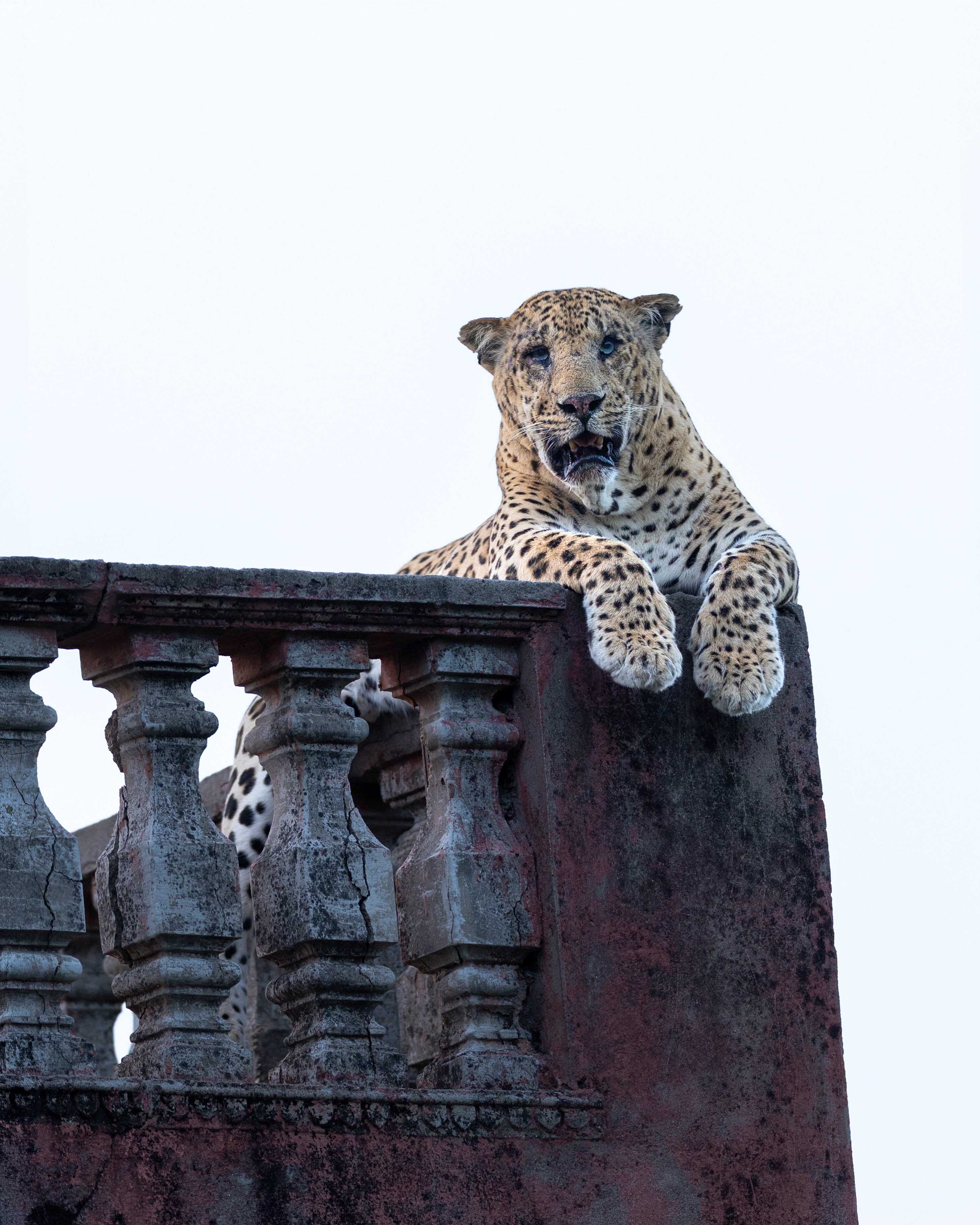
Bahadur, the leopard king of Jhalana, surveys his kingdom atop an abandoned watchtower
Written by Sanya Jain | Photographs by Kriti Walia
Written by Sanya Jain | Photographs by Kriti Walia
At 13, the leopard has earned a reputation as the King of Jhalana, the forest reserve in Jaipur, Rajasthan, that he calls home. His scarred face bears the marks of battles fought to hold on to his territory, but the ageing big cat appears to be reclaiming his lost ground.
Image credit: Kriti Walia
"Bahadur is known as the King of Jhalana. His battered face tells a story of the fights that he has had with other males in order to sustain dominance. It is believed that nearly 75% of the cats in the park are genetically linked to his bloodline," Walia told me.
Jitendra Shekhawat, Assistant Conservator of Forests (ACF) in the Rajasthan Forest Department, told me that Bahadur earned his name when he first appeared in Jhalana as a full-grown adult male sometime in 2014 or 2015.
“Ye first time jab dikha tha toh ek dusra leopard ek aur tha, woh dubak gaya tha usko dekh ke. Isliye phir Bahadur naam diya tha isko (When he was seen for the first time, there was another leopard there. That one cowered away after seeing him. That’s why he was christened Bahadur),” ACF Shekhawat revealed. “Iske attitude ki vajah se hi iska naam Bahadur pada,” he added.
Image credit: Kriti Walia
Image credit: Lakshmi Narasimha/Unsplash
“Leopards often fight for territory. If they get severely injured, they isolate themselves for some time.”- ACF Jitendra Shekhawat
ACF Shekhawat told me that Rana has not been spotted for about a month, allowing Bahadur to regain lost ground. “Since Rana is not being seen these days, Bahadur has expanded his territory,” he revealed.
Image credit: Kriti Walia
Image credit: Kriti Walia
“Leopards are crepuscular in nature therefore most active at dawn and dusk. These photos were taken in the early hours of the morning. Bahadur was reviewing his territory from this vantage point for potential prey or a threat from other alpha males in the park”- Kriti Walia
For Walia, the sight of the leopard surveying his territory from the abandoned structure was as striking for its symbolism as for its visual impact. “It was actually quite paradoxical that a watch tower that was once used by humans to look for forest fires, poachers and Leopard sightings is now a throne to these felines for the same purpose of vigilance and protection of their territory!” Walia said.
Image credit: Kriti Walia
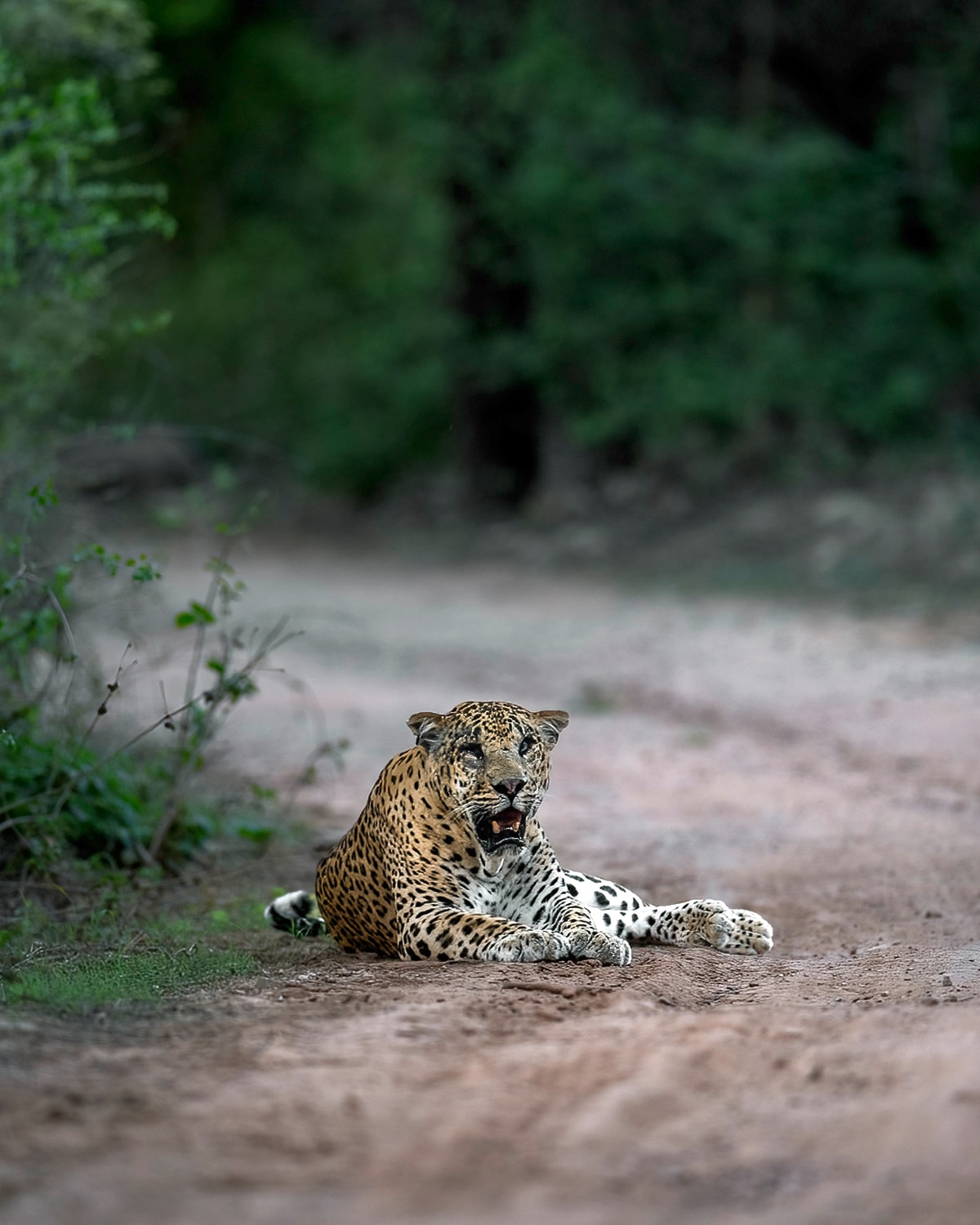
Image credit: Kriti Walia