Belted and bolted
at 33,000 feet
A commercial aircraft’s cockpit door is armoured, its cabin doors are sealed by air pressure, and its slides inflate in seconds. Most of the safeguards were introduced after an accident or a disaster. In this immersive, HT looks at the engineering meant to keep an airliner safe in flight.
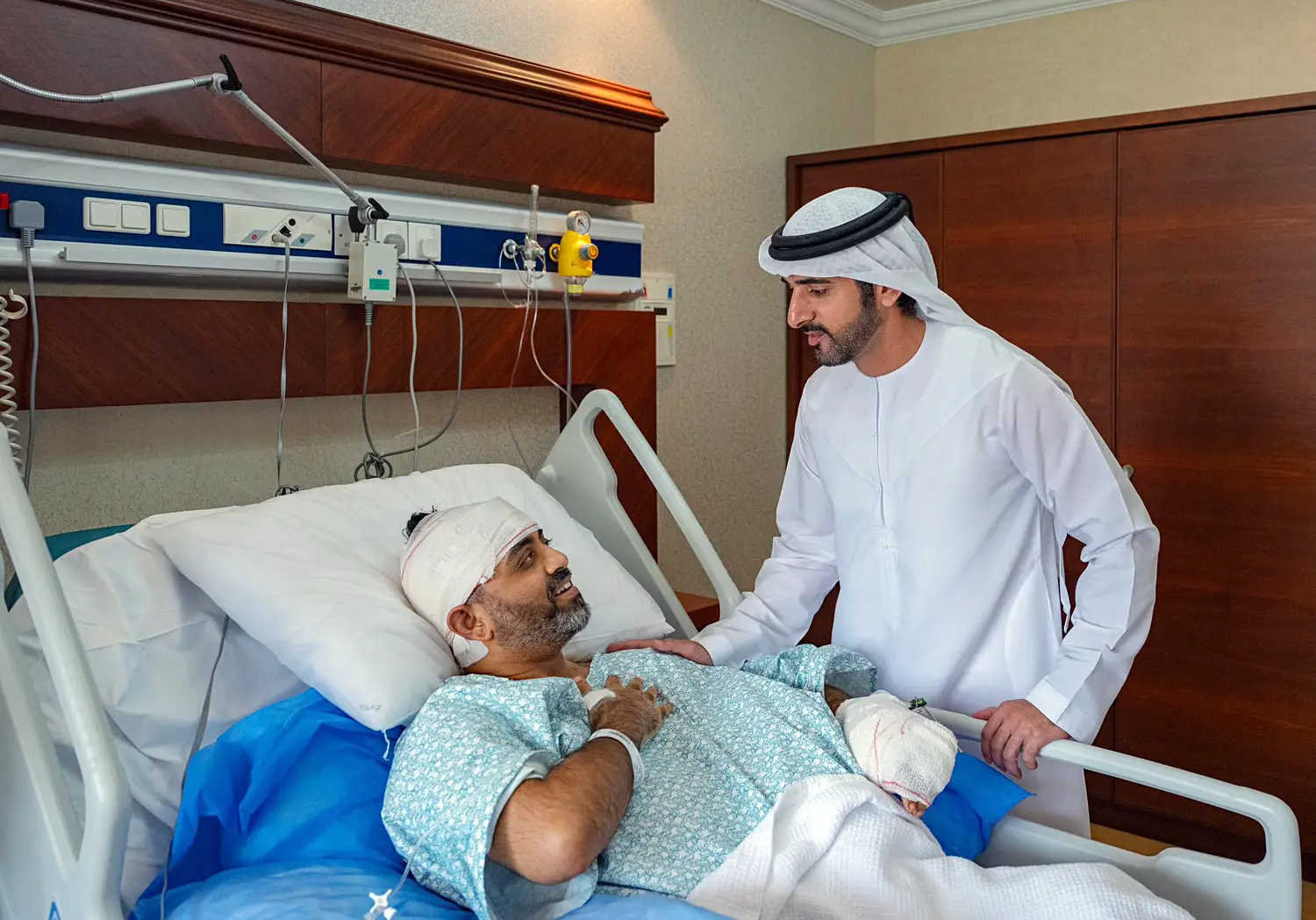
Flydubai flight FZ1073 left Dubai for Tel Aviv on September 30 with 174 passengers, mostly Israelis. Over Jordan and Saudi Arabia, the first officer attacked the captain with the crash axe and tried to seize the controls. The cabin learnt of it only when the cockpit door opened.
A 737's two pilots fly side-by-side, with a jump seat behind. Here, Captain Smit Machchhar, an Indian national from Mumbai, was attacked. The aircraft dropped roughly 14,000 to 16,000 feet in under a minute. Bloodied, Machchhar clicked the switch that releases the door, opening it to the cabin.
The door's lock is worked from this three-position switch between the seats. In AUTO, the door stays locked and cabin crew must request entry through a keypad outside. UNLKD releases it. If the pilots do not respond, an emergency code unlocks it after a delay, unless a pilot selects DENY.
Before 9/11, a key to the door was available to every crew member. In January 2002, the US Federal Aviation Administration (FAA) mandated doors that resist forced entry, small-arms fire and grenade fragments. The UN's aviation body, ICAO, made them mandatory on larger airliners from November 2003.
The deadbolt, door stop and lower latch hold the door shut. A key in the keyhole works the lock from the cabin, unless pilots block it. Blue panels pop open to equalise pressure in a sudden decompression. UAE prosecutors say the crash axe, standard equipment, was the weapon on FZ1073.
Once the door opened, passengers detained the first officer and helped steady the aircraft. Two reserve pilots on board then guided the jet to an emergency landing at Tabuk in Saudi Arabia.
Nine days after the flight, the UAE’s attorney general, Hamad Saif al-Shamsi, gave an initial account of what was planned. The co-pilot, identified as Hamam al-Hammami, a 29-year-old Omani national, had intended to fly the aircraft into the passenger terminal at Israel’s main international airport.
According to al-Shamsi, he aimed “the greatest possible number of human casualties”. Prosecutors said he drew inspiration from the September 11 attacks and had used two earlier flights to Tel Aviv to study the route and the airport. They also said he confessed in his lawyer’s presence and told them he acted alone, and that none of flydubai’s checks had flagged extremist views.
The lock that let Machchhar call for help has also been used to keep help out. On March 24, 2015, the co-pilot of Germanwings flight 9525 locked the captain out of the cockpit and flew the Airbus A320 into the French Alps, killing all 150 people on board. France’s air accident investigation agency, the BEA, found that the crash resulted from a deliberate and planned action by the co-pilot while he was alone in the cockpit.
Three days later, Europe’s aviation regulator, the European Union Aviation Safety Agency (EASA), recommended that two authorised people be in the cockpit at all times. In 2016 it let airlines decide for themselves after assessing their own risks.
On May 18 this year, EASA restored the two-person rule as its preferred approach. It cited an EU-funded study which found that reinforced doors, while essential against unlawful interference, “may introduce specific safety risks in certain scenarios, particularly in cases of pilot incapacitation”.
The door must also open whenever a pilot steps out for a break. Airlines have long rolled a food and beverage trolley across the aisle while it stands open. In the US, a 2023 FAA rule further requires airlines to fix a secondary barrier beyond the cockpit door. It is meant to slow an attacker long enough for the door to be shut and locked. The rule covers American airlines’ aircraft built after August 25, 2025, but not foreign carriers such as flydubai.
Breaching a cockpit draws the heaviest penalties. India's Directorate General of Civil Aviation (DGCA) has proposed treating an attempted or actual breach as the most serious level of unruly behaviour, according to its February 2026 draft rules. The penalty would carry a flying ban of at least two years with no upper limit.
Cabin doors must stay shut at altitude and open fast in an emergency. This one has an interior control handle, an assist handle and a slide pack. Before departure, crew arm it by fixing the slide's bar to the floor and stretching a red strap across the window. Opened while armed, it inflates the slide.
From the side, the door's stop fittings rest against matching ones on the frame. Cabin pressure presses them together, so the frame takes the load, while latch fittings and guide tracks hold the door. In 2021, the FAA ordered checks on these fittings on 737 forward doors after cracks were found, citing decompression risk.
Some Boeing 737-9s have a mid-cabin exit held by 12 stop pads and pins, or a plug if airlines do not need it. On January 5, 2024, an Alaska Airlines 737-9’s plug blew out. Boeing had delivered it missing four bolts, the US National Transportation Safety Board found. The cockpit door flew open.
None of the Alaska crew knew that the cockpit door was designed to swing open in case of a rapid loss of pressure. The NTSB’s chair, Jennifer Homendy, subsequently said Boeing would make the feature clear in the aircraft’s manual.
Rules for aircraft doors have often been written after something went wrong.
On March 3, 1974, a Turkish Airlines DC-10 climbing out of Paris Orly lost a cargo door that had not been properly secured. All 346 people on board were killed. The FAA and the industry then reviewed door rules, and tighter design standards followed in 1980.
Fifteen years later, on February 24, 1989, the forward cargo door of a United Airlines Boeing 747 opened over the Pacific after the jet left Honolulu. Nine passengers were thrown from the aircraft and lost at sea. That accident and another the same year prompted a further review, and the FAA adopted stricter standards in May 2004.
Today, FAA guidance asks for several safeguards on every door. Latches hold it shut, locks keep the latches in place, lights tell the pilots if a door is not secure, and a system stops the cabin from pressurising until every door is fully closed.
The passenger at the handle
When a cabin is pressurised, the doors can’t be opened by an individual. But pressure decreases at lower altitudes, when the plane is close to landing or taking off.
It was this gap that a passenger utilised on an Asiana Airlines Airbus A321, which was approaching Daegu, in southeast South Korea, on May 26, 2023. The man, surnamed Lee, was sitting beside an emergency exit, when he pulled the lever as the aircraft was about 213 metres above the ground.The door stayed open for at least eight minutes before the plane touched down, injuring 12 people.
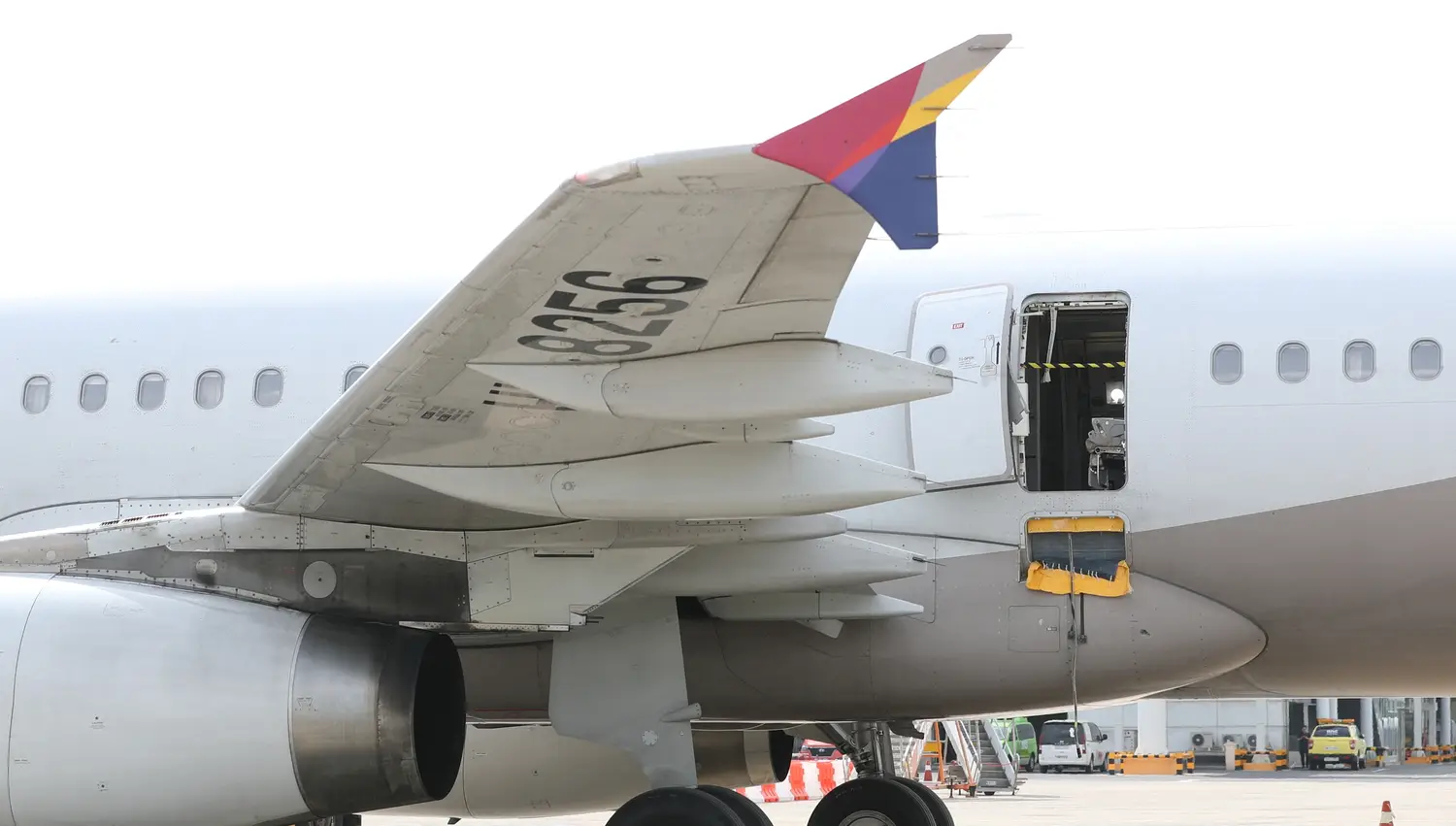
Lee told police he had been under stress after losing his job and wanted to get out because he felt suffocated just before landing. A court in Daegu gave him a three-year prison sentence, which was suspended for five years because of his feeblemindedness. It later ordered him to pay Asiana 727 million won. Aviation regulators have, over the years, accepted this as part of the risk.
An FAA guidance says a door should not normally open once the pressure difference between cabin and outside air exceeds 2 pounds per square inch. But it concedes that during approach, take-off and landing, when that difference in pressure is lower, a deliberate opening may be possible. Nonetheless, the risk is low because these phases are short and passengers ought to be strapped in at the time. FAA says aircraft makers can consider extra locks triggered by airspeed or air pressure. The rule protects the aircraft and its passengers, the guidance says, but “not necessarily the person who intentionally tries to open the door”.
South Korean media, citing a report by the country’s transport ministry, later found that the exit on this model could open when the pressure difference was low, and that the seat was close enough for the lever to be worked by someone seated nearby. It also found that the A321 involved had no automatic exit lock by design. Asiana stopped selling the seats beside those exits on its 14 A321-200 jets.
Other attempts have come higher up. On a United Airlines flight from Los Angeles to Boston in March 2023, a flight attendant found a door’s locking handle moved about a quarter of the way towards unlocked and its slide lever switched to “disarmed”, according to the US Justice Department. On a flight from San Juan, Puerto Rico, to Chicago, a passenger allegedly tried to open both an emergency exit and the cockpit door, forcing a diversion to Miami.
In India, the civil aviation ministry told the Rajya Sabha in 2023 that one case of an emergency exit being opened had come to the DGCA’s notice in the previous five years. It happened on the ground, aboard IndiGo flight 6E 7339 from Chennai to Tiruchirappalli on December 10, 2022. In a separate written reply, the government named the passenger as an MP and said, citing IndiGo, that the door had opened accidentally.
The FAA can propose fines of up to $37,000 per violation, and one incident can bring several. The DGCA’s February 2026 draft lists “tampering of the doors/emergency exits” among acts that can lead to arrest. It would also let airlines ban a passenger for up to 30 days for misusing an exit, without waiting for an independent committee.
But every lock added to a flight is weighed against the need to get people out fast. Since 1967, aircraft makers have had to show that a full cabin can be emptied within 90 seconds using half the exits. That standard was tested at Tokyo’s Haneda airport on January 2, 2024. A Japan Airlines A350 caught fire after colliding with a coast guard aircraft on the runway, leaving only three of its eight escape doors usable. All 367 passengers and 12 crew got out alive.
For FZ1073, the door that mattered needed to be opened from the inside. The investigation into the attack, and whether anyone else was involved, is still open.
Photos: Hamdan bin Mohammed Al Maktoum (@HamdanMohammed) on X; Reuters
Note :Illustrations based on Boeing 737 variants. Actual components might vary depending on models and manufacturers
Sources: National Transportation Safety Board, Boeing manuals, Aviation eLearning