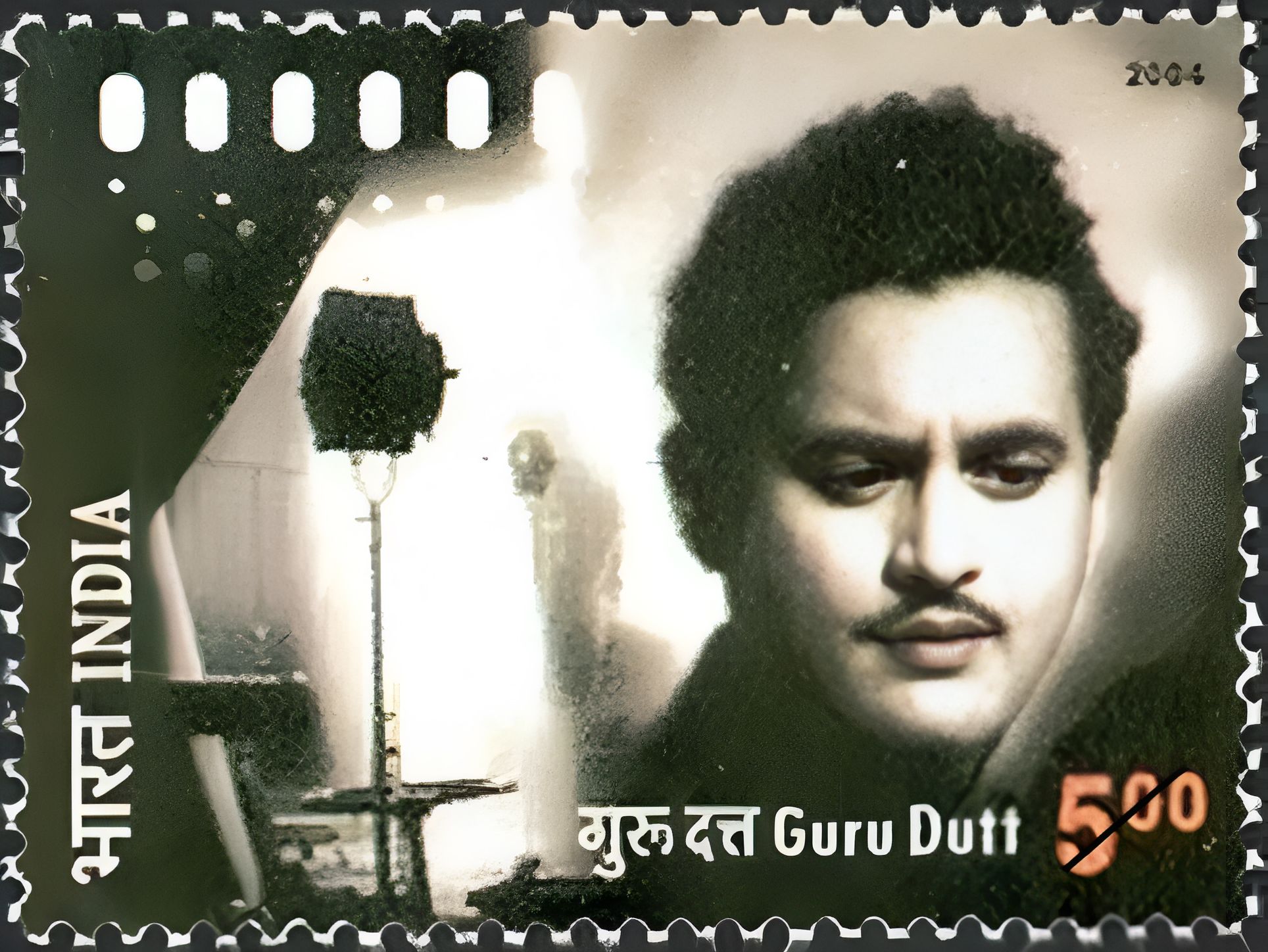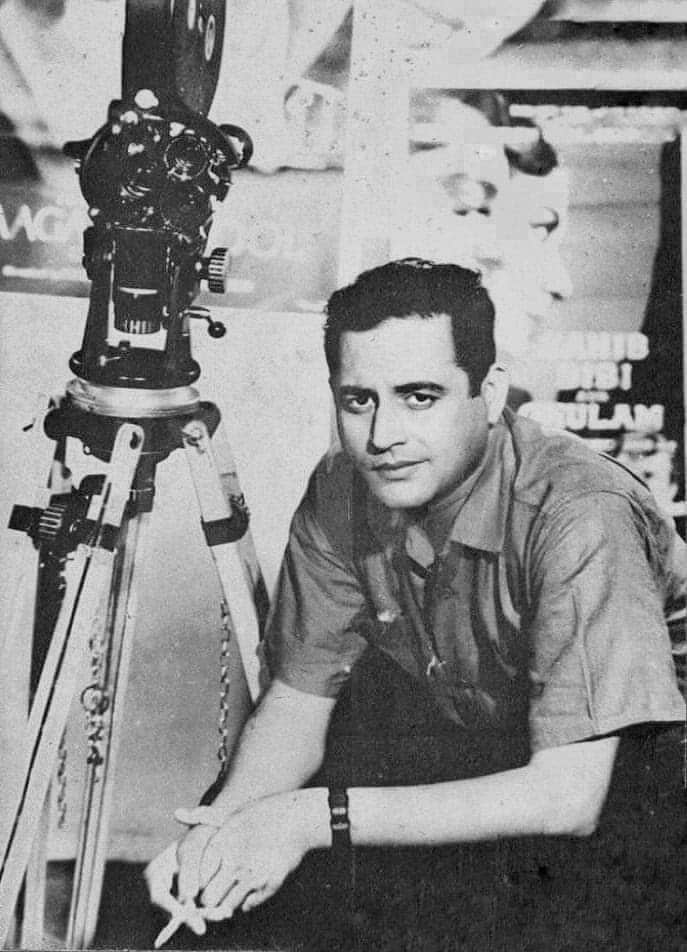
Guru Dutt:
A master, remembered
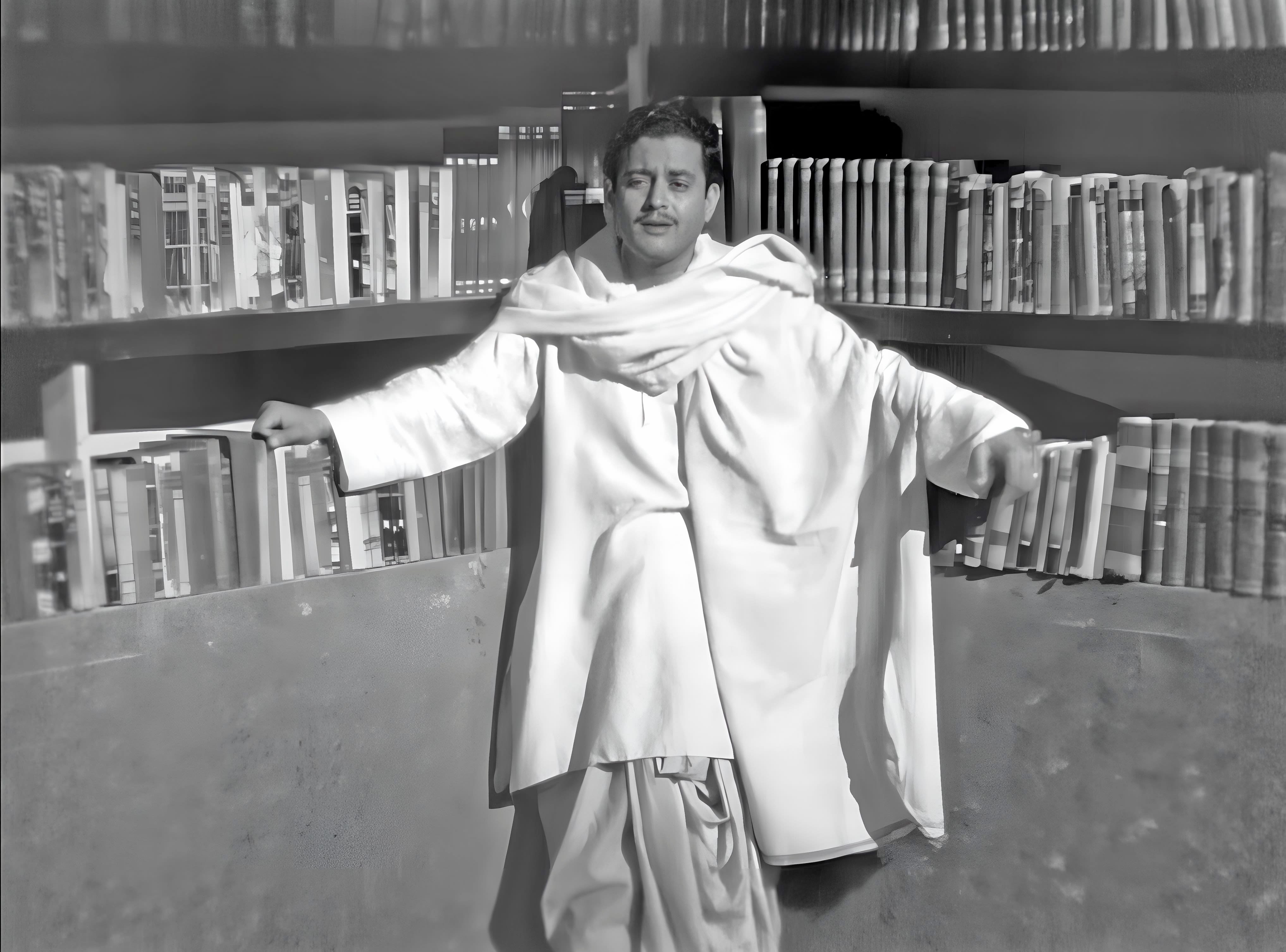

He was once a telephone operator; then a dance director. Much later, he began making luminous films that remain classics to this day: Pyaasa, Jaal, Kaagaz Ke Phool.
In many cases, the stories were his stories;
the tussles, his tussles.
In his centenary year,
a tribute to a tortured artist.
Guru Dutt was born in 1925, into a family from Mangalore (now Mangaluru). His father, Shivashanker Padukone, moved cities and jobs frequently, before settling in Calcutta in 1929, where he found work as a clerk. (Incidentally, Dutt’s given name was Vasanth Padukone. His parents changed it after a childhood accident, hoping to accord him better luck.)
After school, Dutt stopped studying in order to work and help keep the family afloat. At 16, he found a job as a telephone operator. It was
a relative who noticed his love for arts and helped him find a job with Pune-based Prabhat Film Company.
In this picture, Dutt is captured behind the scenes of his final production 'Baharen Phir Bhi Aayengi'. This film, a romance drama, was initially shot with him in the lead role; it would be released two years later, with Dharmendra starring instead. Dutt died by suicide in 1964.

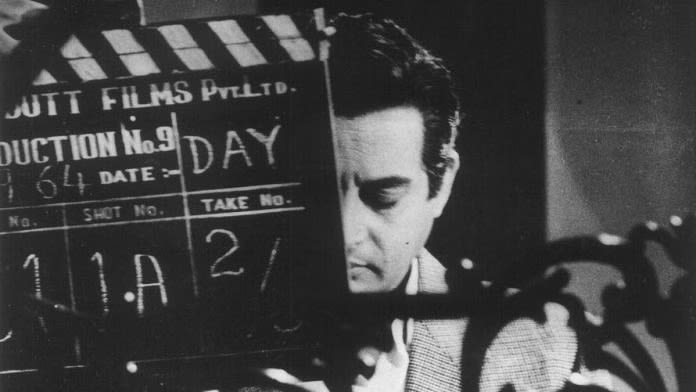
When Dutt was found in his flat in Bombay, dead having drunk a glass of water with sleeping pills dissolved in it, he was only 39. It was his third suicide attempt.
In her book 'Guru Dutt: A Life in Cinema', Nasreen Munni Kabir quotes his brother, filmmaker Atmaram Dutt, as saying: “He was quite social in his early days…had a very pleasant nature… Whether it was the success or his filmmaking, he became increasingly enclosed, more and more cut off.”
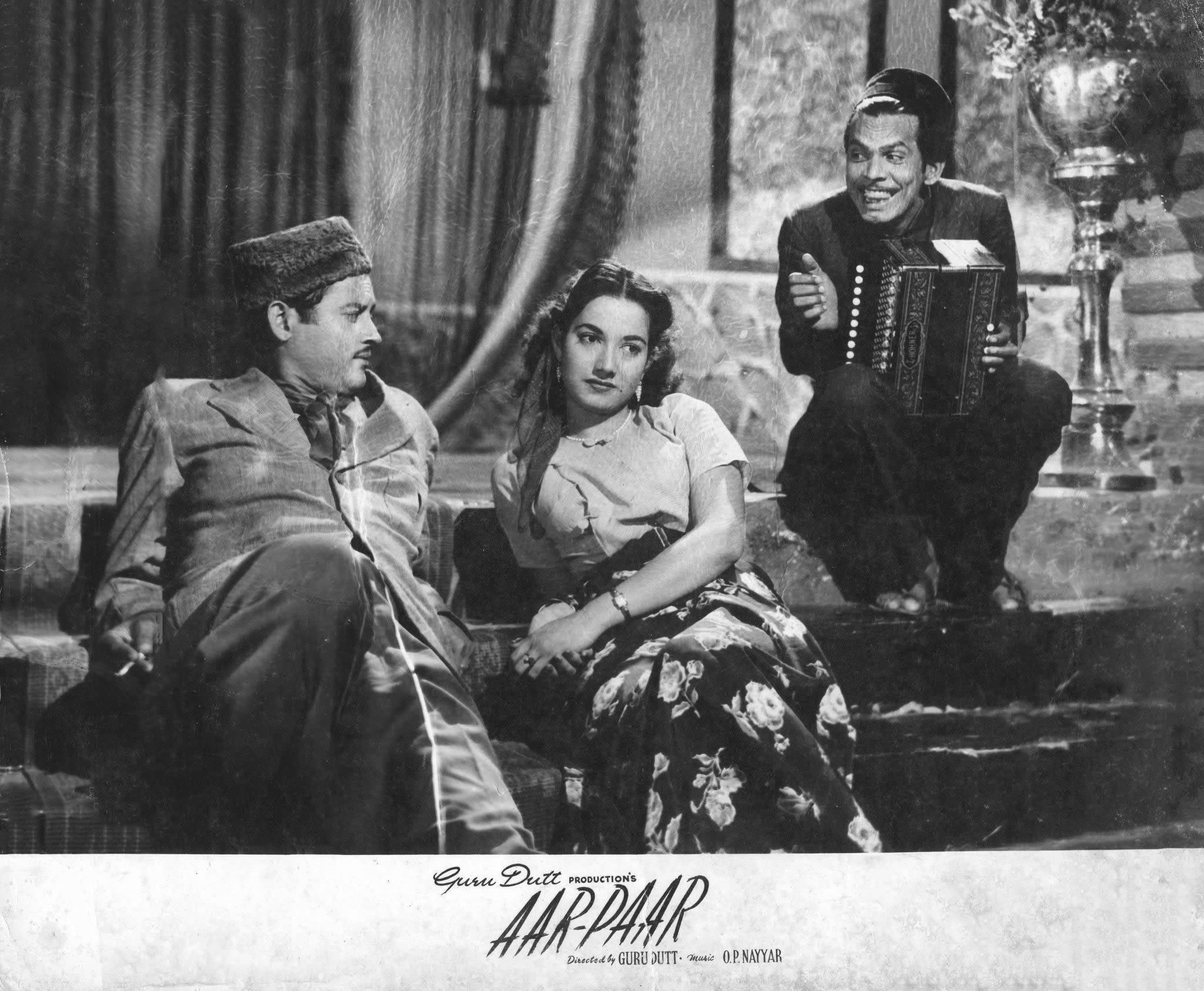
In the early years, even his films weren’t as dark. Dutt directed and starred in romantic comedies such as Aar Paar (1954; in picture), playing a rakish but charming taxi driver who finds himself fancied by two women.

In fact, the genre he founded — Bombay noir — was gritty but not dark. Atmospheric and morally complex, these were films also laced with humour. They featured smoke-filled clubs and cabarets, heroes who were rakish rogues, women who were luminously beautiful, and sepia streets pulsing with crime, romance and intrigue.
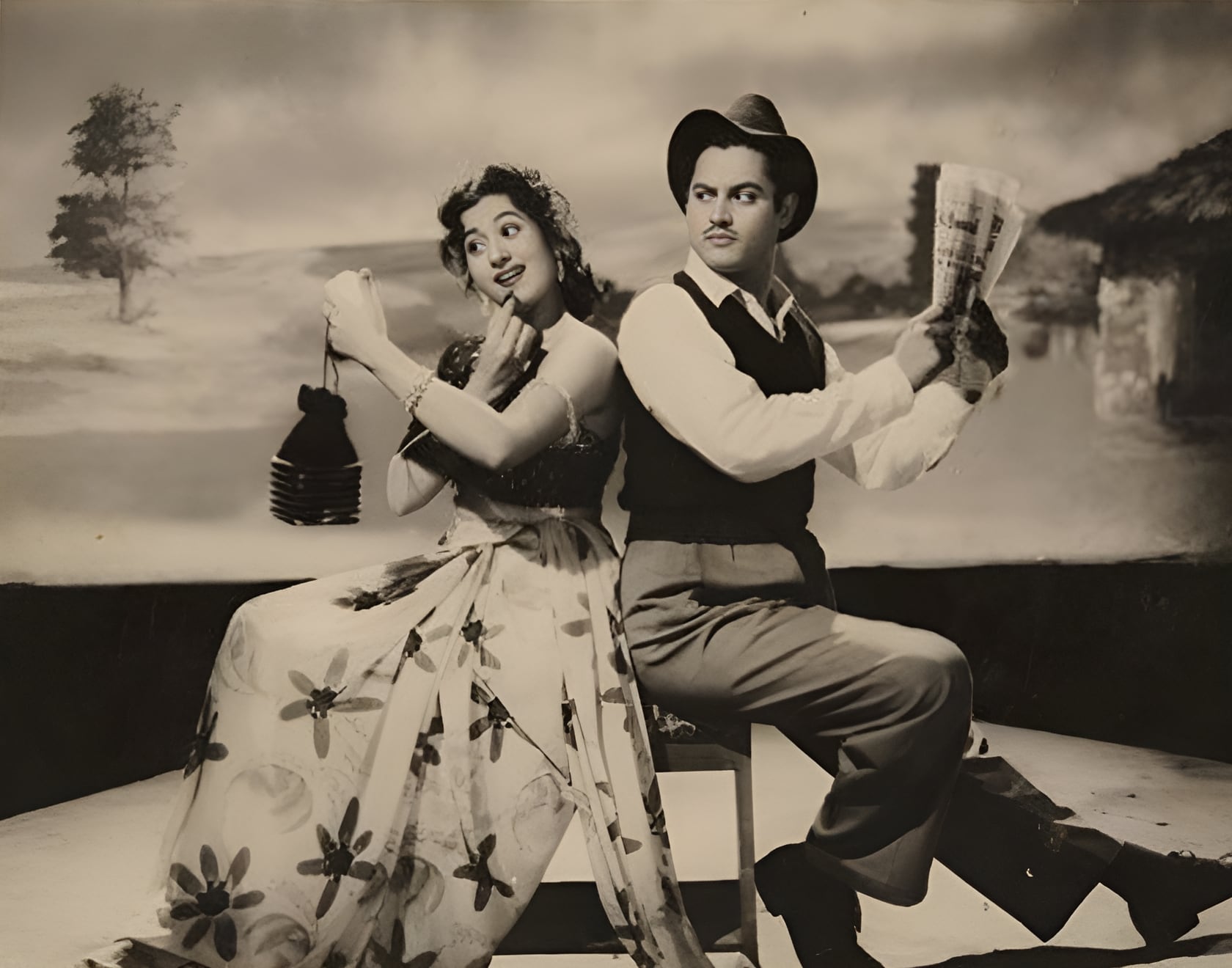
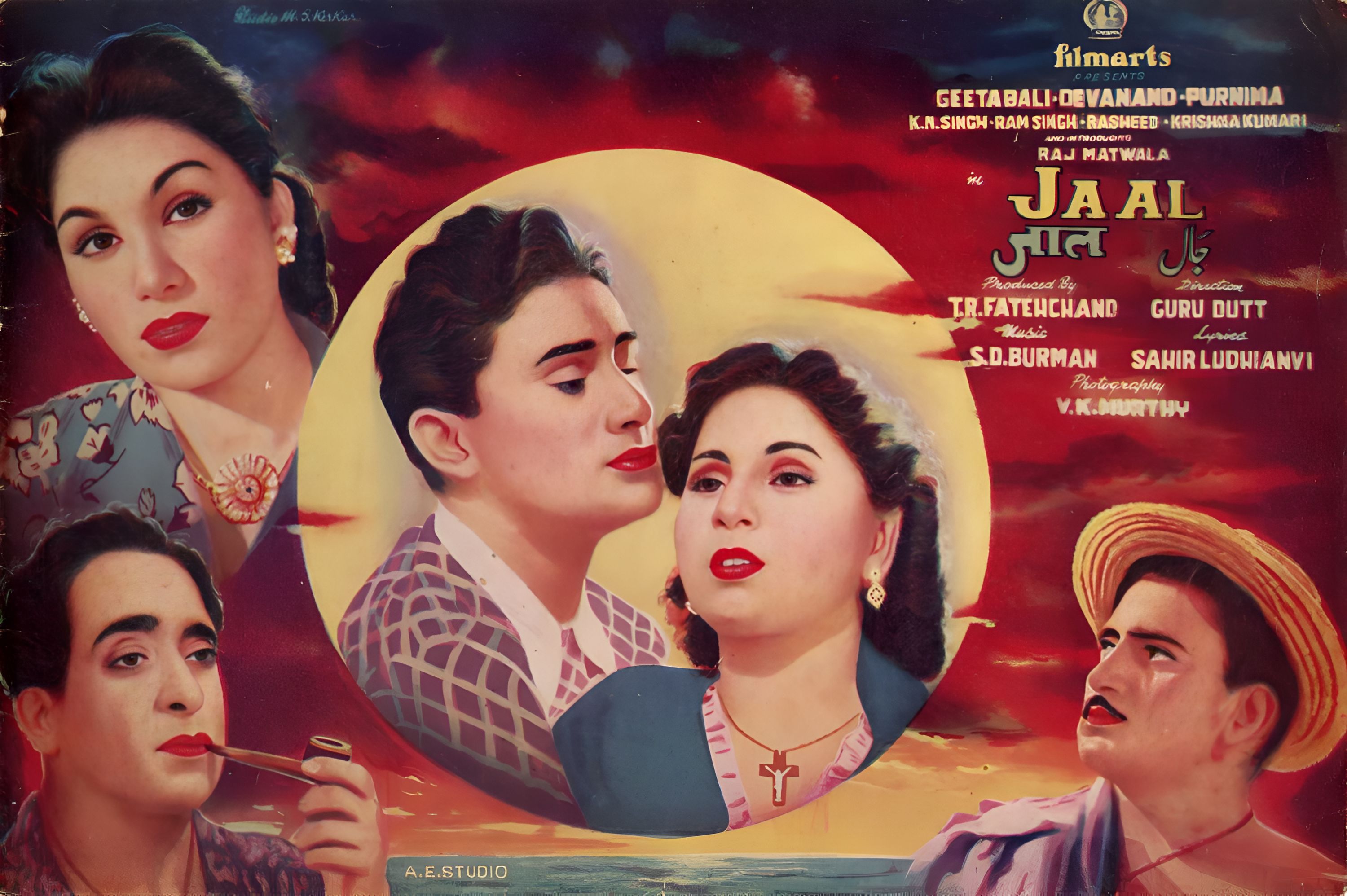
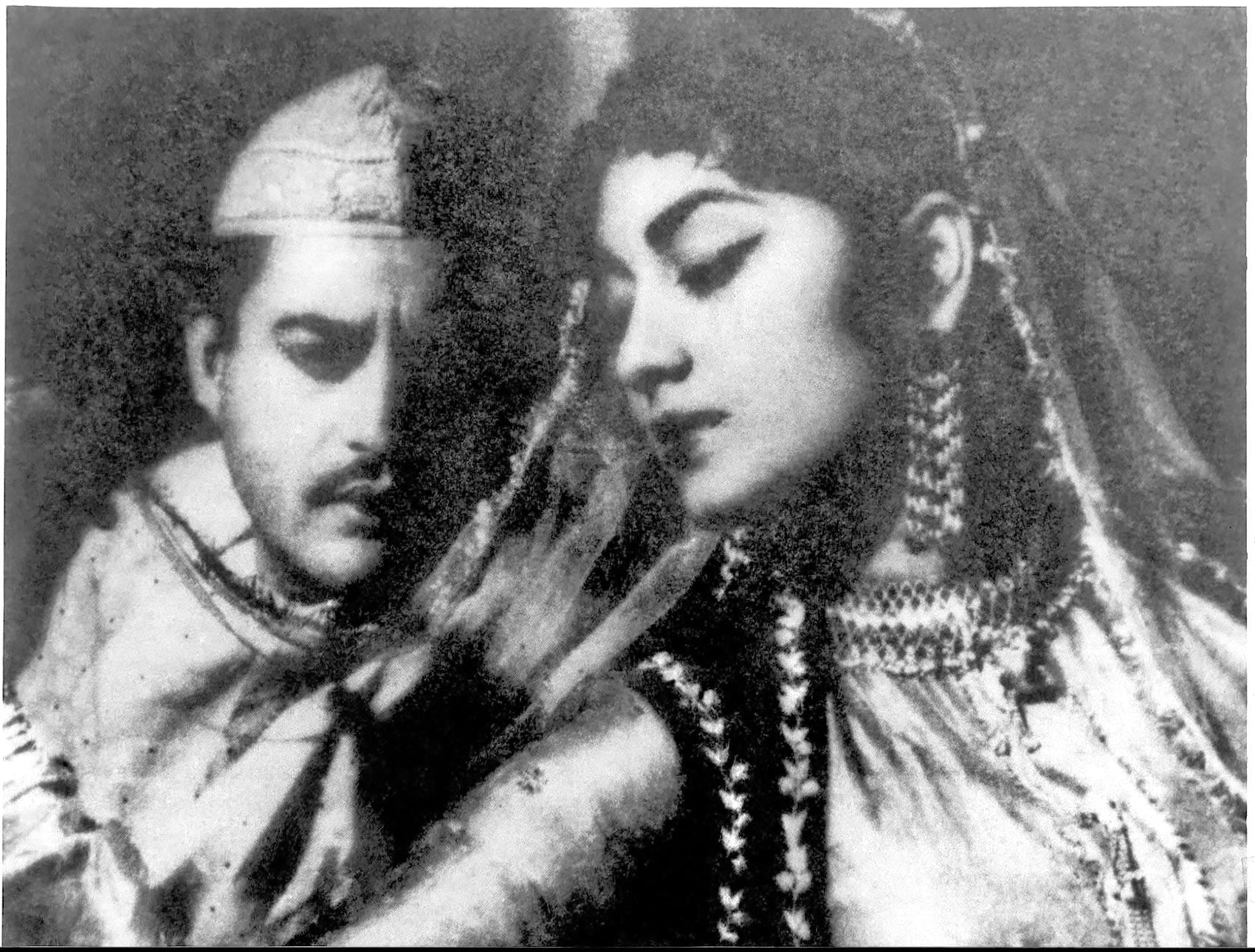
Among the pioneering films in this genre were Mr & Mrs '55 (1955; in picture), starring Dutt and Madhubala; and Jaal (1952), starring Dev Anand and Geeta Bali.


Fresh off the success of these romantic comedies, Dutt made Pyaasa (1957), a film about a disillusioned poet rejected at every turn, who finds solace with a prostitute (played by Waheeda Rehman).
With its crushingly beautiful poetry, music and dialogue, Pyaasa was a hit and would become a classic.
It remains his best-known film; and resurfaces regularly on lists of the best films of all time.
As it turned out, the story of despair turned out to be a deeply personal one. This would become more apparent, at least in hindsight, in his next major release.
Kaagaz Ke Phool (1959), about a successful film director’s self-destructive slide into penury and alcoholism,
was so dark and defeatist, it crashed at the box office.
Even Waheeda Rehman didn’t believe in it.
In an interview with Nasreen Munni Kabir, she said: “I thought the film was too sad…too heavy… I know there are many good moments in Kaagaz Ke Phool, but as a whole I don’t think it worked.”
Dutt, who set great store by commercial success,
lost a little more of himself with this failure.
He never directed a film again.

He would go on to star in several others, and was in great demand as an actor. Among these hits was Chaudhvin Ka Chand (1960, above),
a tale of duty, friendship, love, misunderstandings and sacrifice, directed by Mohammed Sadiq and produced by Dutt.
At least in financial terms, it would be the biggest hit of Dutt's career.
Meanwhile, a turbulent personal life was adding to his despondency. In 1953, Dutt married the beautiful singer Geeta Roy, whom he met during the making of his first film as director, Baazi. By all accounts they were very much in love, but their marriage soon soured, amid industry rumours of a great love between him and Waheeda Rehman.
A third dark classic, Sahib Bibi Aur Ghulam (1962, in picture), would complete what is considered Dutt’s trilogy, following Pyaasa and Kaagaz Ke Phool, even though the 1962 film, produced by Dutt, was directed by his long-time writer Abrar Alvi.
The haunting story of a late-19th-century Bengali zamindari family’s decline, it features outstanding music by Hemant Kumar and a towering performance by Meena Kumari as the neglected 'chhoti bahu' who turns to alcohol in an attempt to win over her indifferent husband (Rehman).
The tragedy of his life, and his end, have marked Guru Dutt’s legacy, but there are lighter moments to remember too. On set, he was famously short-tempered and so compulsive a re-shooter that Alvi called him the “Hamlet of cinema”, after he took 104 takes of the climax scene in Pyaasa. He built a dream team around himself. Waheeda Rehman and Johnny Walker featured in almost all his films. Alvi buffed each screenplay until it shone. Master cinematographer VK Murthy and production head S Guruswamy worked with him for years. As did music composers SD Burman and OP Nayyar. Dutt’s wife Geeta Roy Dutt sang some of the most spectacular songs of her career in his films.
Production: Murukesh Krishnan