
How did SIR impact electoral rolls across states?
By Abhishek Jha
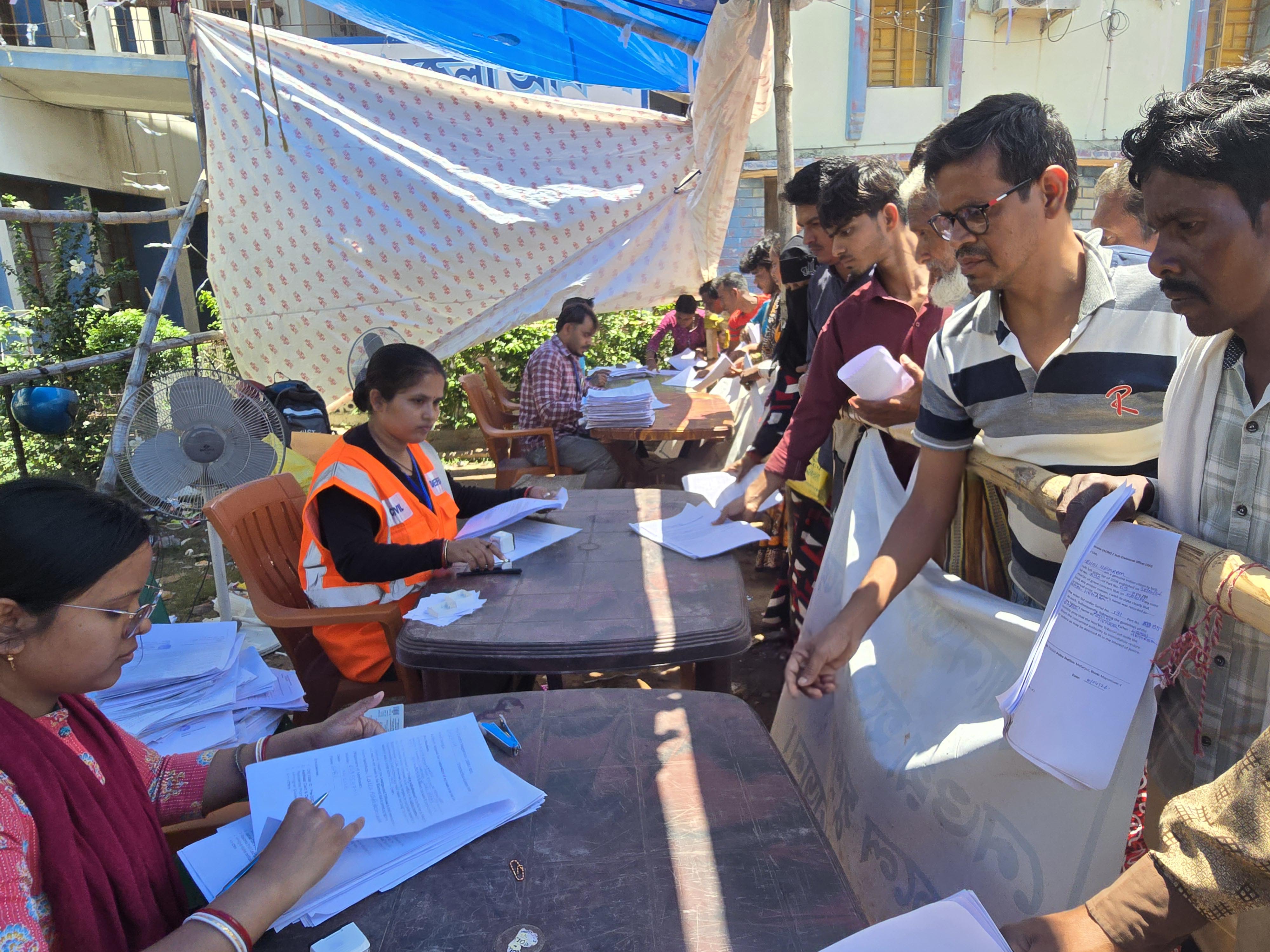


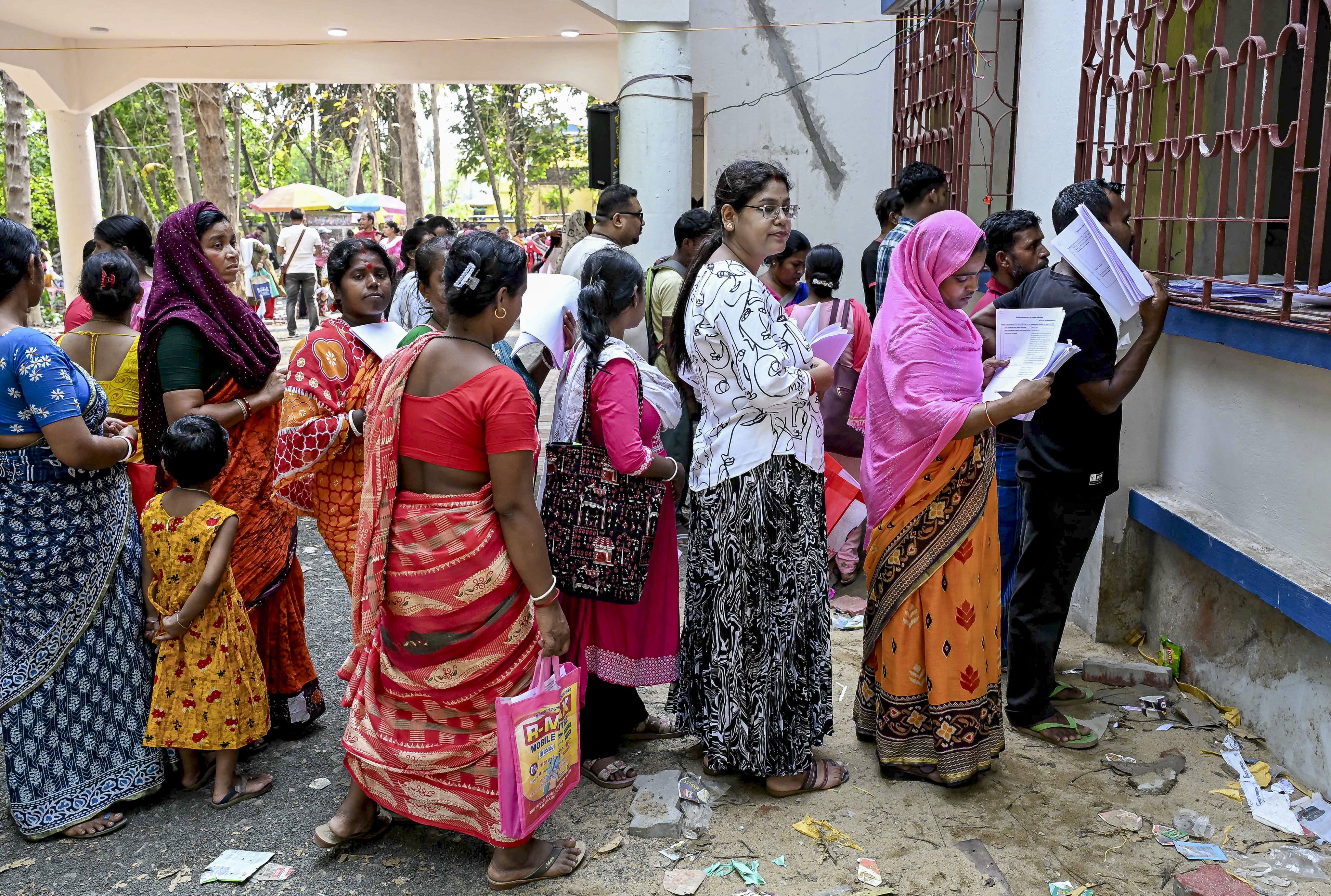

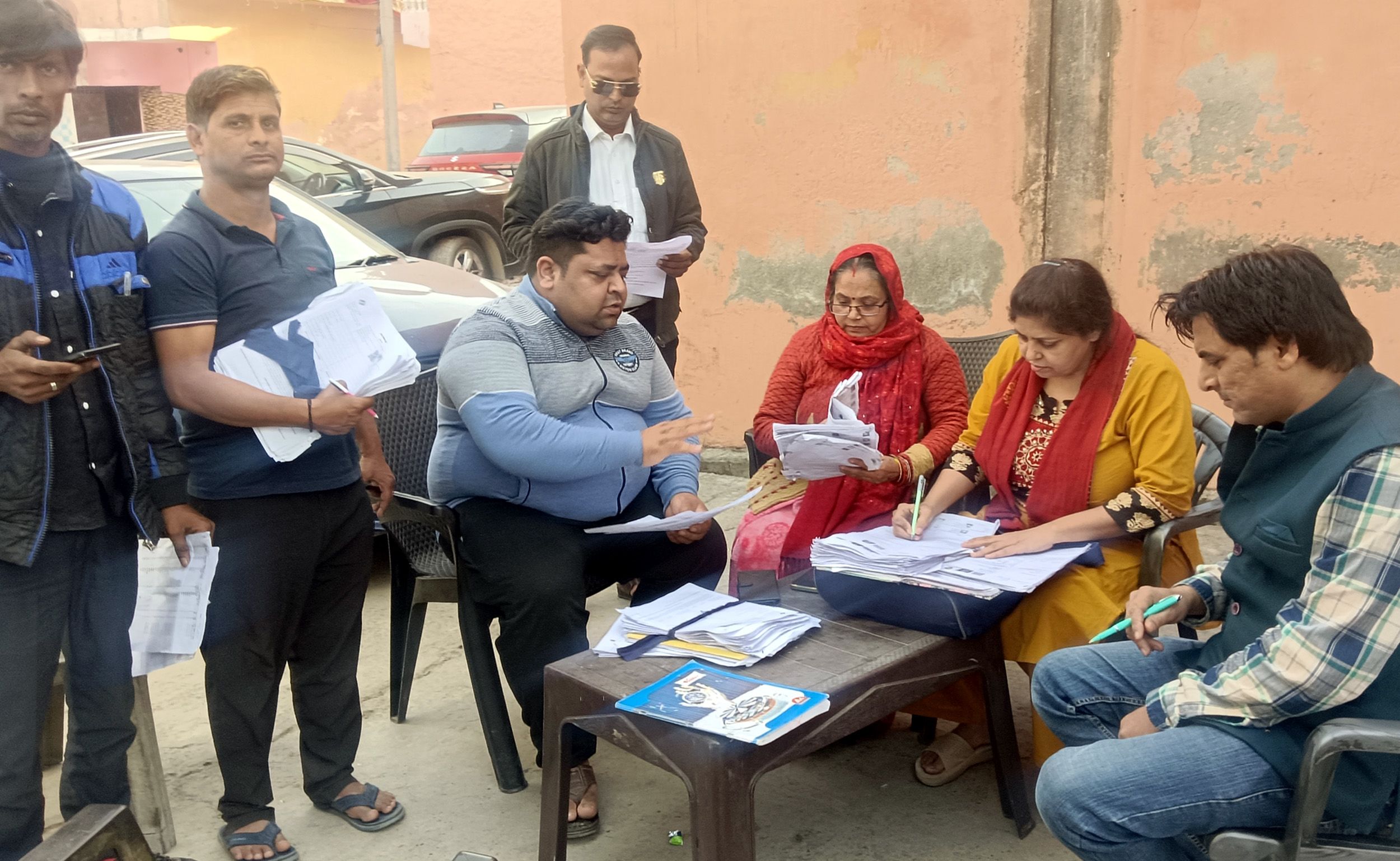

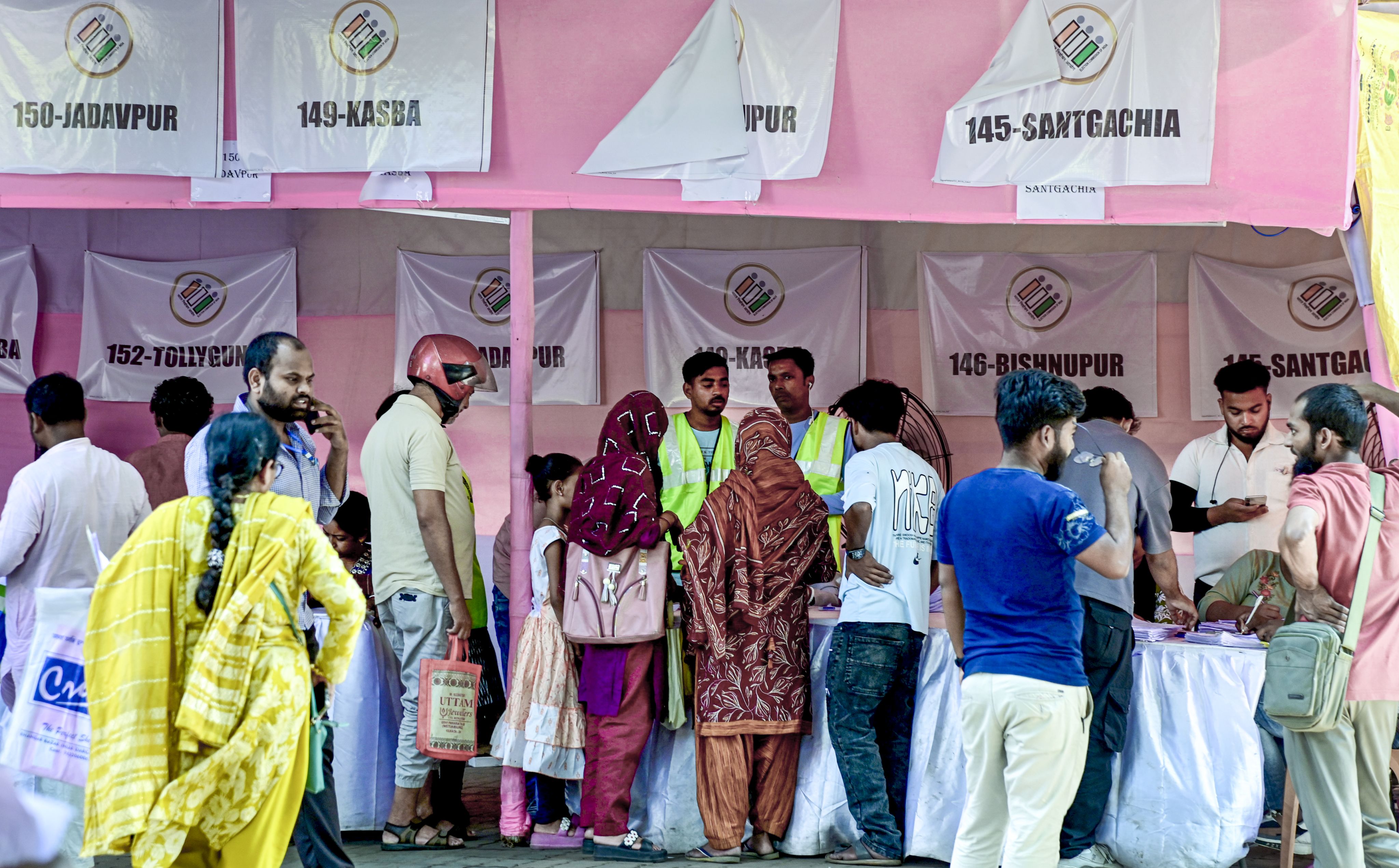

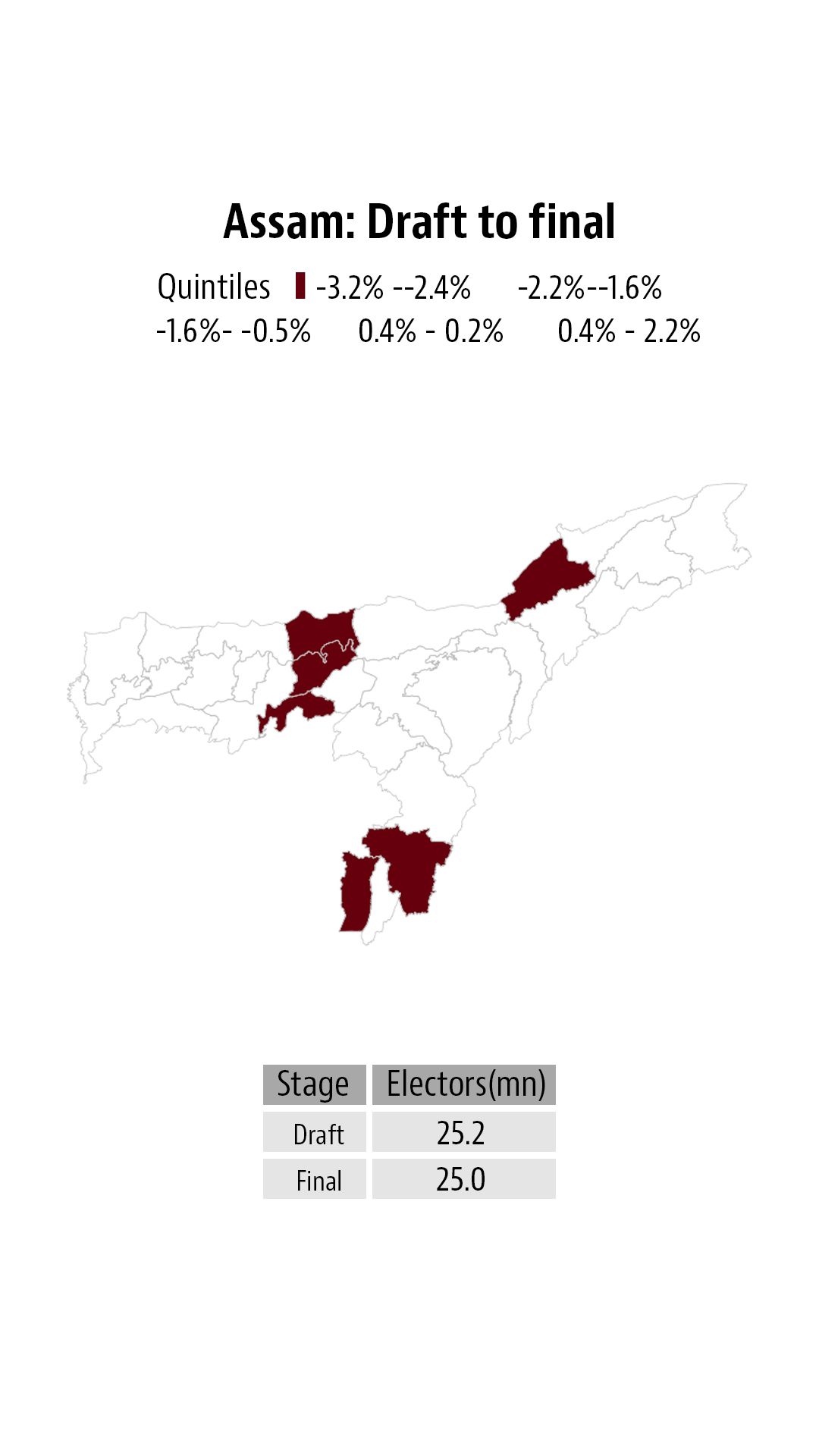

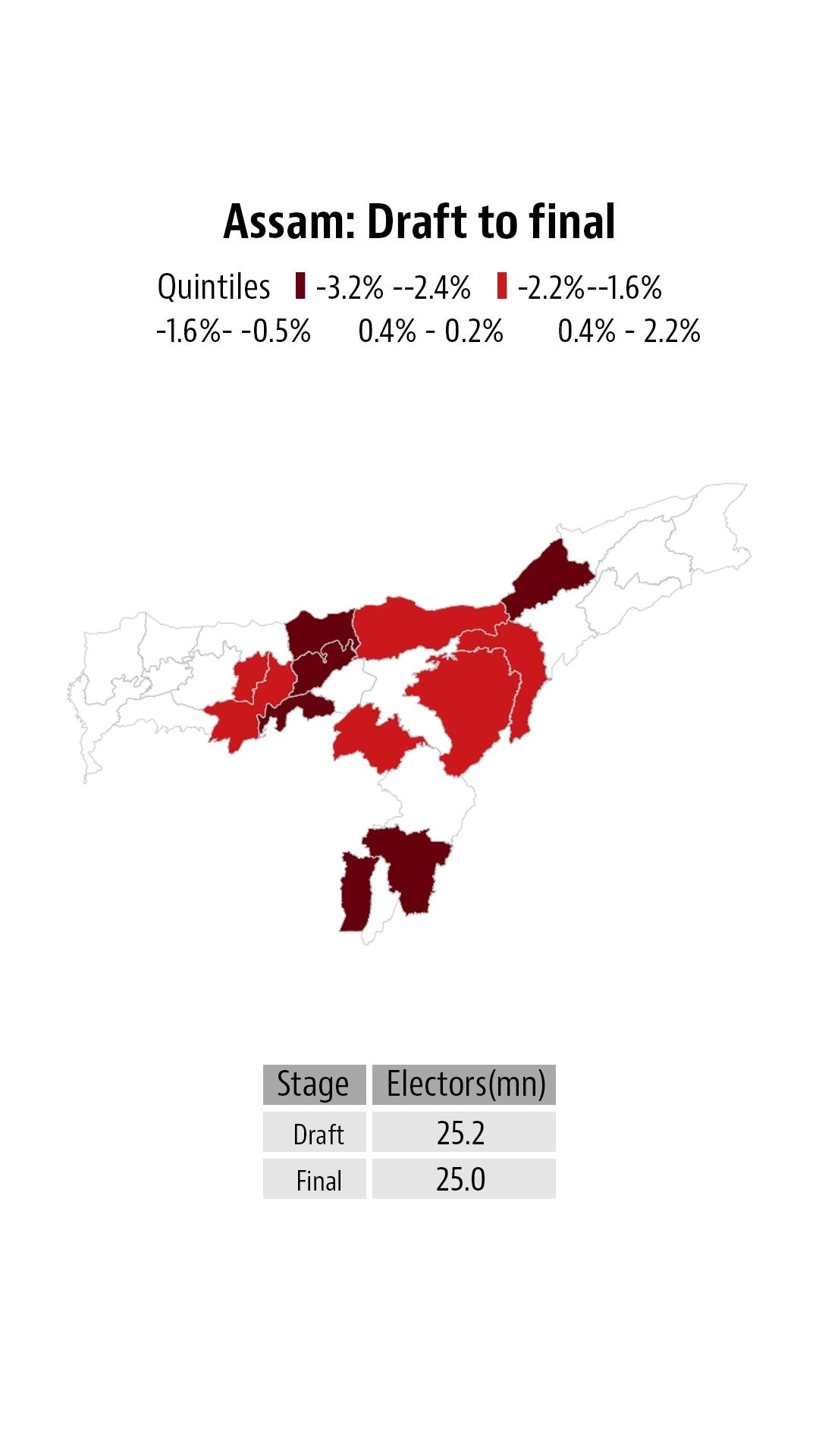

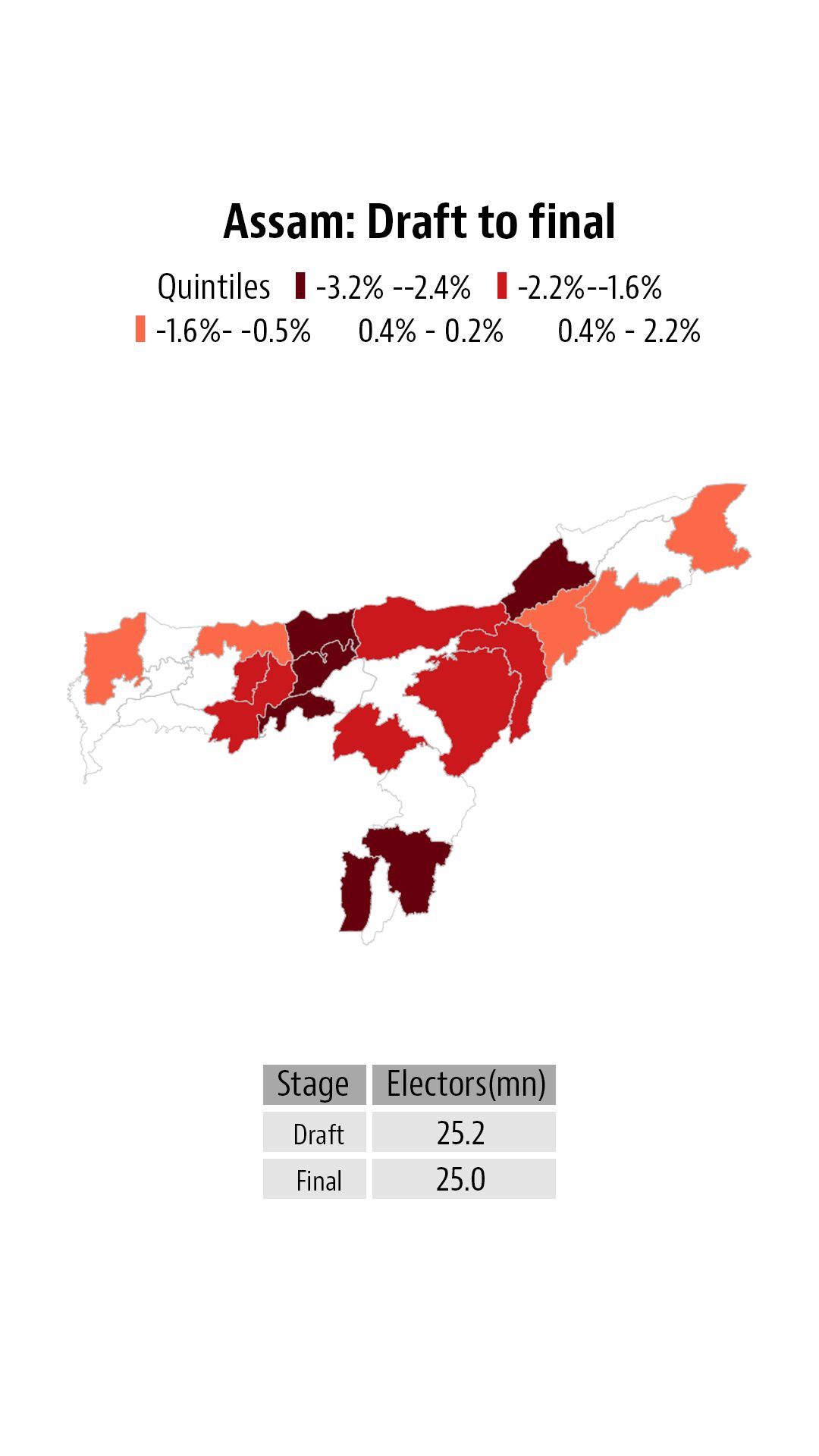

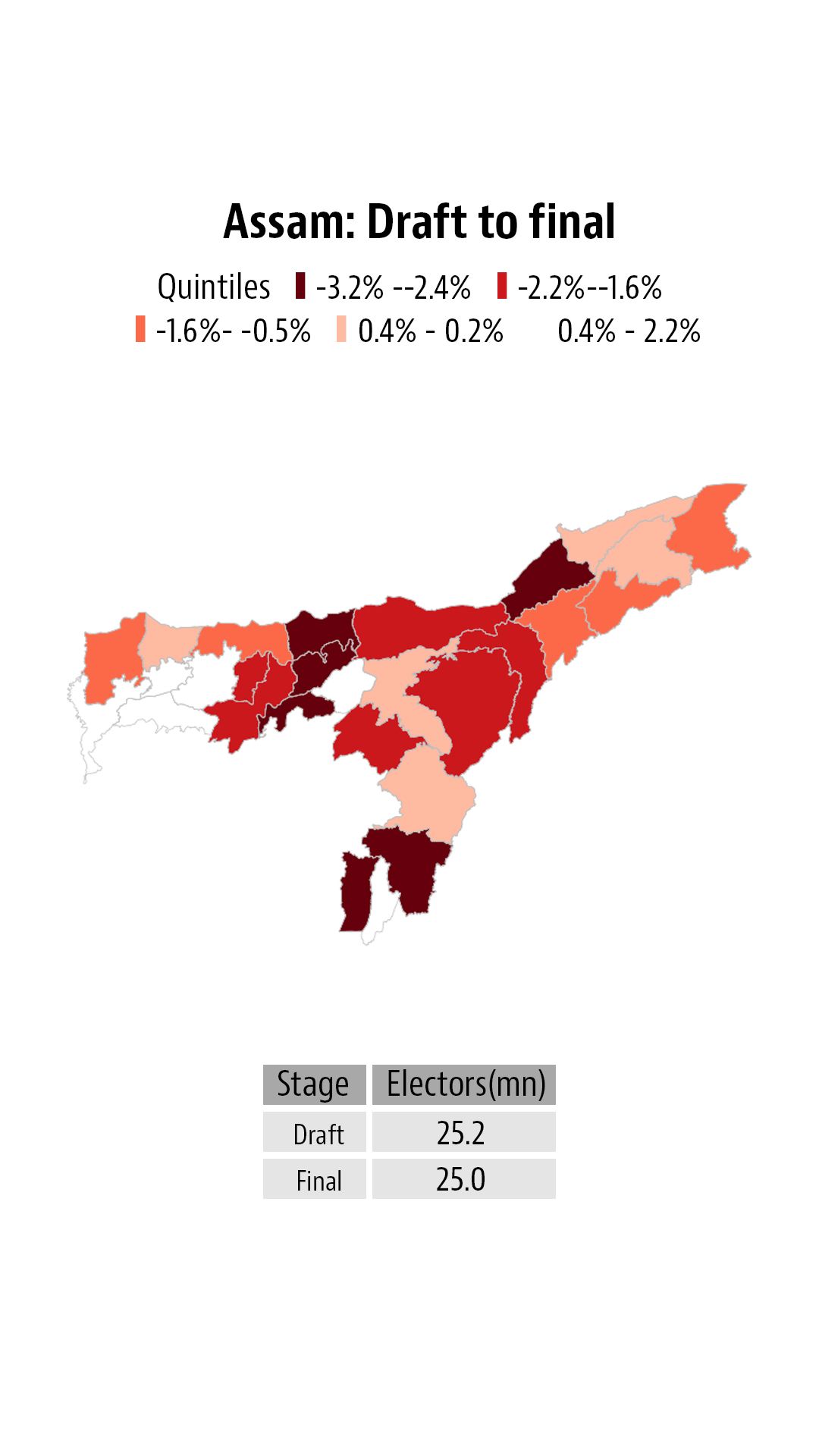

















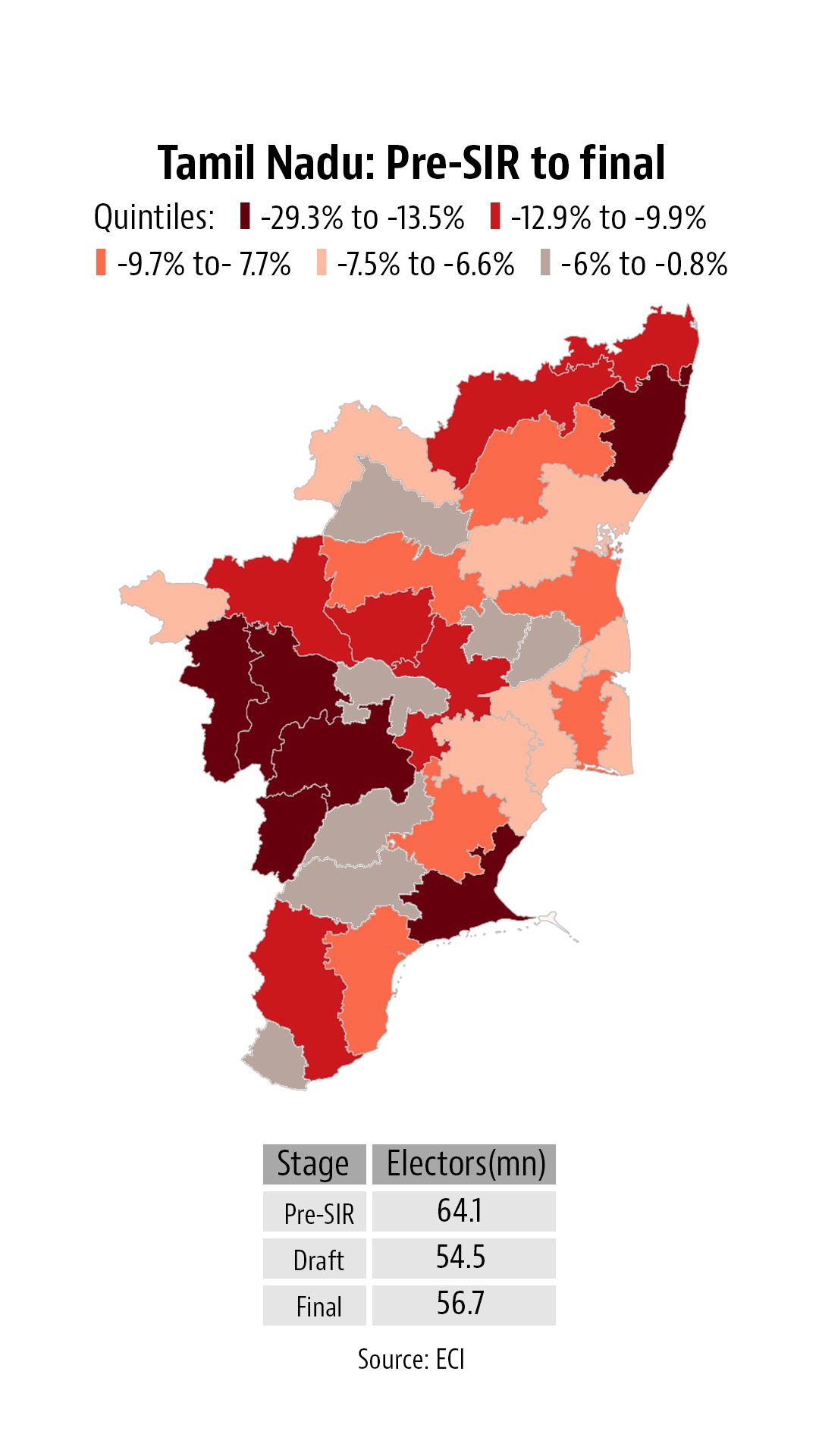

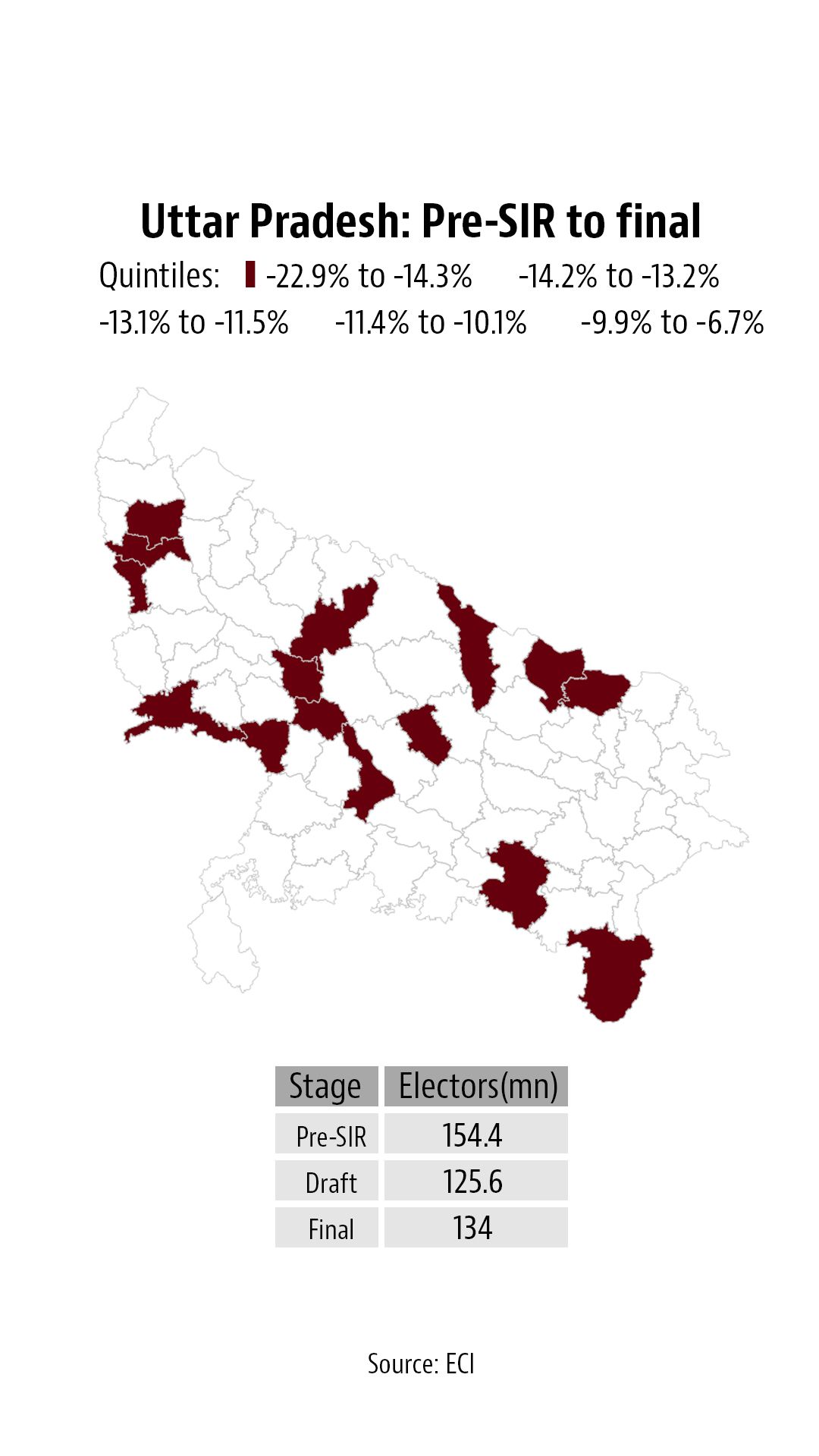

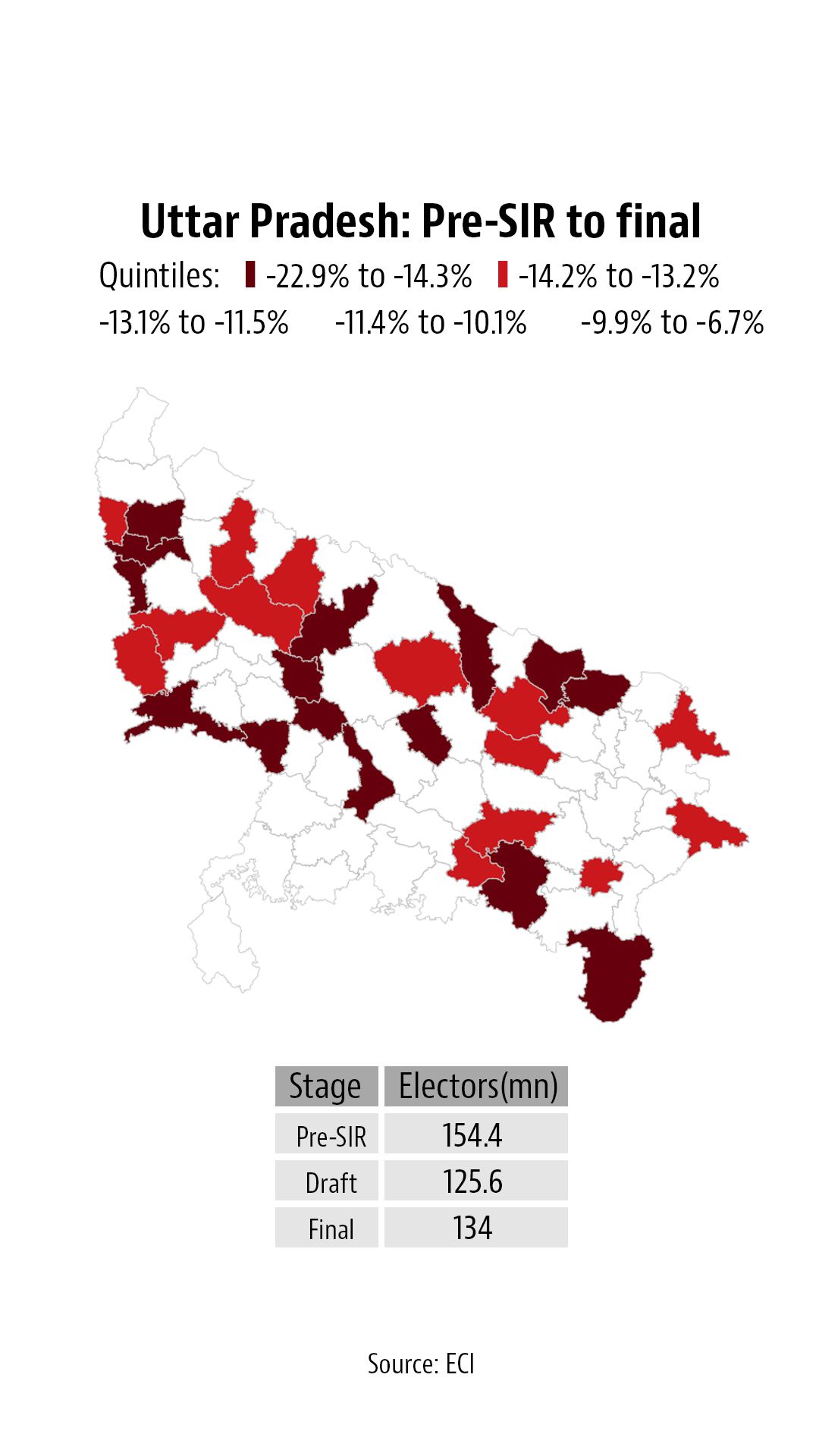

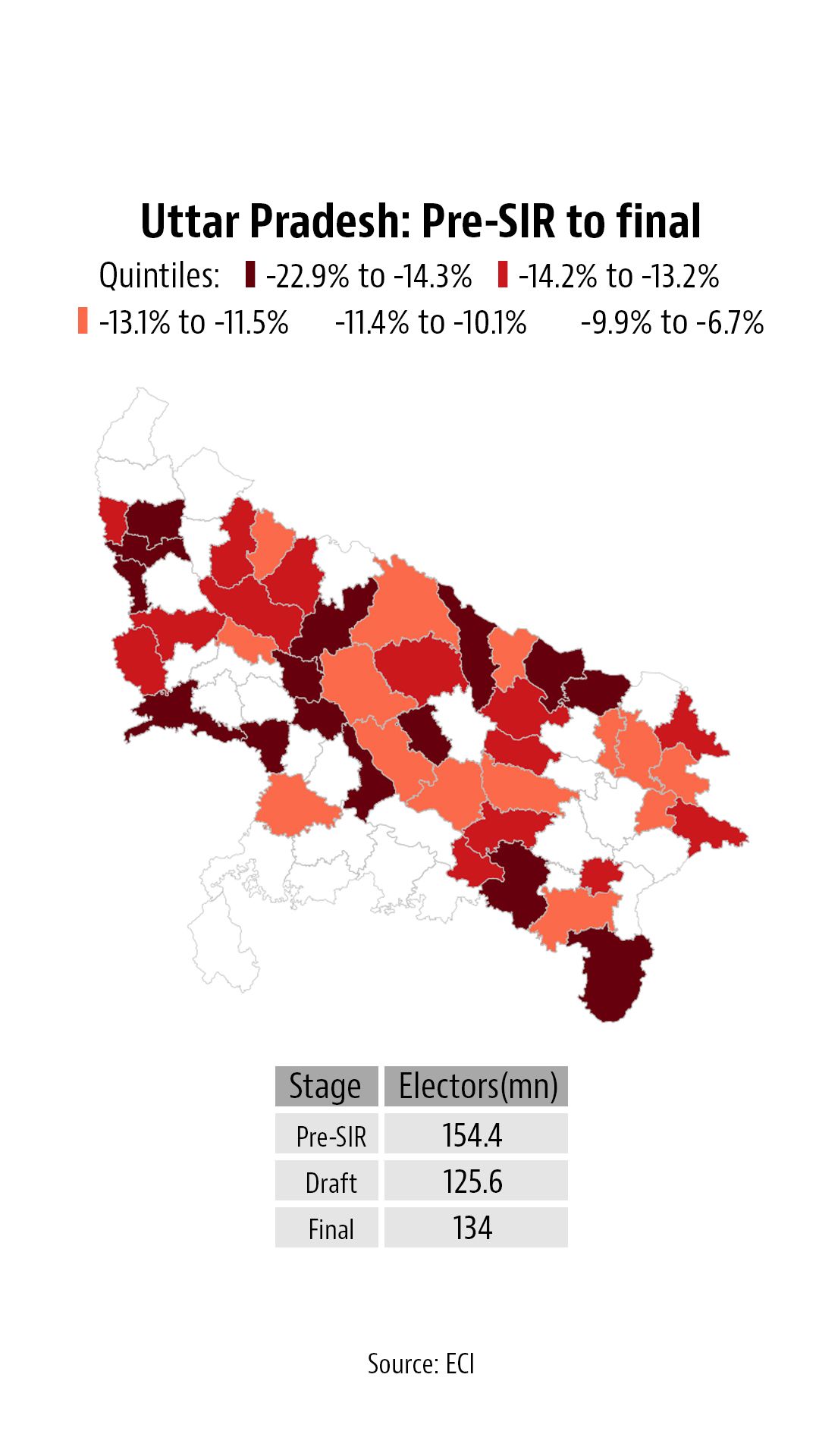

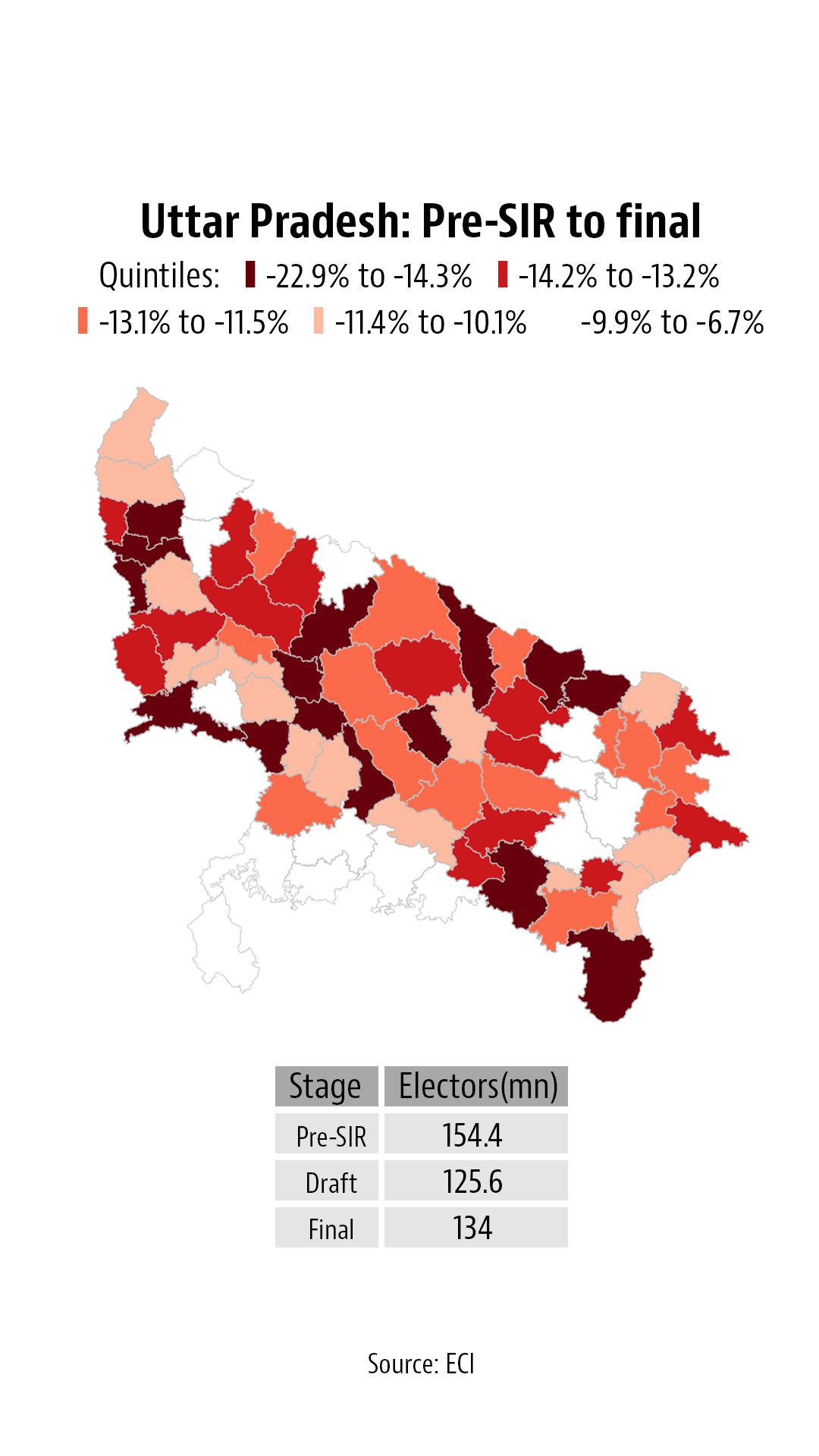

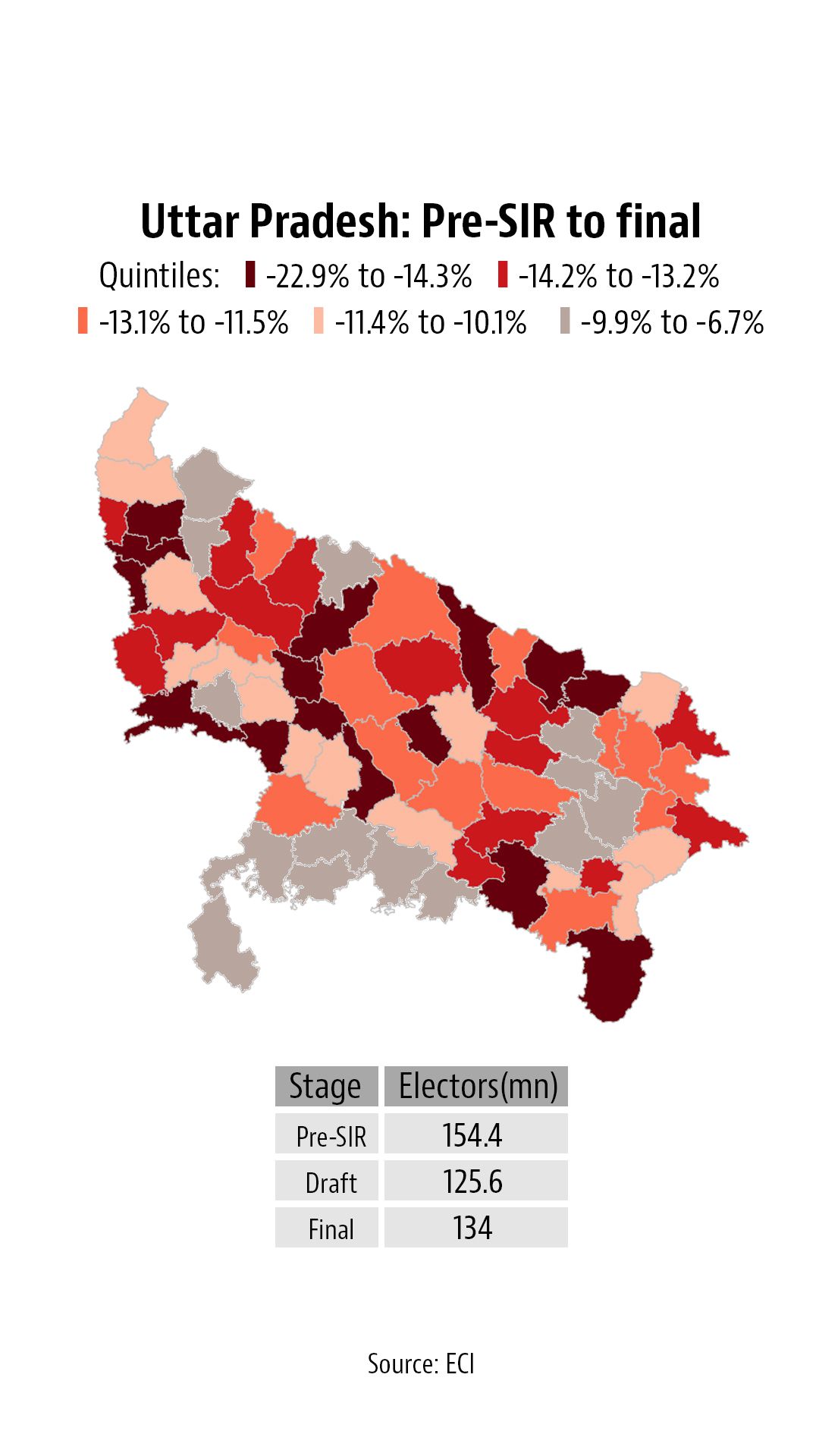

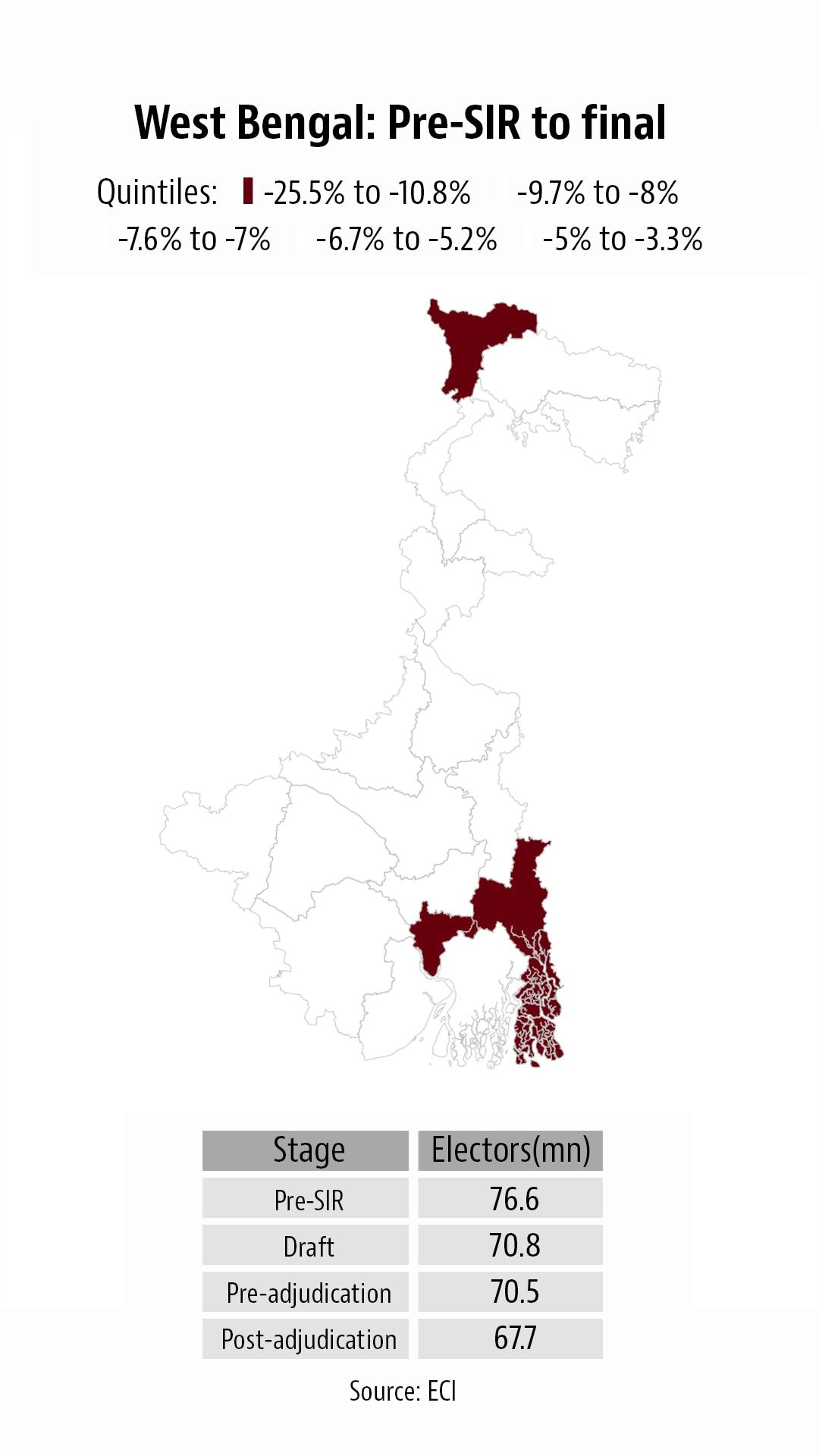

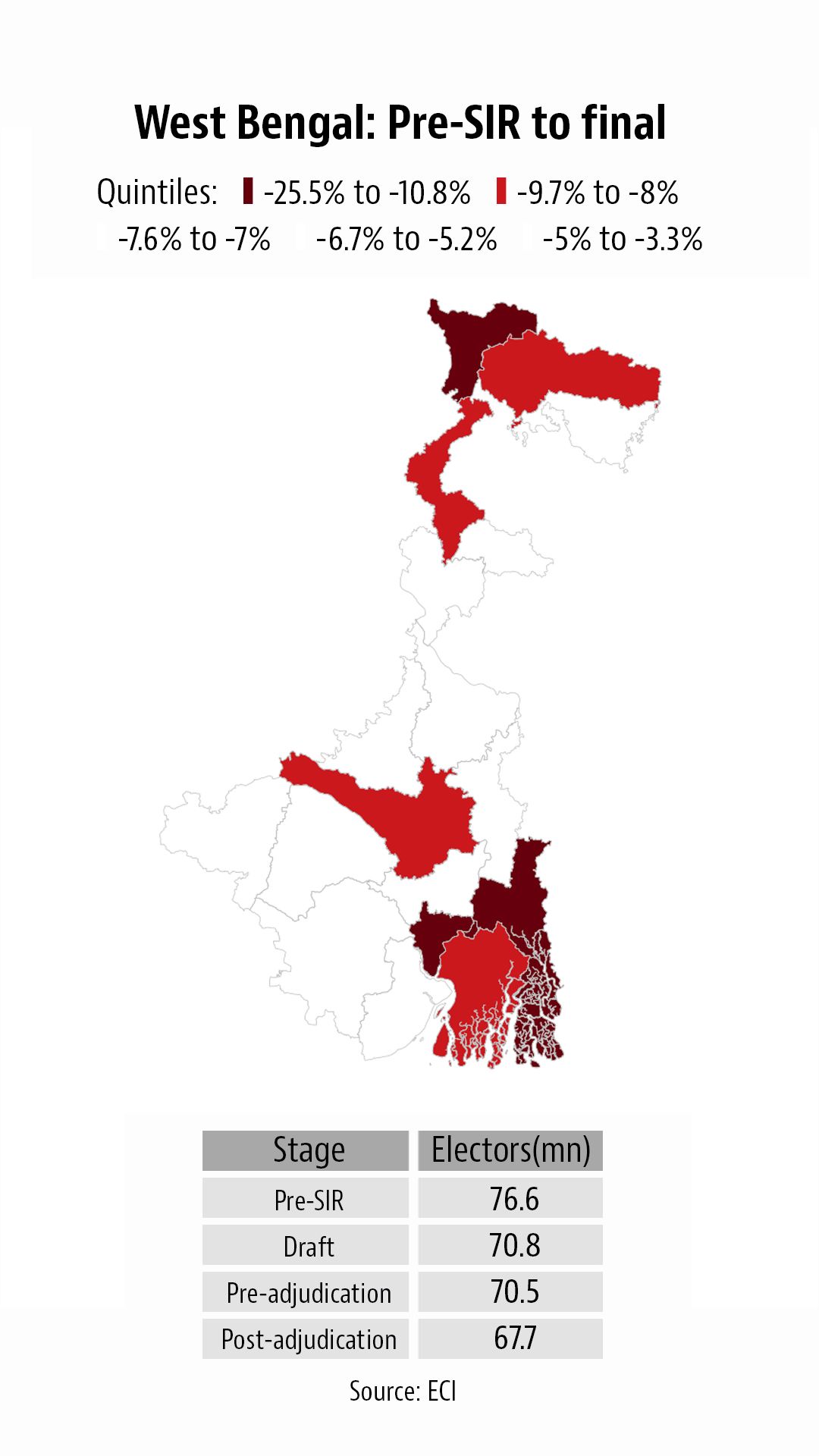





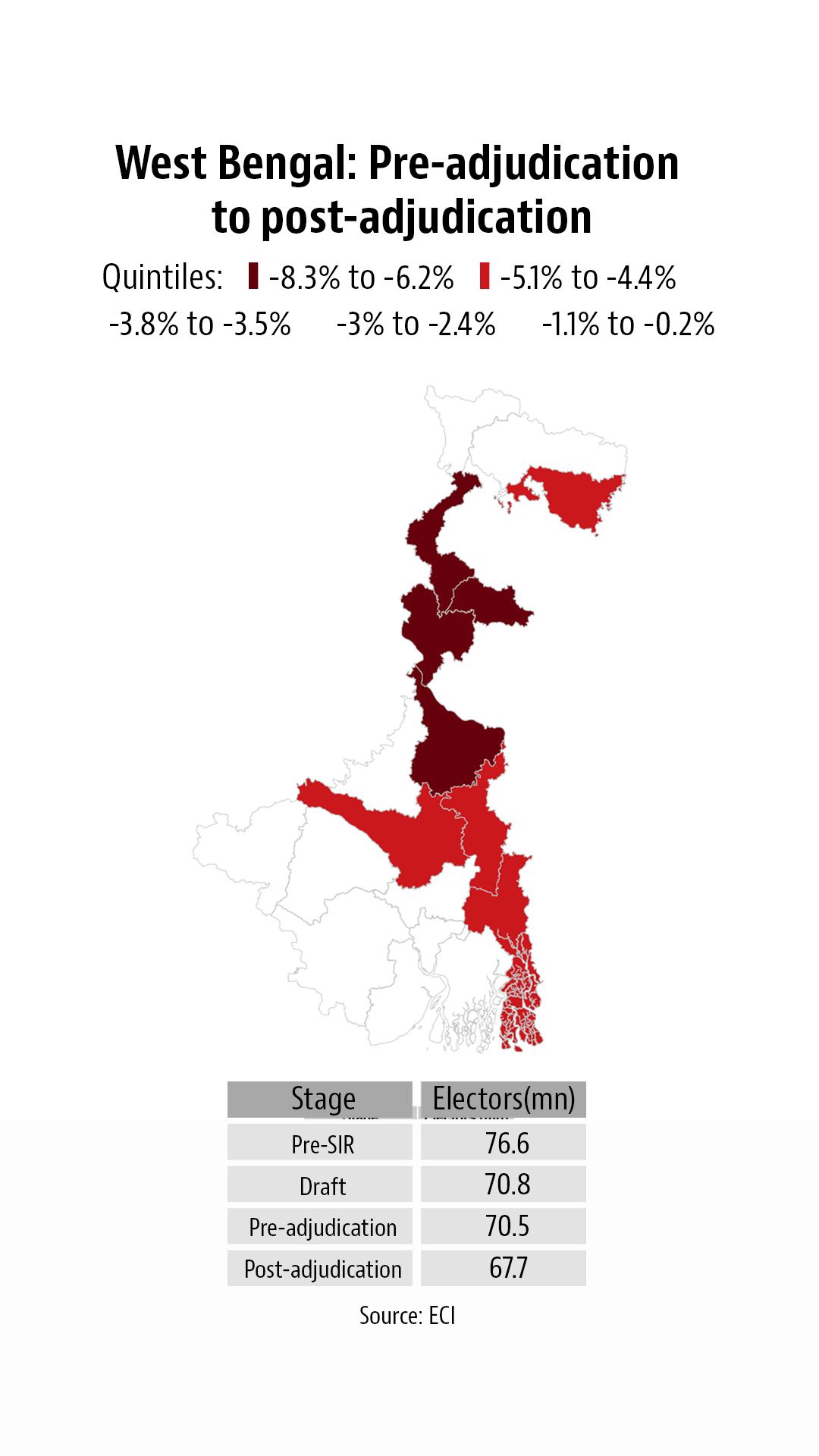

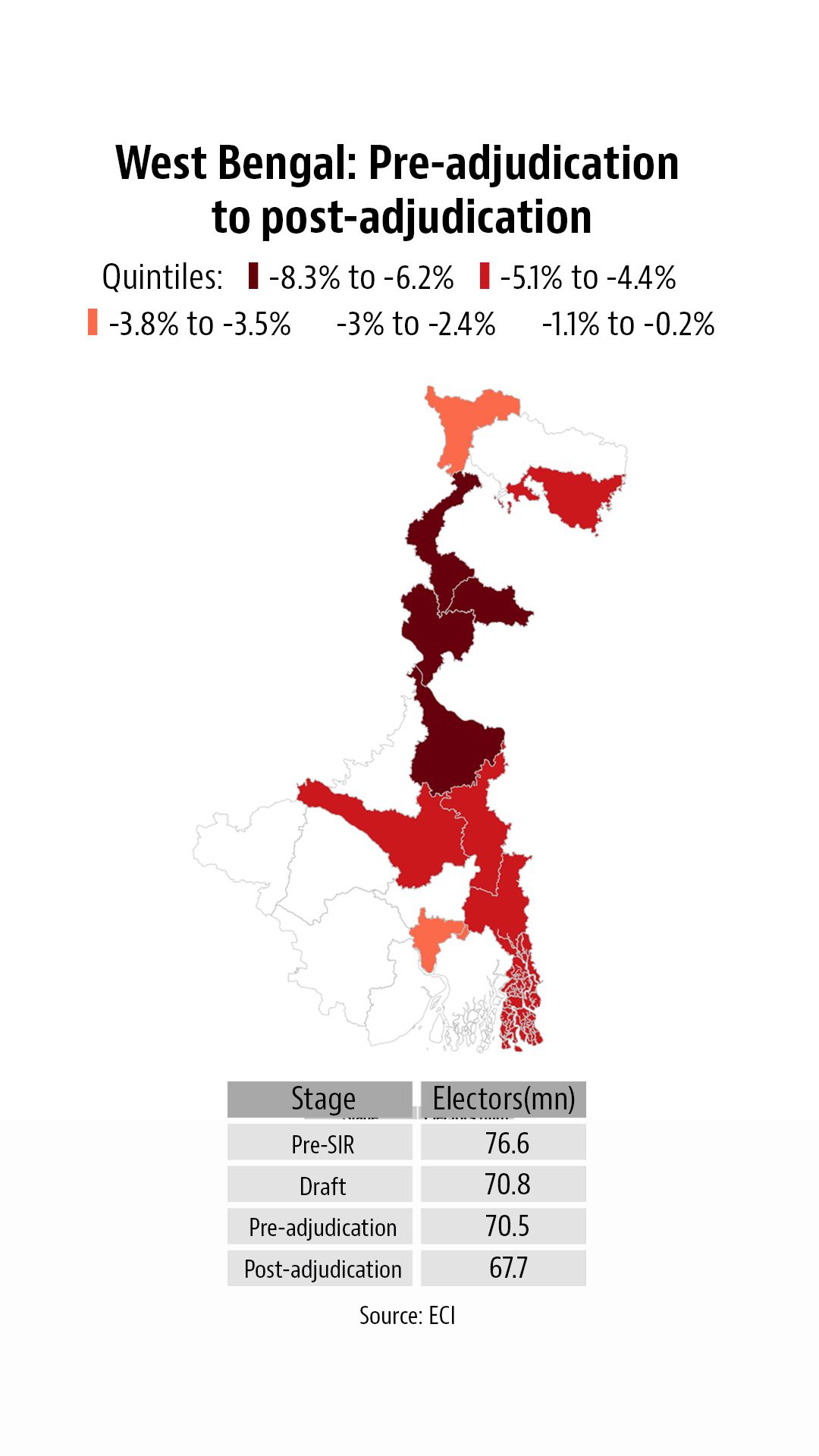

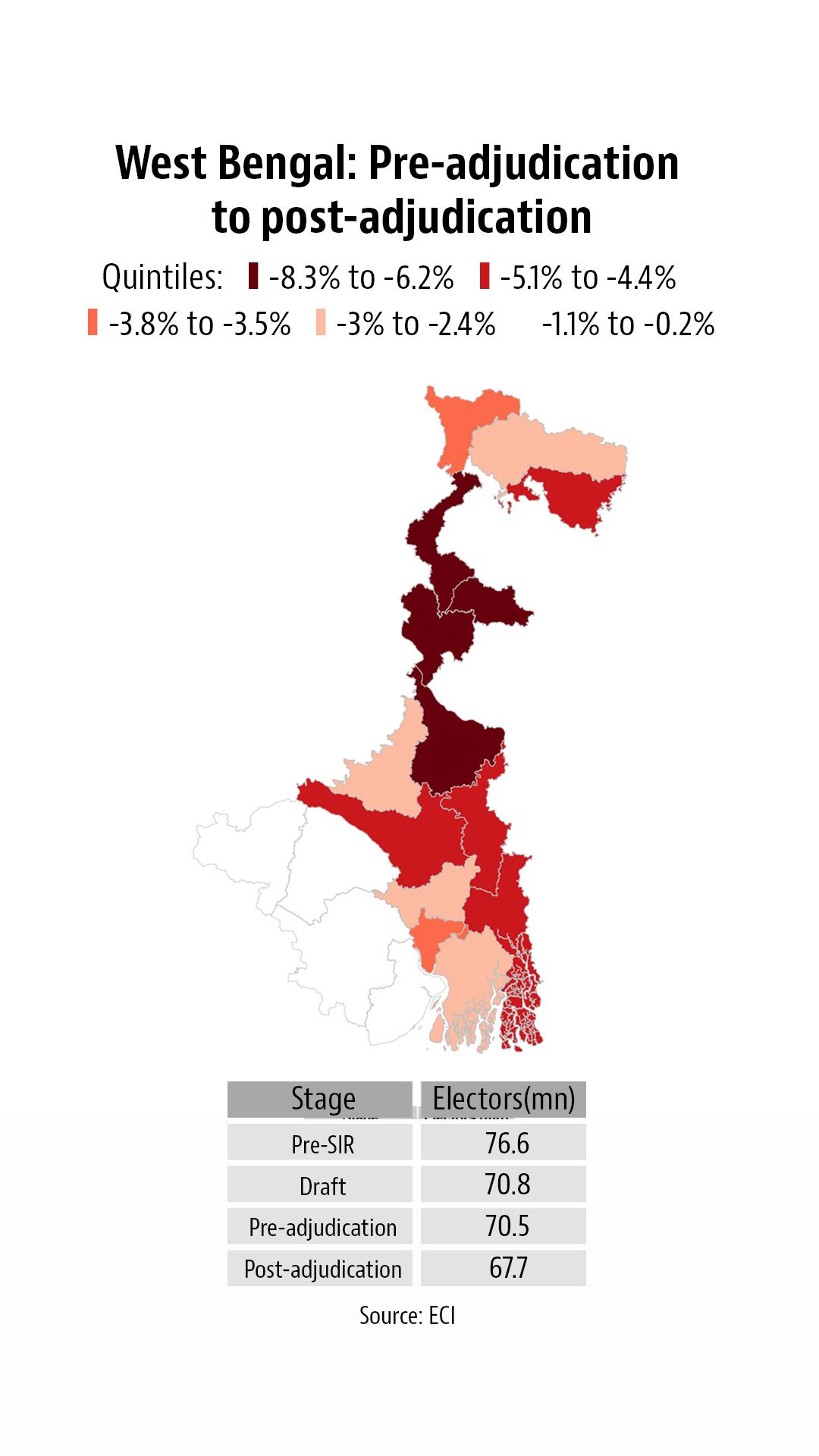

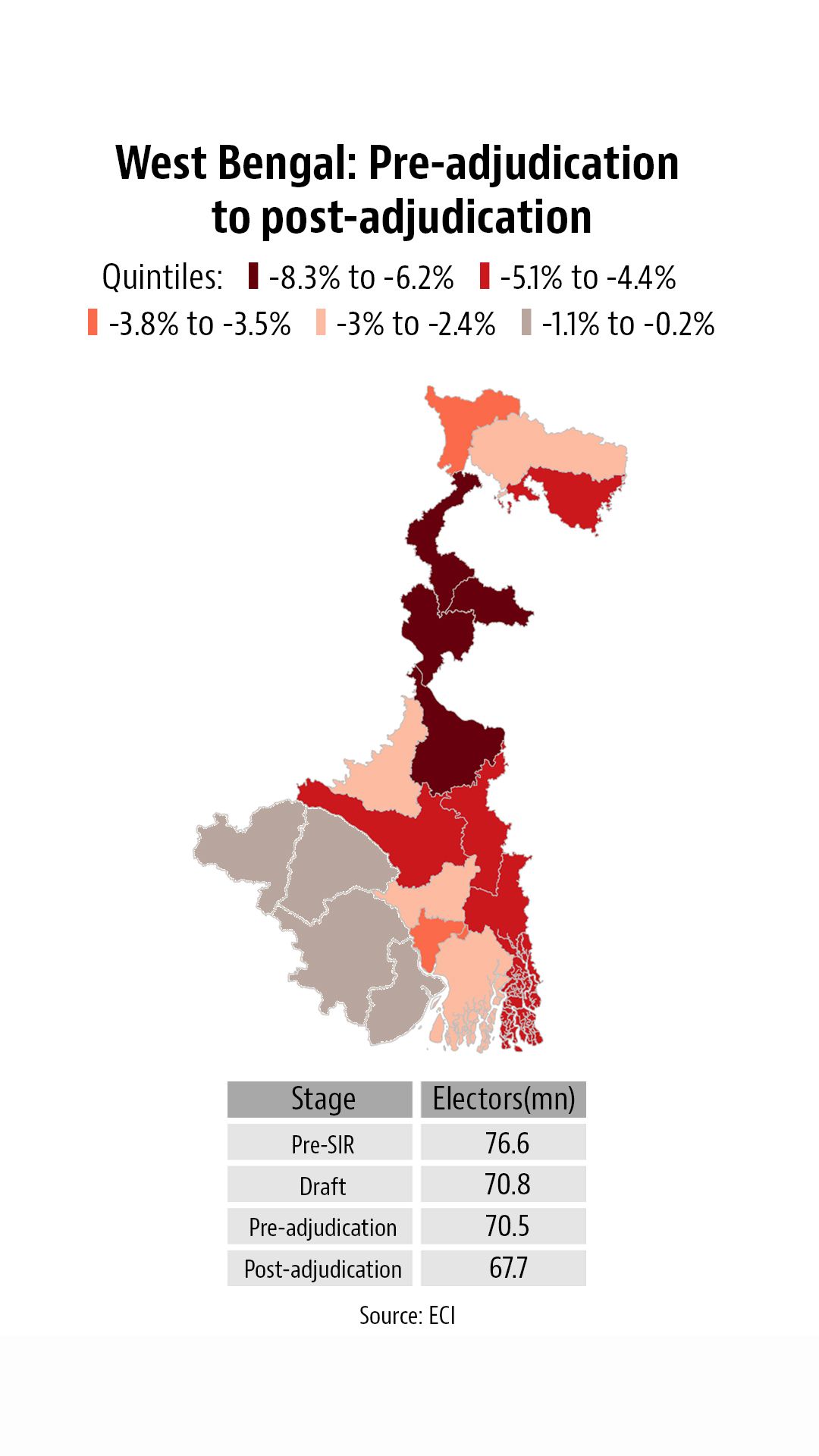





















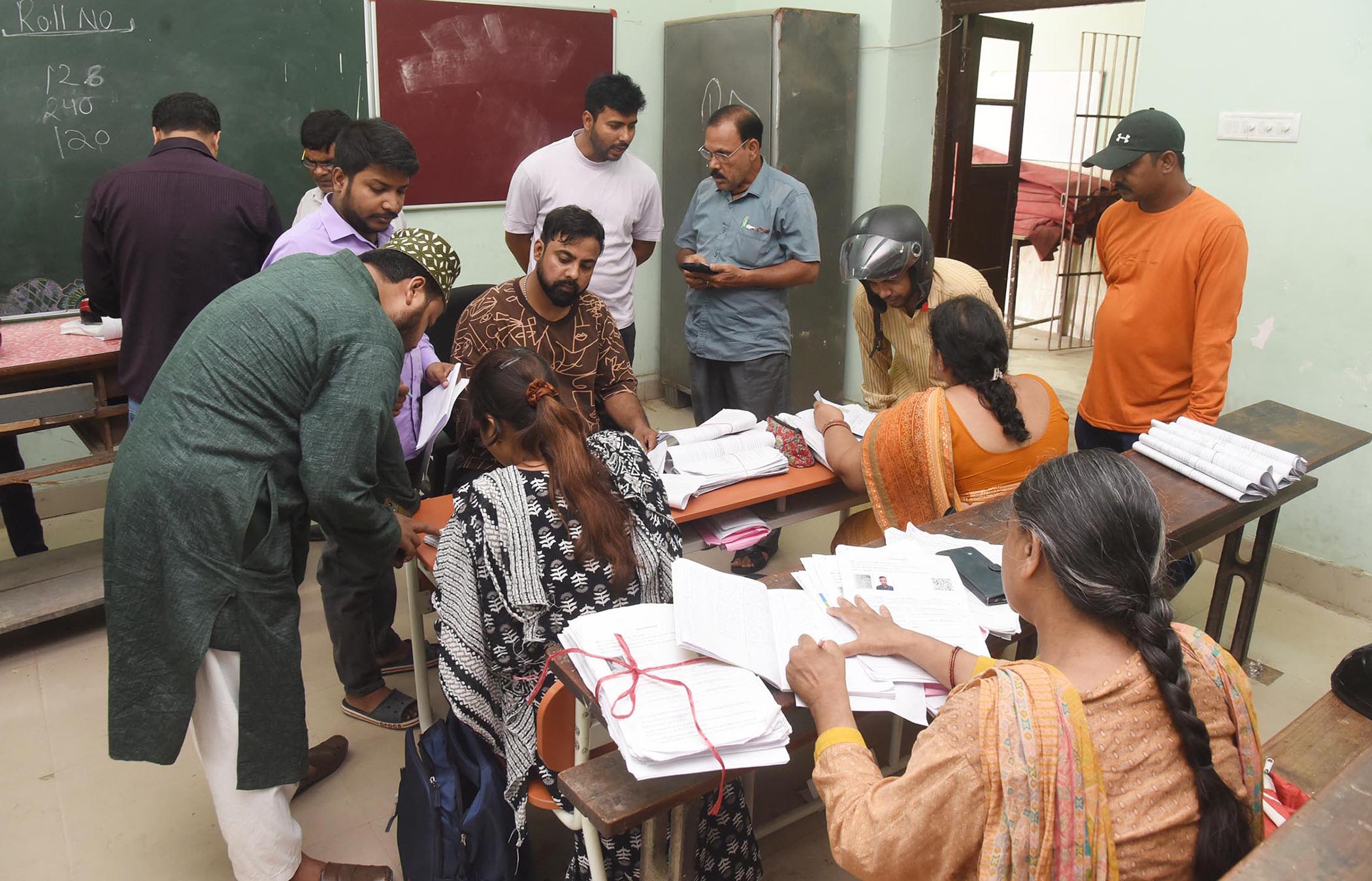
The Election Commission of India (ECI) announced the Special Intensive Revision of electoral rolls on June 24, 2025. The previous SIR was conducted in the 2002-2004 period.
By now, the SIR process has been completed in 14 states and union territories (UTs) if one includes Assam, where the exercise was simpler, shorter, and called Special Revision (SR).
By the end of the current election cycle – it ends on April 29 – six states and UTs that have undergone SIR or SR would have had elections, too.
How exactly has SIR affected electoral rolls in these states?
SIR has been a two-step process in every state and UT except in West Bengal.
In the first step, the ECI distributes enumeration forms to all electors and collects it back from them once they have filled in their details.
Once this is done, the ECI releases a draft roll which lists all people who submit enumeration forms. In the second step, the ECI addresses claims and objections in the draft roll about wrongful exclusions and inclusions to the draft.
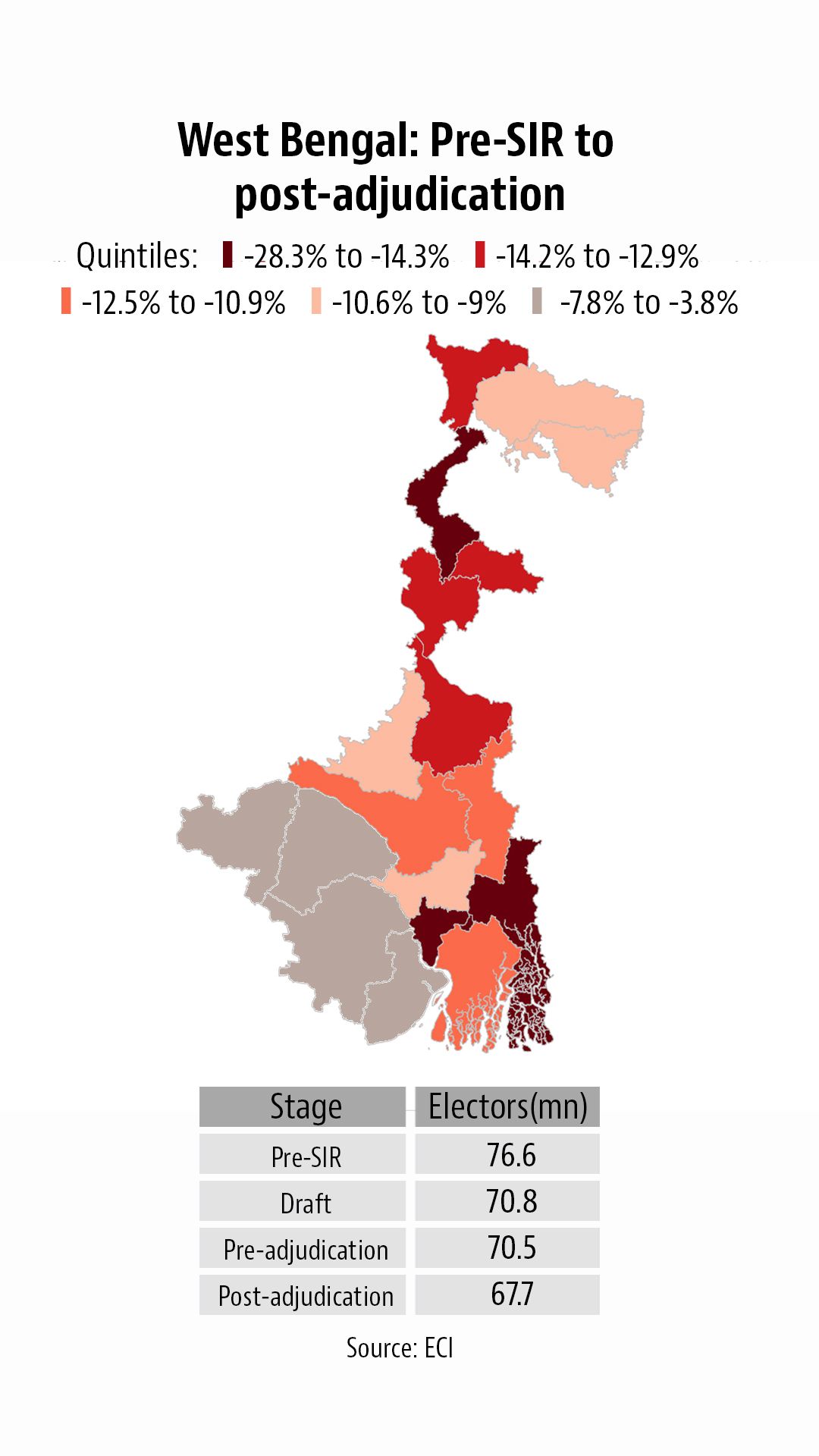
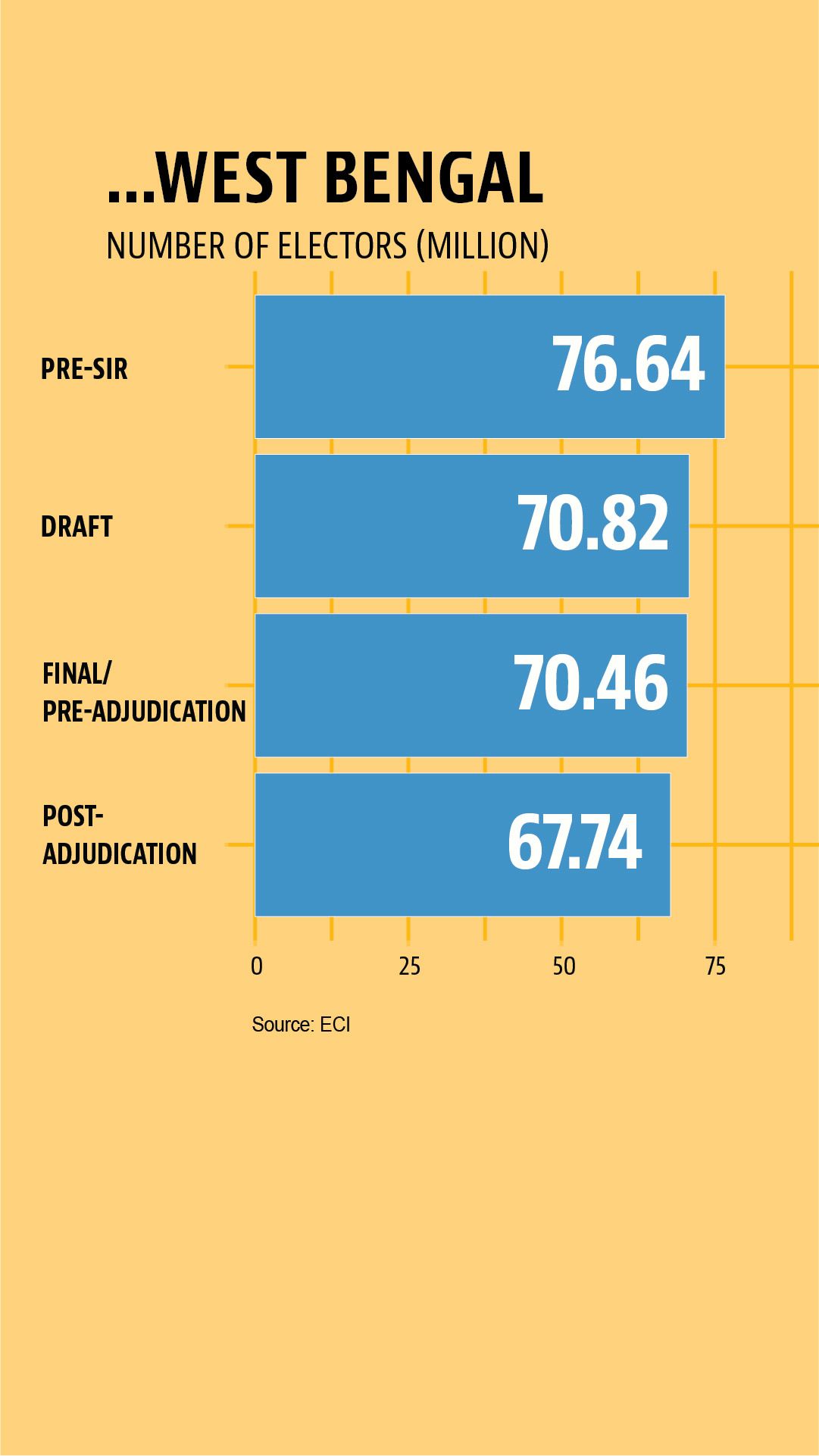
Once this window closes, the ECI releases the final roll. In West Bengal, the ECI added another unique category while publishing the final roll. It put a lot of voters under adjudication for logical inconsistencies.
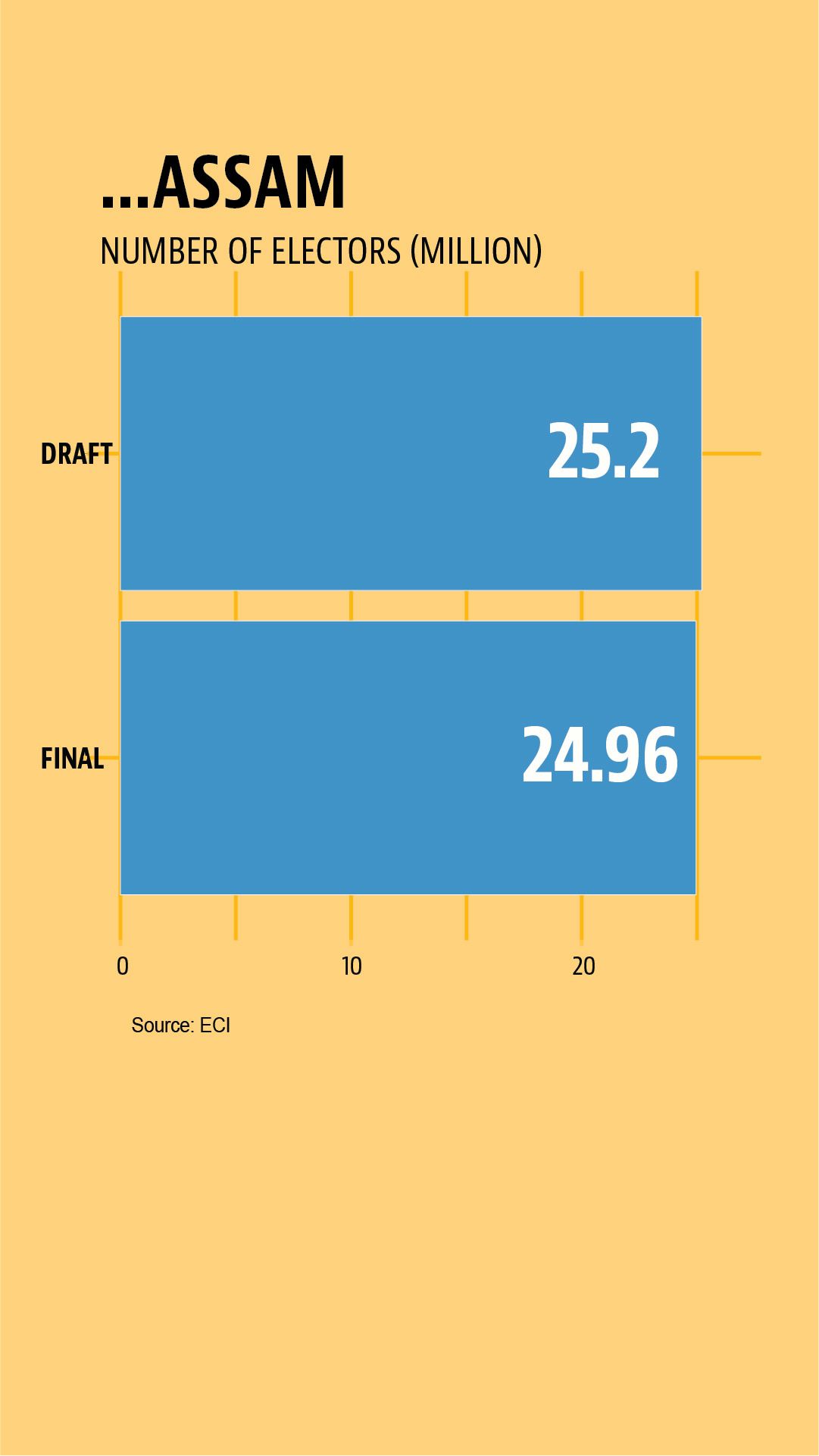
To be sure, while Assam’s SR was also a two-step process, names were not deleted in the draft roll in the state.
What was SIR’s impact on elector rolls across states in these stages?
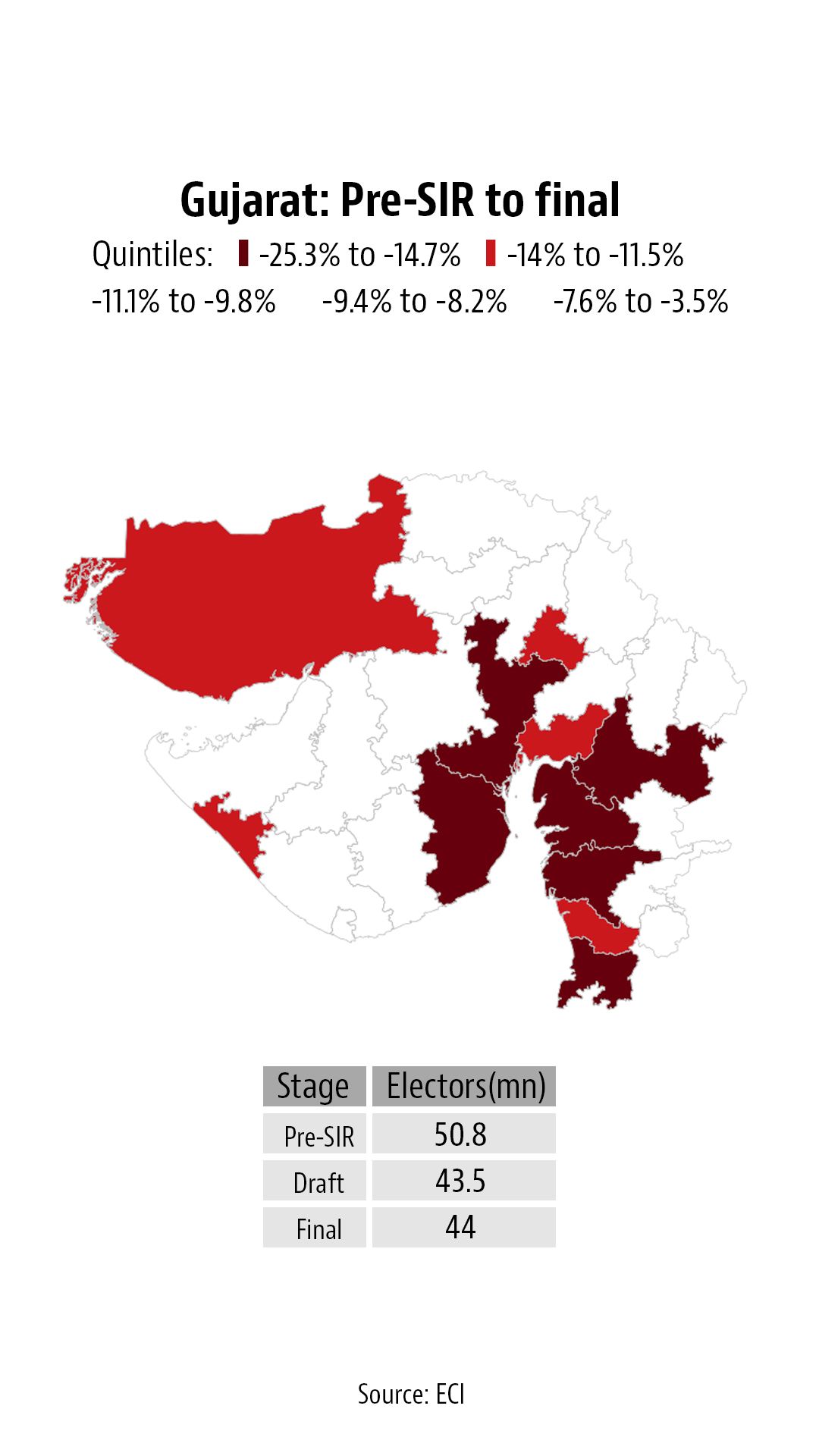
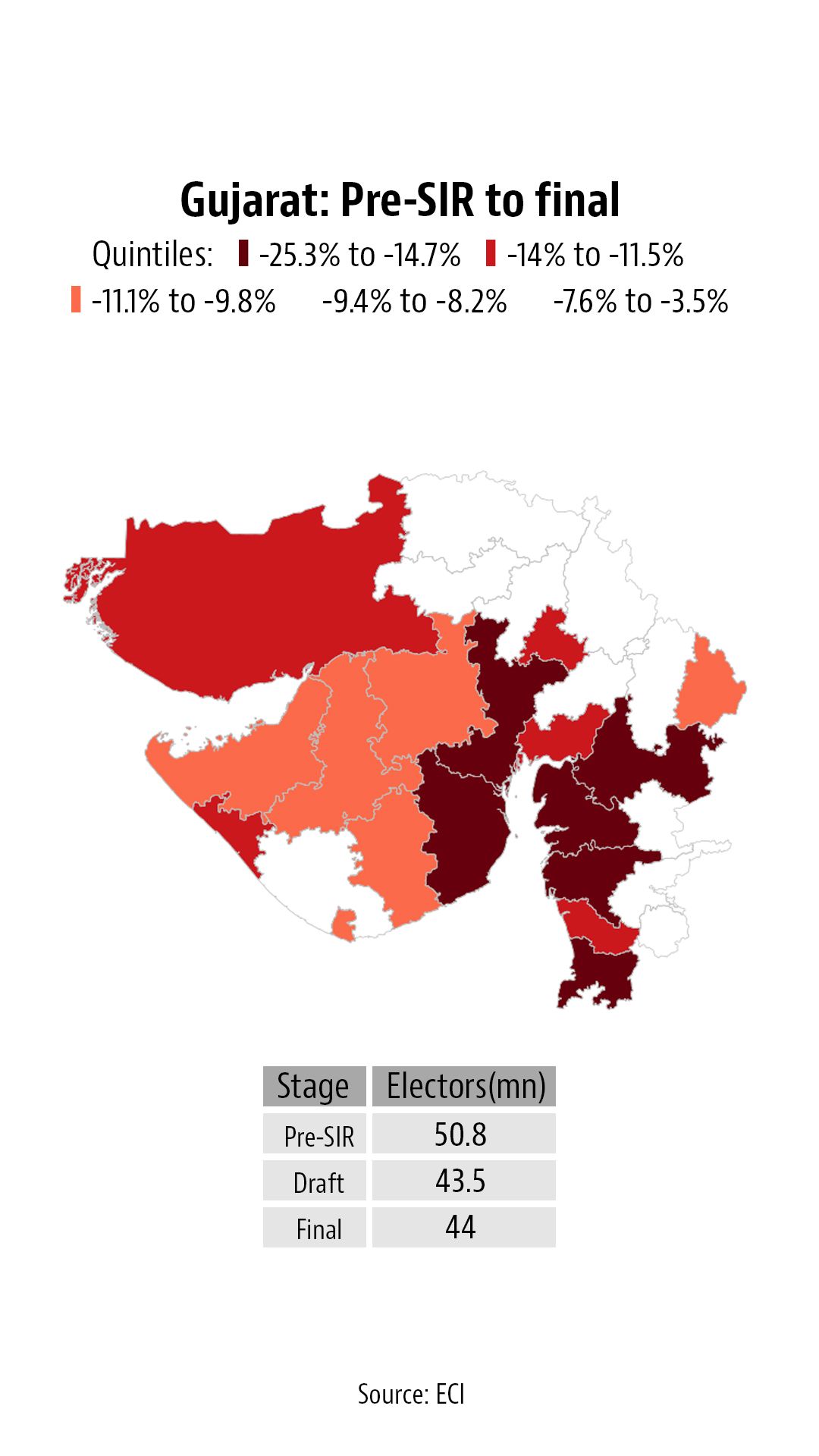
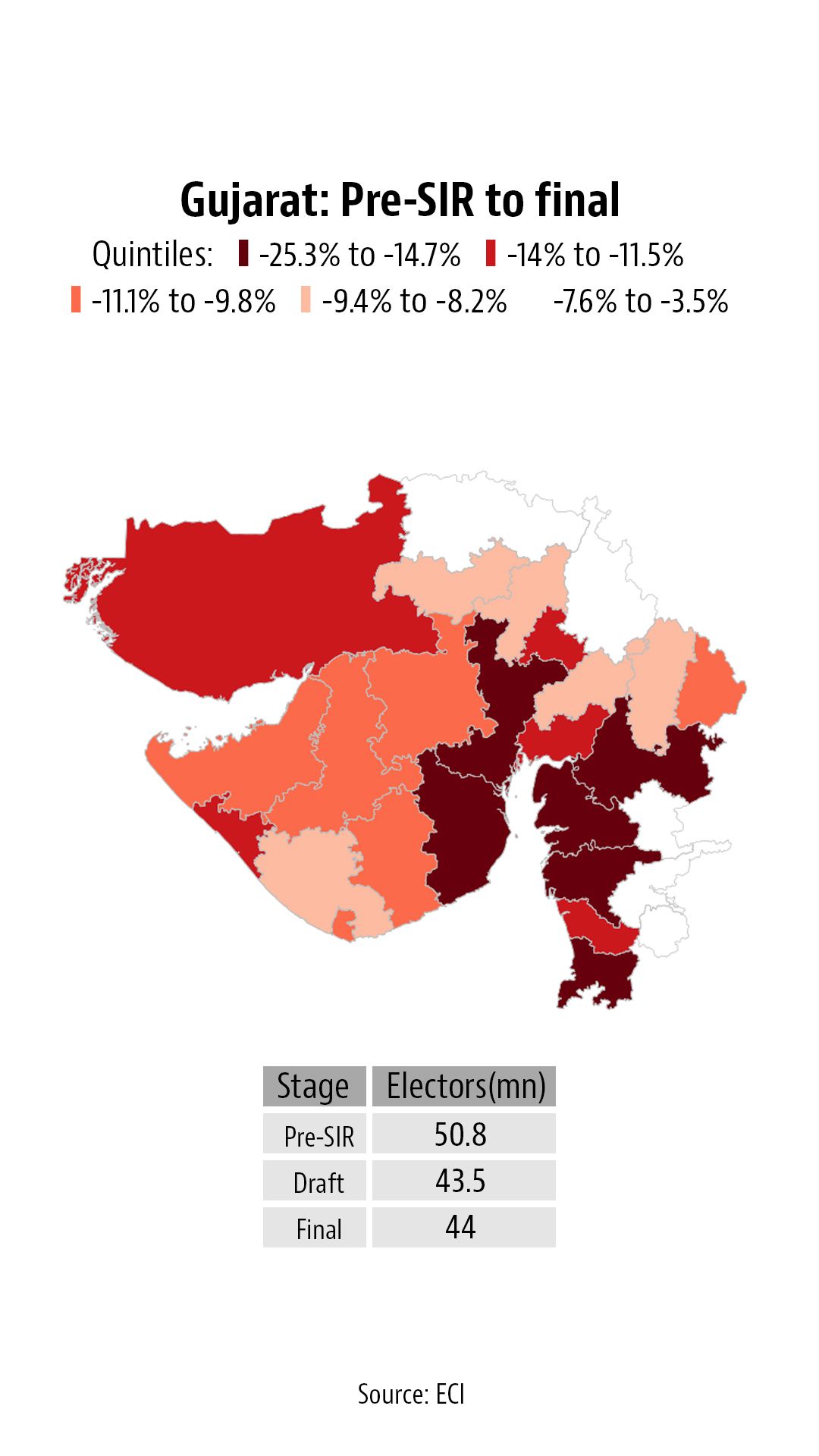
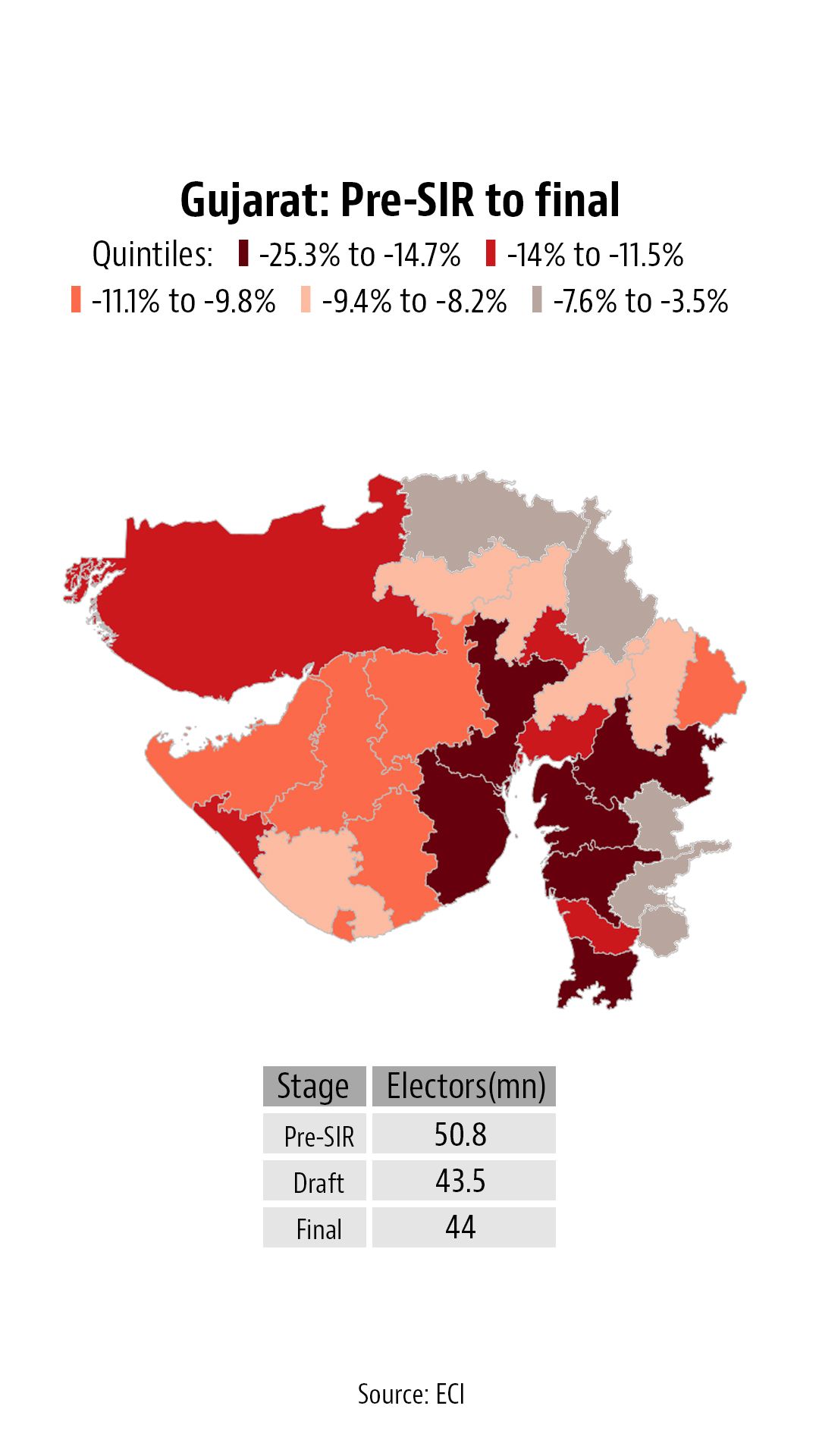
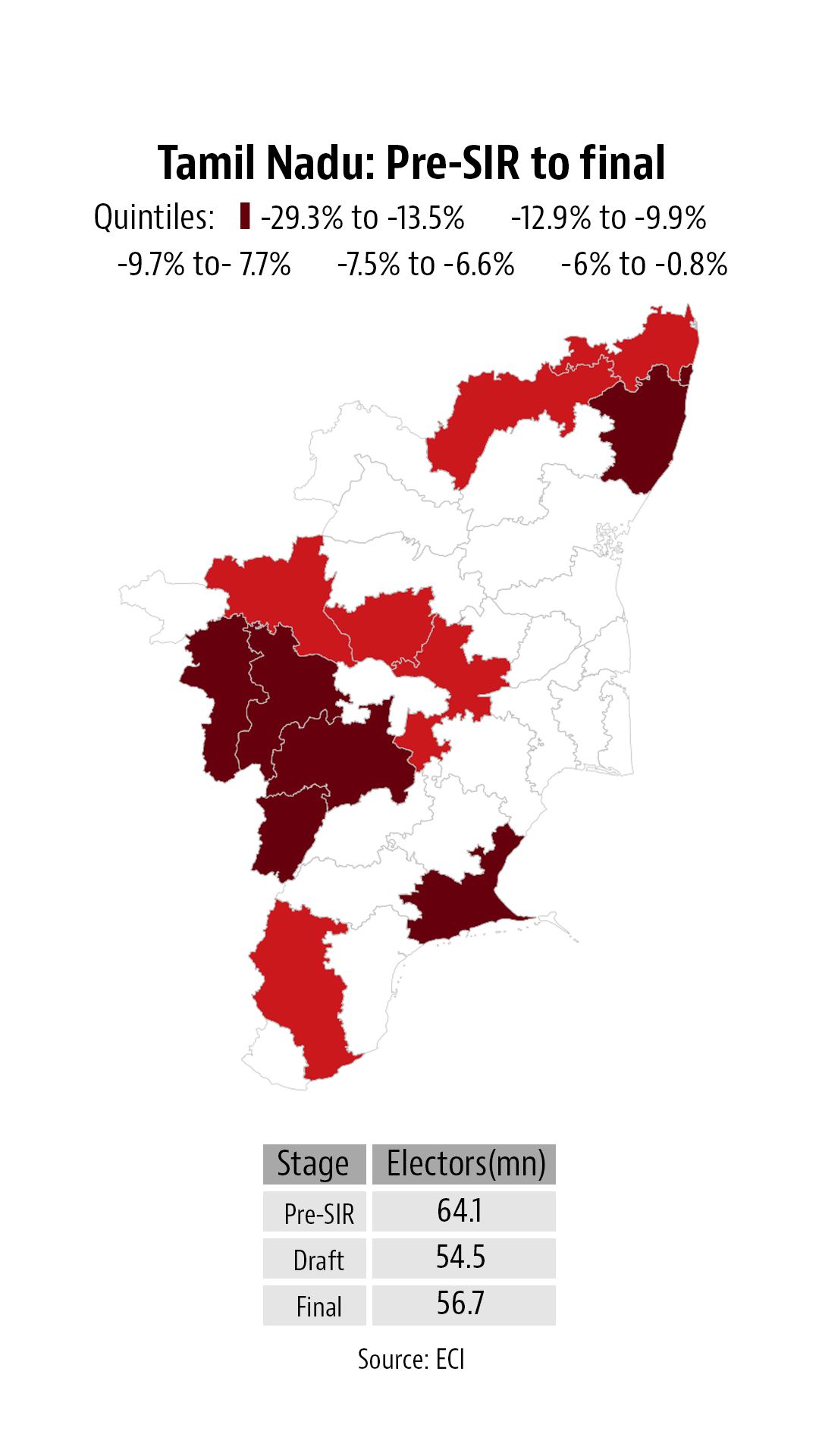
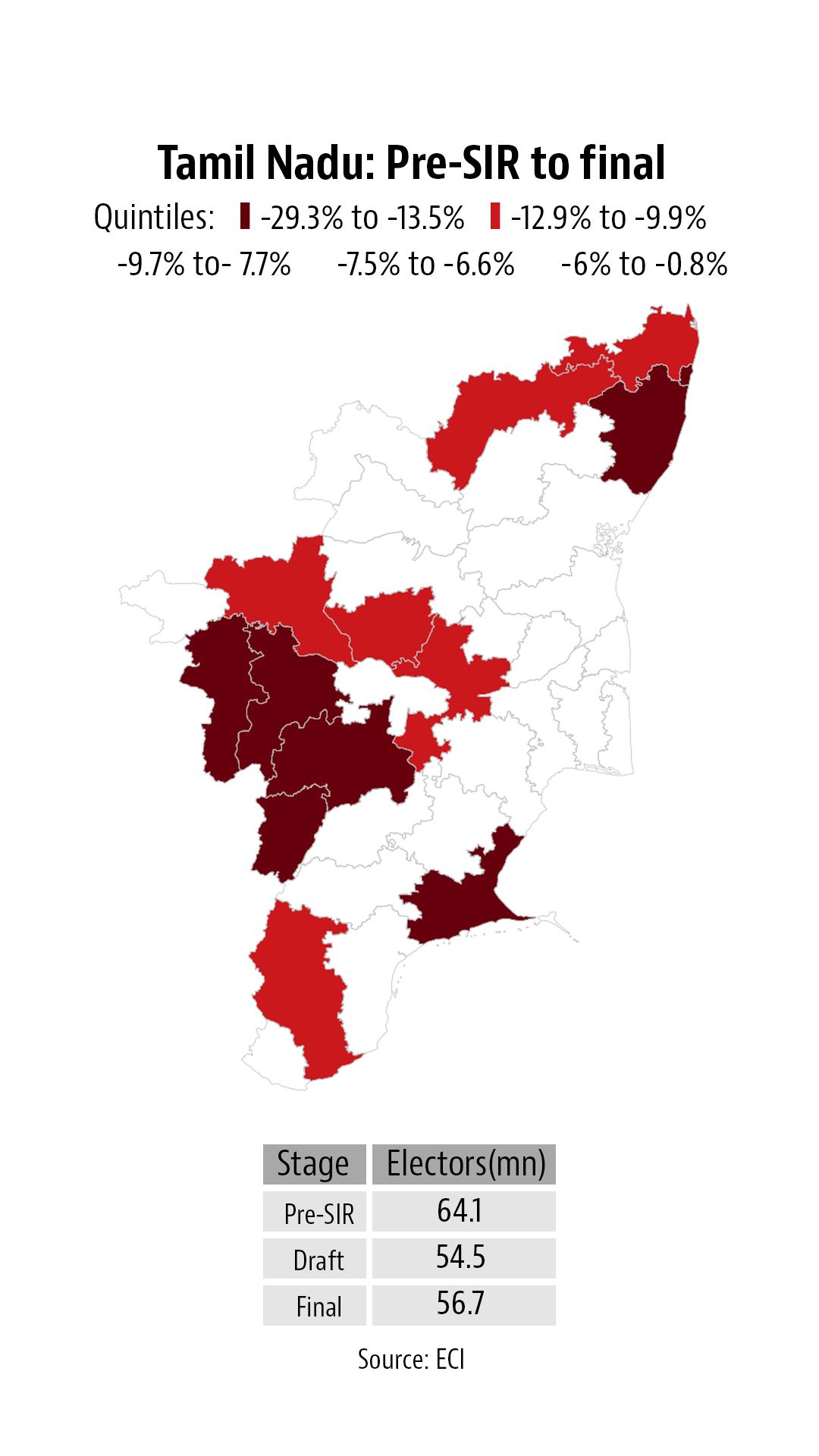
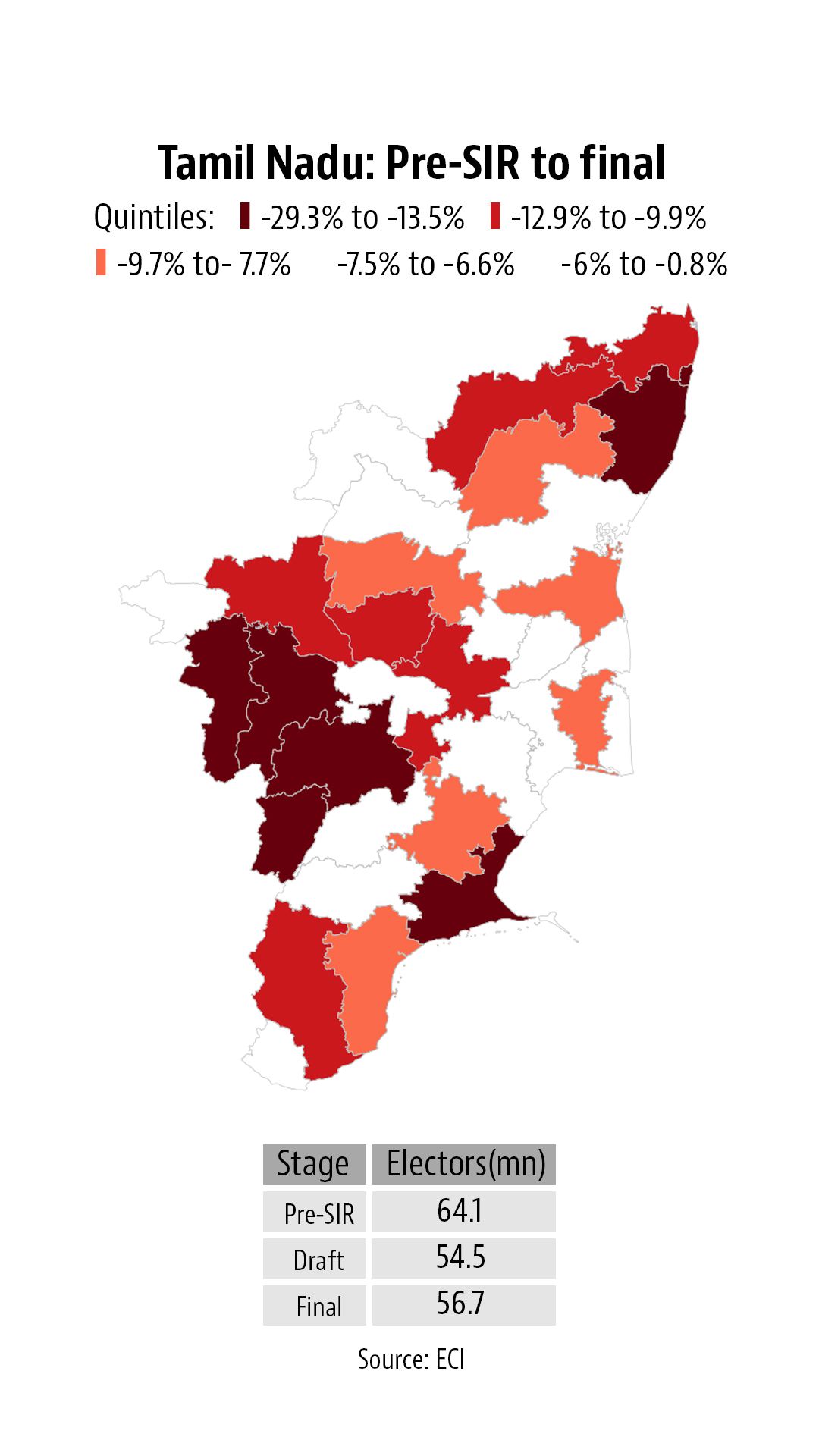
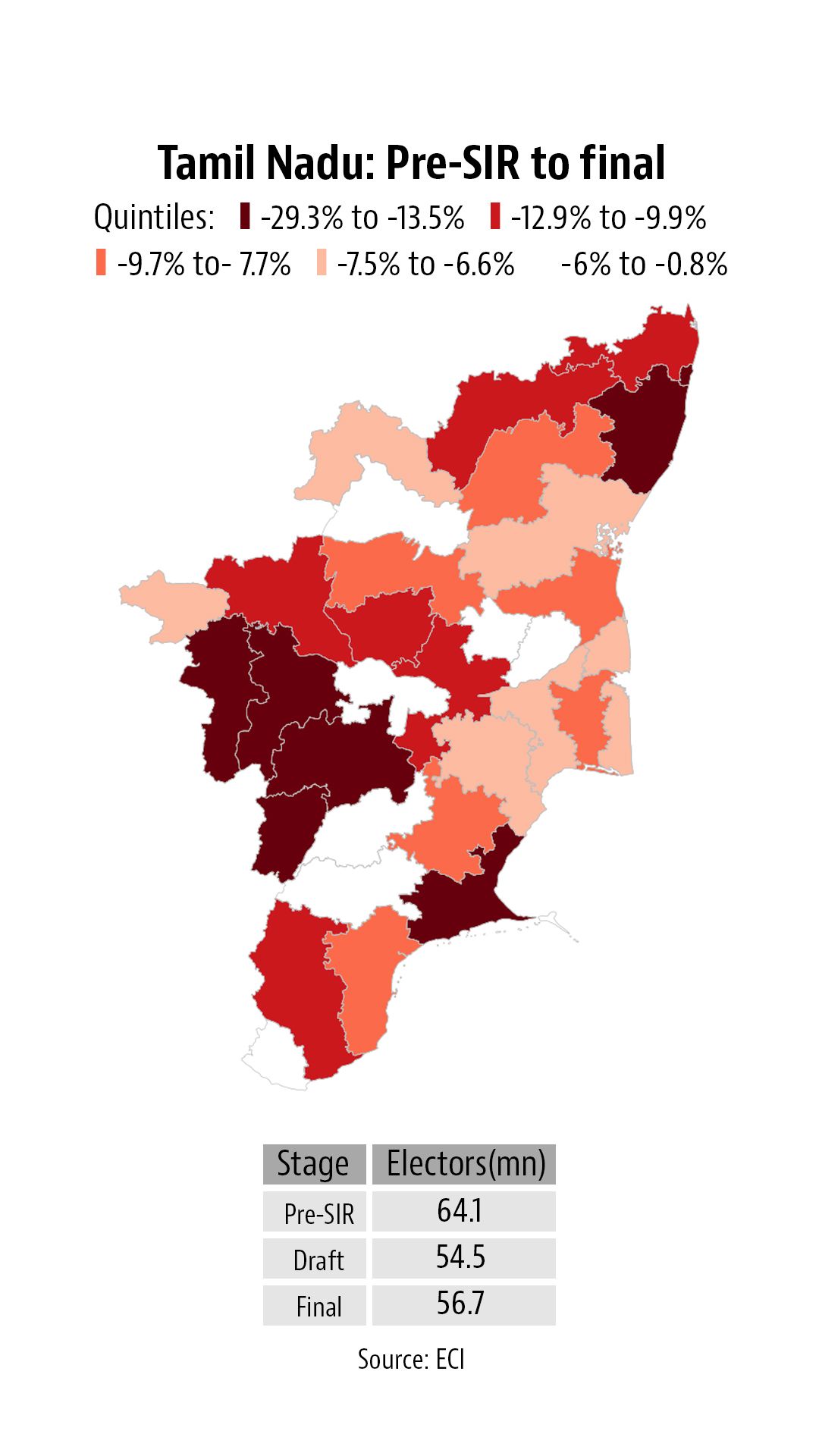
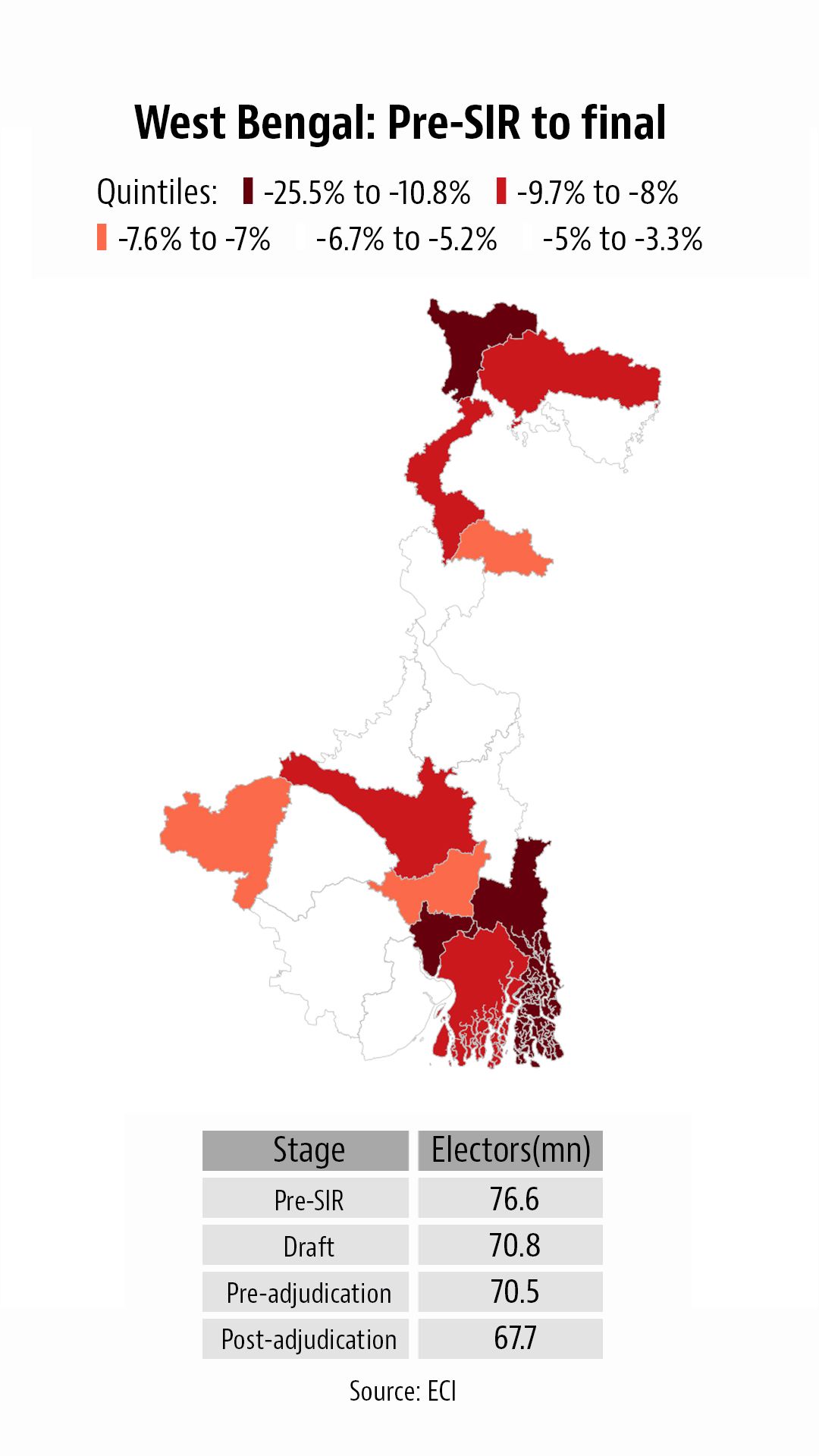
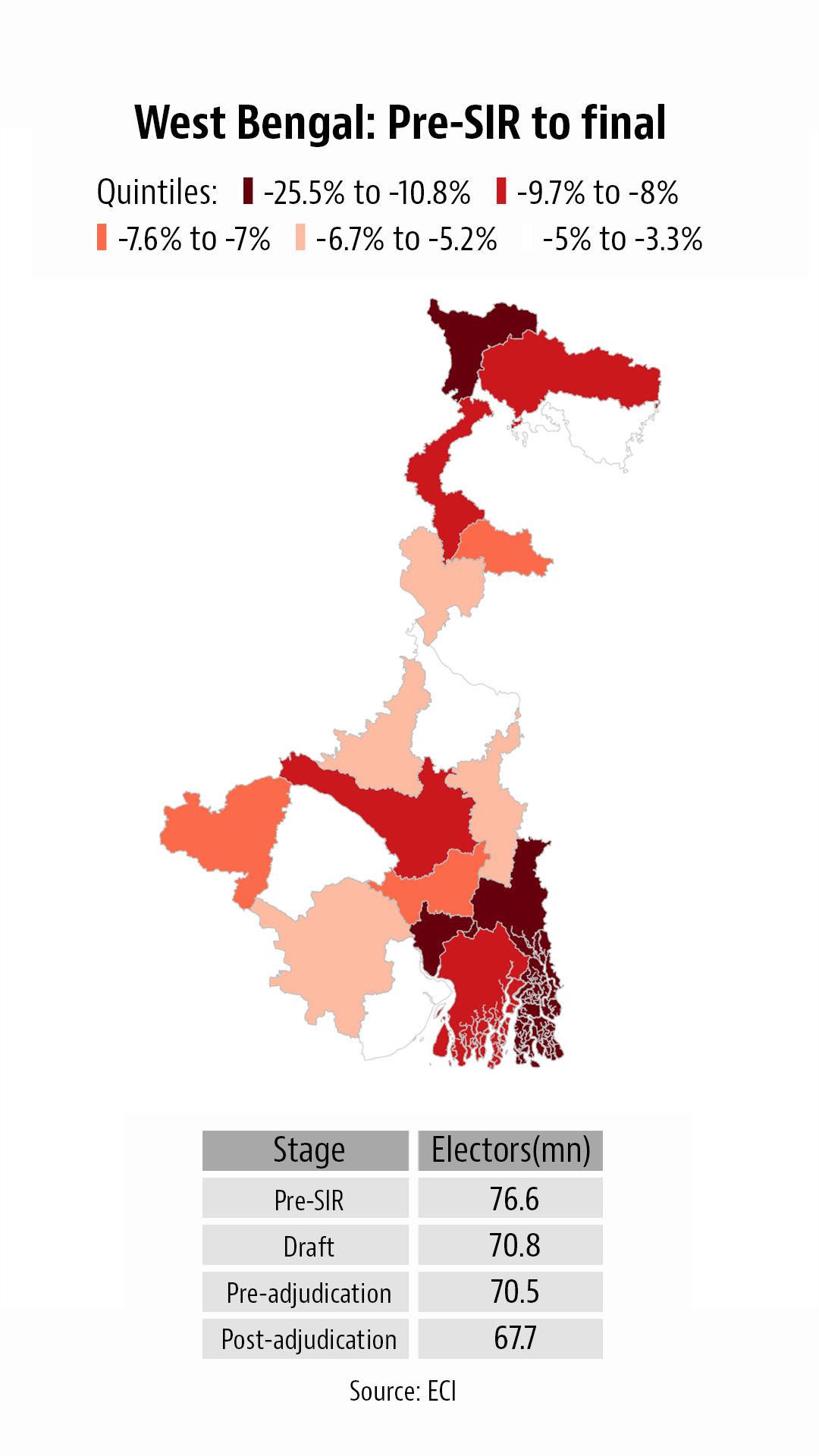
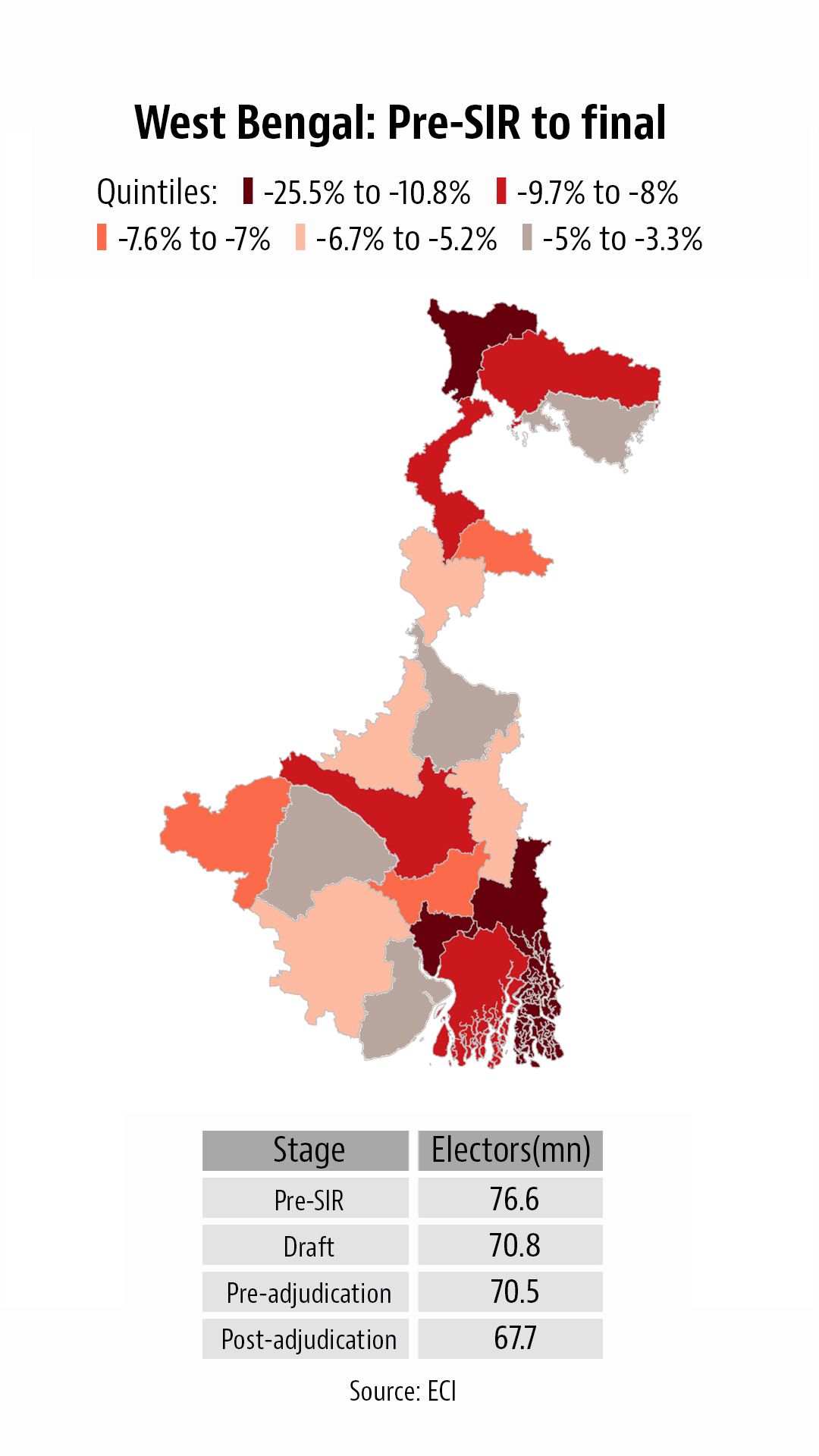
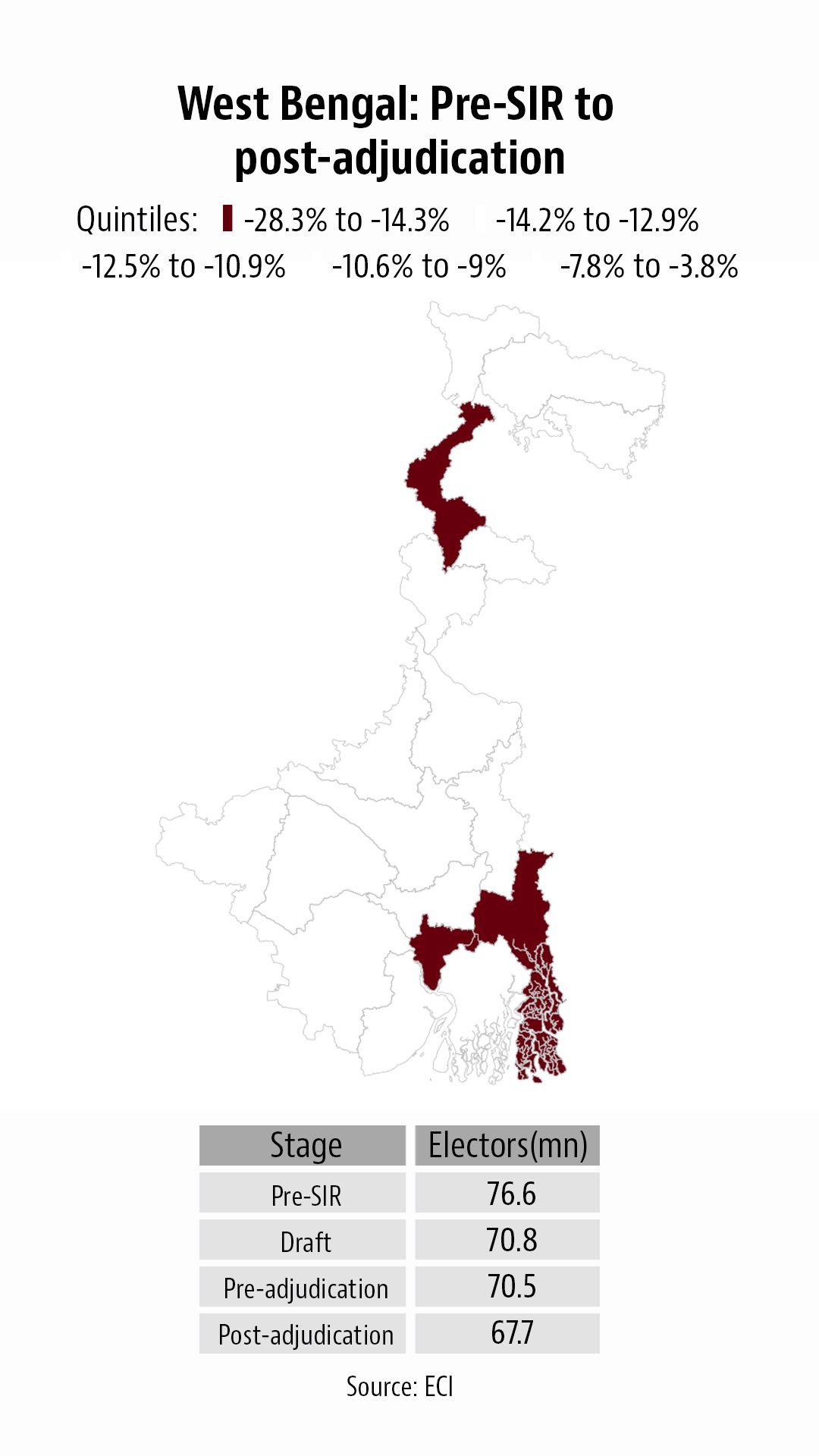
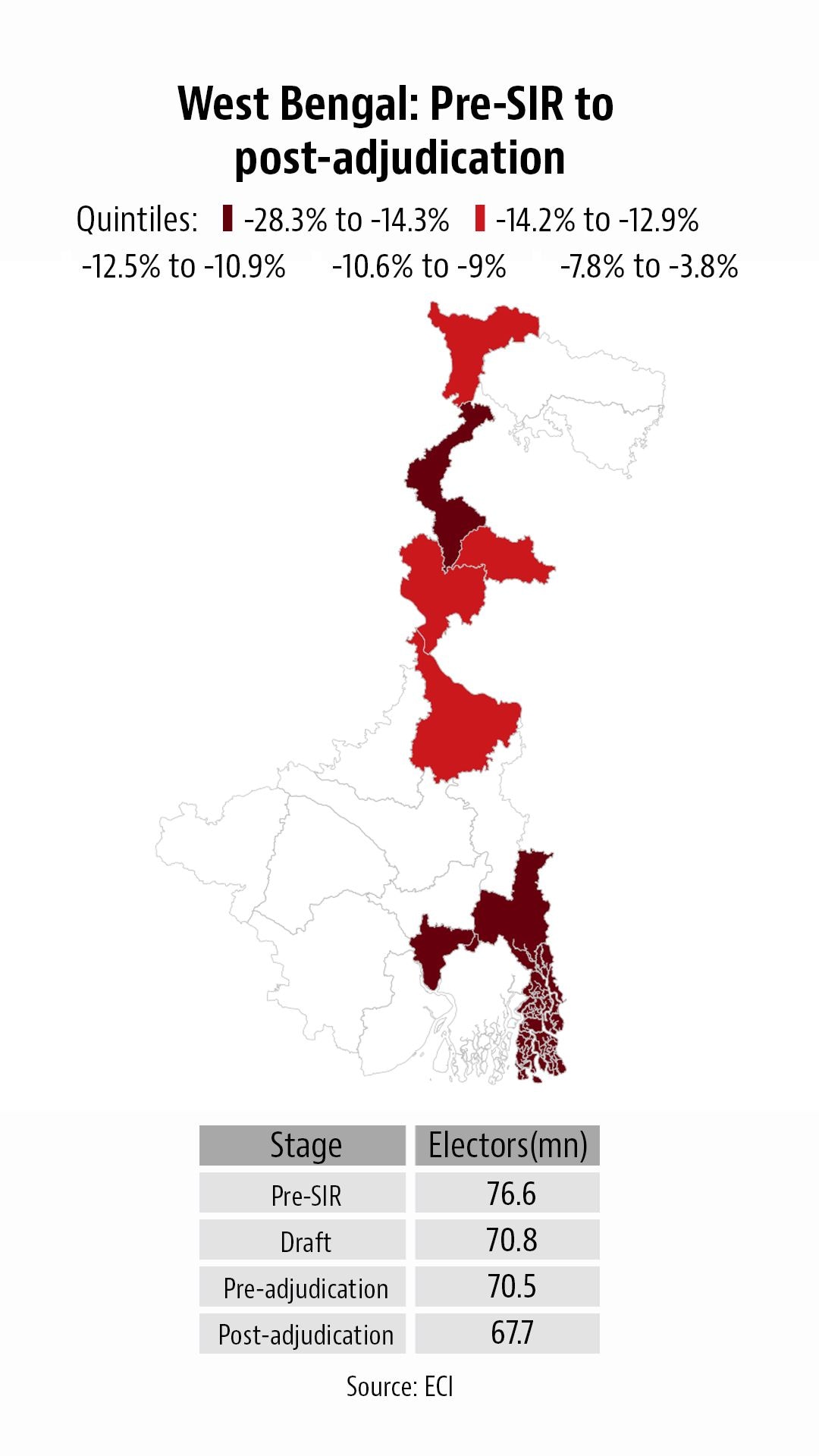
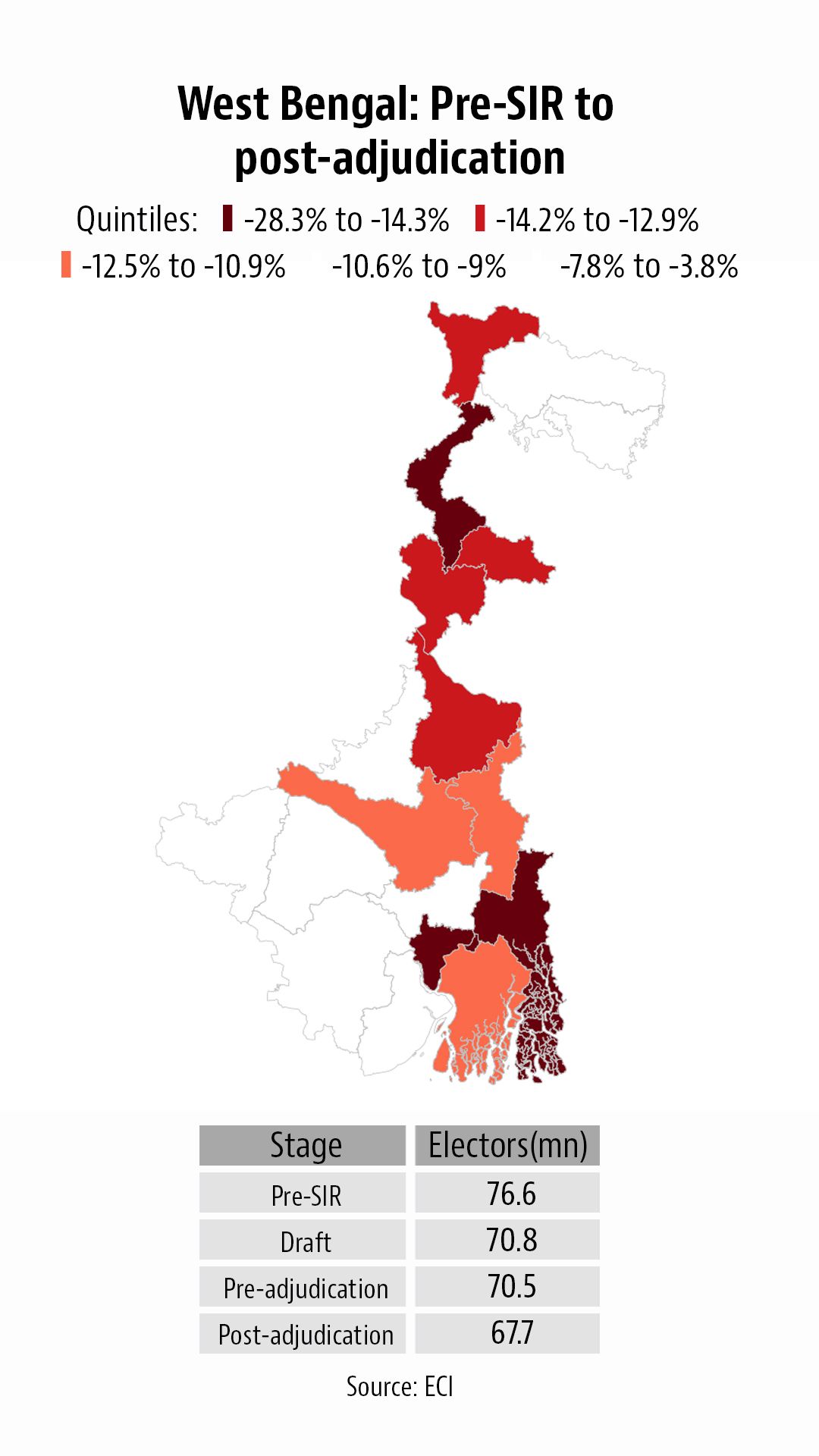
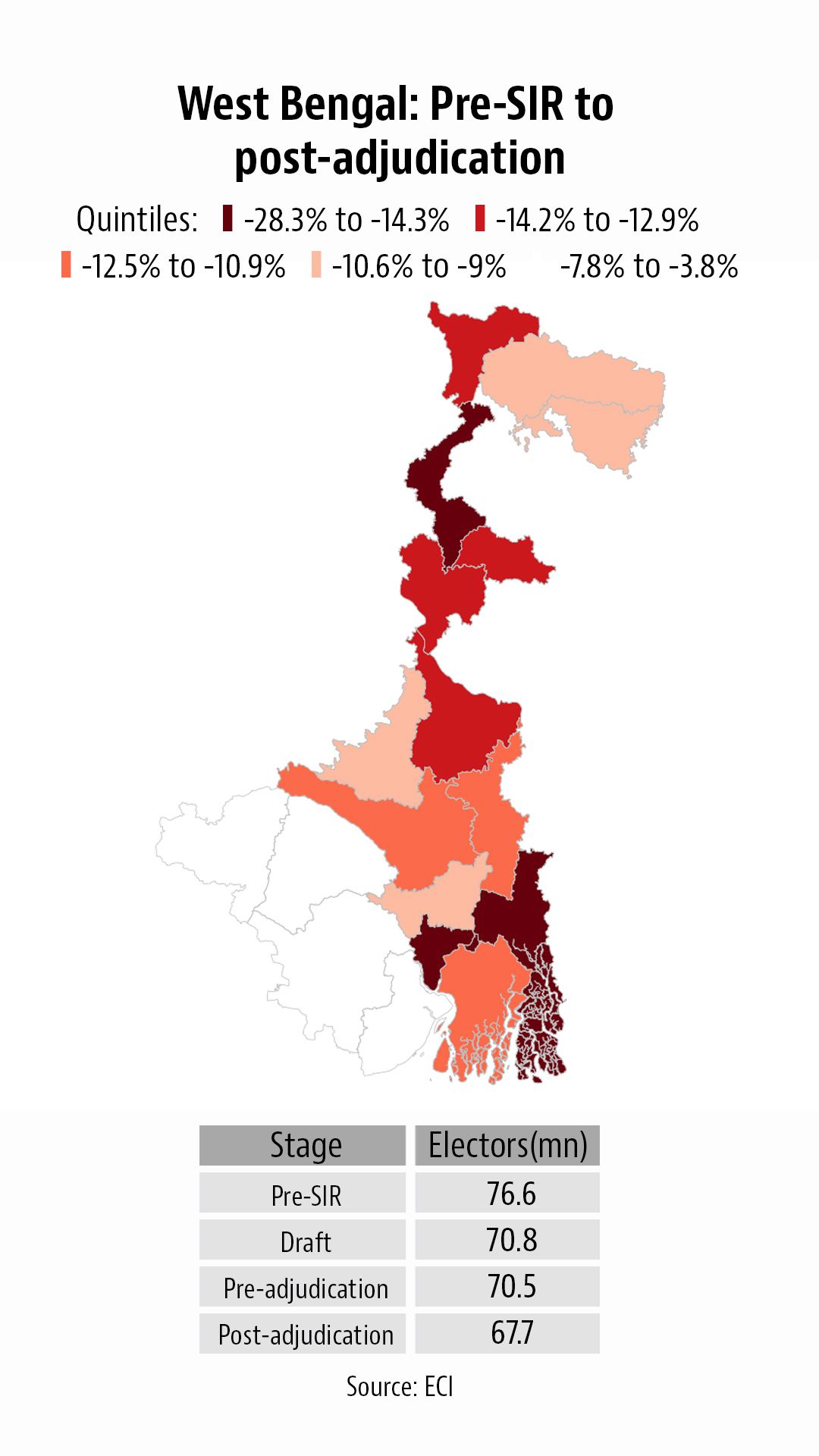
District-wise data has been published by only five states. Across these five states, the net percentage difference between the pre-SIR and final roll (and adjudication in case of West Bengal) varies from 29.3% deletions in Chennai to 2.3% growth in the SR process in Assam.
To be sure, districts have been merged with their parent districts in the 2011 census for this analysis.
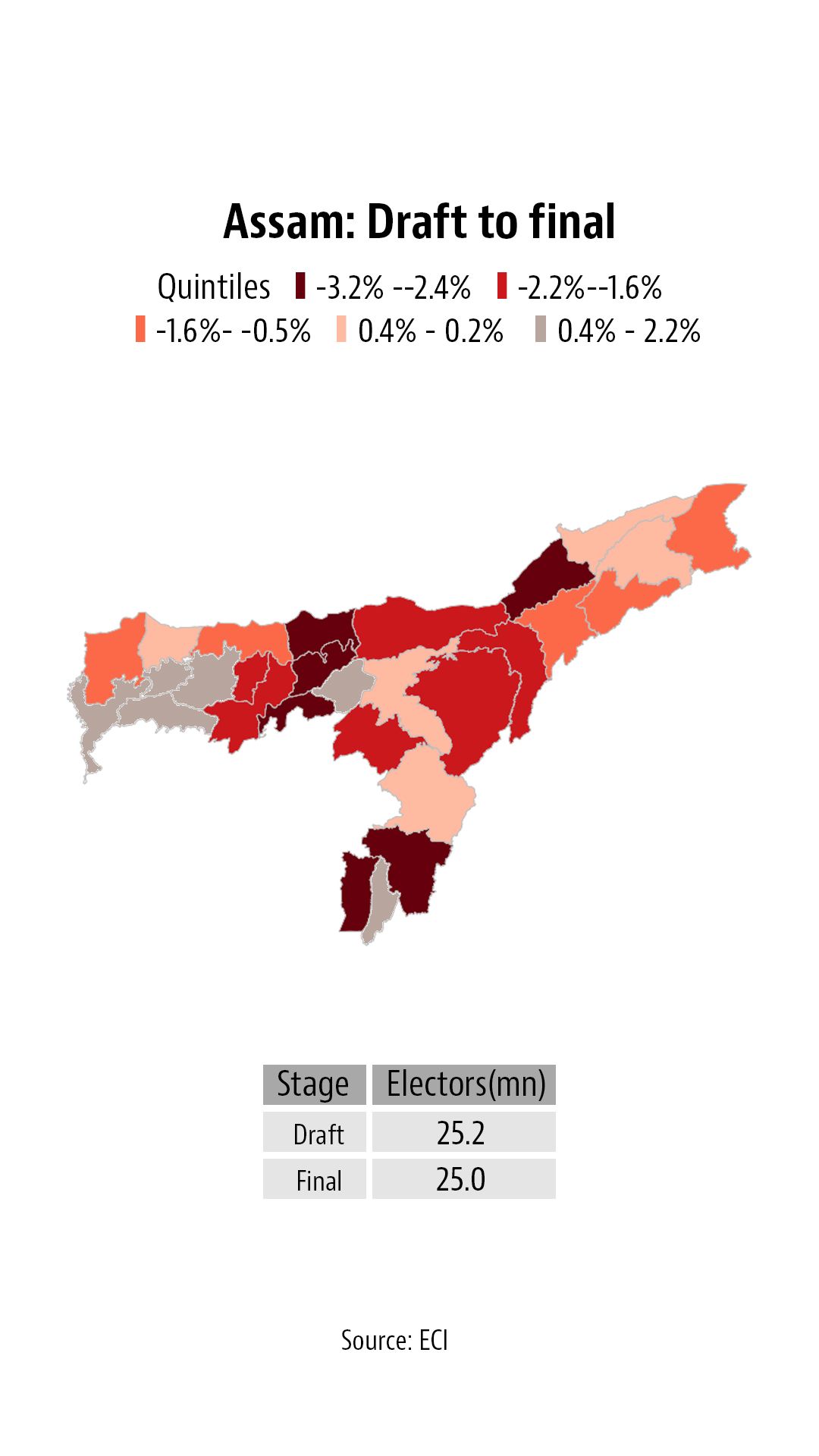
Assam, where SR deletions happened only between the draft and final roll, was the only state where some districts saw net elector addition between the pre-SIR roll and the final roll. To be sure, only around 26% districts (seven of 27) saw net additions.
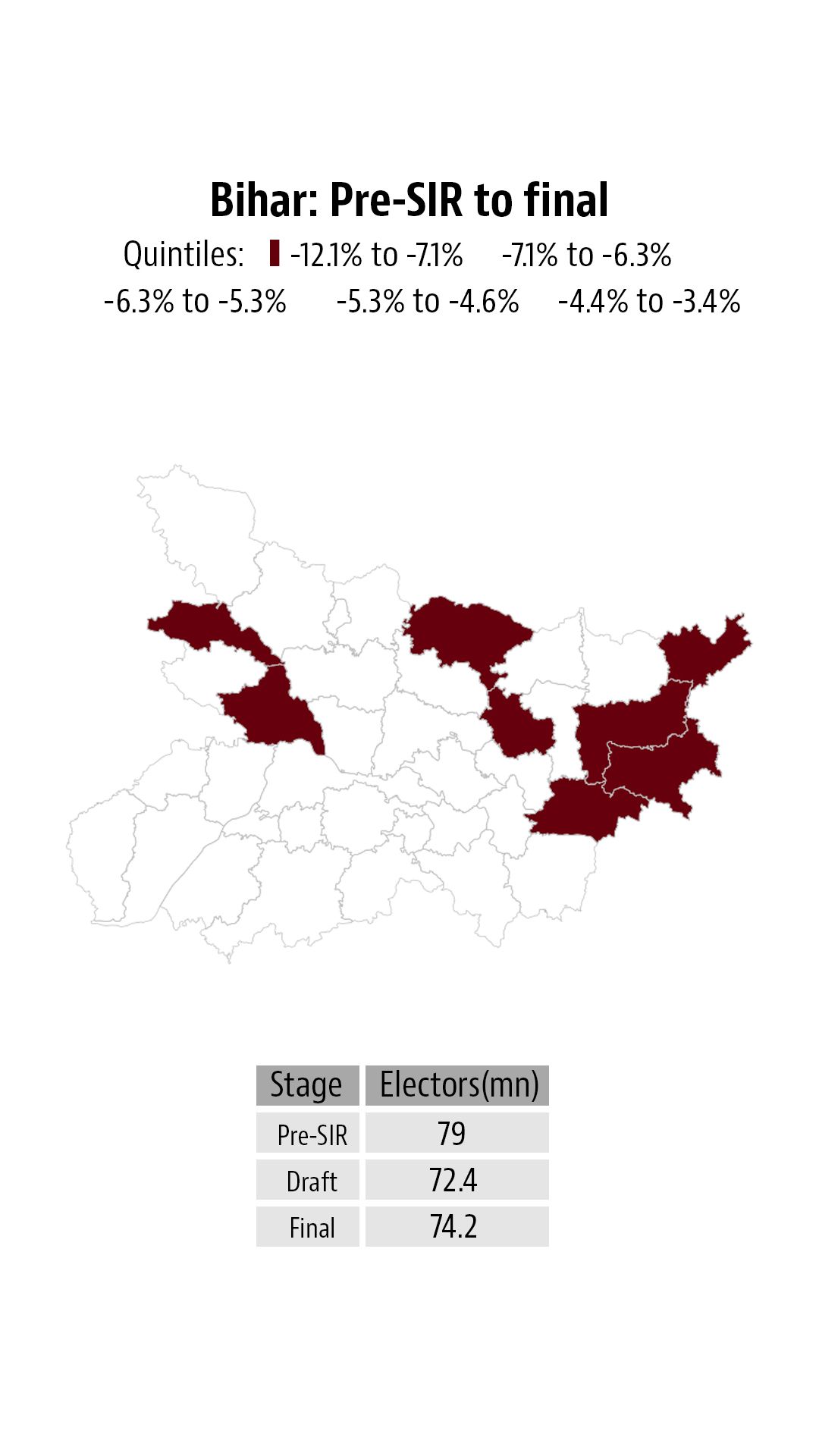
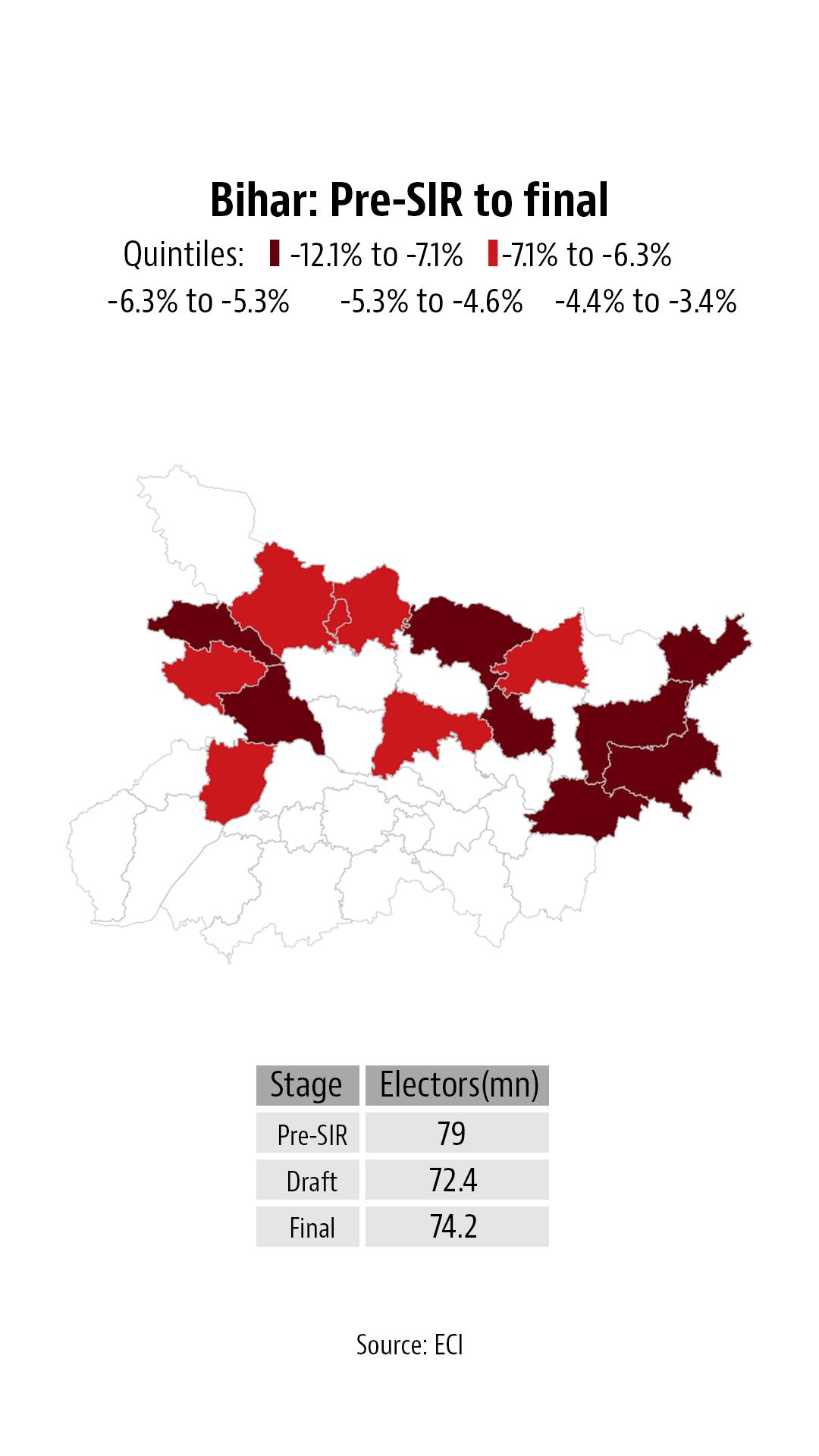
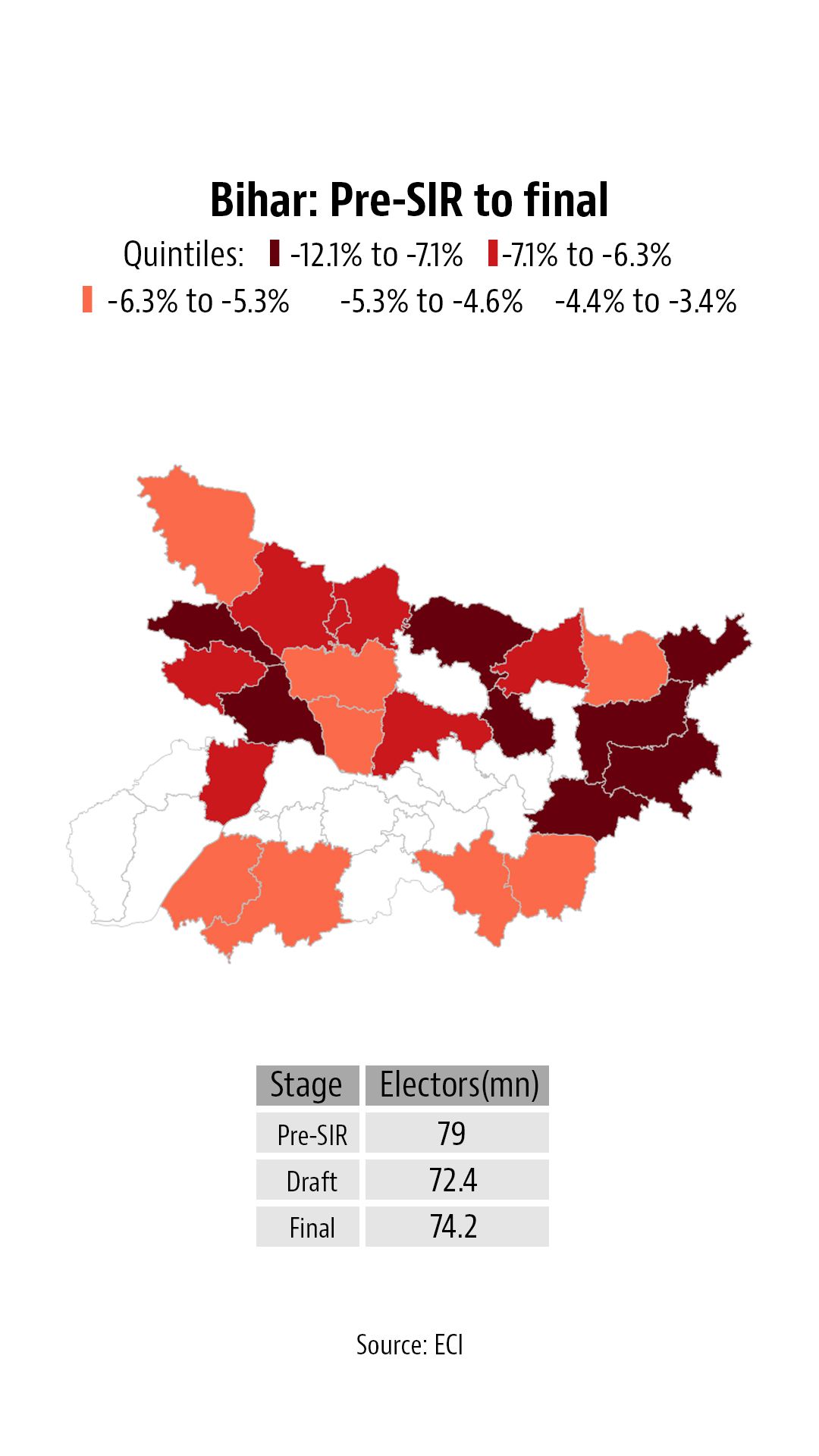
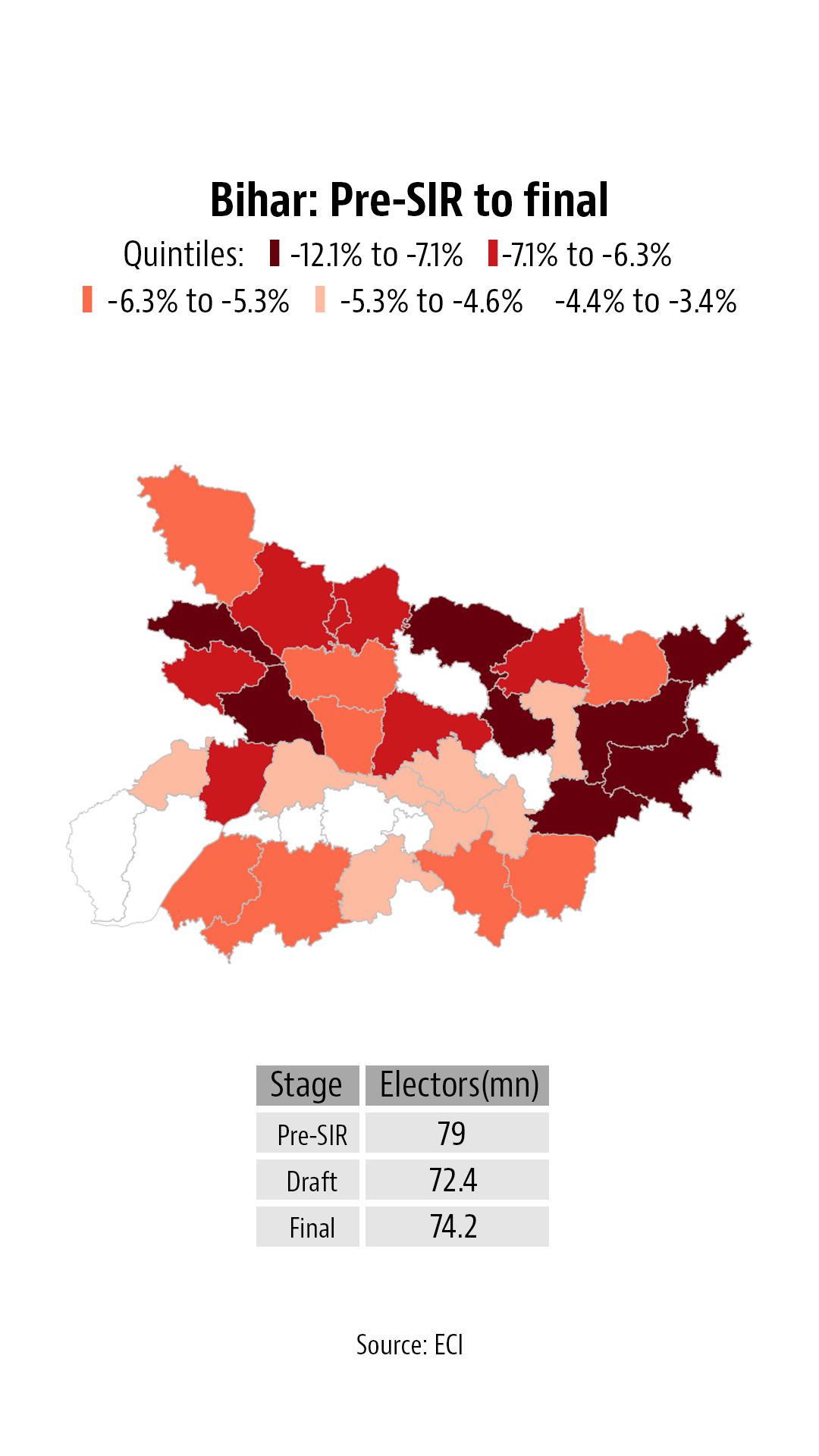
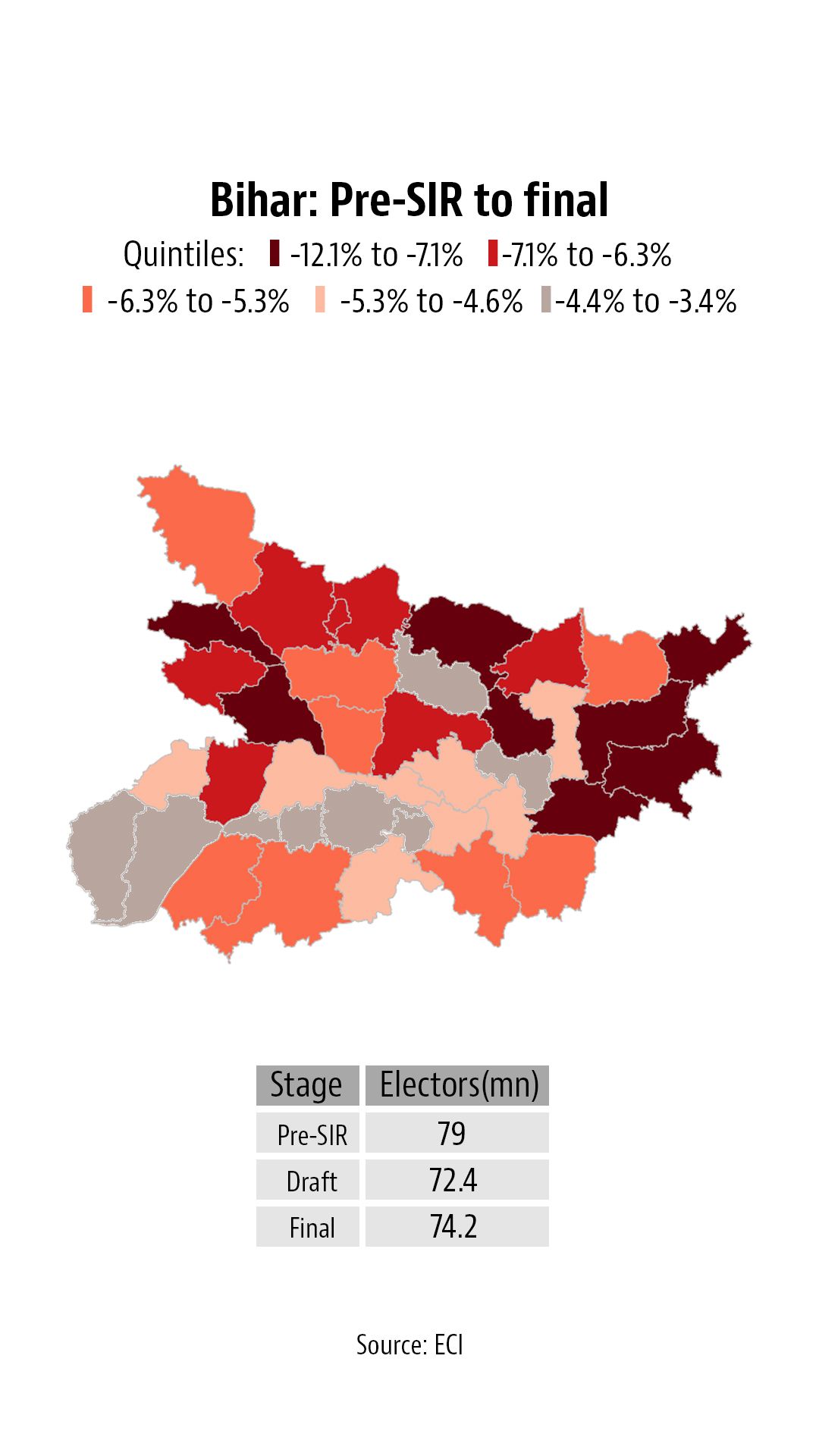
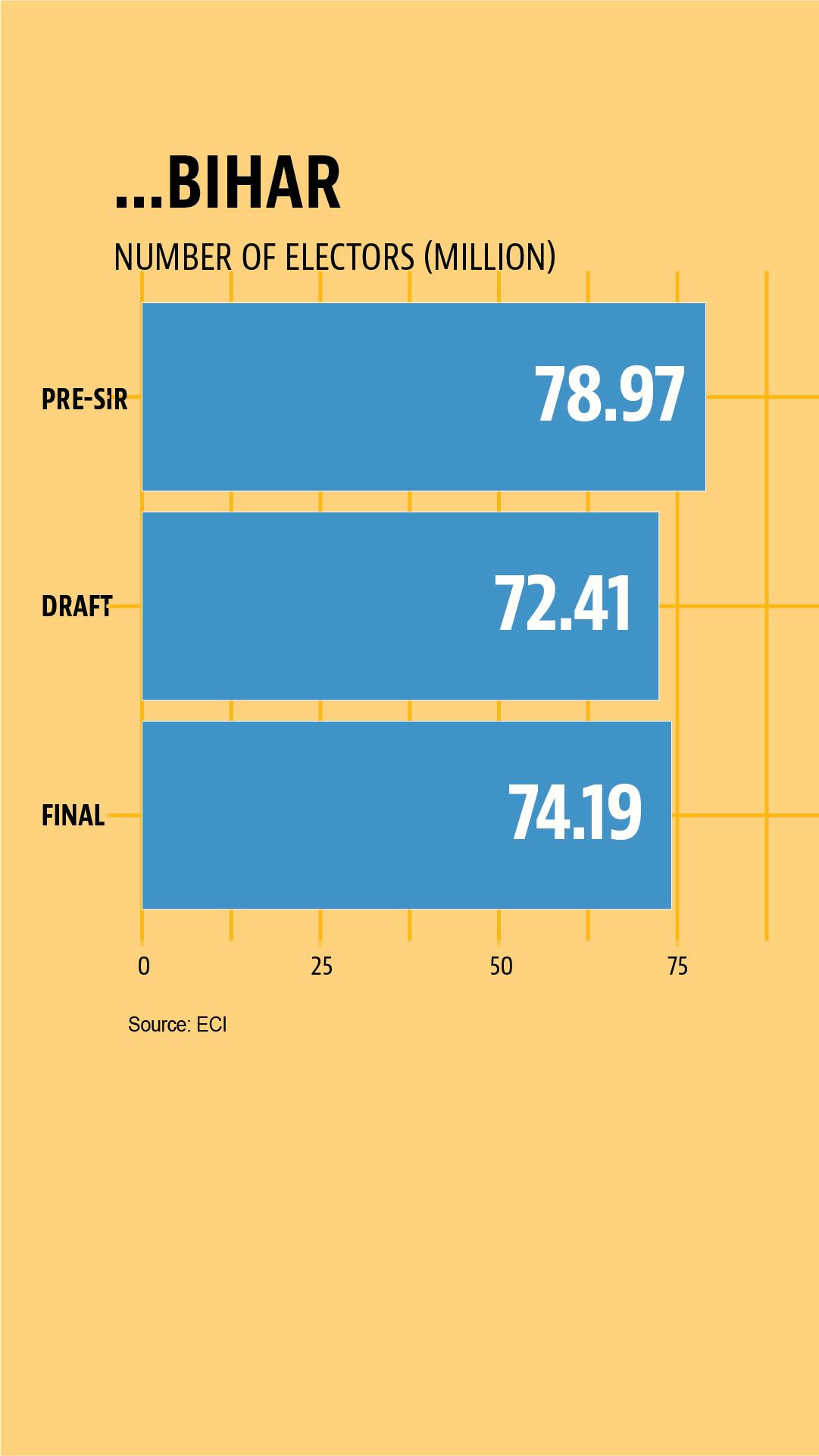
Bihar, where ECI conducted the SIR exercise first, saw deletions in the range of 3.4% to 12.1%. Most high deletion districts were in the eastern and northern half of the state.
As HT has pointed out earlier, this might have to do with the fact that the districts that contributed the most to elector growth before the SIR exercise contributed the most to deletions in the SIR exercise.
This could partly be because migrants from rural to urban areas got enrolled in both their district of origin and in the more urban districts they moved to. In the SIR exercise, they might have chosen to remain enrolled in their place of origin, leading to more deletions in urban districts.
This trend of urban districts seeing more deletions was also seen in…
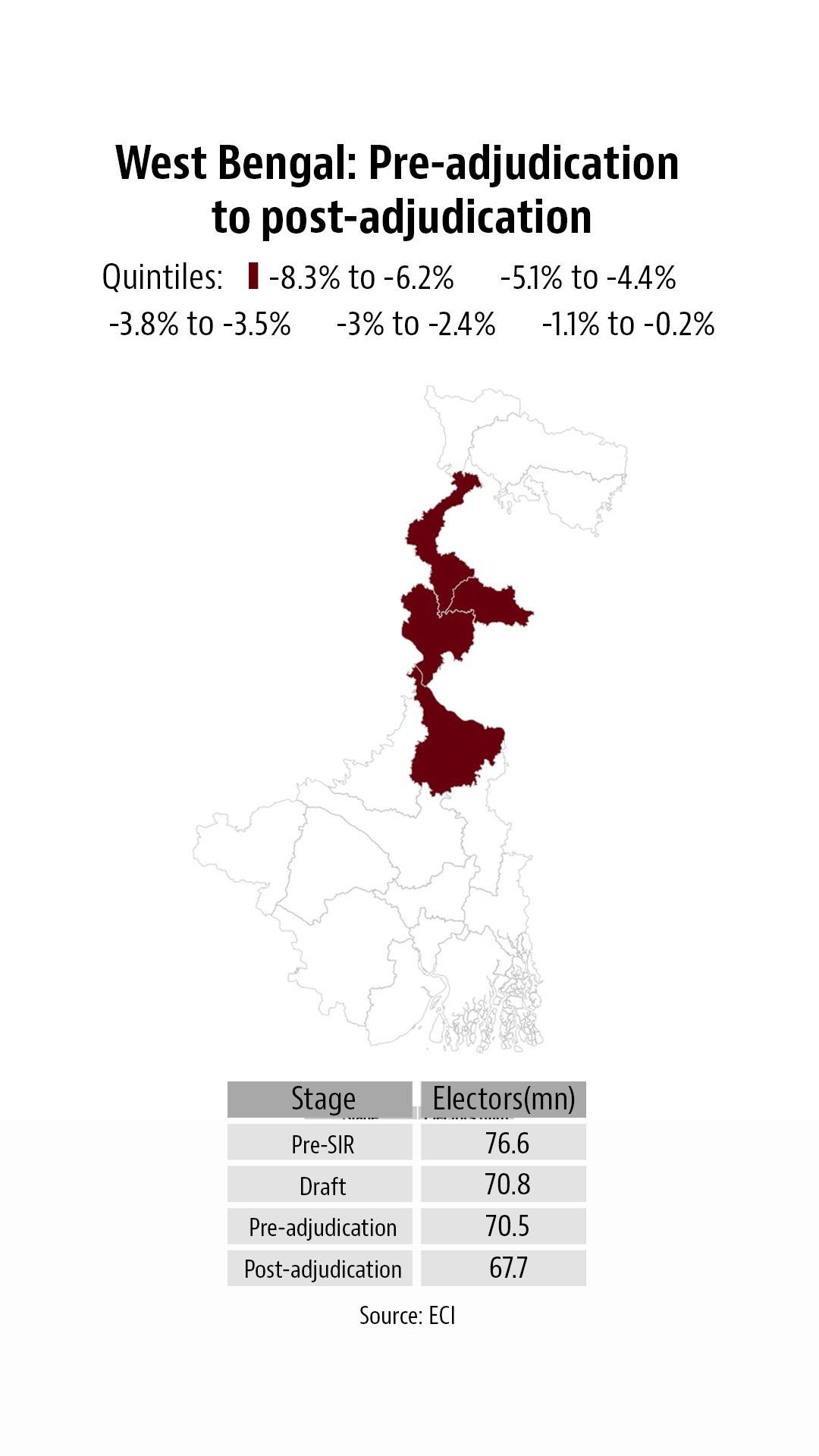
In West Bengal, the trend of urban districts seeing more deletions changed somewhat between the pre-adjudication and post-adjudication rolls.
As HT pointed out when the adjudication results were published, the adjudication process in West Bengal saw deletions correlated with the Muslim share in the district’s population.
This led to the correlation between urban population and deletions in the SIR process become somewhat weaker after the adjudication process.
What happened in other states?
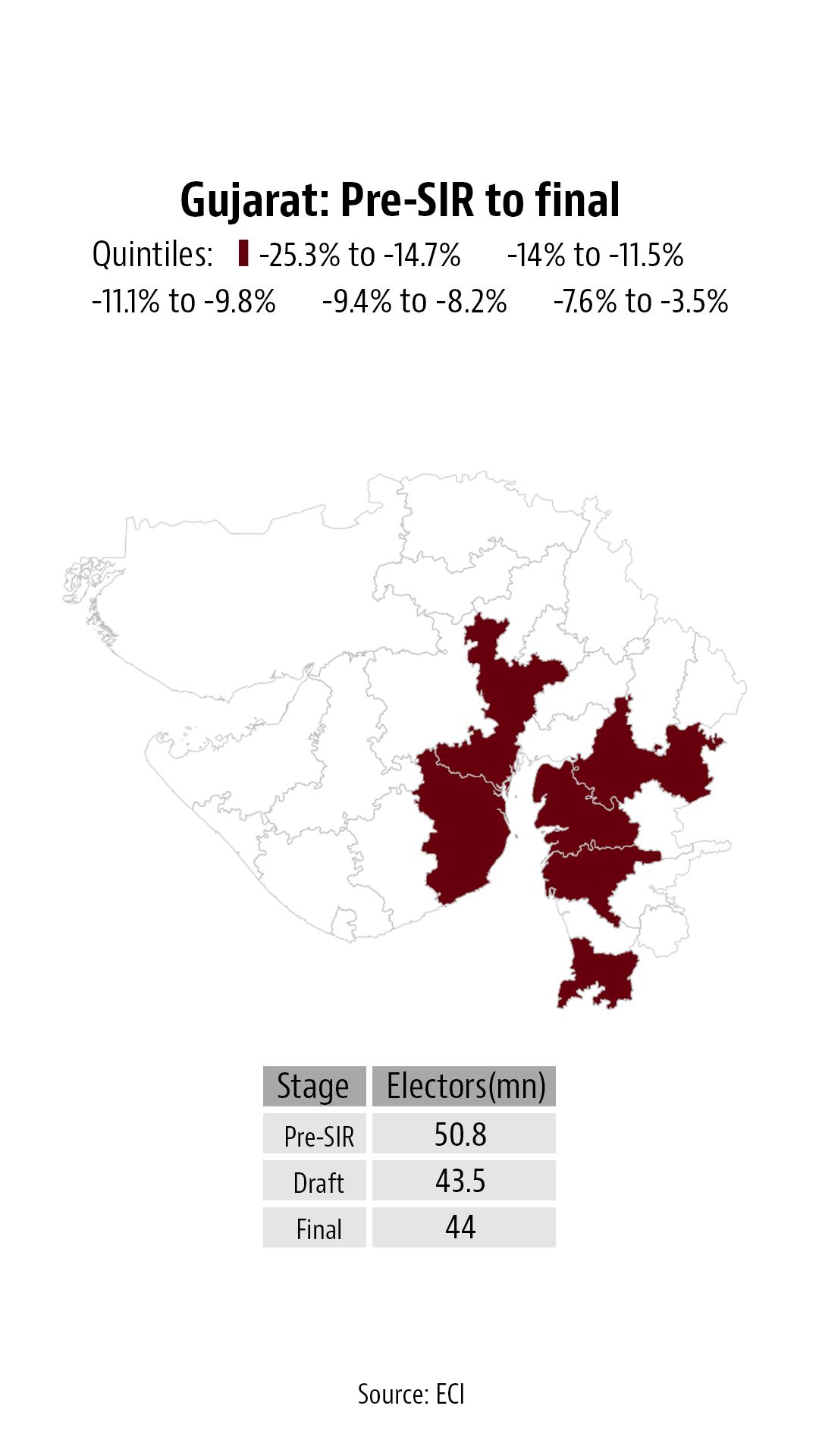
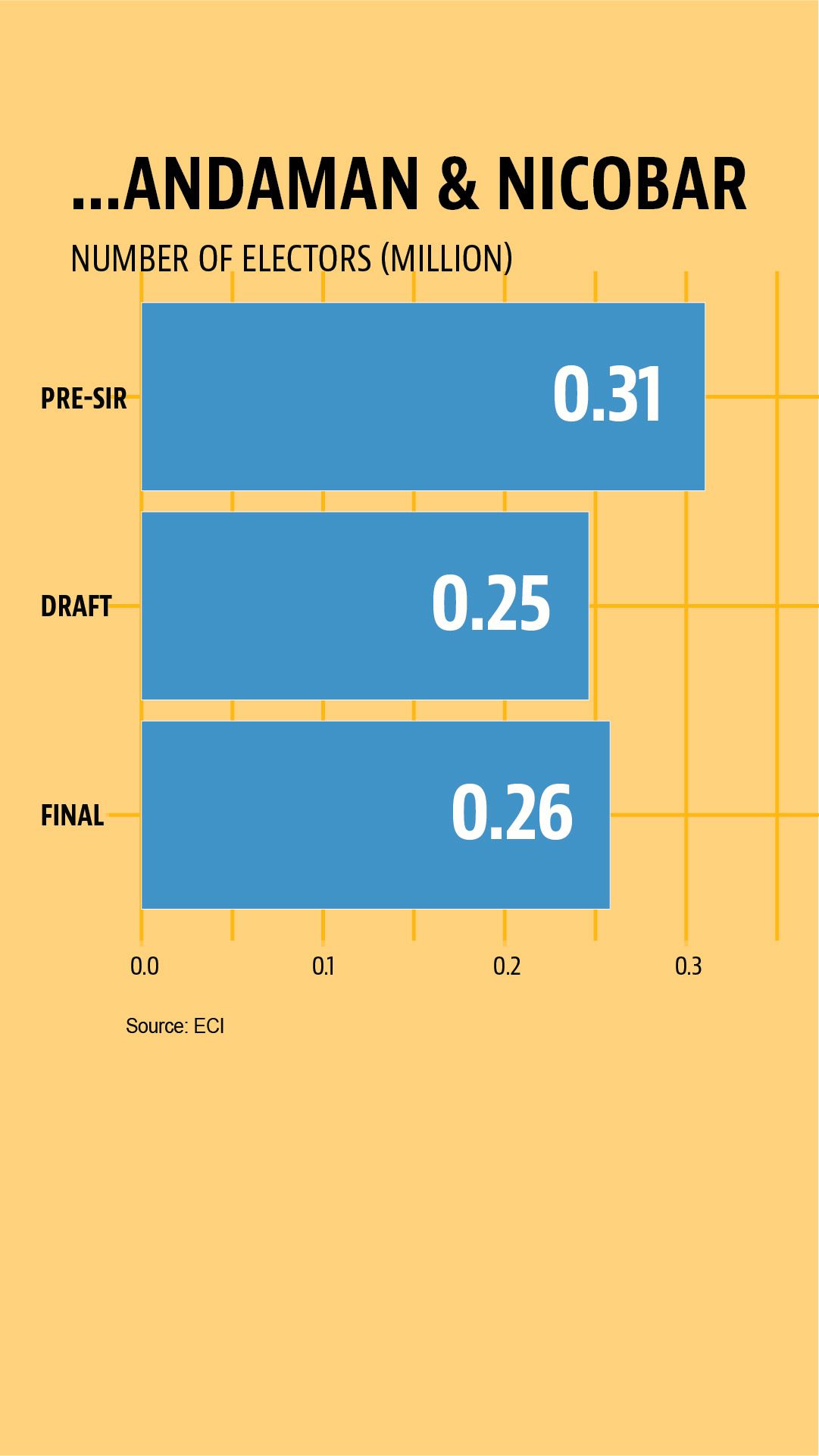
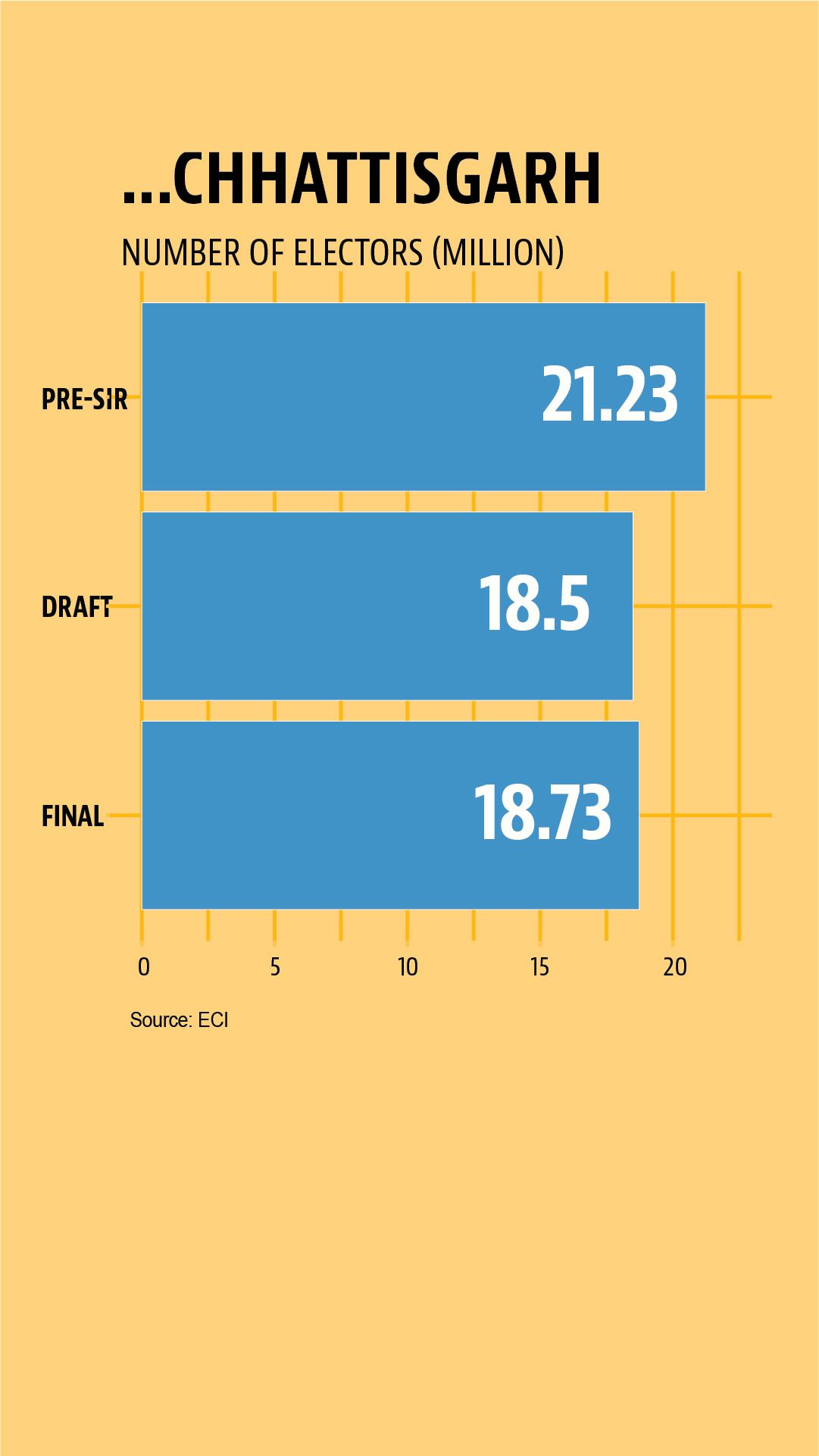
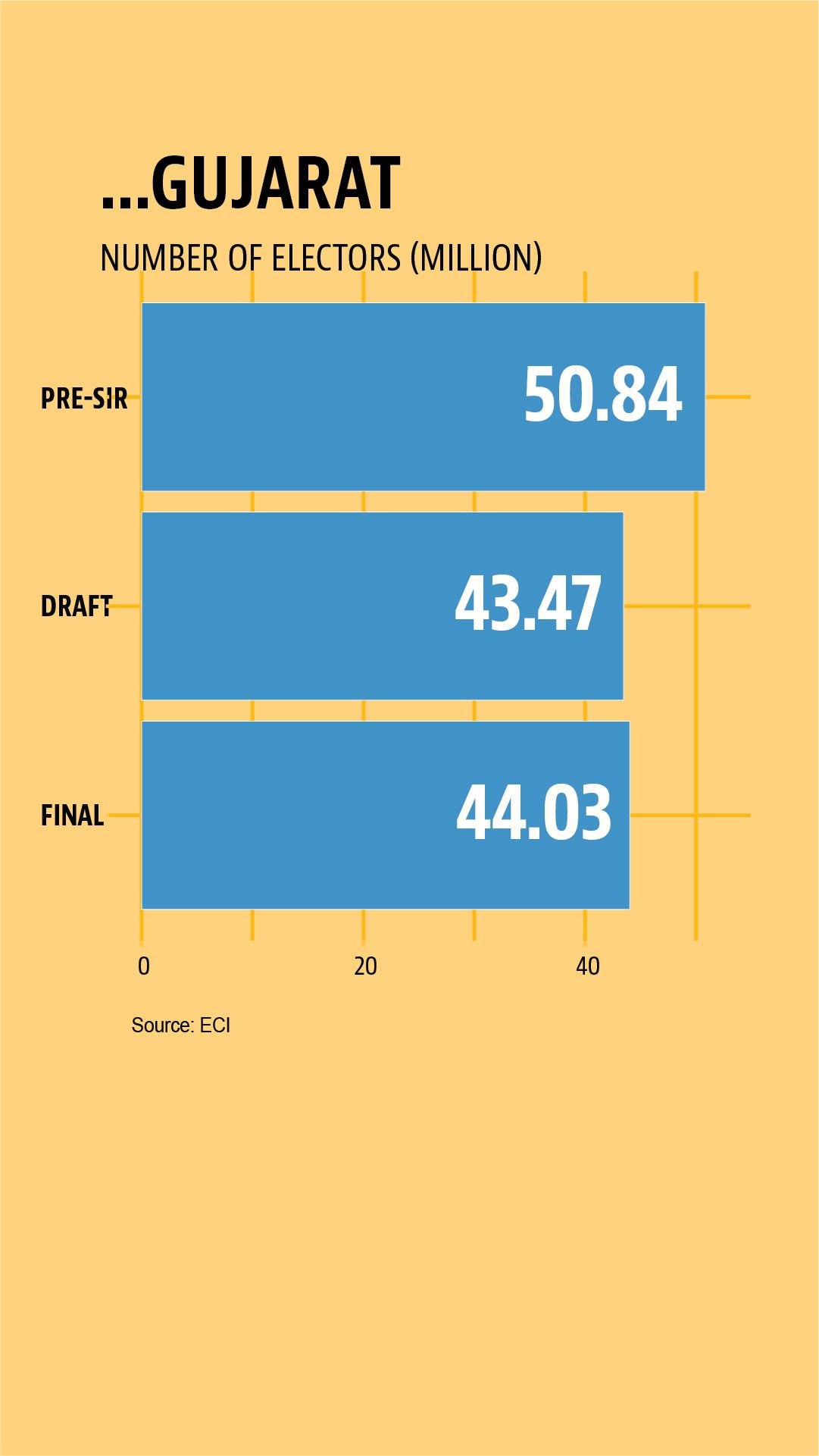
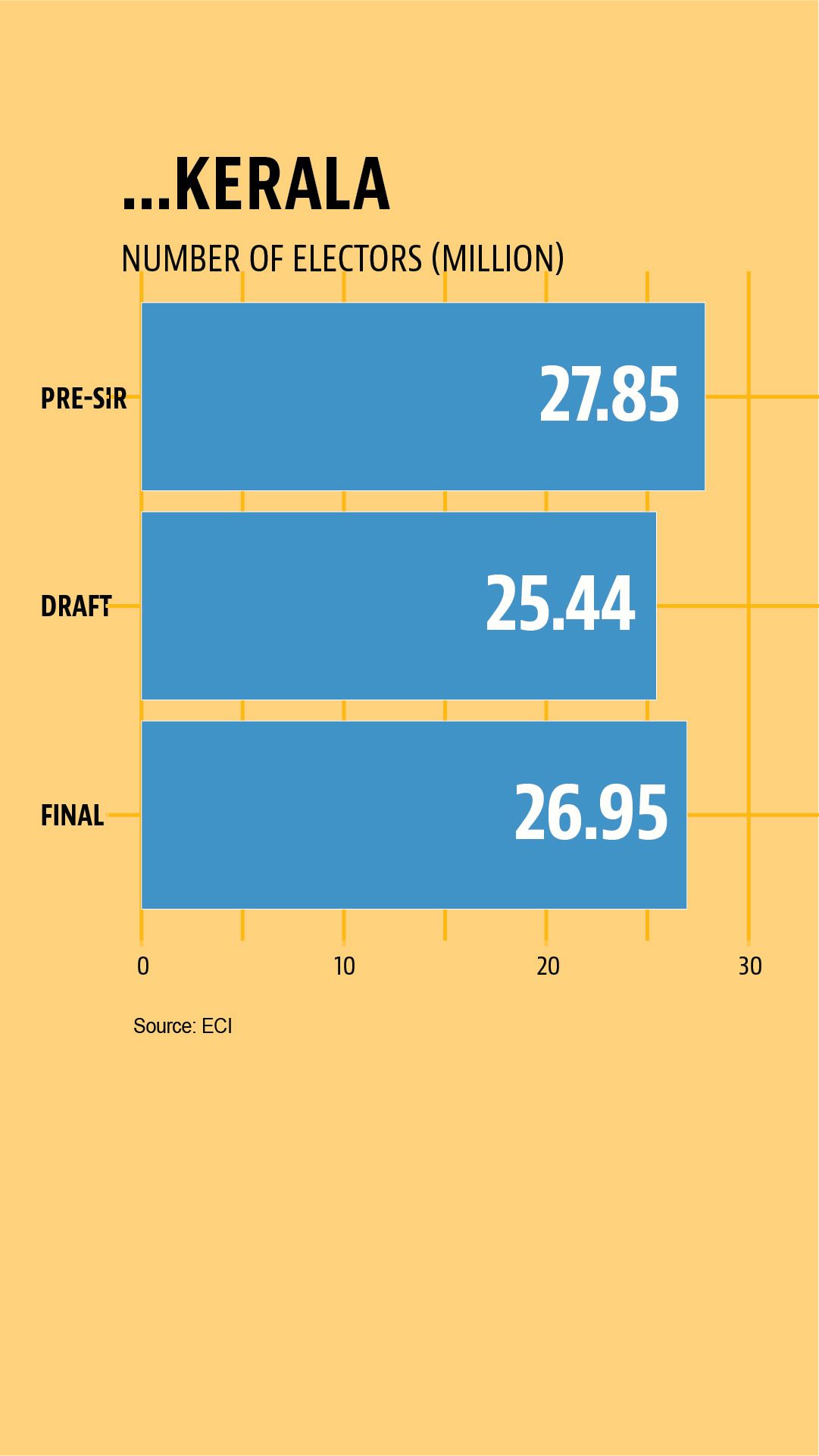
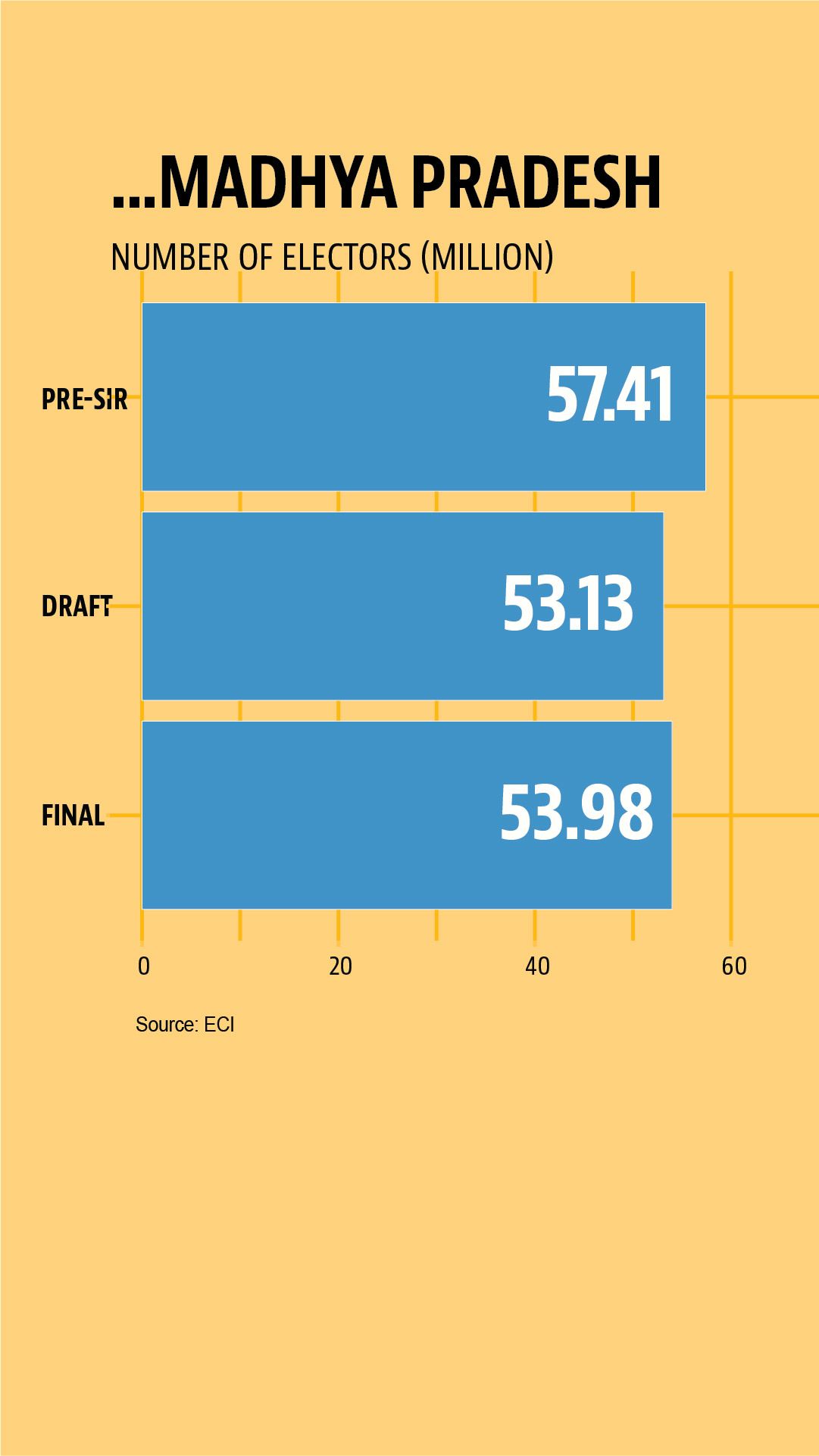
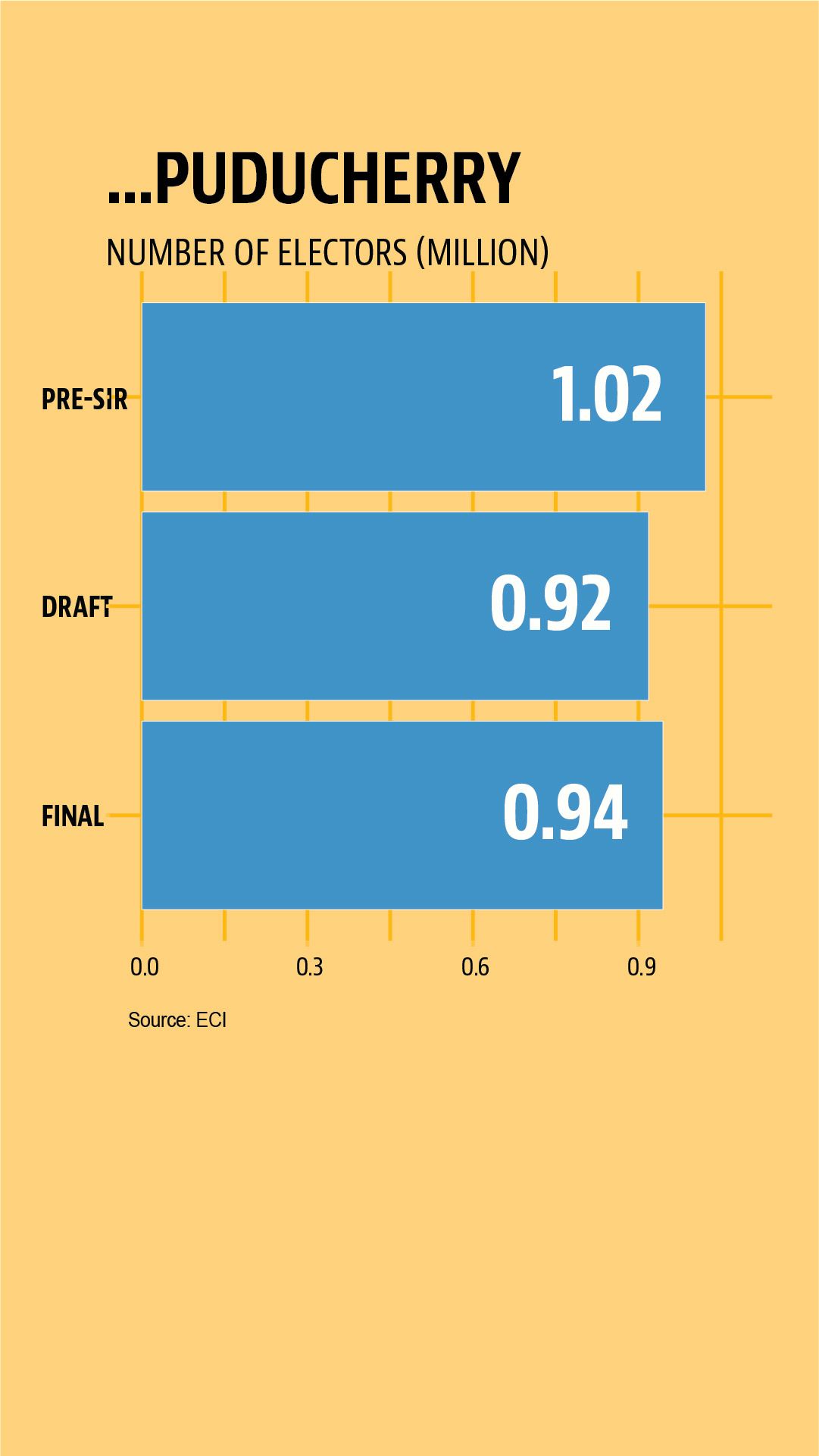
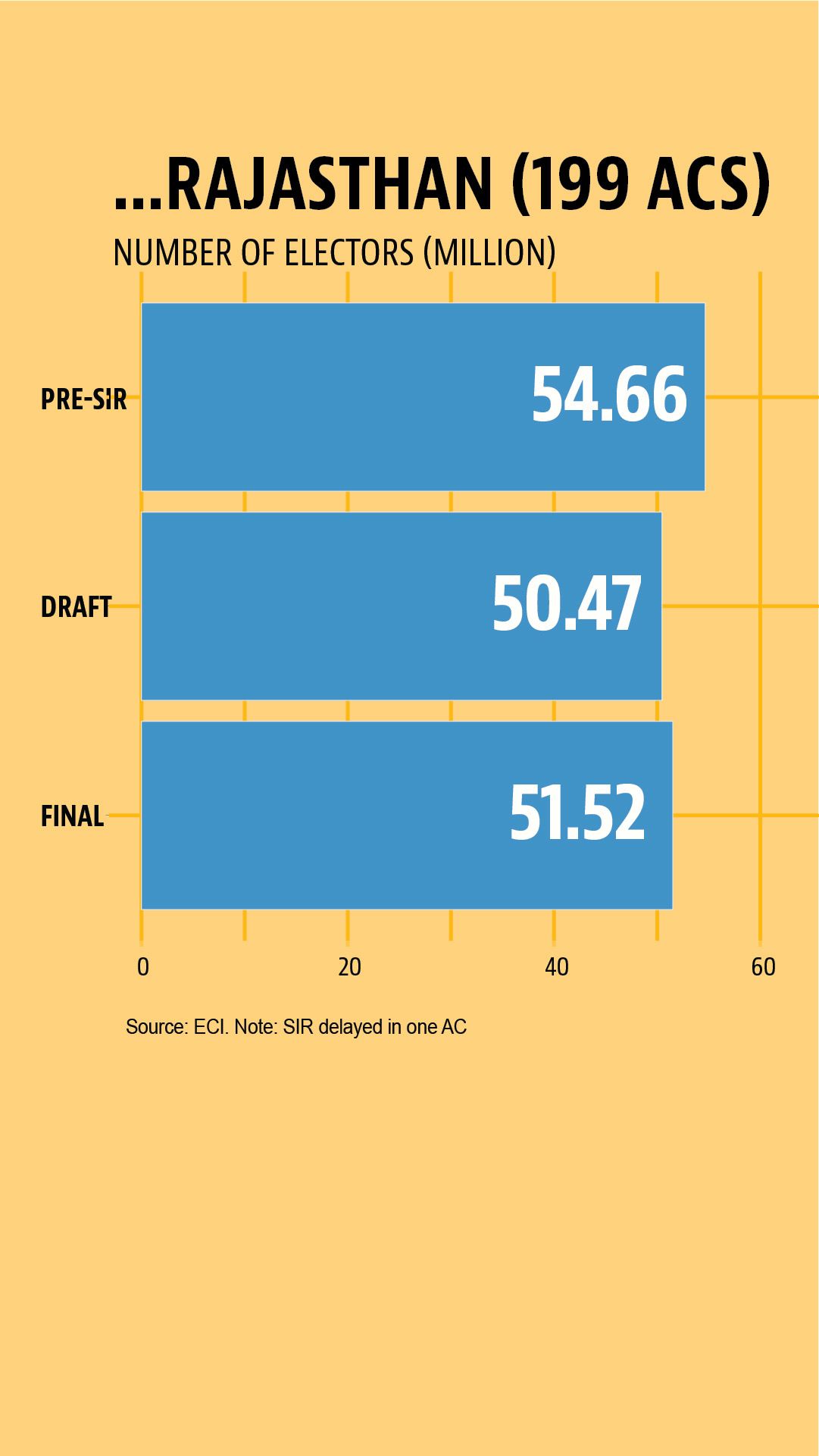
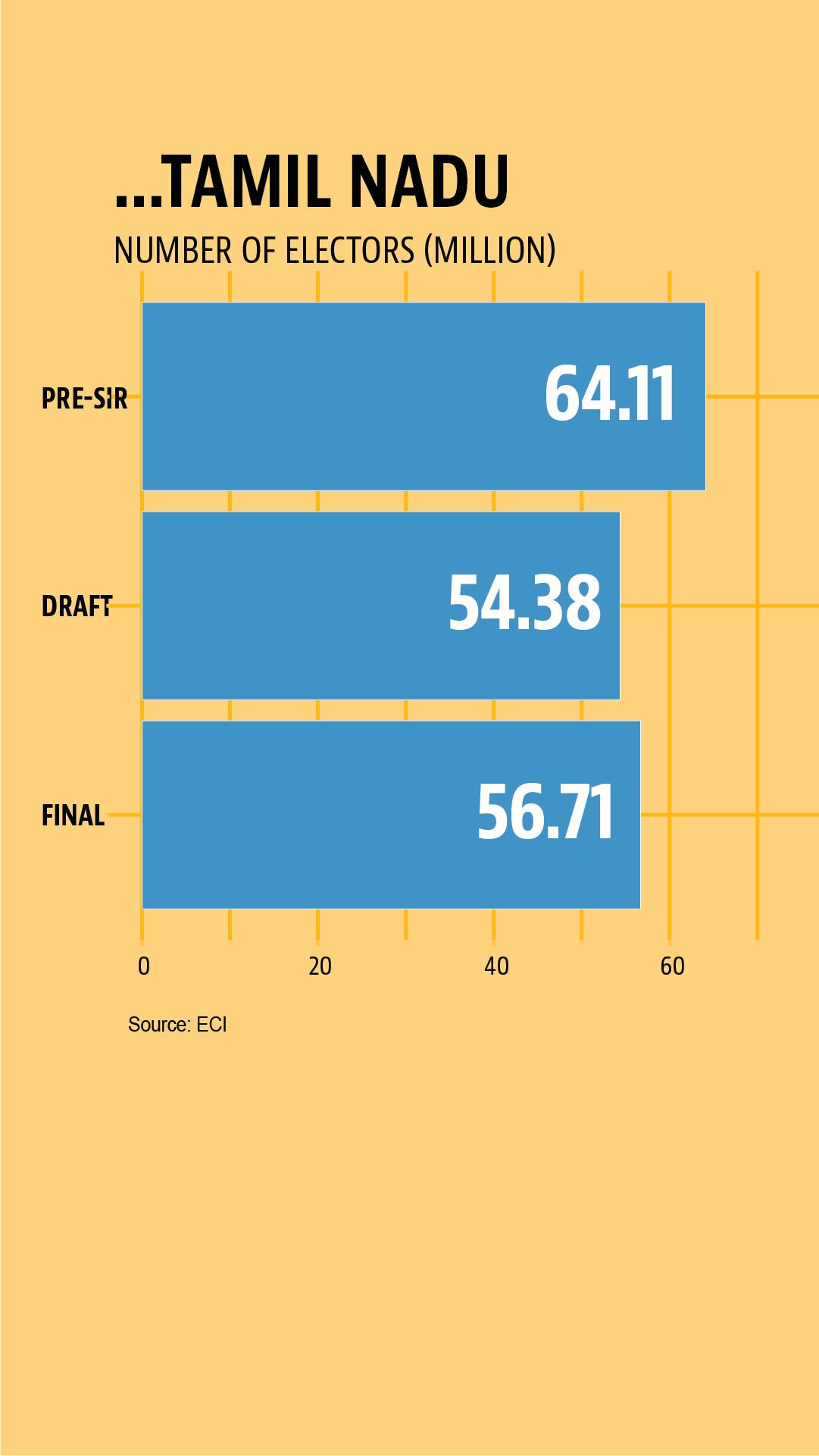
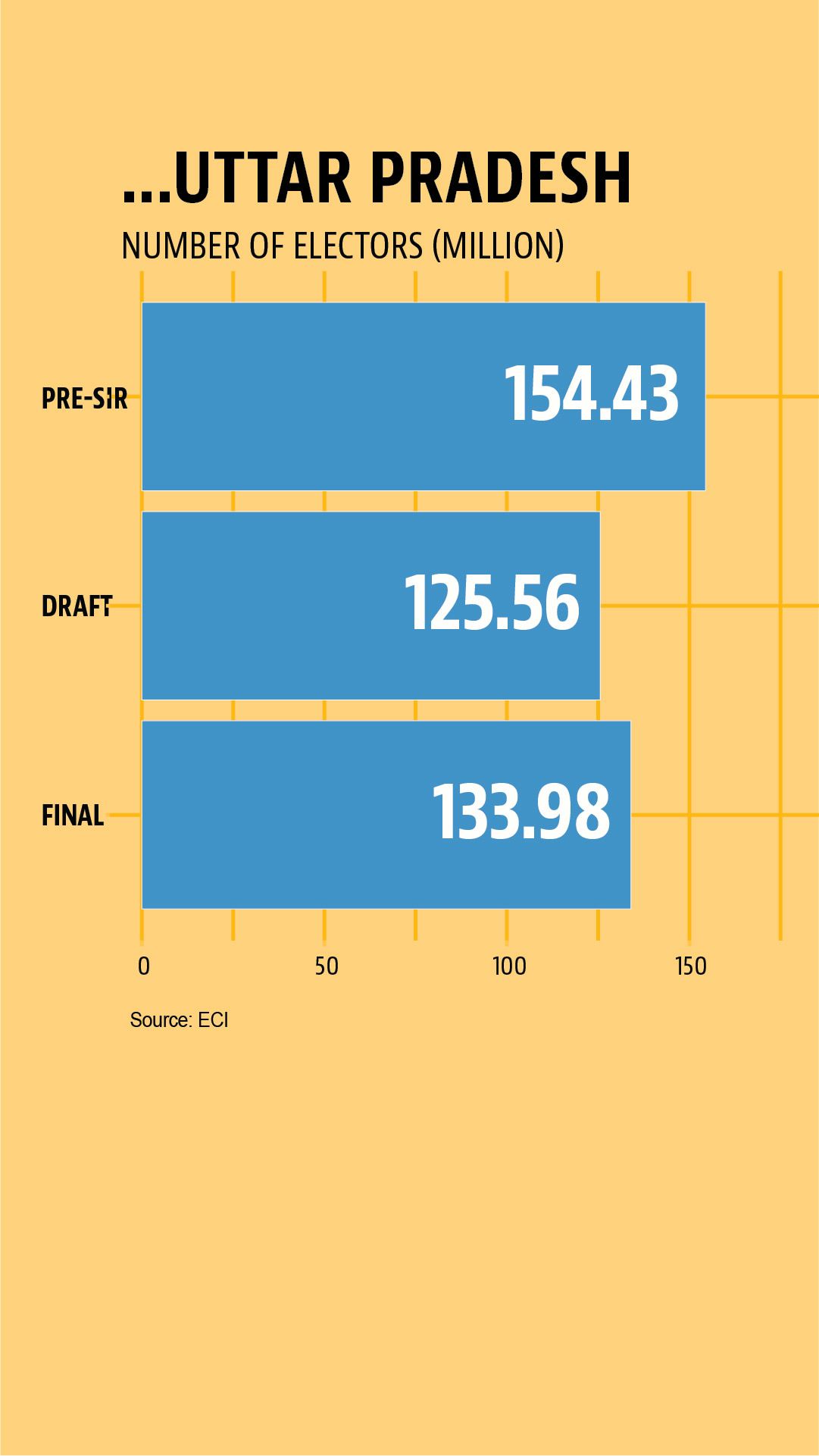
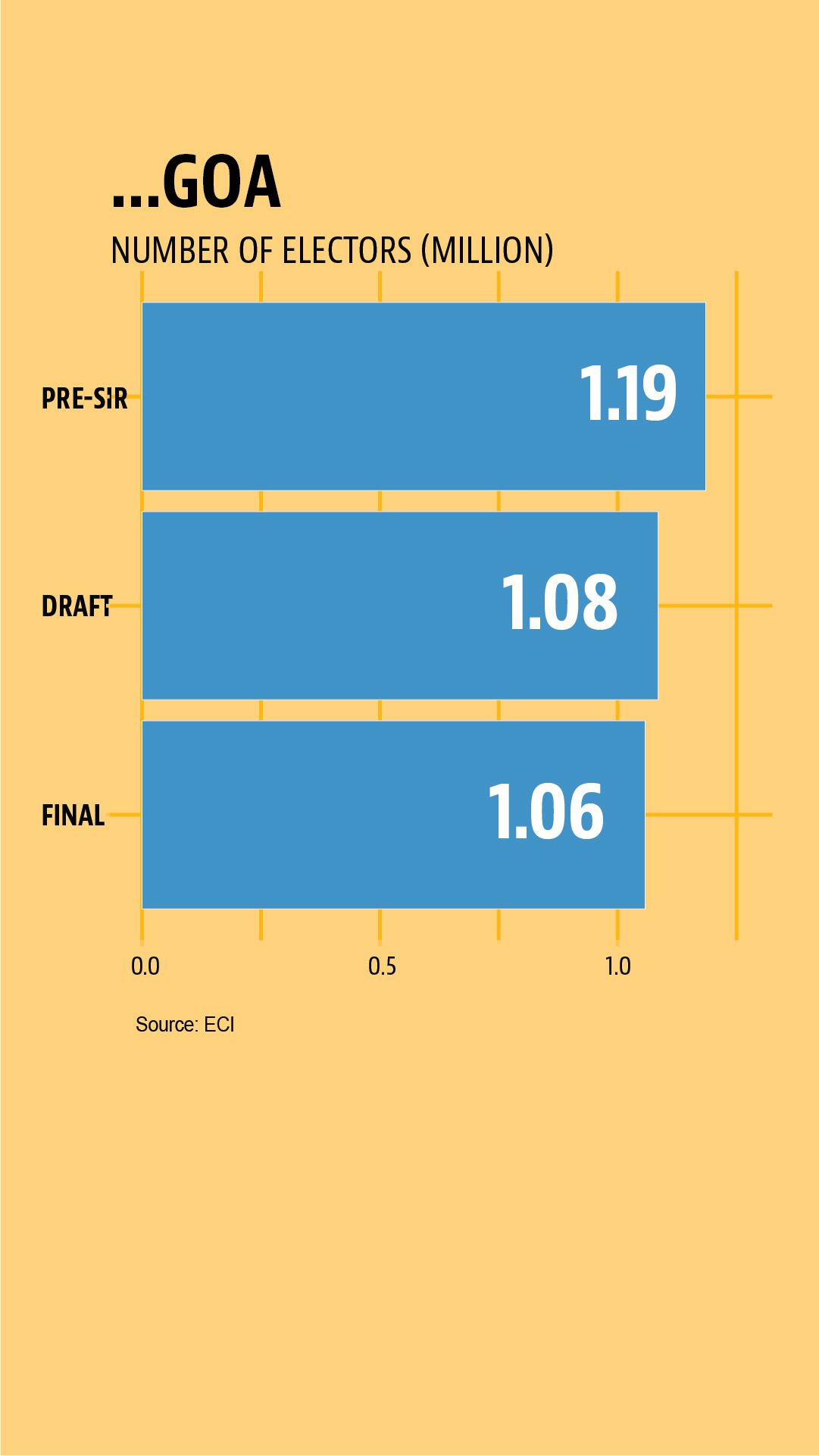
The draft SIR roll has so far shown a large deletion compared to the pre-SIR electoral roll. The final roll has shown more electors than the draft roll generally, but still fewer electors than the pre-SIR roll.
This was seen in…
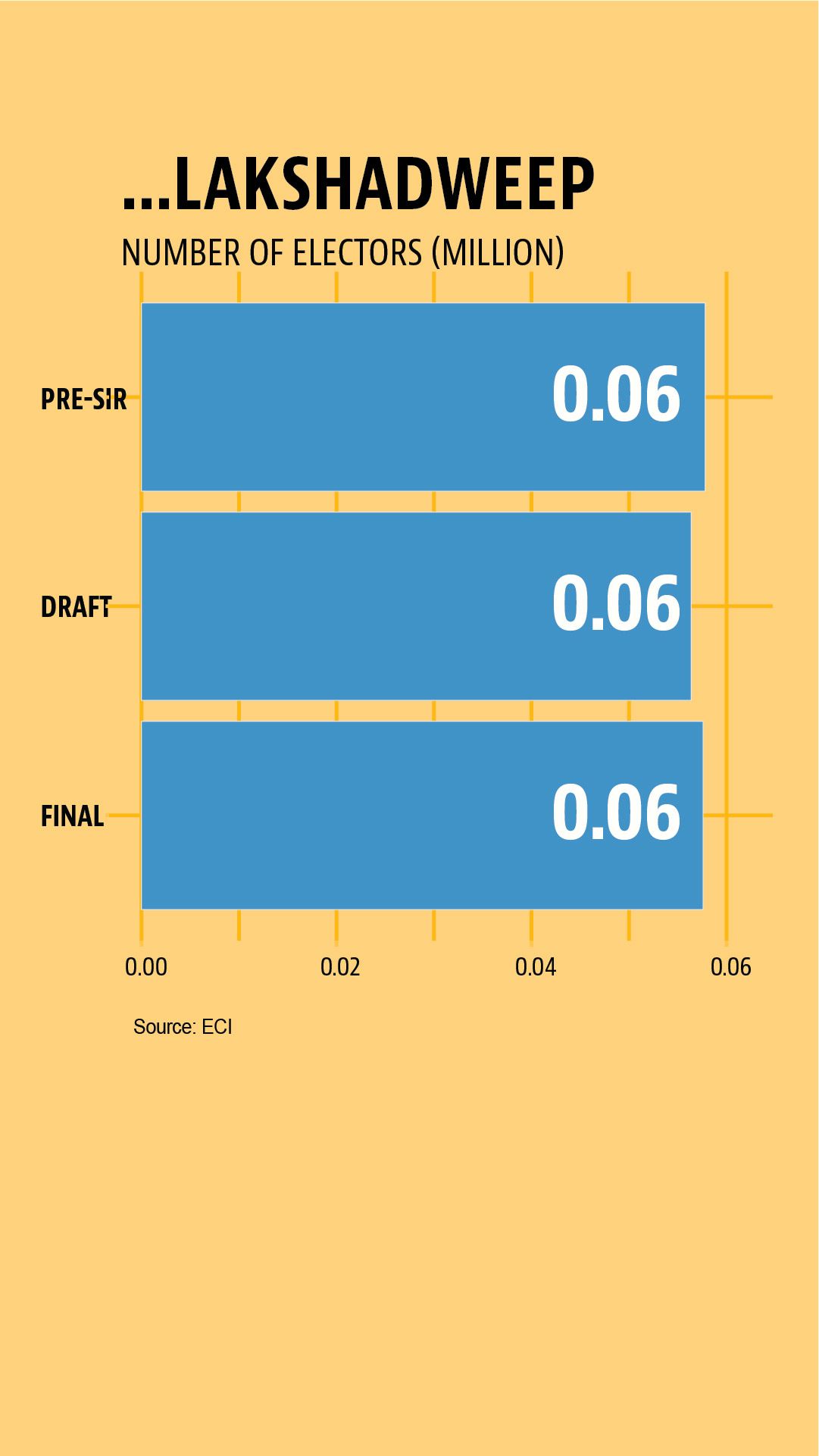
To be sure, deletions were a small proportion of pre-SIR electors in…
And the final roll was smaller than even the draft roll in…
To be sure, the number of post-SIR electors in no state/UT has been lower than the actual number of voters in the past election.
But turnout in some assembly constituencies (ACs) was an exception.
For example, an HT analysis of first phase polling data in West Bengal shows that 10 of 152 ACs likely saw a drop in turnout in absolute terms compared to the 2024 Lok Sabha elections.
These were Samserganj, Kharagpur Sadar, Farakka, Lalgola, Siliguri, Phansidewa, Bhagabangola, Englishbazar, Dabgram-Phulbari, and Matigara-Naxalbari.
 Built with Shorthand