
Inside the Indus water network
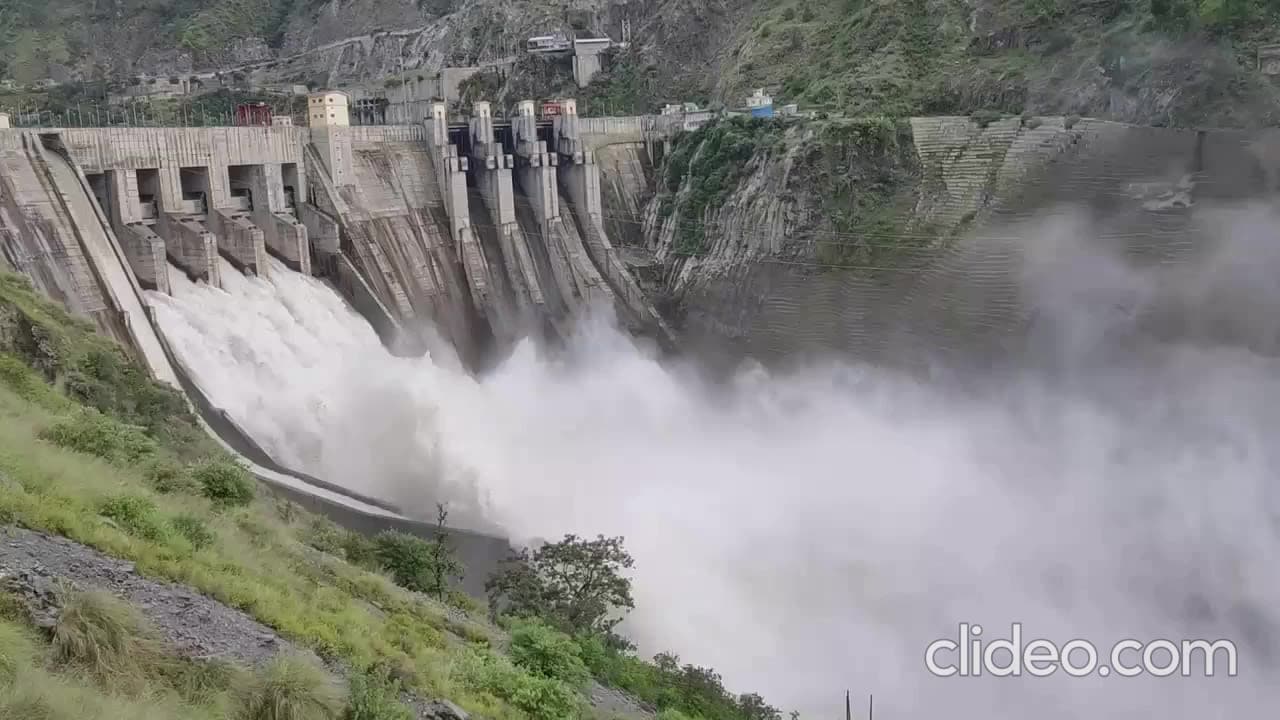

Following the terror attack in Pahalgam in Jammu & Kashmir on April 22, India suspended the Indus Waters Treaty (IWT) with Pakistan. Still, India has shared information about severe weather and possible heavy flooding with Pakistan out of concern for “public safety”, with several cross-border rivers in spate.
The information on chances of flooding and incessant rain in provinces bordering India was conveyed “purely on humanitarian grounds”, said people aware of the matter. Pakistan also evacuated around 150,000 people along the Ravi, Sutlej and Chenab, after India warned that it plans to release excess water from the Madhopur Dam.
In this backdrop, here’s a look at the extensive infrastructure that controls the flow of water in this river system that is critical for roughly 300 million people, according to the Stimson Center.


The big six
The Indus basin consists of six big rivers and their smaller tributaries. The six big rivers are the Indus and five of its tributaries: the Jhelum, the Chenab, the Ravi, the Beas, and the Sutlej. While two of these six rivers – Indus and Sutlej – originate in China and only four in India; the five of them that flow to Pakistan do so through India.
The annual inflow from the Indus basin rivers into Pakistan is estimated to be 243.6 million cubic metres (MCM), the same volume as that of around 244 cubes, each with edges measuring one kilometre in length. However, the IWT puts a limit on how much of this inflow Pakistan can exploit. Of the 243.6 MCM of inflow, 11.1 MCM is from what the IWT calls the “eastern rivers”: the Ravi, the Beas, and the Sutlej. The treaty allows India unrestricted use of these eastern rivers. Pakistan can only exploit tributaries that flow into the main stem of the Sutlej or the Ravi after reaching Pakistan. (The Beas joins the Sutlej in Indian Punjab itself).
However, Pakistan has the right to exploit most of the “western rivers”: the Indus, Jhelum, and Chenab. These western rivers account for 232.5 MCM of the 243.6 MCM of water of the Indus basin that flows from India to Pakistan. The IWT allocates nearly three-fourths of these western rivers (170.3 MCM) to Pakistan. This brings Pakistan’s allocation from India-Pakistan flows to 170.3 MCM of 243.6 MCM, or 70%.


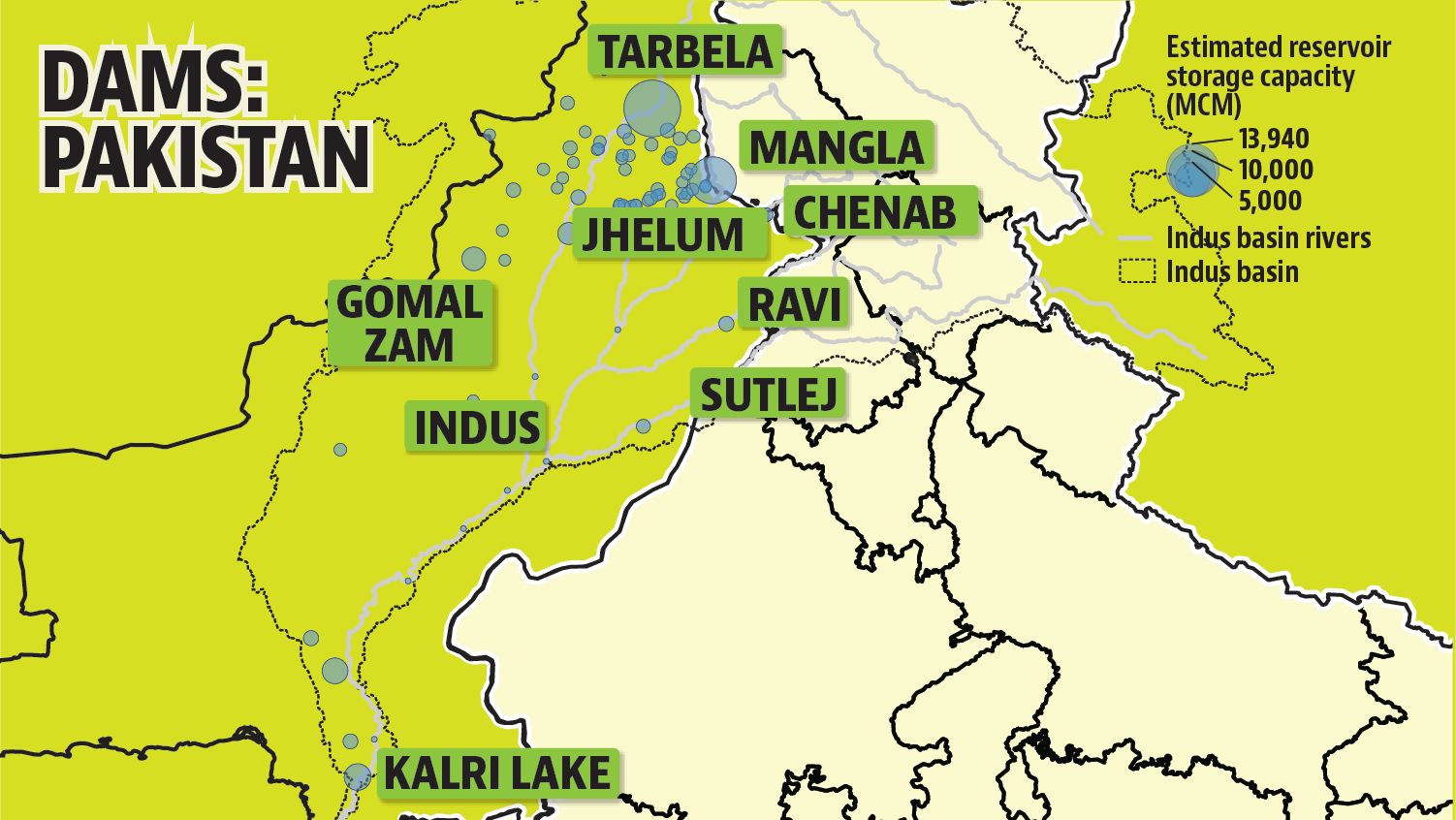
Indus basin in Pak
To be sure, the statistics above only highlight that Pakistan has the right to exploit most of the Indus basin waters flowing from India to Pakistan. What is the importance of this inflow for Pakistan? The FAO document shows that the 170.3 MCM inflow accounts for 69% of Pakistan’s total annual renewable water resources. This explains why Pakistan is eager to revive the IWT. The Indus basin is Pakistan’s lifeline. Even if India cannot block Pakistan’s access to its water right now (more on this later), even lack of hydrological data can possibly upset economic planning.
In contrast to Pakistan, the water available from the basin for India – considering the water treaty – is 73.31 MCM per year, which is only 3.8% of India’s annual renewable water resources of 1,911 MCM. If India blocked all access of the Indus basin water to Pakistan, India’s annual renewable water resources would rise by 9% to 2,081 MCM.


And its importance for India
To be sure, that India has other water resources does not diminish the Indus basin’s importance. Of the total 258 billion cubic metres (BCM) of live reservoir storage capacity India has, 18.2 BCM (7%) is in the Indus basin alone, according to a 2014 report on the Central Water Commission on the Indus basin.


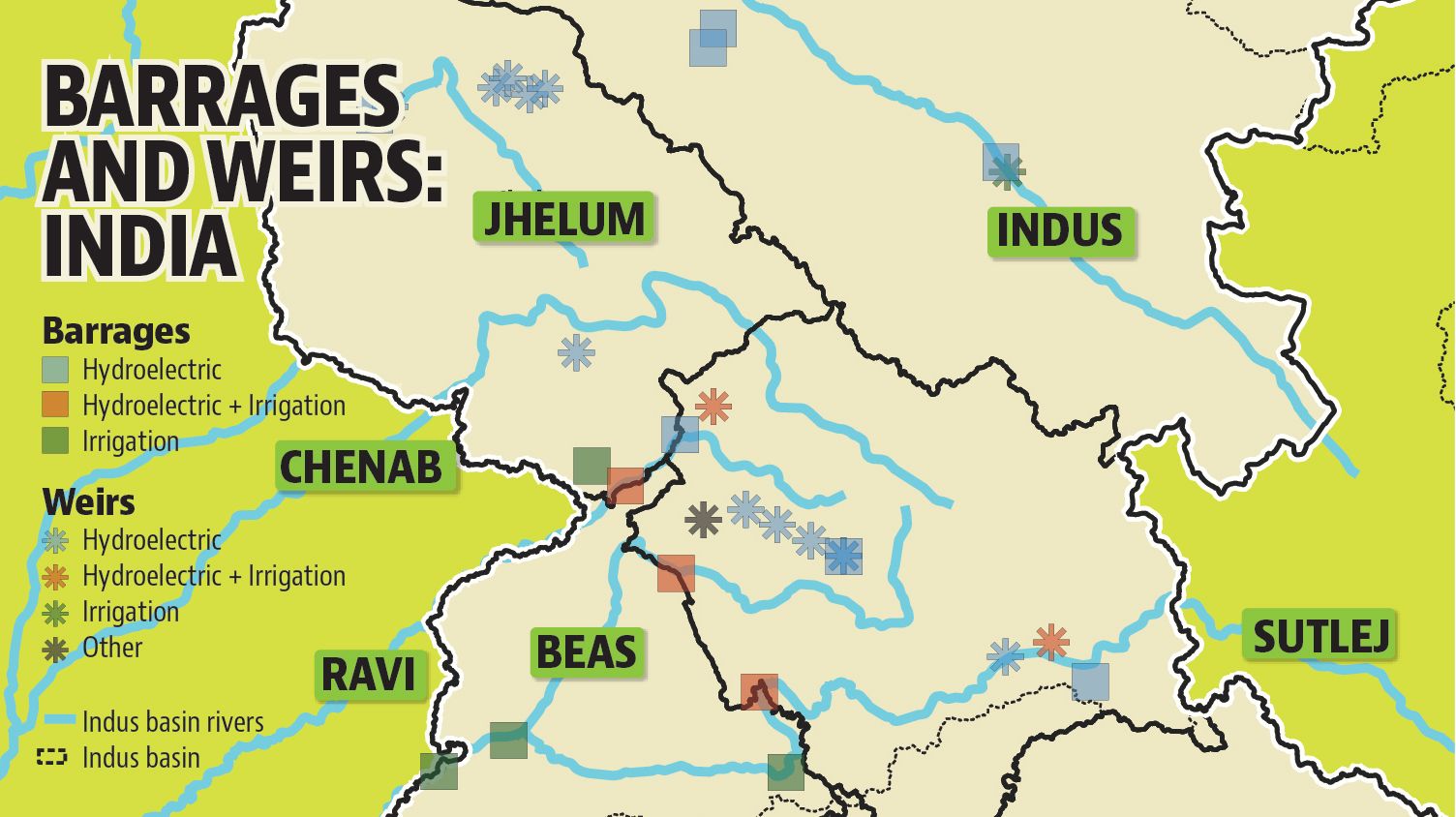
India's big reservoirs are on eastern rivers...
India’s storage in the Indus basin is despite the Indus treaty, which restricts India’s total storage capacity on western rivers to around 4.4 BCM. Therefore, while India has dams on both western and eastern rivers, those with big reservoirs are all located on the eastern rivers; and the opposite holds true for Pakistan.


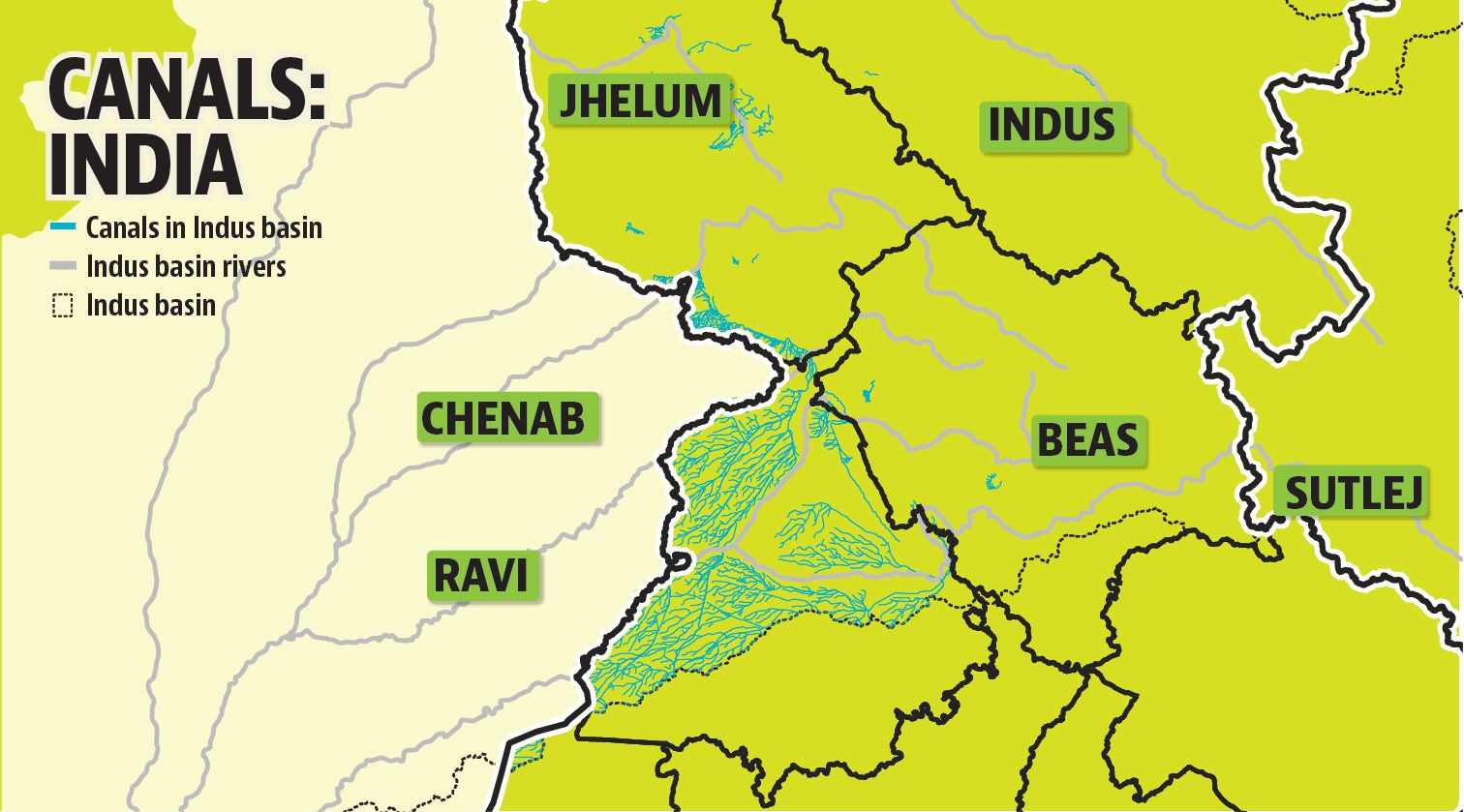
... not on the western
In fact, given the extensive restrictions on using the water from western rivers, even India’s barrages and weirs are mostly concentrated on the eastern rivers. Barrages and weirs regulate water flow of a river somewhat like a dam, but they do not have large reservoirs for storing water.
Treaty on hold, India to rebuild the canals
The distribution of reservoirs across western and eastern rivers also explains why India cannot currently restrict Pakistan from using the Indus basin water, even with the IWT on hold. Pakistan gets most of its water from the western rivers, where India does not have a large storage capacity. However, some of these disadvantages may decrease if the treaty is reworked. As HT reported on May 17, India prioritised rebuilding and expanding canals – currently concentrated only on eastern rivers – soon after it put the treaty on hold. This was also a need for India from an irrigation point of view, which India had sought to address with a reworked treaty even before the terror attack.
Graphics: Kapil Narang