
A Webinar on Understanding Every Child Beyond the Classroom: By Educart
Behaviour is visible but reasons behind are not. On witnessing frequent changes in the behaviour of students, more than 160 educators gathered in a national-level webinar focused on understanding adolescents beyond academics, marks and visible classroom behaviour.
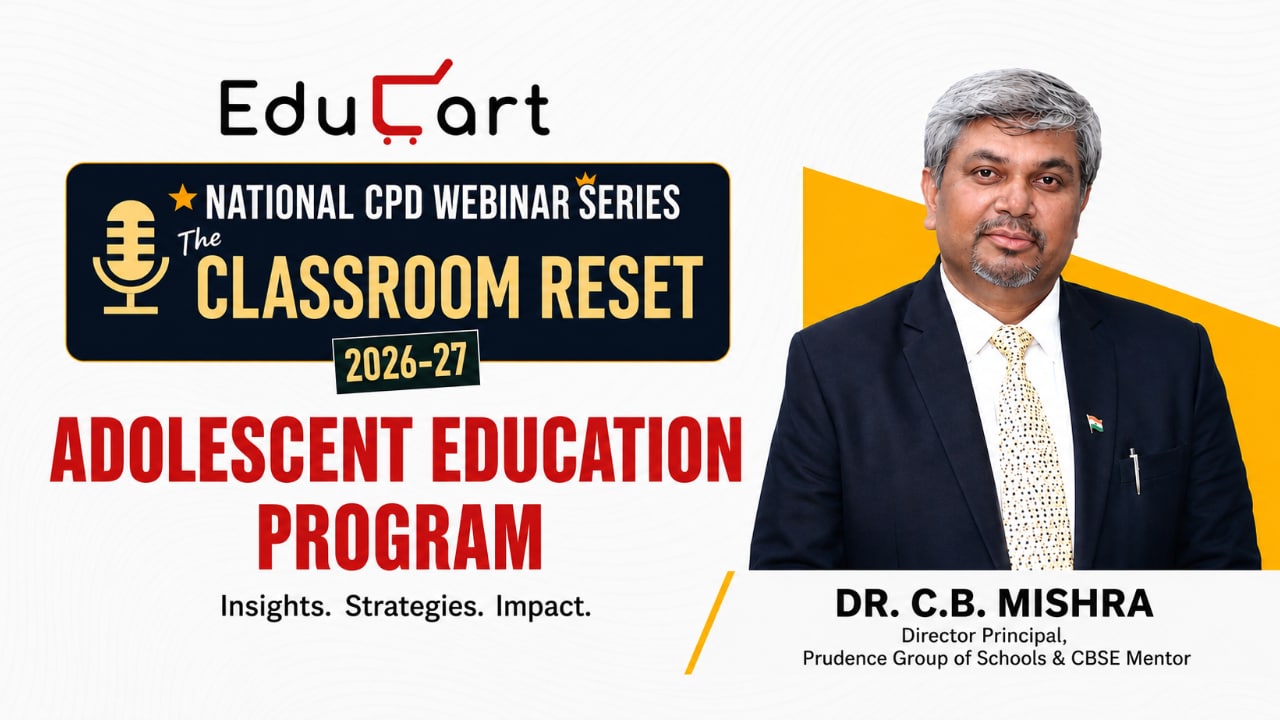
Conducted under the Educart’s National CPD Webinar Series - The Classroom Reset, the session explored how teachers can better understand the emotional, social and behavioural changes students experience during adolescence.
The webinar led by Dr. C.B Mishra brought the educators together to better know the students through experience-driven classroom insights, and real-life cases.
Keys of the Webinar
- Topic: Adolescent Education Program
- Speaker: Dr. C.B. Mishra, Director Principal, Prudence Group of Schools
- Discussion Led By: Mr. Nishant Singh
- Date: 23 May 2026
- Duration: 2 Hours
- Type of Event: National CPD Webinar (Online)
- Participation Fee: Free
Understanding the Child Behind the Behaviour
The webinar revolved around one of the major themes ‘invisible burdens’ which adolescents often carry. Dr. Mishra framed this segment by mentioning that a child who acts out or behaves differently than usual is almost never difficult. That child is surely under some ‘invisible burdens’ like:
- Academic expectations
- Emotional concerns
- Social pressure
- Family situations
- Peer relationships
- Personal insecurities
These burdens are sometimes carried by the students unknowingly.
Teachers Should Understand First
Following the previous segments, this segment framed how it is important for the teachers to be a listener for the students. Only listening can provide enough emotional support to the students for them to open up. Dr. Mishra encouraged teachers to understand the child’s behavior by listening to them carefully without providing any advice.
Some key approaches discussed were:
- Listen before reacting: Give students the space to communicate and feel heard
- Understand before correcting: Look for what may be triggering a particular behaviour
- Highlight positive traits: Recognise what a student is doing well instead of constantly pointing out mistakes
- Become an emotional anchor: Build a relationship in which students feel supported while maintaining appropriate classroom boundaries
This discussion in the beginning emphasised that the child behind the behaviour can often lead to more effective classroom responses than immediate correction and punishment.
Real Classroom Cases Bring Adolescent Psychology to Life
Rather than keeping the conversation theoretical, Dr. Mishra discussed situations teachers frequently come across in schools.
- Cyberbullying and its impact on a student’s emotional and mental well-being
- Emotional withdrawal, when a student becomes unusually quiet or disconnected
- Mood swings that are commonly experienced during adolescence
- Appearance-based insecurities that may suddenly affect a student’s confidence
- Discipline challenges that teachers regularly encounter in the classroom
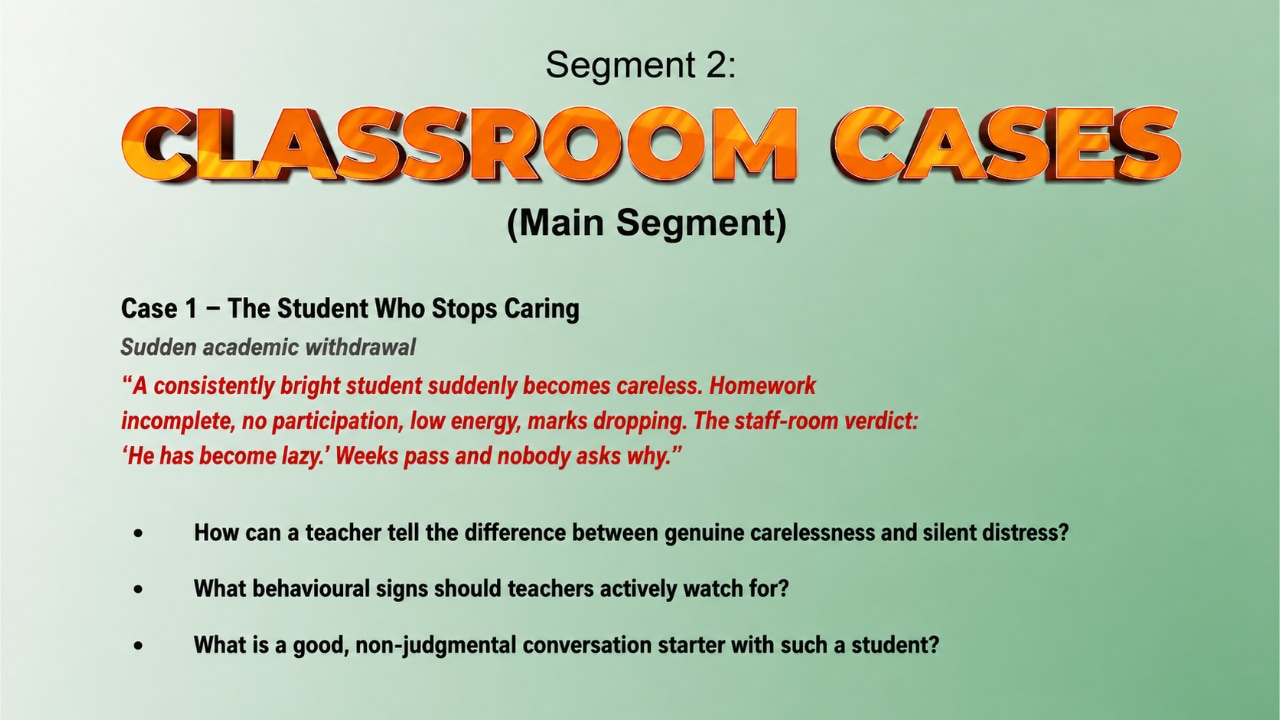
The cases were discussed to help educators explore adolescent psychology which is actually influencing their behaviour within the classroom. The session encouraged teachers to respond to sensitive situations with patience, empathy and calm communication, rather than relying on fear-based classroom control.
One of the strategies that was discussed was the ‘Wait and Watch’ approach. This approach motivated the students to take time, observe the students and understand the situation before reacting. This can help teachers make a difference between a one-time behavioural response and a concern that may require greater attention.
From Positive Discipline to Digital Safety
After discussing real-life classroom situations, the conversation shifted towards creating a classroom culture where students feel secure enough to speak openly and honestly.
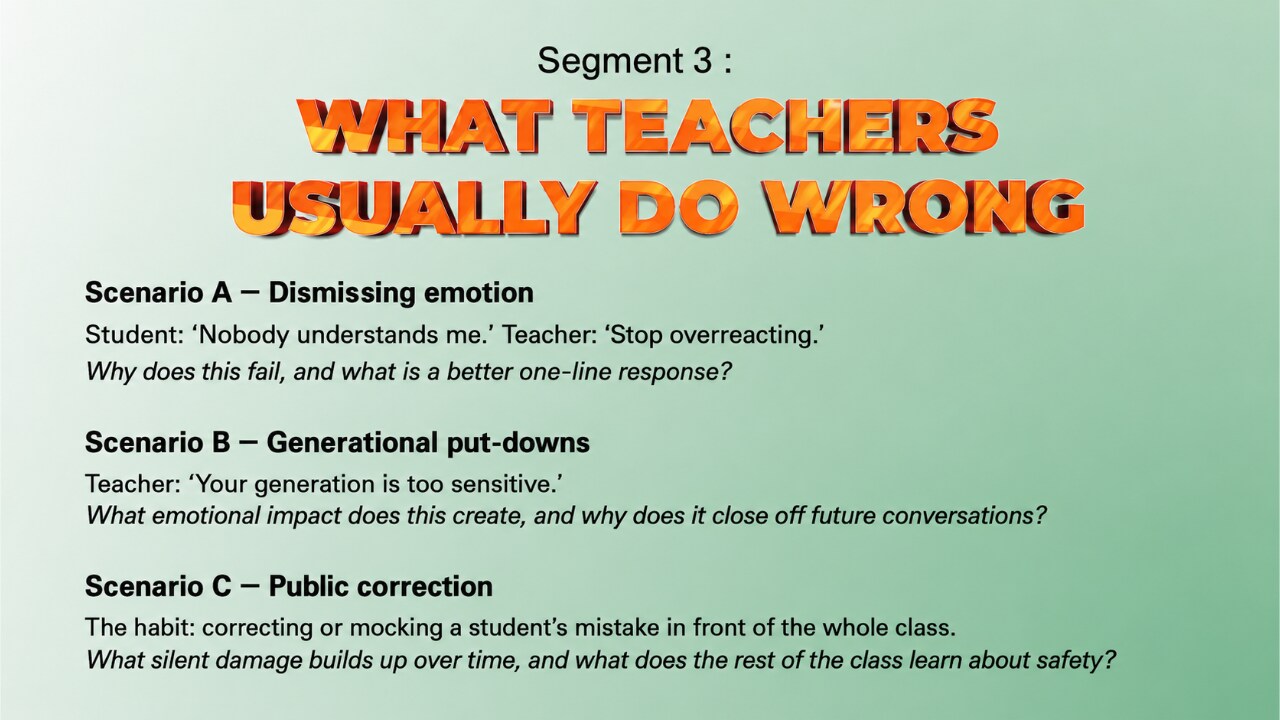
With a large part of teenagers’ social lives now unfolding online, Dr. Mishra highlighted the need for digital safety and a healthy classroom environment in the age of social media. The way teachers respond to students, he suggested, can significantly influence whether they feel comfortable sharing their concerns.
He particularly emphasised choosing positive discipline over fear.
- Fear may create an outwardly disciplined classroom, but it can weaken the connection between teachers and students
- Respect and trust create a safer classroom environment, giving students the confidence to communicate openly and honestly
Turning Ideas into Everyday Classroom Practice
The webinar went beyond discussions on adolescent behaviour and introduced methods that teachers could take back and use in their classrooms.
- Think-Pair-Share: An interactive approach where students first reflect independently, then exchange their thoughts with a partner and finally share them with the class. The method can encourage teachers from students whose voices may otherwise remain unheard.
- Head-Heart-Hand: A complete learning framework that brings together what students know, feel and can do, ensuring that learning is not treated purely as an intellectual exercise.
- Reimagined Homework: Moving beyond routine assignments by making homework more reflective, practical and connected to real-world experiences, so students can see greater meaning in what they are asked to do.
Across these strategies, Dr. Mishra repeatedly returned to three qualities: empathy, communication and trust-building. Rather than treating them as additional elements of good teaching, the discussion positioned them as the foundation on which meaningful teacher-student relationships and healthier classrooms can be built.
“The Power of Care in Teaching”
Dr. Mishra summed up the essence of the session with the thought, “Students don’t care how much you know until they know how much you care.” The message highlighted that teaching adolescents is not limited to subject knowledge; empathy, active listening and human connection are equally important while maintaining academic expectations.
The webinar remained interactive, and educators particularly valued:
- Practical strategies that could be applied in everyday classrooms
- Relatable case studies based on real classroom situations
- Reflection activities that encouraged teachers to think beyond immediate student behaviour
- Open exchange of experiences and ideas among participating educators
The session ultimately focused on that adolescents need patience, guidance and understanding, and that stronger teacher-student connections can support both their emotional well-being and academic growth.
Conclusion
The webinar reinforced that understanding adolescents requires teachers to look beyond marks and classroom behaviour. By combining empathy, active listening, positive discipline and practical classroom strategies, educators can create spaces where students feel heard, supported and confident enough to express themselves.
The session ultimately highlighted that academic growth becomes more meaningful when it is supported by trust, patience and human connection, encouraging teachers to guide adolescents not just as learners, but as individuals navigating an important stage of their lives.