
Beyond Science, Commerce & Humanities: Career Counseling Session for Stream Selection
Choosing a stream after Class 10 is often the first major academic decision students make for themselves. Science, Commerce and Humanities have often been viewed as streams opening up specific pathways. But with changing times, the career opportunities provided by these streams have also evolved.
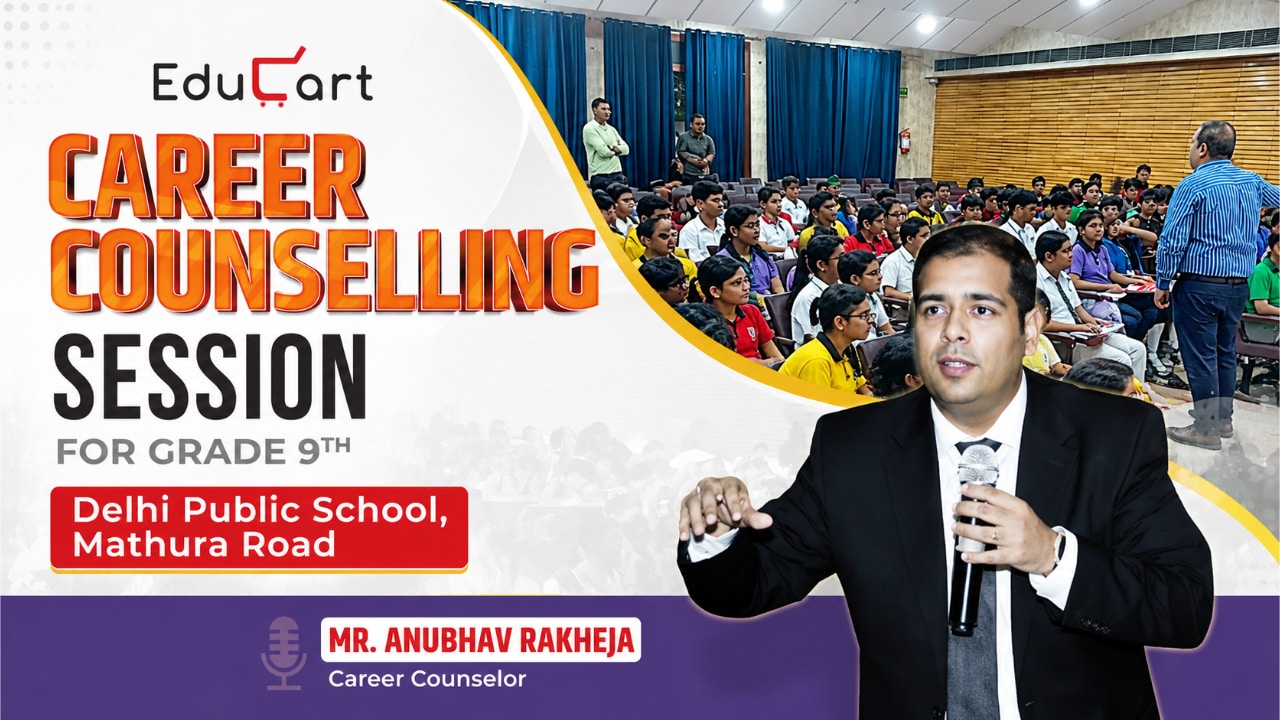
Now, students should choose a stream based on their interests, and aptitude. Educart understood that guidance for the choices should begin earliest by Grade 9 and so, to help the students, a career counseling workshop was organised on 5th August, 2026.
Workshop Highlights
- Organised By: Educart
- Venue: Delhi Public School, Mathura Road
- Date: 5 August, 2026
- Duration: 1 Hour
- Session: Student Career Counseling Workshop
- Career Counselor: Anubhav Rakheja
- Discussion Led By: Inderpreet Singh
The aim of the session was to focus on helping students understand stream selection based on their inclinations. Also, encouraging them to make future academic choices based on self-awareness and exploration.
Moving Beyond Misconceptions Around Streams
The session started with addressing the idea around the three streams. These perceptions turned into beliefs as the students understood Science automatically offering better career opportunities than Commerce and Humanities.
Mr. Anubhav clarified these misconceptions and focused on the fact that career success is majorly shaped by interests, aptitude and individual capabilities, rather than just the stream selected in school.
This clarity opened up a large conversation about how careers are changing. Students were told that streams should not be viewed as rigid ways leading to limited professions. Instead, should be taken as a possibility of multiple career trajectories from each stream.
Choosing a Stream Starts With Knowing Yourself
Before deciding which stream to choose, students were motivated to understand their own strengths and areas for improvement.
The session focused several crucial factors students can consider while making academic choices, including:
- Interests and long-term aspirations
- Individual learning styles
- Aptitude and problem-solving abilities
- Personality traits
- Strengths and areas requiring improvement
Towards the end of the segment, the message to be focused on was that stream selection being the first decision towards the ladder of career, should begin with self-discovery, rather than external expectations. Understanding one's abilities and interests can help students identify subjects and careers that better align with their individual potential.
Subject Choices Shaping Future Opportunities
This part of the workshop focused on guiding the students about subject combinations after Class 10 which can influence their higher education and career options.
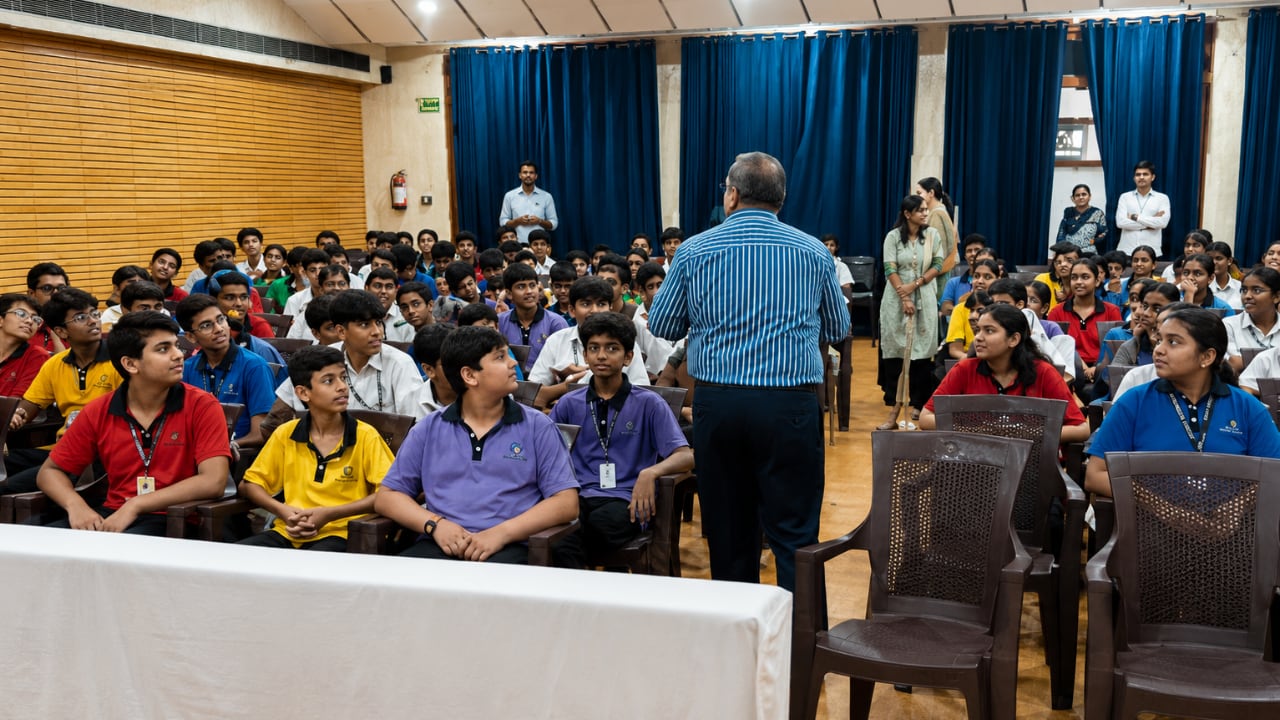
Students learned that:
- Certain university programmes require specific subjects in Classes 11 and 12.
- Different subject combinations can open pathways to multiple academic fields and careers.
- Career pathways today are more flexible as compared to earlier times where Science, Commerce and Humanities offered specific career choices.
- Interdisciplinary education allows students to combine interests across different fields.
This segment also helped students to know the importance of discussion on stream selection at this early stage. They understood that knowing now can help choose a subject thoughtfully when the time comes.
Career Beyond the Known Ones
Engineering and medicine remain popular career choices, but students were told that now they have access to several emerging and future-ready opportunities across streams. Students were then introduced high-growth fields such as:
- Data Science
- Design
- Artificial Intelligence (AI)
- Psychology
- Law
- Liberal Arts
- Economics
- Public Policy
- Environmental Science
- Entrepreneurship
- Business Management
Students also learned that:
- Different streams can lead to careers across multiple industries
- Leading global universities value diverse academic interests
The discussion inspired students to look above the known professions and explore the growing range of opportunities available to them.
Scholarships and Global Opportunities
In continuation with the previous segment, Mr. Anubhav familiarized students with merit-based, need-based and talent-based scholarships, as well as financial support offered through government programmes, private organisations and universities in India and overseas.
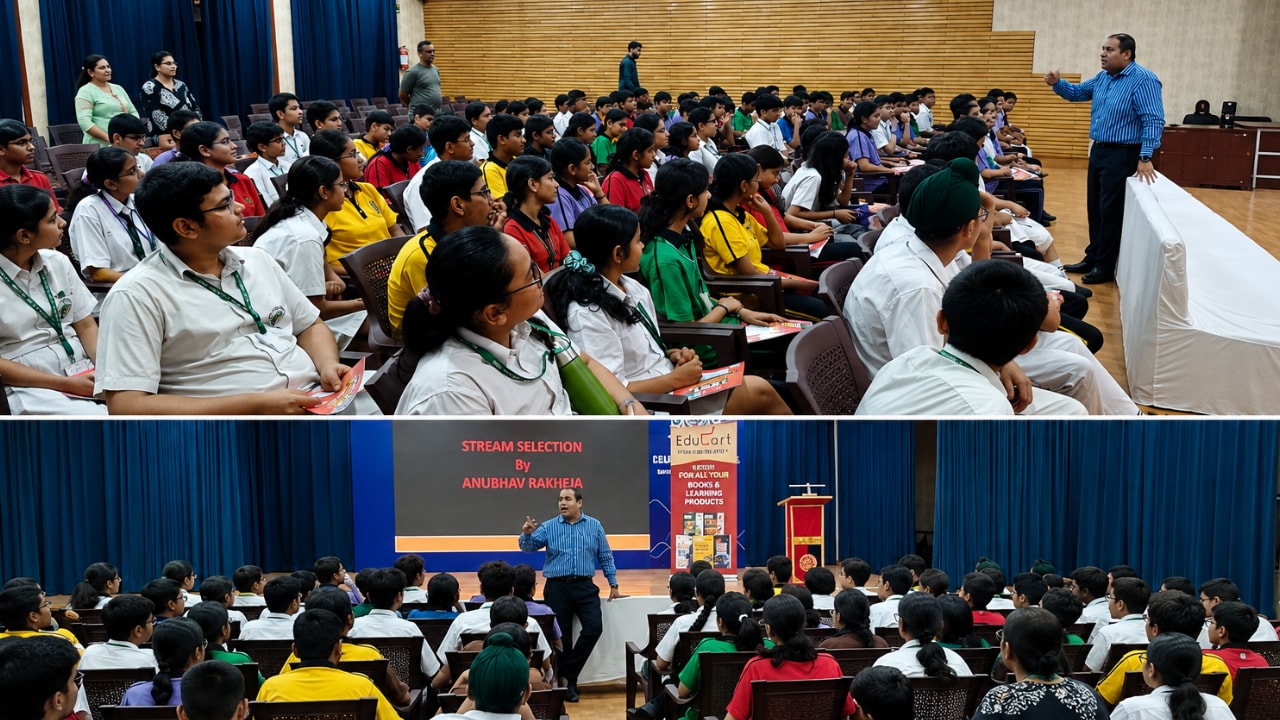
Students were told that early awareness can be particularly useful, as scholarship requirements may involve academic performance, extracurricular achievements, competitions or other profile-building activities developed over several years.
The segment also introduced students to global exposure opportunities such as:
- Summer schools at international universities
- Research programmes
- Student exchange opportunities
- Short-term academic courses
Such experiences can allow school students to explore subjects in greater depth, and experience different academic environments. Also, students can develop a broader perspective before making decisions about undergraduate education.
In the End
The session focused on career preparation that goes beyond academics, with extracurricular activities, leadership, internships and projects helping students build essential skills. For Grade 9 students, starting early can help them make future choices that align with their interests, abilities and aspirations.
By helping students make informed decisions at an early stage, Educart aspires to support learners beyond textbooks & preparing them not only for academic success but also for meaningful and future-ready careers.