
Beyond the Textbook: How Art Integration Makes Classroom Learning Meaningful
Imagine students learning concepts by creating, observing, and performing instead of simply reading a definition. That's the power of creativity. It can make learning more engaging and memorable. For example, students can create their own Moon phases using biscuits and arrange them around a model of the Earth.
A recent CPD webinar on Art Integration for school teachers by Educart explored how creativity can turn classroom concepts into memorable learning experiences. The session took place on September 26, 2026, hosted by Educart's CPD (Continuing Professional Development) Webinar Series.
Over two hours, the speaker explained what art integration is, how teachers can use it in the regular classroom, and shared simple, low-cost activities. The big takeaway was that what students learn from an activity matters more than how the final creation looks.
Workshop at a Glance
Topic: Art Integration
Organised by: Educart
Duration: 2 hours
Facilitator: Mr Mathews K. Thomas (NCERT Master Trainer)
Discussion led by: Ms Sonali Khosla
Event type: CPD Webinar
Participation fee: Paid
What Art Integration Really Means?
People think art integration is just drawing or creating a craft item in class. Mr Thomas said it is far more than that. In this approach, the subject concept remains the focus of the lesson and art is the route through which children understand it and demonstrate their learning.
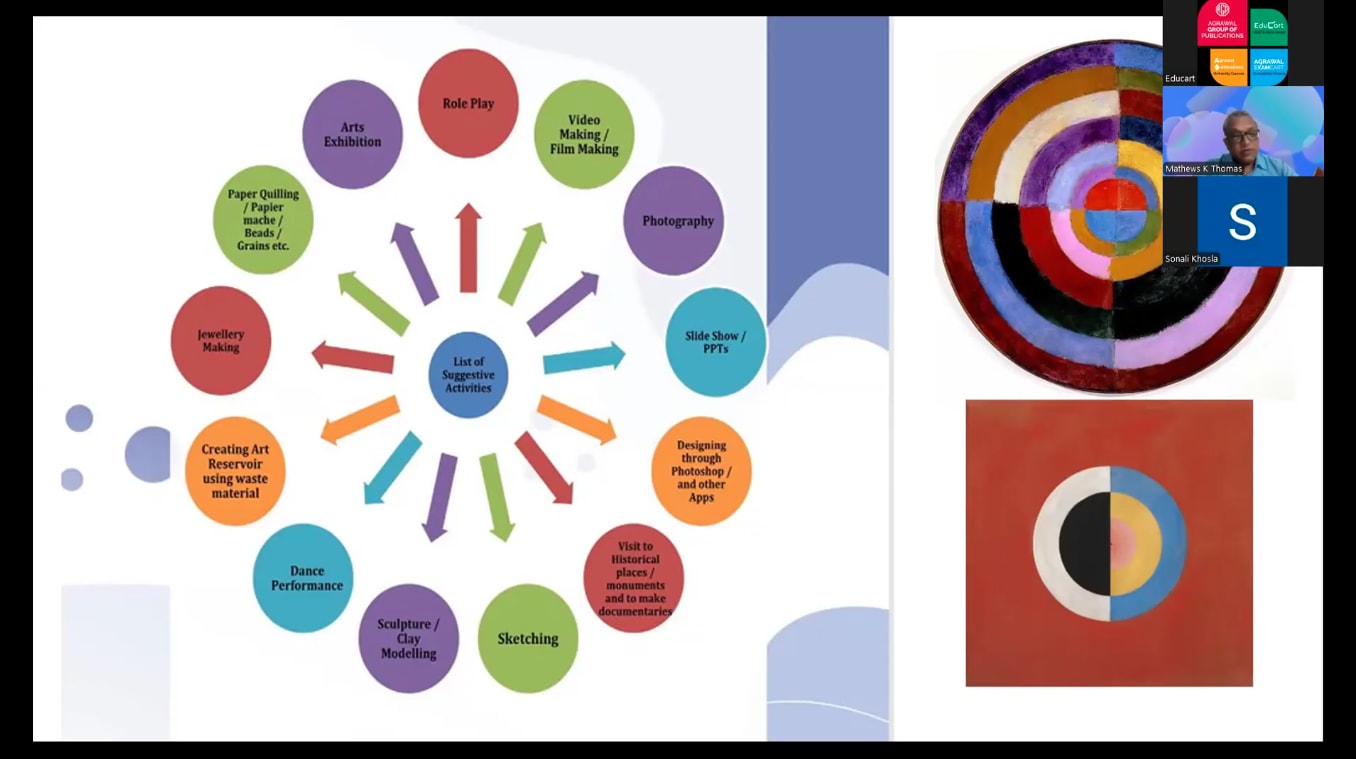
He explained it as thinking outside the box and not putting children in a rut to only give one correct answer. A child can draw, act, sing, dance, create a model or make an animation. The following examples were cited: Painting, Clay Work, Music, Origami, Drama and Mime. The art form can evolve, but the learning goal doesn’t.
Why Art Integration Matters for Schools?
The Art Integration webinar was conducted with the aim of taking learning beyond textbooks and rote memorisation. Since every child learns differently, giving students multiple ways to participate and express ideas creates more opportunities to show what they’ve learned.
It helps students build teamwork, self-confidence and emotional expression while encouraging observation, curiosity, respect for different cultures, and connections between subjects.
The session also explained the expected learning outcomes of AIL (Art Integrated Learning), such as:
- Collaborate with peers and build confidence
- Express thoughts and emotions in different ways
- Appreciate different cultures
- Bringing different concepts together
- Reflect on their own learning
- Observation and experimentation
- Develop curiosity and scientific mindset
How Can Teachers Use Art Integration
An easy rule for teachers: he recommended pairing what they teach with an appropriate art form, wherever possible. For example:
- Maths concepts can be explored through patterns or paper folding.
- Science ideas can be demonstrated through models.
- Languages can come alive through drama
- Social Science topics can be understood through pictures and visuals.
The technique depends on the child's age. One activity can bring many concepts together for younger and middle-school students. For higher classes, activities are more closely aligned with the curriculum requirements of the subject.
Learning by Doing
Mr Thomas also discussed experiential learning, which simply means learning by doing something. An experience that a child has lived tends to be remembered better than one they have only heard of.
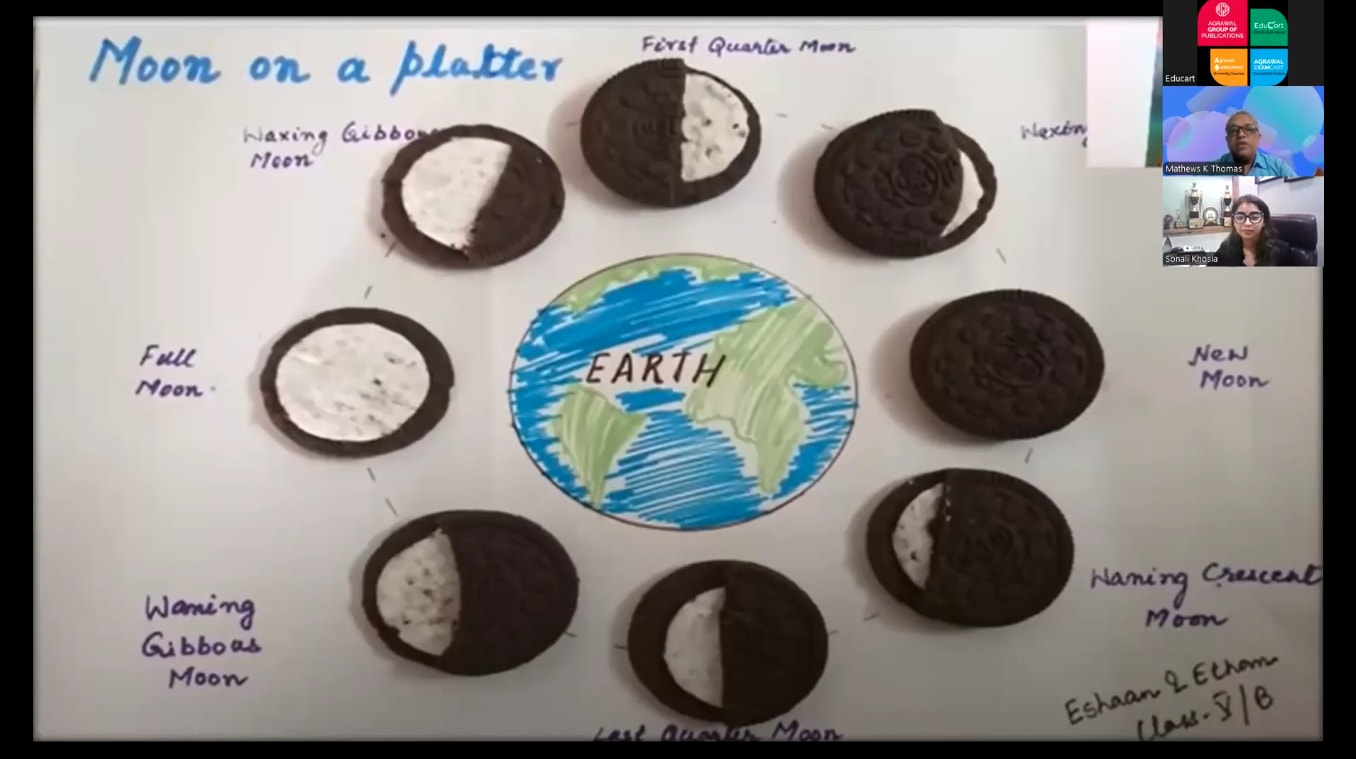
One example was a student project called "Moon on a Platter". Cream biscuits were arranged around a drawn Earth to show the phases of the moon, from new moon to full moon and back. Children could see the changing shape and remember it easily.
This activity shouldn't end when the task is complete. Children should go through four steps:
- Participate in the activity
- Reflect on what happened
- Discuss what they learnt
- Apply the learning to a different situation
Big Ideas from Simple Materials
One major idea of the session was that art integration doesn’t need money or fancy resources. A teacher can use newspapers, fabric, buttons, leaves, bottles, cartons, and other easily available materials to explain a concept. Such materials are also cheap and eco-friendly, and they help children observe their surroundings more closely.
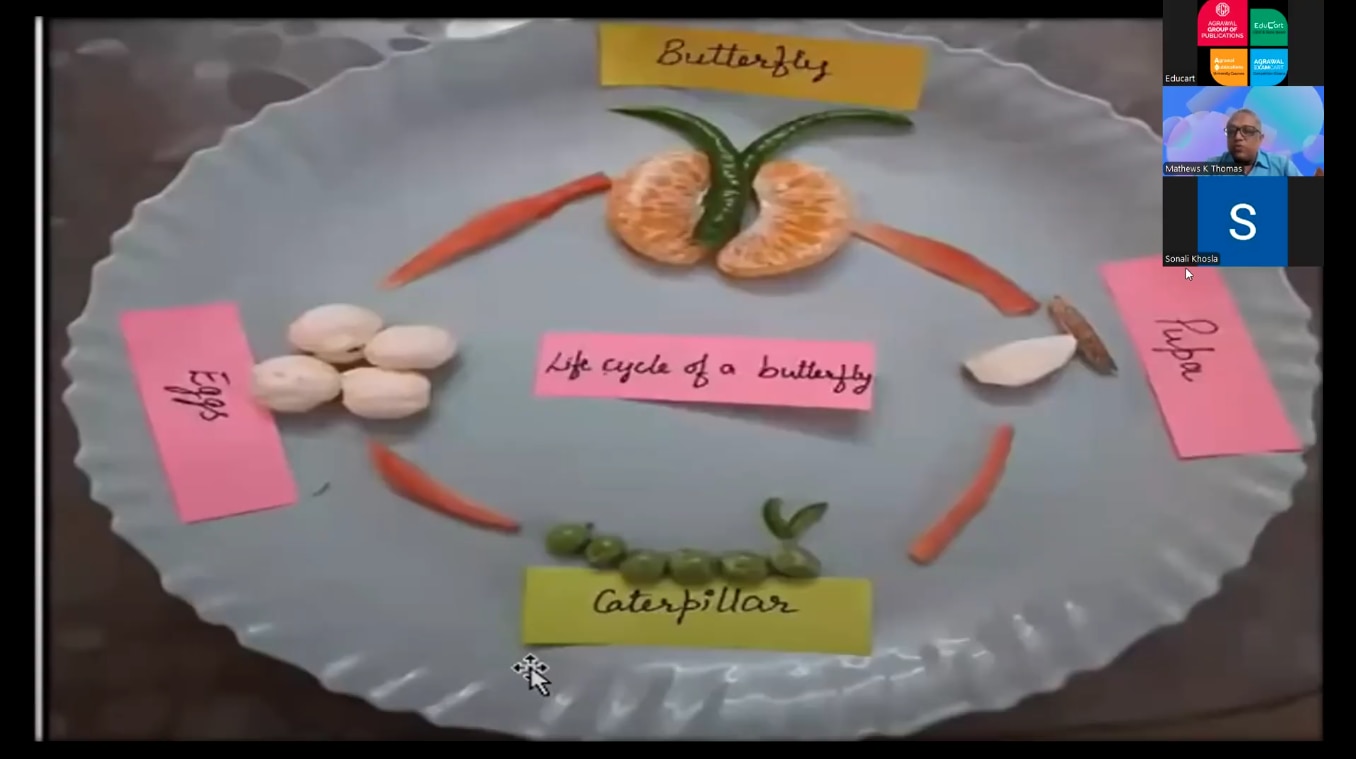
An attention-grabbing highlight was a project on the life cycle of a butterfly created from vegetables and other materials found at home. It proved that what counts is not the price of the material but how creatively a child explains an idea.
Maths Can Be Colourful Too
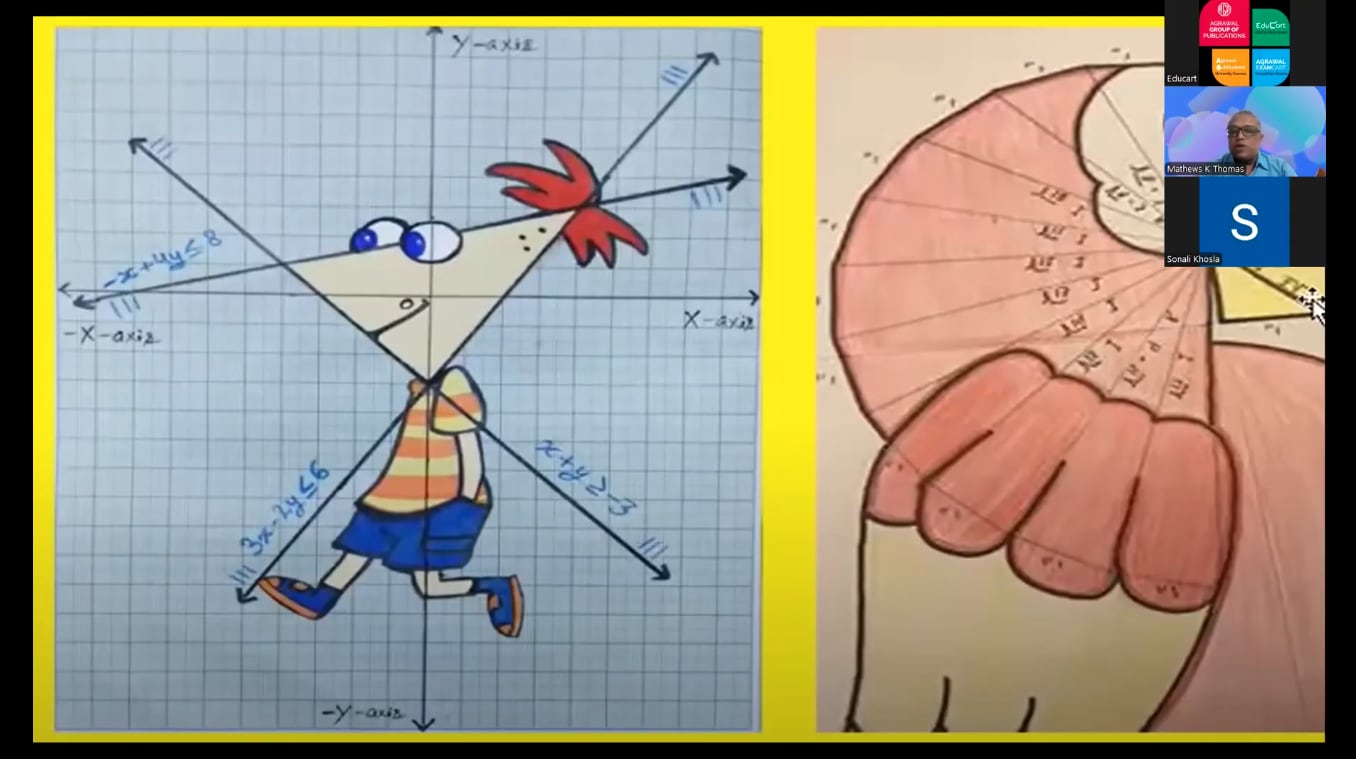
One slide depicted a cartoon on graph paper with the outline created from lines in linear inequalities. A topic many students struggled with became something they could enjoy and take pride in.
Animation, Videos and STEM Projects
The speaker also played a video to show how animation can help explain ideas that are difficult to imagine. For kids who learn better by seeing than by listening, visual tools can help to make abstract topics more accessible.
He also spoke about STEM projects, in which students use ideas from Science, Technology, Engineering and Maths to tackle real-life problems. Beyond just learning a concept, definition, or formula, students are encouraged to put it to work while solving a real-world problem. This ideology moves learning from:
“What do I need to remember?”
To
“How can I use what I have learnt?”
This shift from memorising information to using knowledge in meaningful situations is at the heart of competency-based learning.
Planning an Activity and Checking Learning
Mr Thomas then presented a simple model for writing an art-integrated learning (AIL) activity. A teacher notes down the class, subject, chapter or theme, the art form to be used, the time needed and the learning objectives.
Activities can be as brief as 10-15 minutes or can be expanded to larger classroom projects. Teachers should not evaluate only the end product. They can observe how students:
- participate in the activity
- communicate their ideas
- think and solve problems
- collaborate with others
- apply their knowledge in real life
This makes assessment an integral part of learning, rather than a separate activity.
Kala Setu: Platform to Share Ideas
The webinar also introduced teachers to Kala Setu, a space for sharing and discovering creative classroom activities. It provides teachers with an opportunity to learn from others and gain new concepts to apply in their own classrooms.
The Takeaway
The webinar highlighted that children learn better when they are involved, and there is more than one way to show understanding. With simple materials such as paper, graphs, vegetables, and everyday objects, teachers can bring art integration into classroom learning.
The message also helps parents. When a child explains a concept through a drawing, model, or performance, they are not just being creative; they are also learning. The synergy of art and academics makes classrooms happier and more engaging, making learning more meaningful than memorization.