
Practice Class 10 Science Competency-based Questions based on 2023-24 Board Exams Pattern
Science is considered one of the most difficult subjects by Class 10 students. Ever since the announcement of the increment of competency-based questions by CBSE, the students have been trying to find the right study material to include in their practice sessions.

There are Class 10 additional practice papers available at the official site to help students get well-versed with the exam pattern and level. To boost students’ preparation for the board exam, we are providing the top most important competency-based questions.
What are Competency-based Questions Class 10 Science?
Competency-based questions in Science are introduced to help students align their understanding of scientific concepts with real-world situations. The introduction of competency-based questions will help in eradicating the rote-learning method and will help students solve the problems practically.
An in-depth understanding of Class 10 Science concepts is a crucial element in attempting competency-based questions. Understanding the real problem and finding the scientific and practical solution is what competency questions are based on.
Case studies, true-false, assertion-reasoning, short and detailed questions, everything can be included in competency-based questions. The section below will include questions as per the latest exam pattern.
Case-Based Questions
The question paper will include three case-based questions carrying 4-5 marks for every question.
Read the following passages and answer the questions that follow:
Ques 1. The Human body is made up of five important components, of which water is the main component. Food as well as potable water are essential for every human being. The food is obtained from plants through agriculture. Pesticides are being used extensively for a high yield in the fields. These pesticides are absorbed by the plants from the soil along with water and minerals and from the water bodies. These pesticides are taken up by the aquatic animals and plants. As these chemicals are not biodegradable, they accumulate progressively at each trophic level. The maximum concentration of these chemicals accumulates in our bodies and greatly affects the health of our minds and bodies.
- Why is the maximum concentration of pesticides found in human beings?
- Give one method that could be applied to reduce our intake of pesticides through food to some extent.
[Chapter-13 Our Environment]
Ans:
- As human beings occupy the top level in any food chain, the maximum concentration of these chemicals accumulates in our bodies due to biological magnification.
- We can reduce our intake of pesticides through food to some extent using the following methods:
- Wash fruits and vegetables before eating.
- Buy organic and locally grown fruits and vegetables.
- Use non-toxic methods for controlling insects in the kitchen garden.
Ques 2. Baking powder is used in cooking to make the cake spongy, crisp pakoda. Although baking soda also produces CO2 on heating, it is not directly used in cooking because it makes the taste slightly bitter. Generally mild edible acid is mixed with baking soda to make baking powder. When baking powder is heated NaHCO3 decomposes to give CO2 which makes bread and cake soft and spongy. Mild edible acid helps to remove bitter taste due to the formation of sodium tartrate.
2NaHCO3 + mild edible acid → Na2C4H4O6 Sodium Salt of acid+H2O +CO2
- Sodium hydrogen carbonate is produced using:
(a) sodium chloride
(b) ammonia
(c) carbon dioxide
(d) all of these.
- The gas released during the heating of Sodium hydrogen carbonate is
(a) carbon dioxide
(b) hydrogen
(c) carbon monoxide
(d) both (a) and (b).
- The edible acid added to the Sodium hydrogen carbonate to make baking powder is:
(a) Tartaric acid
(b) Dilute hydrochloric acid
(c) Formic acid
(d) Any of these.
- The nature of Sodium hydrogen carbonate solution is:
(a) basic
(b) highly acidic
(c) neutral
(d) slightly acidic.
- Sodium hydrogen carbonate is used to prepare a cake because
(a) it makes the cake tasty
(b) it makes the cake sweet
(c) it makes the cake colourful
(d) it makes the cake soft and spongy.
[Chapter-2 Acids, Bases & Salts]
Ans:
- (d) all of these
- (a) carbon dioxide
- (a) Tartaric acid
- (a) basic
- (d) it makes the cake soft and spongy
Ques 3. Observe the ears of all the students in the class. The lowest part of the ear, called the earlobe, is closely attached to the side of the head in some of us, and not in others. Free and attached earlobes are two variants found in human populations.
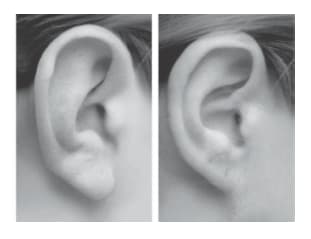
The percentage of people having free earlobes and attached earlobes is shown below:
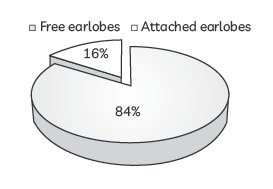
- The earlobes of a child whose parents have free earlobes will be:
(a) free earlobe
(b) attached earlobe
(c) can be free or attached earlobe
(d) neither free nor attached.
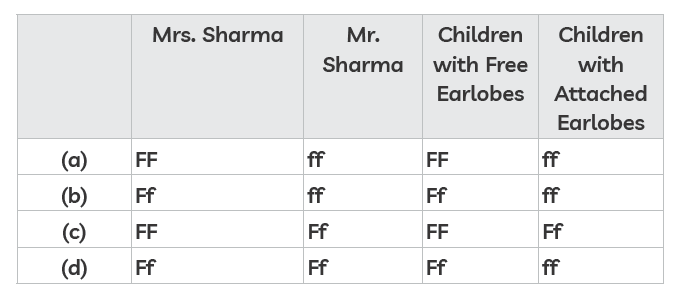
- Mrs. and Mr. Sharma have six children. Three of them have attached earlobes like their father, and the other three have free earlobes like their mother. Taking F for free earlobes and f for attached earlobes, select the row containing the correct genotype of parents and children from the table below:
[Chapter-8 Heredity and Evolution]
Ans:
- (c) can be free or attached earlobe
- (b) Mrs. Sharma: Ff; Mr. Sharma: ff; Children with free earlobes: Ff; Children with attached earlobes: ff
Ques 4. The given below images are those of a specialised slide projector. Slides are small transparencies mounted in sturdy frames ideally suited to magnification and projection since they have a very high resolution and a high image quality. There is a tray where the slides are to be put into a particular orientation so that the viewers can see the enlarged erect images of the transparent slides. This means that the slides will have to be inserted upside down in the projector tray.
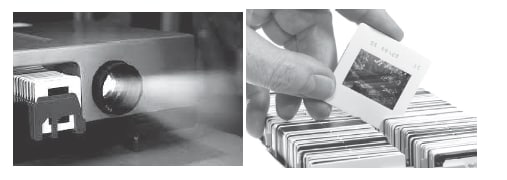
To show her students the images of insects that she investigated in the lab, Mrs. Iyer brought a slide projector. Her slide projector produced a 500 times enlarged and inverted image of a slide on a screen 10 m away.
- Based on the text and data given in the above paragraph, what kind of lens must the slide projector have?
- If v is the symbol used for image distance and u for object distance then with one reason state what will be the sign for V/u in the given case.
- (A) A slide projector has a convex lens with a focal length of 20 cm. The slide is placed upside down 21 cm from the lens. How far away should the screen be placed from the slide projector’s lens so that the slide is in focus?
(B) When a slide is placed 15 cm behind the lens in the projector, an image is formed 3 m in front of the lens. If the focal length of the lens is 14 cm, draw a ray diagram to show image formation. (not to scale).
[Chapter-9 Light – Reflection and Refraction]
Ans:
- Convex lens
- Negative as the image is real and inverted.
- (A) 1/f = 1/v - 1/u
1/20 = 1/v - 1/(-20)
1/v = 1/20 - 1/21
= (21-20)/420
= 1/420
(B) v = 420 cm

Ques 5. The thyroid gland is a bilobed structure situated in our neck region. It secretes a hormone called thyroxine. Iodine is necessary for the thyroid gland to make thyroxine. Thyroxine regulates carbohydrate, protein, and fat metabolism in the body. It promotes the growth of body tissues also. When there is an excess of thyroxine in the body, a person suffers from hyperthyroidism and if this gland is underactive it results in hypothyroidism. Hyperthyroidism is diagnosed by blood tests that measure the levels of thyroxine and thyroid-stimulating hormone (TSH). Hypothyroidism is caused due to the deficiency of iodine in our diet resulting in a disease called goitre.
- Where is the thyroid gland situated in our body?
- State the function of thyroxine in the human body.
- What is hyperthyroidism? How can we control hypothyroidism?
[Chapter-6 Control and Coordination]
Ans:
- Thyroid gland is situated at the front of the neck, just below the larynx (Adam’s apple).
- Thyroxine hormone is secreted by thyroid glands. Thyroxine plays a vital role in increasing the basal metabolic rate and regulating long bone growth. Increasing the body’s sensitivity to the hormone adrenaline, digestive functions, etc.
- Hyperthyroidism occurs when the thyroid gland produces an excessive amount of the hormone thyroxine. We can control hypothyroidism by including iodized salt in our diet. A deficiency of iodine in our diet reduces the levels of TSH and a disease called goitre.
Ques 6. Pre-Conception and Pre-Natal Diagnostic Techniques (PCPNDT) Act,1994 is an Act of the Parliament of India enacted to stop female foeticides and arrest the declining sex ratio in India. The act banned prenatal sex determination. This process began in the early 1990s when ultrasound techniques gained widespread use in India. There was a tendency for families to produce children until a male child was born continuously. Social discrimination against women and a preference for sons have promoted female foeticide in various forms, skewing the sex ratio of the country towards men.
- Why is the child sex ratio declining at an alarming rate in India?
- How can unwanted pregnancies be terminated? Write the names of any two contraceptive methods.
- (A) Which two factors determine the size of the population and how?
(B) Why is the increasing size of the human population a matter of concern?
[Chapter-7 How do Organisms Reproduce?]
Ans:
- The child-sex ratio is declining at an alarming rate because of preference in Indian societies for a male child and reckless female foeticides.
- Unwanted pregnancies can be terminated by surgical method.
Methods of contraception:
- Mechanical barrier methods such as the use of condoms.
- Surgical methods such as tubectomy in females and vasectomy in males
- Chemical methods such as Oral and vaginal pills
- Intra-Uterine Contraceptive Devices such as copper –T
- (A) The two factors which determine the size of the population are death rate and birth rate. The increase in birth rate increases the population size whereas, an increase in death rate decreases the size of the population.
(B) The increasing size of the population is a matter of concern as the expanding population makes it difficult to provide good living standards, health services, nutrition, etc., to everyone.
Ques 7. The figure shown below represents a common type of dialysis called Haemodialysis. It removes waste products from the blood, such as excess salts, and urea which are insufficiently removed by the kidney in patients with kidney failure. During the procedure, the patient’s blood is cleaned by filtration through a series of semipermeable membranes before being returned to the patient's blood. Based on this answer the following questions:
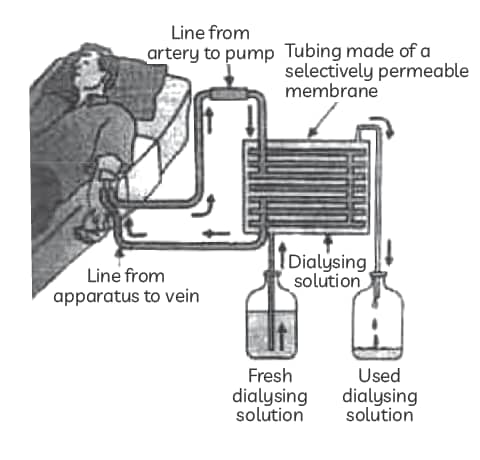
- (A) Name the filtering units present in the human kidneys.
(B) Name the main excreting waste removed by kidneys from blood. - What are the two main functions of kidneys?
- What are the major factors on which the amount of water reabsorbed in the part of the nephron depends?
[Chapter-5 Life Processes]
Ans:
- (A) The filtering units present in the human kidneys are nephrons.
(B) The main excreting waste removed by kidneys from blood is urea. - The functions of kidneys are excretion and osmoregulation. Kidneys remove nitrogenous waste from the blood and maintain salt and water balance in the body.
- The factors on which the amount of water reabsorbed depends on:
- the amount of excess water present in the body.
- the amount of dissolved waste to be excreted.
Ques 8. Organic compounds are made up of hydrogen, oxygen, carbon, and a few other elements. But, the number of organic compounds is far bigger than inorganic compounds that do not form bonds.
Carbon is a chemical element with the symbol C and atomic number 6. Carbon is a versatile element and is found in many different chemical compounds, including those found in space.
Carbon is versatile because it can form single, double, and triple bonds. It can also form chains, branched chains, and rings when connected to other carbon atoms. The versatile nature of carbon can be best understood with its features such as tetravalency and catenation.
- What is the atomic number and electronic configuration of carbon?
- Name two properties of carbon that lead to the formation of a large number of carbon compounds.
[Chapter-4 Carbon and its Compounds]
Ans:
- Atomic number of carbon is 6 and its electronic configuration is: K-shell: 2, L-shell: 4, or (2, 4).
- The two properties of carbon that lead to the formation of a large number of carbon compounds are tetravalency and catenation.
Ques 9. TA students took four metals P, Q, R, and S, and carried out different experiments to study the properties of metals. Some of the observations were:
(A) All metals could not be cut with a knife except metal R.
(B) Metal P combined with oxygen to form an oxide M2O which reacts with both acids and bases.
(C) Reaction with water.
P – Did not react either with cold or hot water but reacted with steam
Q – Reacted with hot water and the metal started floating
R – Reacted violently with cold water.
S – Did not react with water at all.
- Out of the given metals, identify the metal which needs to be stored in kerosene.
(a) Metal R
(b) Metal P
(c) Metal Q
(d) Metal S
- Which of the following are arranged correctly in the increasing order of reactivity of four metals?
(a) S > P > Q > R
(b) S < P < Q < R
(c) R < Q < P < S
(d) None of these
- Name the metal that starts floating in hot water and explain why.
(a) Copper
(b) Mercury
(c) Magnesium
(d) Zinc
- Metal R reacted violently with cold water. Which metal R could be?
(a) Either sodium or potassium
(b) Magnesium
(c) Zinc
(d) Aluminium
- Metal S did not react with water at all. Which metal ‘S’ could be?
(a) Zinc
(b) Sodium
(c) Potassium
(d) Both (b) and (c)
[Chapter-3 Metals and Non-metals]
Ans:
- (a) Metal R
- (b) S < P < Q < R
- (c) Magnesium
- (a) Either sodium or potassium
- (a) Zinc
Ques 10. Vikram had gone to his cousin’s apartment to celebrate Holi. While climbing the stairs he observed that all the electric metres and main switches were installed on one side of the staircase. On each metre box, apart from other information, the following was also written: kWh metre, 220V AC.
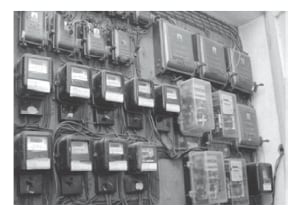
- How many times does AC used in India change direction in one second?
- Vikram is curious to know if there is any difference between the wire used in the element of an electric heater and the wire used in a fuse. Explain.
[Chapter-12 Magnetic Effect of Electric Current]
Ans:
- The frequency of alternating current in India is 50 Hertz. This means that the AC changes current every 1/100 second.
- The wires used in the element of an electric heater and the wire used in a fuse differ from one another in their resistivity and melting points. The wire used in an electric heater has high resistivity and high melting point whereas the wire used as a fuse has low resistivity and low melting point.
Ques 11. Shivani had studied in her class that an electric bulb consists of a filament made up of a metal having a high melting point such as tungsten. Also, the bulbs are filled with a chemically inert gas such as nitrogen or argon to prolong the life of the filament.
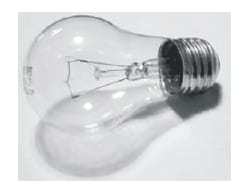
- A current of 2A is drawn by a filament of an electric bulb. What will be the number of electrons passing through a cross-section of the filament in 32 seconds?
- Shivam wondered how electricity produces heat. Explain.
- What is the meaning of the following statement? ‘A typical rating on an electric bulb is 60W-220V.’
[Chapter-11 Electricity]
Ans:
Given that:
I = 2A, t = 32 sec.
I = Q/t
I = ne/t
where, n = number of electrons, e = charge of one electron = 1.6 × 10⁻¹⁹C, I = current, and t = time.
n= (lxt)/e
n= (2x32)/(1.6x10-19)
n= 4 x 10²⁰We know all conductors have free electrons. When an electric potential is applied at the ends of the conductor, the free electrons start moving randomly from the higher potential to the lower potential, however, the motion of free electrons is not very smooth. They collide with the molecules or atoms of the conductor and during these collisions, a part of the energy of moving electrons is transferred to the atoms of the conductor. The atoms of the conductor start moving more vigorously and the temperature of the conductor starts rising. As a result, heat is produced in the conductor.
The statement means that the electric bulb will work with optimum efficiency at a potential difference of 220V and will consume a power of 60W.
Ques 12. Put some sugar in your mouth. How does it taste? Block your nose by pressing it between your thumb and index finger. Now eat sugar again. Is there any difference in its taste? While eating lunch, block your nose in the same way and notice if you can fully appreciate the taste of the food you are eating.
- Identify the correct statements:
(A) The Taste of sugar is sweet.
(B) Gustatory receptors in our tongue are responsible for taste.
(C) Olfactory receptors in our tongue are responsible for smell.
(D) Receptors communicate information to the mouth so that we can taste things.
Options:
(a) Only (A)
(b) Both (A) and (B)
(c) (A), (B) and (C)
(d) (A), (C) and (D)
- When we block our nose by pressing it between our thumb and index finger, then:
(a) there is no change in taste of sugar
(b) we do not get the taste of sugar
(c) there is a change in the taste of sugar
(d) sugar tastes salty (Remember)
- Can you fully appreciate the taste of the food you are eating if you block your nose while eating?
[Chapter-6 Control and Coordination]
Ans:
- (b) Both (A) and (B)
- (c) there is a change in the taste of sugar
- No, we cannot fully appreciate the taste of the food we are eating if we block our nose while eating as the general perception of taste, which we have for any particular edible substance, is jointly created by our sense organs, tongue, and nose through receptors. Gustatory receptors in the tongue will detect taste while olfactory receptors in the nasal cavity will detect smell.
Ques 13. Redox reactions are an important class of reactions. The oxidation and reduction reactions always occur simultaneously, such a class of chemical reactions is named the redox reaction or Oxidation-Reduction reaction. The substance getting reduced in a chemical reaction is known as the oxidising agent, while a substance that is getting oxidised is known as the reducing agent. The activity in which copper powder is taken in a china dish and heated helps in understanding redox reactions
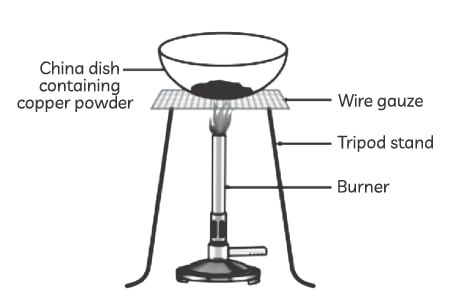
- Observe the given figure and write what happens when the copper powder is heated in a china dish. Explain your observation.
- What will you observe if hydrogen gas is passed over the heated material obtained in (A) above?
- (A) Identify the substance oxidised and substance reduced in the reaction at (B) above.
(B) In the reaction between lead sulphide and hydrogen peroxide shown by the equation below.
PbS + 2H2O2 → PbSO4 + 4H2O
Identify oxidised and reduced compounds.
[Chapter- 1 Chemical Reaction and Equation]
Ans:
When copper powder is heated in a china dish, the surface of copper powder is coated with black copper oxide as oxidation of copper takes place by the addition of oxygen to copper.
2Cu + O2 → 2CuO
- When hydrogen gas is passed over heated material CuO, the black coating on the surface turns brown as the reverse reaction takes place, and copper is formed.
CuO + H2 → Cu + H2O
(A) In the reaction, hydrogen is oxidised to water by the addition of oxygen whereas Copper oxide is reduced to copper by loss of oxygen.
(B) Lead sulphide is oxidised and hydrogen peroxide is reduced. In the reaction given, lead sulphide gains oxygen and therefore, gets oxidised to form lead sulphate, whereas hydrogen peroxide loses oxygen and reduces to form water.
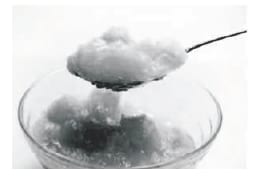
Ques 14. One day, Swati and Sneha were discussing their favourite foods. Swati told Sneha “The smell of paratha or halwa made in ghee always increases my appetite. While normally I eat only one paratha, but if made in ghee, I have at least two of them”.
- Study the chemical equation given below:
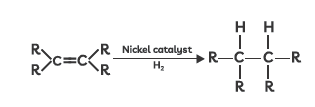
What name can be given to this reaction?
- Write one application of the reaction shown in (A).
- Why is the hydrogenation of vegetable oil said to be an additional reaction?
[Chapter-4 Carbon and its Compounds]
Ans:
- Hydrogenation reaction.
This reaction is commonly used in the hydrogenation of vegetable oils that have long unsaturated carbon chains.
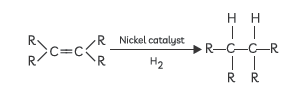
Vegetable oils are unsaturated compounds When these are heated in the presence of a catalyst such as nickel or palladium, they get converted into saturated fats called vegetable ghee. Therefore, the hydrogenation of vegetable oil is said to be an additional reaction.
Ques 15. Raman is a keen observer and loves the spectacular colours in a rainbow. He also observed the same pattern when he allowed sunlight to pass through a glass prism. He guessed that it is due to the inclined refracting surfaces of a glass prism which is responsible for showing such an exciting phenomenon. Whereas, no such phenomenon was observed when light passes through a glass slab.
- Name the phenomenon that could explain the formation of a rainbow.
- Why don’t we observe a similar band of colours when light passes through a glass slab?
[Chapter-10 The Human Eye and the Colourful World]
Ans:
The phenomenon that could explain the formation of a rainbow is the dispersion or splitting of light into its component colours.
We don’t observe the splitting of white light into its component colours when light passes through a glass slab because the refracting surfaces in a glass slab are parallel to each other whereas they are inclined at an angle in a glass prism.
How to Prepare with These Class 10 Science Competency Practice Questions?
The inclusion of competency-based questions will help students eradicate the habit of rote learning and will improve their problem-solving and comprehension skills. The competency-based questions might appear difficult to answer due to the increase in typology in exams. Students can learn how they can prepare to solve competency-based questions in the CBSE Class 10 Science exam by the below-listed points.
- Competency-based questions can easily be attempted if students have an in-depth clarity of Class 10 Science concepts. Try to formulate a strategy that will help in creating a strong conceptual base.
- Students won’t be able to answer competency-based questions if they try the rote-learning method. There is a wide range of competency-based questions like CBQs in books like Educart; including 100+ CBQs to boost exam preparations.
- Follow the simple way to solve the competency-based questions i.e. discovering the problems followed by finding the apt solution to the problems.
There are lots of mind games available like quizzes that can help in improving competency-based questions. Refer to the table below to download the chapter-wise competency-based questions for extra practice.
| Class 10 | Download Chapter-wise PDF |
| Chapter 1 | Chemical Reactions and Equations |
| Chapter 2 | Acids, Bases, and Salts |
| Chapter 3 | Metals and Non-metals |
| Chapter 4 | Carbon and its Compounds |
| Chapter 5 | Life Processes |
| Chapter 6 | Control and Coordination |
| Chapter 7 | How do Organisms Reproduce? |
| Chapter 8 | Heredity and Evolution |
| Chapter 9 | Light – Reflection and Refraction |
| Chapter 10 | The Human Eye and the Colourful World |
| Chapter 11 | Electricity |
| Chapter 12 | Magnetic Effects of Electric Current |
| Chapter 13 | Our Environment |
Frequently Asked Questions
Ques 1. Do Class 10 CBSE exam previous year questions get repeated?
Ans. Yes, there is a high probability that questions from previous exams reoccur in the question papers.
Ques 2. What are competency-based questions in Class 10 Science?
Ans. The question paper can include objective and subjective types of competency-based questions like fill-in-the-blanks, case studies, assertion-reasoning, 1-mark answers, and short and long answers.
Ques 3. Does attempting any question secure marks in the CBSE 2024 exam?
Ans. Every attempted question will secure you at least ½ marks for each question.