
Educart and Vedanta Launch Foundational Learning CSR Pilot at Nand Ghars in Faridabad
Long before children begin reading words independently, they first need to become comfortable with language through sounds, simple words, pictures and everyday conversations. Building these early language skills is important, as they create the foundation for how confidently a child communicates, understands instructions and gradually moves towards formal learning.

It is with this focus that Educart has initiated a three-month Foundational Literacy and Numeracy CSR intervention with Vedanta across three Nand Ghars in and around Faridabad.
The CSR pilot mainly focuses on building children’s pre-reading skills in English, while also helping them communicate confidently in both their home language and English. The programme follows the National Curriculum Framework for the Foundational Stage (NCF-FS) 2022 and gives special attention to early literacy and bilingual communication.
Rather than being designed as a standalone project, the pilot follows a longer cycle of understanding classroom needs and assessing Anganwadi workers and learners. The programme focuses on supporting classroom implementation and measuring change over time.
A Partnership Built Around Strengthening the Early Ecosystem
The CSR intervention brings together Vedanta’s experience in strengthening the early childhood ecosystem through Nand Ghar and Educart’s expertise in learning design, assessment and educator capacity-building.
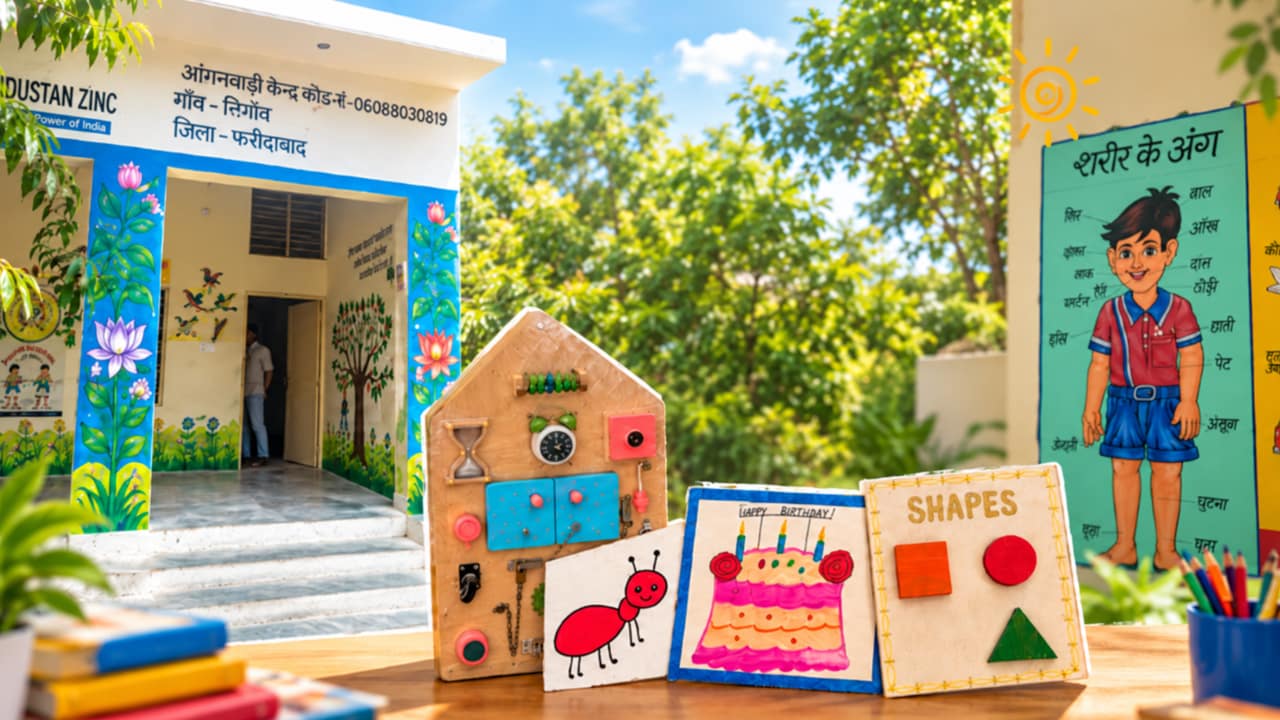
Through its Nand Ghar initiative, Vedanta has already worked on strengthening approximately 1,500 Anganwadi centres, addressing early childhood needs through a model that goes beyond classroom infrastructure alone.
Its work includes catering to different parts of the early childhood ecosystem, from the learning environment and curriculum to health and nutrition. Children at the centres receive nutritious meals such as daliya and khichdi, supplemented with an additional protein bar each day.
The current Faridabad CSR intervention brings a more concentrated foundational literacy and communication component into this ecosystem, with Educart focusing on strengthening the classroom practices of Anganwadi Workers (AWWs).
Pre-work with Anganwadi Workers to Understand Classroom Needs
Before designing the training programme, the Educart team worked closely with the Vedanta team to understand what was happening inside the Nand Ghar classrooms. The aim was to identify the real gaps faced by AWWs and design solutions to address them.
As part of this pre-work:
- The team visited the participating Nand Ghars to observe the classroom environment and existing practices.
- Anganwadi workers were assessed to understand their current knowledge of foundational literacy and the methods they were already using.
- Previous learner data was reviewed to identify gaps in communication and early literacy skills.
- Discussions and observations helped identify where AWWs needed additional support in oral language, pre-reading skills and classroom engagement.
- These findings were used to design a focused capacity-building programme instead of relying on a standard, ready-made training module.
Six Hours of Unlearning and Learning Across Three Days
During Phase I, teachers from the participating Nand Ghars underwent a six-hour training programme spread over three days. The programme focused on helping AWWs understand foundational concepts and apply them through simple, age-appropriate practices with young learners.
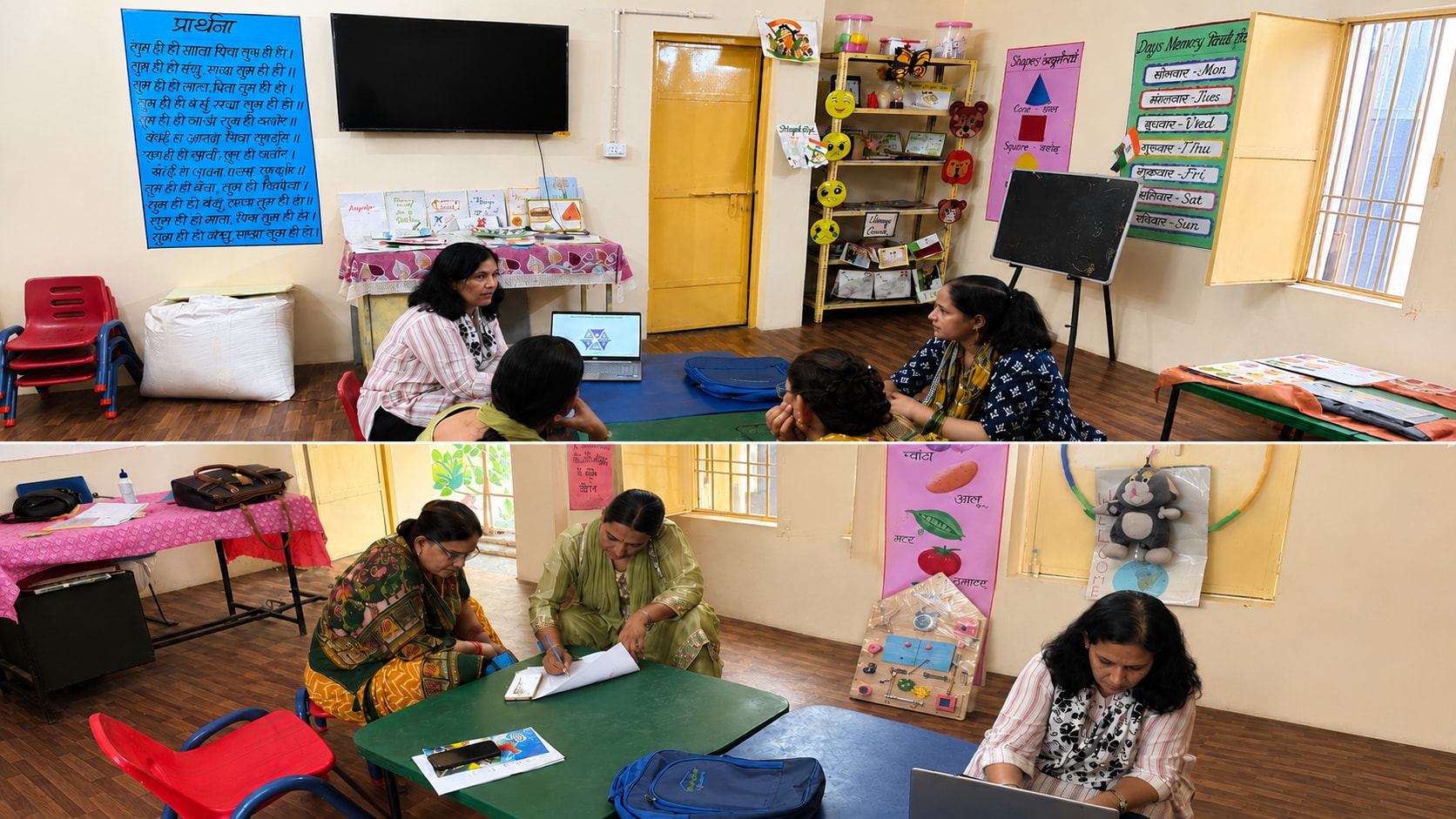
A key part of the programme was helping teachers understand the foundational literacy goals outlined under NCF-FS 2022, as envisioned under NEP 2020, and why pre-reading skills need to be developed before children move towards independent reading.
Teachers were introduced to important areas of early literacy development, including:
- Oral language development
- Phonological awareness
- Print awareness
- Fine-motor development
- English letter recognition
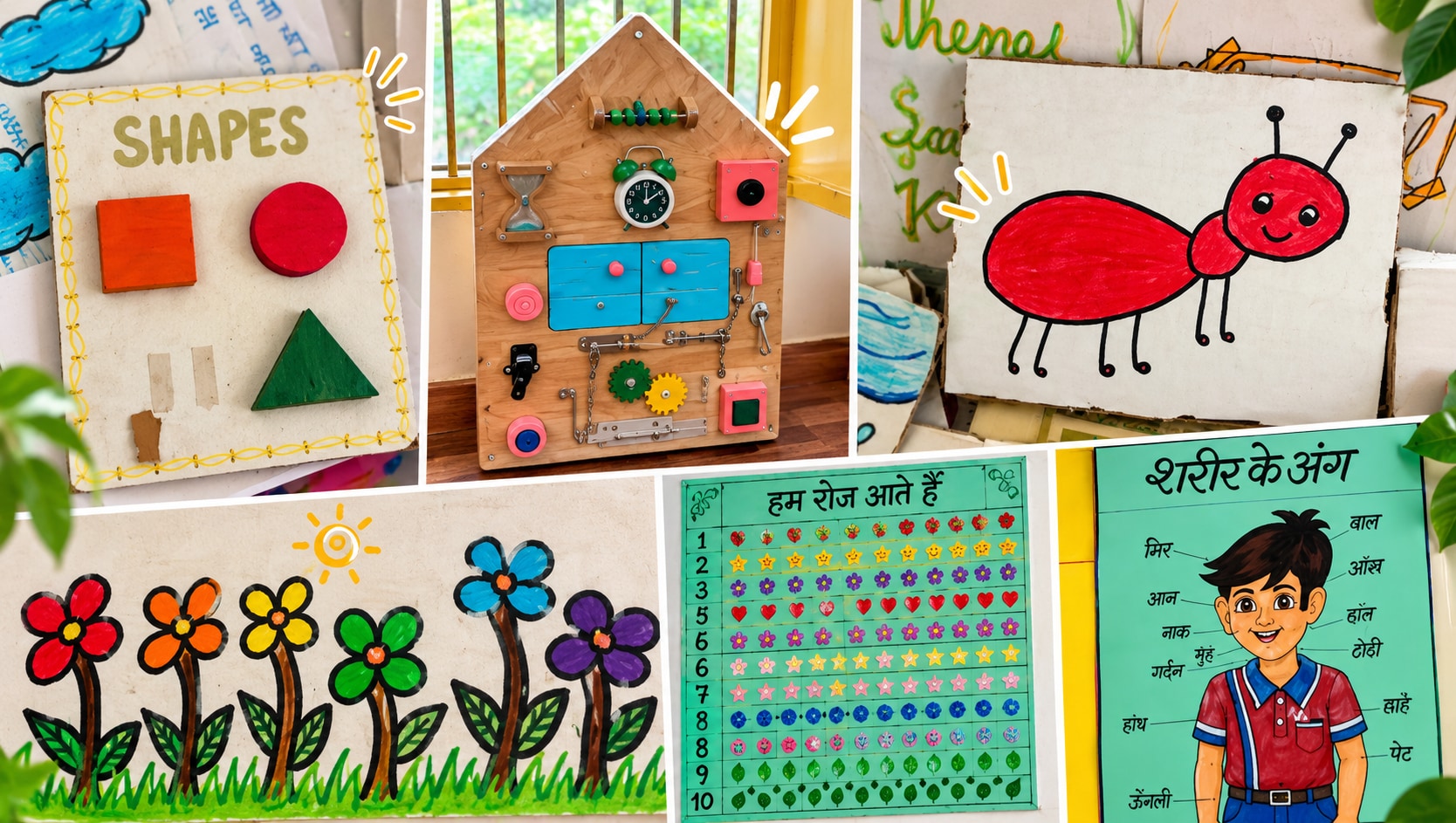
The sessions were customized to be engaging, experiential and practice-oriented. Instead of relying mainly on theoretical instruction, teachers participated in:
- Role plays to experience classroom situations from different perspectives
- Classroom simulations to practise techniques before applying them with learners
- Demonstrations to understand how concepts can be introduced effectively
- Teaching Learning Materials (TLMs) to make early language learning more engaging and accessible
The focus throughout the programme remained on application. Teachers were encouraged not only to understand what to teach, but also how to take that learning back into their classrooms and apply it with young children.
From AWW Training to Classroom Practice
Completing the training and the baseline assessment is only the first step of the three-month CSR pilot. The next focus is to understand how progress takes shape during the intervention.
During the implementation phase:
- The master trainer will connect with AWWs every fortnight to understand how the new practices are being used.
- Classroom progress will be reviewed against agreed milestones.
- Changes in learner participation and pre-reading skills will be observed.
- AWWs will receive regular online mentoring and support to address classroom challenges as they arise.
The purpose is not just to complete the training, but to ensure that the learning reaches the classroom. The impact will be seen in how confidently AWWs use the new approaches and how children respond to them over time.
Building Evidence Through the Three-Month Pilot
The three-month period is important not just for implementation, but also for building evidence of what is changing.
The AWW baseline, learner baseline, fortnightly classroom reviews and progress checks will help track the journey from training to classroom practice and, ultimately, to learner response.
The pilot will help examine:
- Which practices AWWs are able to adopt independently
- Where continued mentoring is required
- Whether greater classroom engagement is improving children’s early language abilities
Feedback will be generated throughout the process, so practices can be monitored and additional support can be provided whenever required.
At the end of the pilot, progress will be compared with the baseline assessments to understand how AWW practices have changed, what difference they have made for learners, and which elements can be carried forward or strengthened further.
Strengthening Learning from the Very Beginning
Early childhood learning builds the skills children need before they enter formal schooling. Listening, speaking, recognising sounds and engaging with print help create a stronger learning foundation.
The Faridabad pilot brings together Vedanta’s experience with the Nand Ghar ecosystem and Educart’s expertise in learning design, assessment and educator capacity-building.
The intervention focuses on integrating early literacy practices into the existing Nand Ghar curriculum through simple everyday activities such as:
- Conversations and rhymes
- Stories and picture-based interactions
- Activities that build communication and pre-reading skills
The aim is to create visible improvement in:
- AWW classroom practices
- Children’s participation and communication
- Early literacy and pre-reading skills
Over the three-month pilot, the focus will be on understanding how AWW capacity-building transitions into stronger classroom practices and better learning outcomes for children.
Looking Ahead
The Faridabad CSR pilot by Educart and Vedanta is designed to go beyond one-time training and focus on what changes inside the classroom over time. The intervention assesses how AWW training, mentoring and classroom support improve children’s communication and early literacy skills.
At the end of the three-month period, the success of the pilot will be reflected not only in what AWWs have learned, but in how effectively that learning is applied in classrooms and how it supports children in becoming more confident and ready for formal learning.