
Educart's CPD Webinar On Experiential Learning Beyond Activities
On 11th July 2026, Educart conducted the fifth session of its CPD webinar series on Experiential Learning. The session was designed to help teachers understand that experiential learning is more than just about adding more classroom activities.
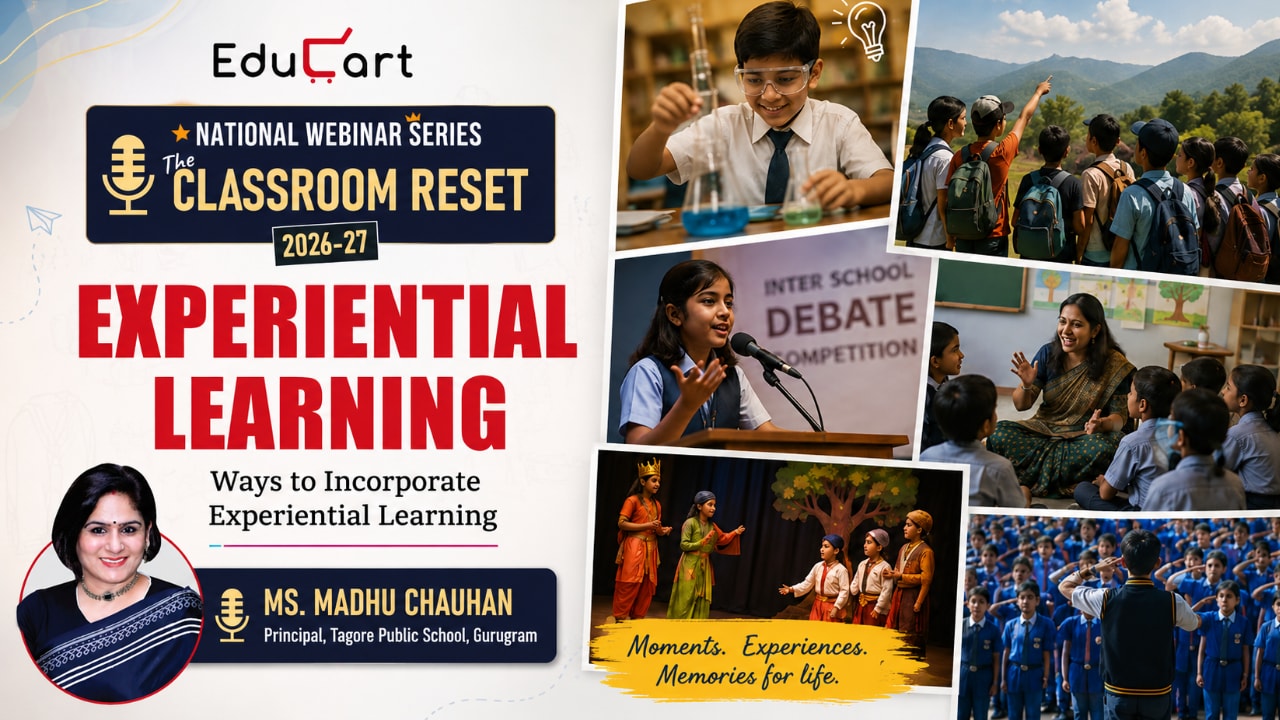
It is also about creating meaningful learning experiences for the students which encourage them to think and reflect.
Event Snapshots
- Topic: Experiential Learning
- Date: 11th July, 2026
- Duration: 2 Hours
- Mode: Webinar
- Registration: Paid
- Speaker: Ms. Madhu Chauhan, Principal, Tagore Public School, Gurugram
- Discussion Led By: Mr. Nishant Lakra
Why CBSE is Moving Towards Experiential Learning
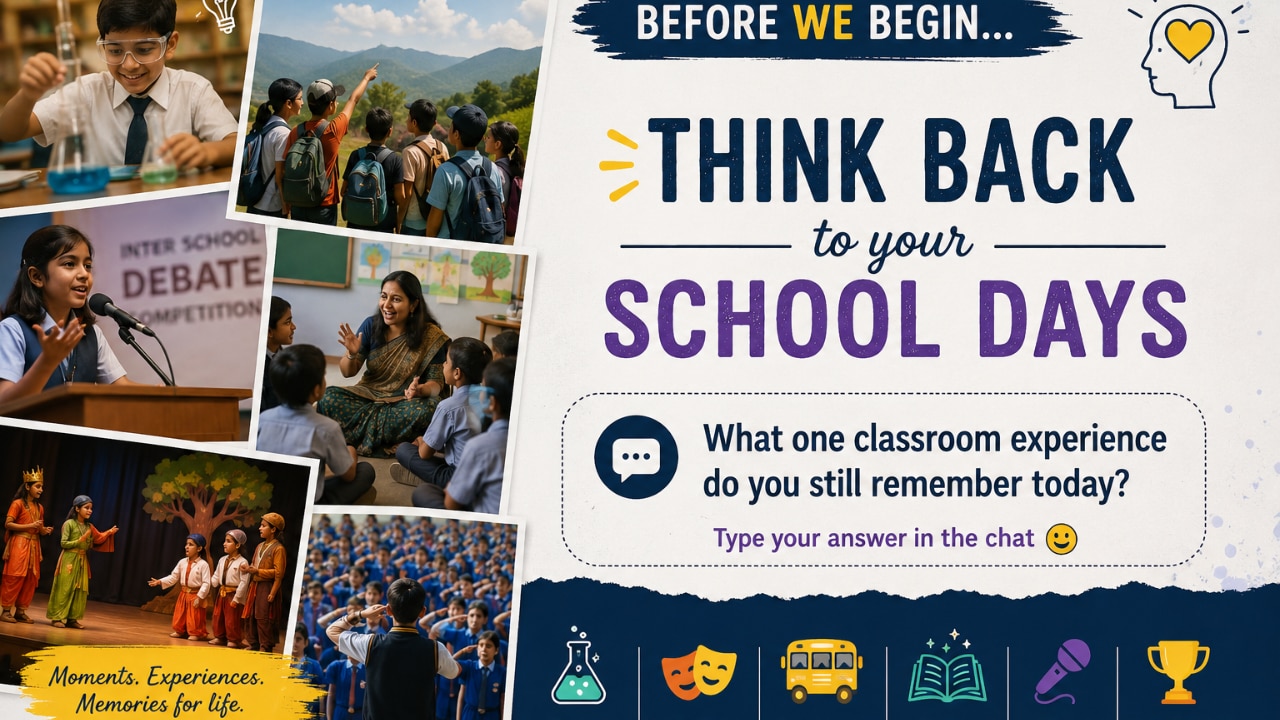
The webinar started with a simple question: Which classroom memory from your school days do you still remember? The question made the teachers realise that memorable learning actually came from experiences rather than lectures. This became the perfect starting point for understanding why CBSE is encouraging experiential learning.
Ms Madhu then explained that the purpose of education is no longer limited to students just scoring marks. She further added answering the points of discussion.
- CBSE promotes experiential learning to prepare students with skills for life needed for the future, not just academic success.
- Experiential learning moves beyond rote learning by helping students understand concepts through real-life experiences.
- Schools should be concerned if marks improve but curiosity declines, because true learning begins with curiosity.
At the end of the segment, she remembered her own journey. From serving in the Indian paramilitary to becoming a school principal, she shared how discipline, and real-life experiences can mold a person's understanding more than memorising information.
Key Takeaways:
- Education today is about preparing students for life, not just exams.
- Students need curiosity, confidence and problem-solving skills.
- Learning should help children become responsible global citizens.
- Experiences leave a stronger impact than memorised information.
- Better marks should never come at the cost of curiosity.
Understanding Experiential Learning Beyond Activities
This is one of the most impactful segments of the webinar. Ms Chauhan explained how not every classroom activity becomes experiential learning. The purpose of the activity should make students think, discuss, reflect and connect the activity with real life.
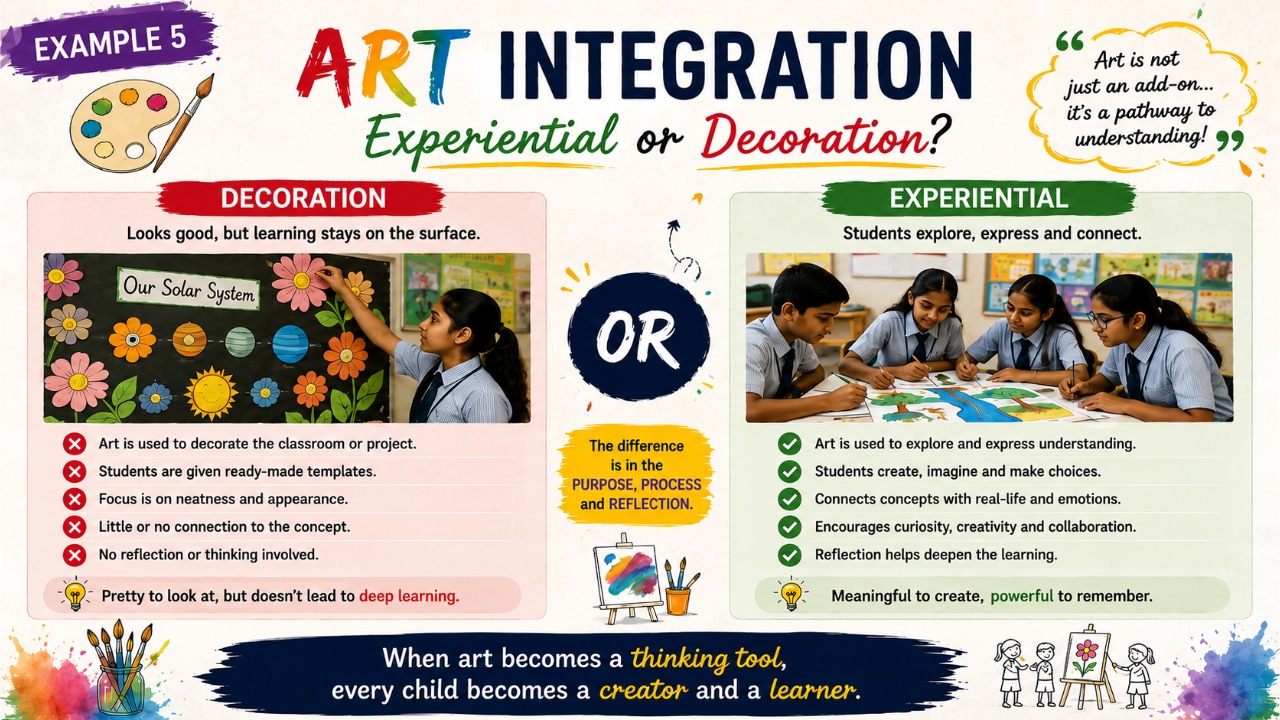
Some of the practical examples discussed in the webinar were:
- Science experiments should encourage prediction, observation and reflection.
- Role plays should build empathy and understanding, not just performance.
- Morning assemblies should invite student participation instead of one-way announcements.
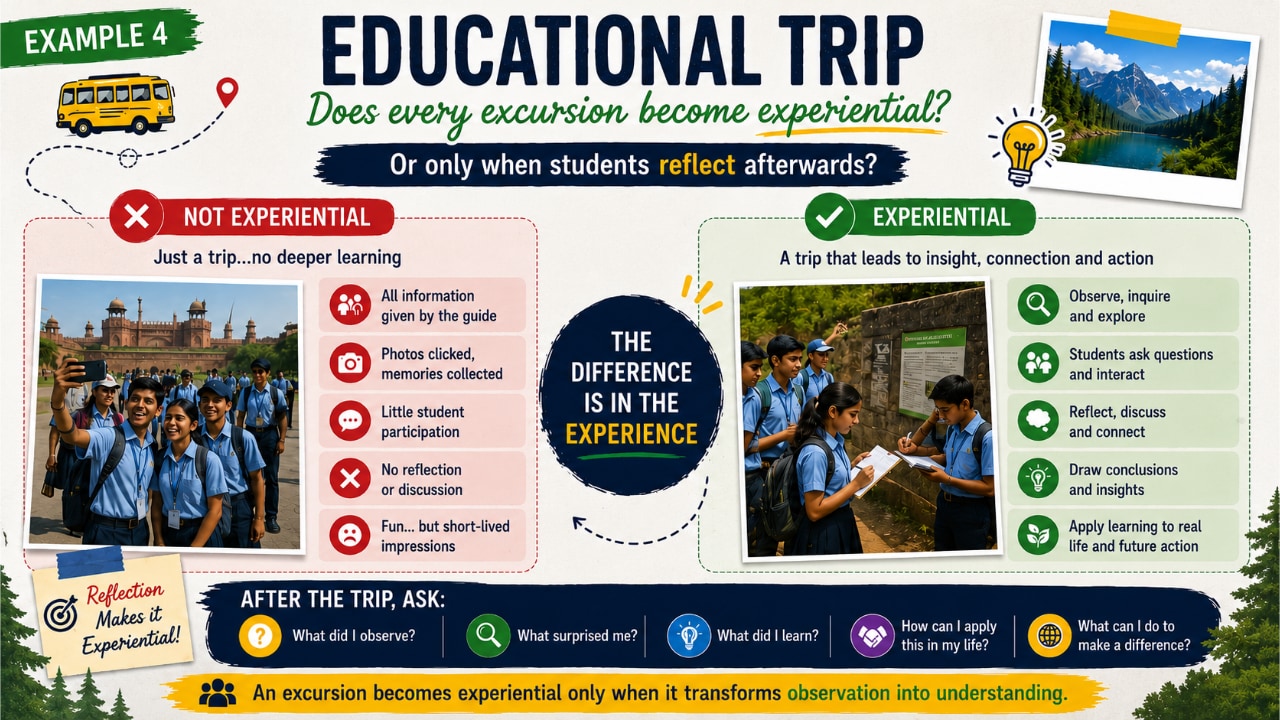
- Educational trips should include observation, discussion and reflection after returning.
- Art activities should help students express ideas instead of only making attractive charts.
- Project work should be completed by students themselves.
- Group discussions should have clear learning objectives and equal participation.
- School exhibitions should value the learning process, not just the final display.
Reflection Turns Activities into Learning
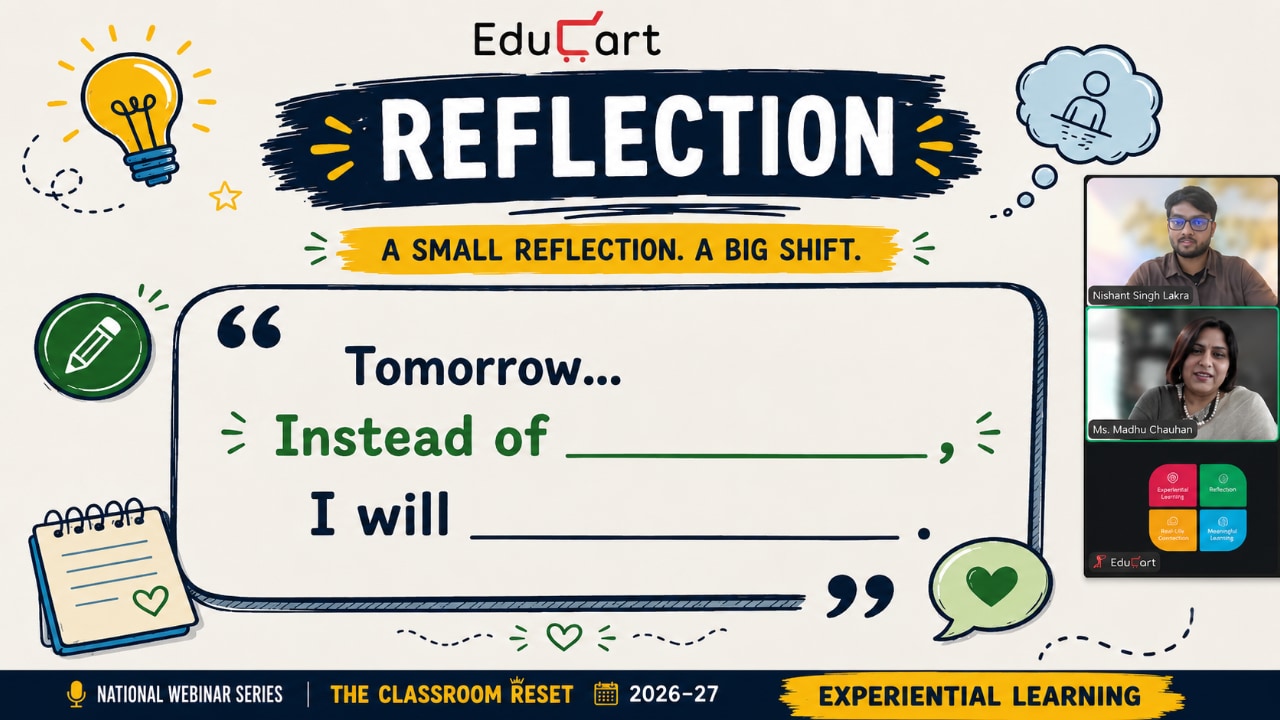
This part shared a message to remember, that reflection is the heart of experiential learning. Ms Madhu explained that learning is incomplete unless the student pauses and thinks about what they have experienced.
Teachers were encouraged to:
- Ask reflection questions after every activity
- Connect classroom learning with daily life
- Allow students to share observations and ideas
- Introduce concepts through driving questions instead of beginning directly though textbook explanation
Towards the end, she explained that real learning follows four stages:
Experience - reflect - connect - apply
Better Planning Makes Experiential Learning Possible
This segment catered to the teachers biggest concern - lack of time. Many teachers believe they don't have enough time for experiential learning to which Ms. Chauhan shared that the best solution for this lies in better lesson planning rather than extra classroom hours.
She suggested including:
- A real-life question to introduce the topic
- Small observation-based activities
- Interactive quizzes and discussions
- Reflection before ending the lesson
- Simple formative assessments
She then explained that experiential learning and syllabus completion can happen together when lessons are planned well.
Common Myths v/s Reality
A dedicated segment covered the myths and realities that confuses the educators. This often stops them from adopting experiential learning.
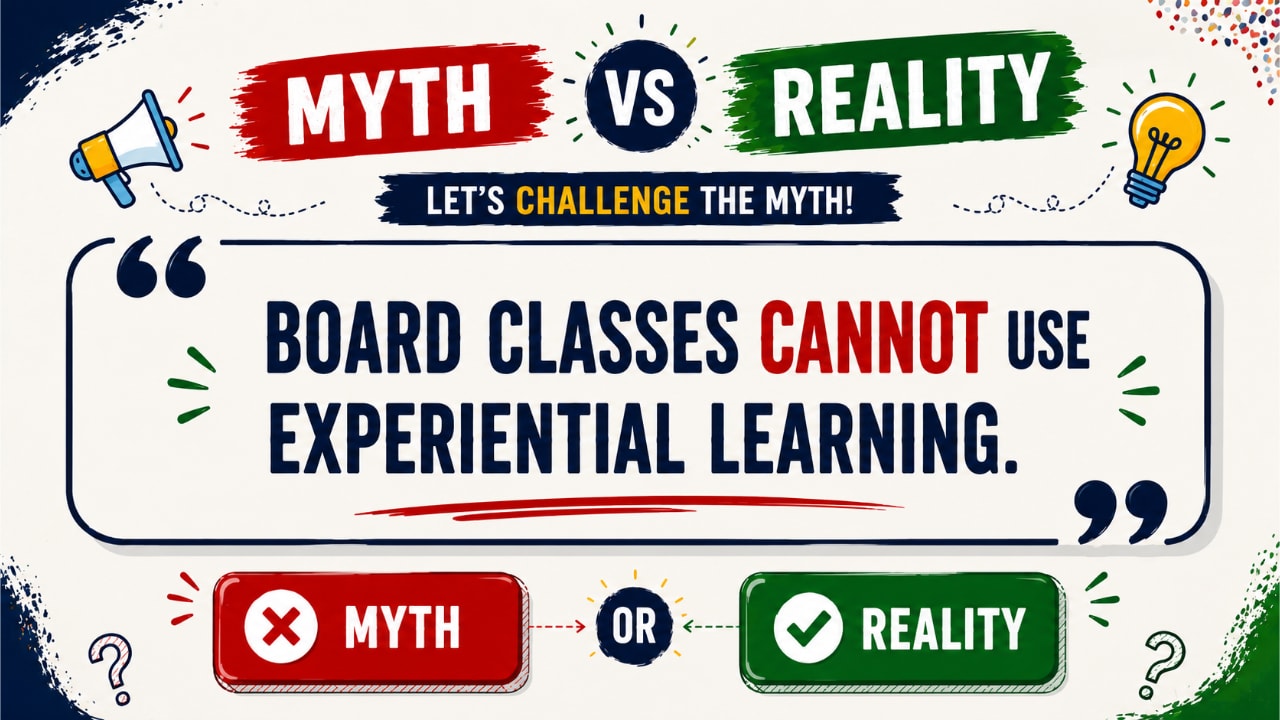
Some of them are:
- Myth: Experiential learning needs expensive resources
Reality: Simple classroom materials are enough - Myth: It only works in Science.
Reality: Every subject can use experiential learning - Myth: Board classes don't have time for it
Reality: Better understanding contribute to better board performance too - Myth: More activities mean better learning
Reality: Purpose and reflection matter more than the number of activities
AI as Teachers' Planning Assistant
Ms Madhu Chauhan encouraged teachers to explore how AI can reduce their planning time without replacing personal meaningful interactions.
Teachers learnt that AI can help in:
- Preparing lesson plans
- Creating worksheets and quizzes
- Designing classroom activities
- Generating reflection questions
- Saving planning time for meaningful classroom interaction
Final Message for Teachers
The webinar came to an end with a powerful thought, small classroom changes create big learning outcomes.
Teachers were encouraged to make one promise - to replace one traditional classroom practice with a more engaging and reflective learning experience.
The session concluded with three important reminders:
- Meaningful education is created by stronger classroom experiences
- Reflection is key to make every activity meaningful
- Experiential learning can be practiced by every teachers through simple classroom strategies
Towards the end, teachers reflected on their own classroom practices, explored practical ways to slowly introduce experiential learning into their daily teaching.
To sum up everything, experiential learning is not an added responsibility but is a better way of teaching that prepares students not just for exams but for life.