
Educart CPD Webinar on NEP 2020 and Its Impact on Teaching with Dr Sonika Chauhan
Educart organised a CPD webinar on 01 November 2026 to provide educators with a clear understanding of the National Education Policy 2020 (NEP). The session focused on NEP 2020, its key principles, changes in teaching methods, and how to implement it in schools.
Dr Sonika Chauhan, a CBSE Resource Person, led the two-hour session, while Ms Sonali Khosla guided the event discussion. The session aimed to help teachers understand the policy beyond theoretical approaches to classroom practice. Teachers were also asked to share their existing knowledge and combine it with these changes to support student learning.
Training Session at a Glance
- Topic: National Education Policy (NEP) 2020
- Event Name: CPD Webinar
- Event Type: Webinar
- Organised by: Educart
- Date: 1 November 2026
- Duration: 2 Hours
- Speaker: Dr Sonika Chauhan
- Speaker Designation: CBSE Resource Person
- Event Discussion Led by: Ms Sonali Khosla
- Participation Fee: Paid
Watch the full webinar video
https://drive.google.com/drive/folders/151mhVehYQlqoydxPrRGi5mLcqGL1kNIR
Educart's CPD Webinar Discusses NEP 2020 and Its Key Principles
Dr Sonika Chauhan began the webinar by asking participants how familiar they were with NEP 2020. She invited them to share their views on the policy and discuss what they already knew about its objectives.
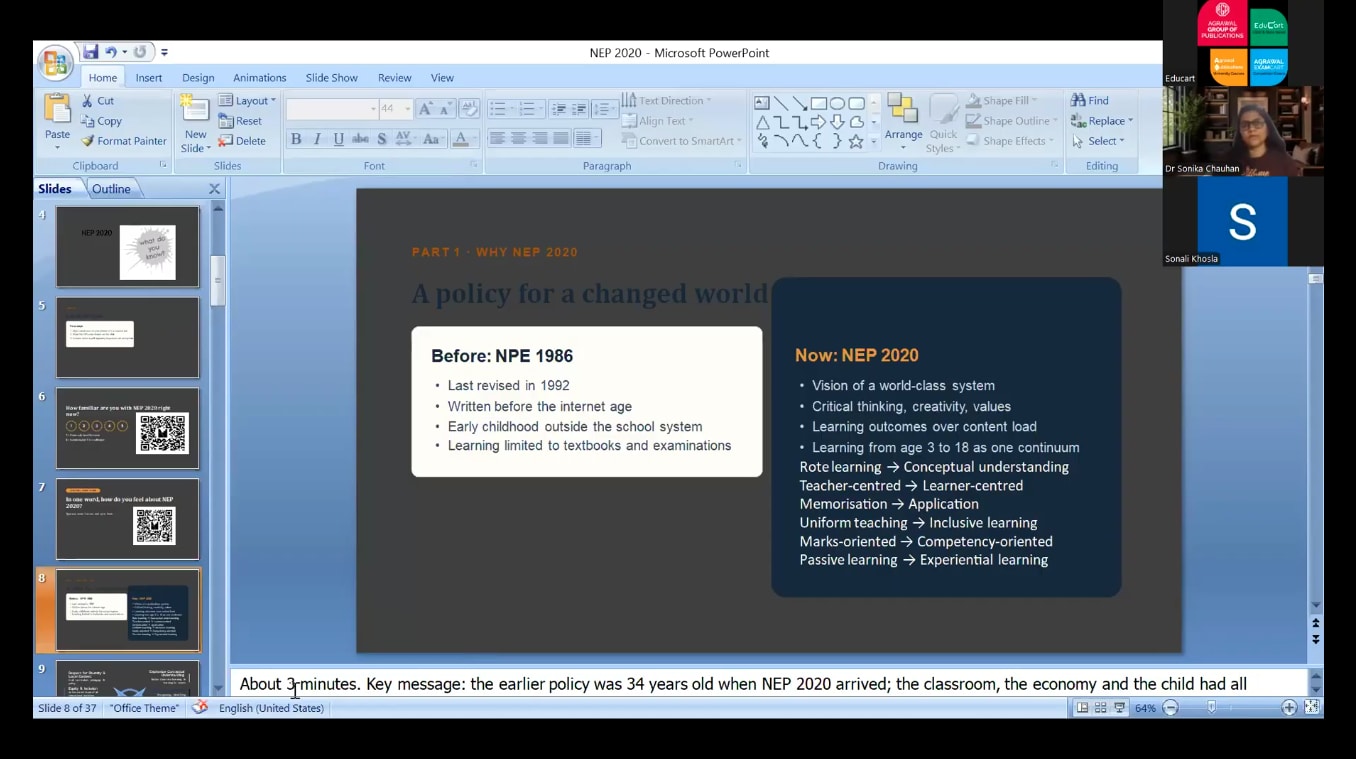
She then explained why India moved from the National Policy on Education (NPE) 1986 to National Education Policy 2020. Under the earlier policy, students relied heavily on textbooks and traditional learning methods. However, NEP 2020 encourages experiential learning and moves away from rote memorisation.
What is the Main Difference Between NPE 1986 and NEP 2020?
The discussion highlighted a shift in how students learn. Instead of focusing mainly on remembering information, the new policy encourages students to understand concepts through activities, exploration and practical experiences.
Dr Sonika Chauhan also discussed the key principles of NEP 2020. These principles focus on holistic development, student-centred learning and better educational outcomes.
Dr Sonika Chauhan Explains the Structure and Learning Stages of NEP 2020
The next part of the webinar focused on the structure of school education under NEP 2020. Dr Sonika Chauhan explained the importance of the foundational stage, which covers children aged 3–8 years.
Why Does the Foundational Stage Cover Ages 3–8?
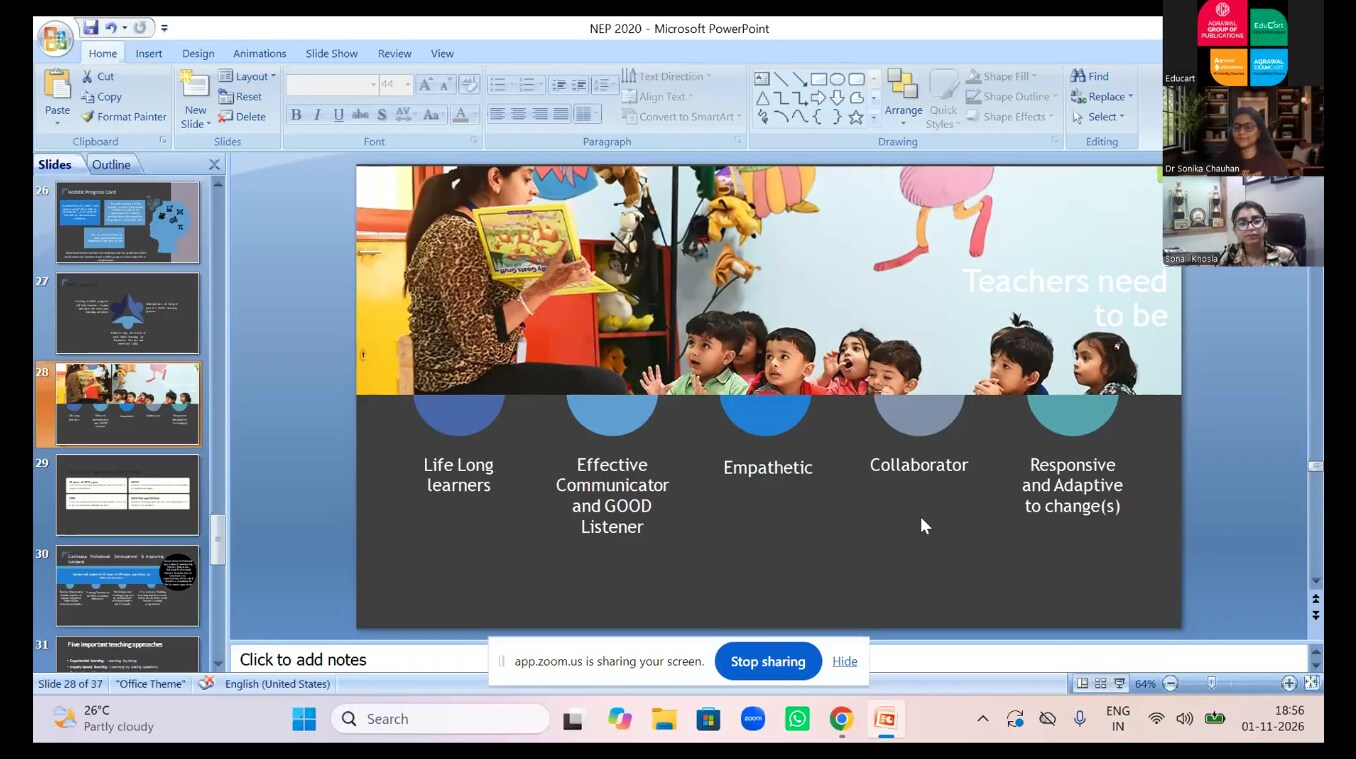
Dr Sonika Chauhan highlighted that children acquire several important skills during these early years. Their brains develop rapidly during this period, making it crucial for cognitive, social, emotional and physical development.
She then introduced the 5+3+3+4 structure of NEP 2020 and explained its four stages:
- Foundational Stage: Ages 3–8 years.
- Preparatory Stage: Ages 8–11 years.
- Middle Stage: Ages 11–14 years.
- Secondary Stage: Ages 14–18 years.
What are the Teaching Approaches Across These Stages?
The session discussed the key pedagogical approaches and salient features of each stage. She explained how teaching methods and learning activities should match students' developmental needs.
It further covered areas common across all four stages. This helped teachers understand the importance of maintaining continuity in learning while adapting classroom practices to different age groups.
Training Session Explores Policy Changes, Classroom Practices and Assessment
Dr Sonika Chauhan further explained the major shifts between NPE 1986 and NEP 2020. She highlighted how the policy moves towards practical understanding, active participation and competency-based learning.
How Can Teachers Connect NEP 2020 with Classroom Practices?
To encourage practical thinking, Dr Sonika Chauhan presented a case study and asked teachers to share their thoughts. Dr Sonika Chauhan asked participants to redesign a Water Conservation lesson using NEP 2020 principles. Instead of asking students to memorise five points, teachers had to plan activity-based lessons. They also explored how to connect different subjects and encourage group work. The activity included ways to assess learning beyond written tests.
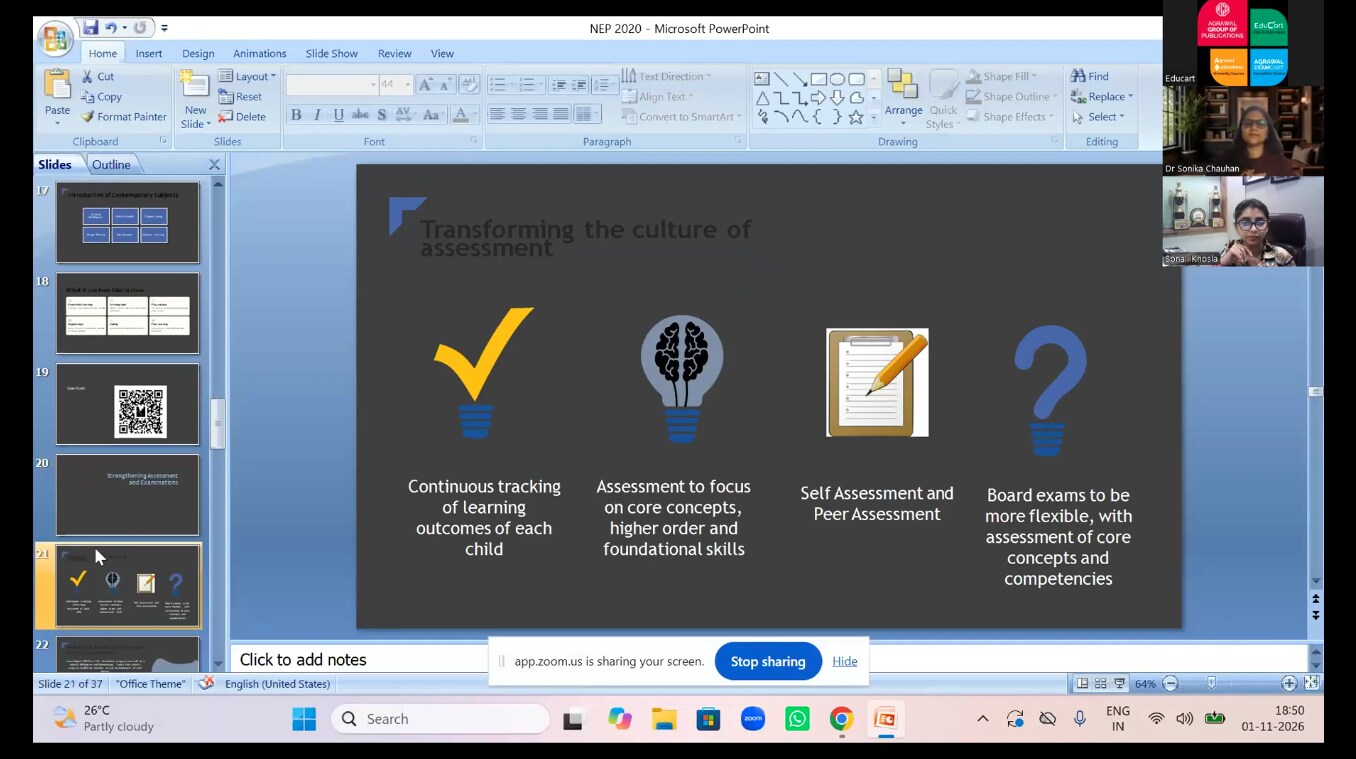
She then moved the discussion towards assessment and examination under NEP 2020.
What Are Self-Assessment and Peer Assessment?
Dr Sonika Chauhan introduced two assessment approaches:
- Self-Assessment: Students review their own performance, identify learning gaps and understand where they need improvement.
- Peer Assessment: Students evaluate each other's work and share feedback. This encourages collaboration and helps them understand different perspectives.
These approaches help teachers look beyond examination scores and understand how students learn and progress.
Webinar Covers Student Progress and Teacher Development Under NEP 2020
The webinar also explored the Holistic Progress Card (HPC) and its role in understanding student development. Dr Sonika Chauhan introduced its different domains and explained the benefits of tracking students across multiple areas.
How Does the Holistic Progress Card Support Student Development?
The HPC helps teachers understand student progress beyond academic performance. It offers a broader view of their development and helps educators identify areas that need attention.
How Does NEP 2020 Support Teacher Development?
Dr Sonika Chauhan explained that NEP 2020 focuses on teachers' professional growth alongside student development. She highlighted the requirement of 50 hours of annual teacher training and discussed three important initiatives:
- 50 hours of annual teacher training
- NPST: National Professional Standards for Teachers, which outlines professional expectations and competencies.
- NISHTHA: A teacher training programme that supports professional development and improves teaching practices.
- DIKSHA: A digital platform that offers educational resources and teacher learning opportunities.
The discussion highlighted the need for teachers to keep updating their knowledge and skills. Continuous professional development helps educators respond to changing classroom needs.
Educart Concludes the Webinar with Key NEP 2020 Takeaways
Before concluding the webinar, Dr Sonika Chauhan summarised the session through 20 key points. The recap covered NEP 2020's principles, learning stages, teaching approaches, assessment methods, the Holistic Progress Card (HPC) and teacher development.
The two-hour Educart CPD webinar helped teachers understand NEP 2020 through structured discussions and a practical case study. It covered the four stages of school education, changes in classroom practices, assessment methods and initiatives for teachers' professional development.
Organised by Educart, the session connected policy recommendations with everyday teaching requirements. It also addressed the need to adapt teaching methods and recognise students' different learning needs. The session reinforced that teachers play a key role in putting NEP 2020 into practice and creating a more holistic learning experience for students.