
Educart Hosts National CPD Webinar on Understanding CBSE Marking Scheme: 136+ Teachers Gain Clear, Practical Assessment Skills!

New Delhi, November 29, 2025 - Educart organized a comprehensive national CPD (Continuing Professional Development) Webinar focused on "Understanding CBSE Marking Scheme" that brought together 136+ teachers from across the country. The full-session webinar addressed one of the most crucial aspects of board exam preparation: helping teachers understand how CBSE marking actually works so they can guide their students more effectively.
The webinar was expertly conducted by Dr. Tulsi Kumari, a respected Life Coach and Career Counselor with deep expertise in CBSE assessment patterns, and skillfully moderated by Mr. Nishant Lakra, whose facilitation ensured active engagement and productive discussions throughout the session.
The Logic Behind CBSE Questions: More Than Random Testing!
Dr. Kumari opened the session by addressing a common misconception among both teachers and students: that CBSE question papers are random collections of questions designed to test memory. She explained that there's actually a clear logic and purpose behind every question type that appears in board exams.
She walked teachers through different question types and explained what each one is actually testing. Some questions check if students remember basic facts and definitions. Other questions test whether students can apply concepts to solve problems. Some assess analytical thinking and the ability to compare and contrast ideas. Others evaluate how well students can synthesize information from different sources. And some questions measure students' ability to evaluate arguments and think critically.
Understanding this logic helps teachers move beyond simply drilling students with practice questions.
Dr. Kumari emphasized that modern CBSE papers are shifting away from pure memorization toward competency-based assessment. This means students need to genuinely understand concepts and know how to use them, not just remember them long enough to write them in an exam. For teachers, this shift requires adjusting teaching methods to focus on understanding and application rather than rote learning.
What is Competency-Based Assessment?
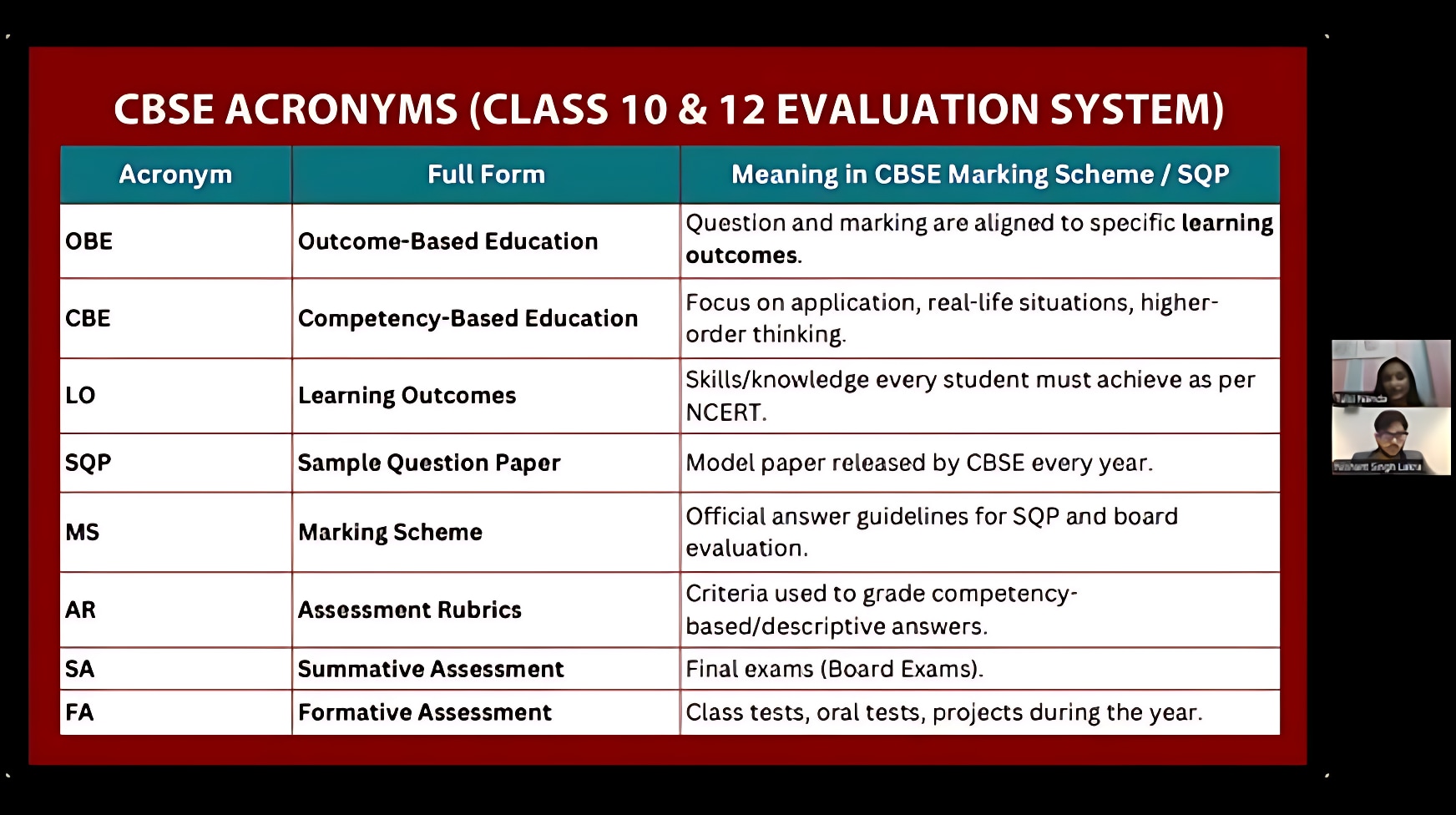
A major focus of the webinar was understanding competency-based questions, which have become increasingly important in recent CBSE papers. Dr. Kumari explained what competency-based assessment actually means. Instead of asking students to simply recall information, these questions require students to apply knowledge to new situations, analyze data or scenarios, and demonstrate understanding through explanation rather than reproduction.
For example:
- In science, Instead of asking "What is photosynthesis?" a competency-based question might present experimental data and ask students to analyze what's happening and why.
- In math, Instead of straightforward formula application, questions might present real-world scenarios requiring students to figure out which concepts to apply.
- In social science, Instead of listing facts about a historical event, questions might ask students to evaluate causes and effects or compare different perspectives.
This shift has important implications for how teachers prepare students. If exams are testing real understanding and application, then classroom teaching needs to focus on these same skills. Many teachers in the webinar shared that they've noticed this shift in question patterns but weren't sure how to adjust their teaching accordingly. Dr. Kumari's explanations helped them understand what CBSE is actually looking for and how to prepare students appropriately.
Understanding Blueprint and Weightage
The blueprint is a document CBSE publishes that shows exactly how marks are distributed across different units, topics, and question types. Dr. Kumari walked teachers through the blueprint step by step, explaining how to identify unit-wise weightage that shows which chapters carry more marks, understand competency distribution across different skill levels, see the pattern of question types (MCQs, short answers, long answers, case studies), and recognize which topics are tested more heavily versus those that carry fewer marks.
Understanding the blueprint helps teachers and students make strategic decisions about where to invest time and energy. Dr. Kumari explained that students should focus most energy on high-weightage units and topics, ensure they're strong on concepts tested across multiple question types, and understand which topics typically appear in which question formats.
Dr. Kumari was careful to clarify that strategic preparation doesn't mean skipping topics entirely. It means understanding what depth of knowledge is needed for different topics based on their weightage and typical question patterns. A 2-mark topic doesn't require the same depth of study as an 8-mark topic.
Answer Presentation Skills: What Actually Gets You Marks?
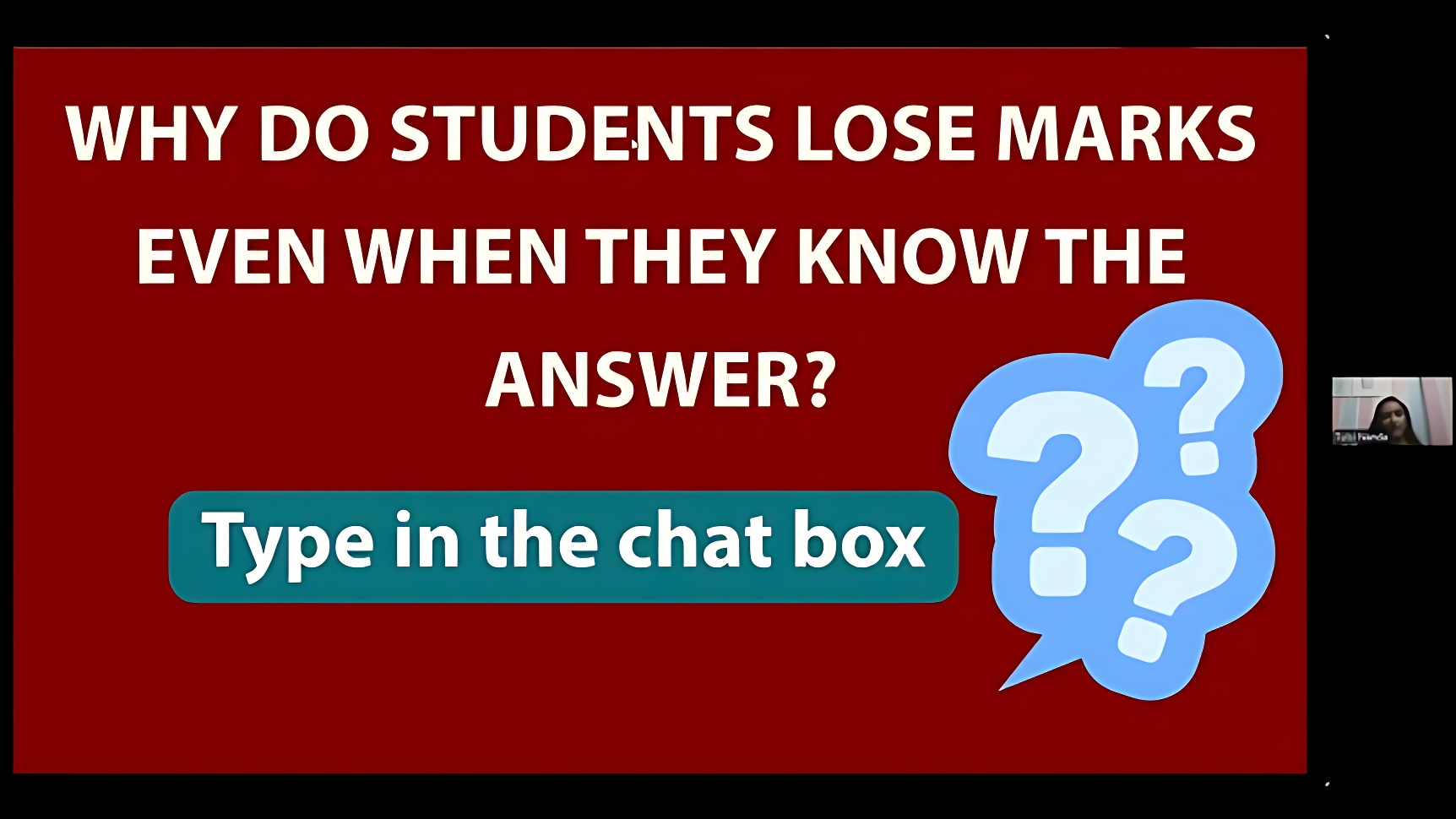
One of the most valuable sections of the webinar focused on answer presentation. Students frequently lose marks not because they don't know the content but because they don't know how to present their answers properly.
Dr. Kumari explained what makes a good answer from a marking perspective. She covered proper format and structure, appropriate length, clear, organized presentation that's easy for examiners to read and evaluate, necessary diagrams, flowcharts, or illustrations where required, and step-by-step working in math and science problems that shows logical thinking.
Dr. Kumari also discussed the practical reality of how marking actually happens. Examiners evaluate hundreds of answer sheets, often under time pressure. This means answers need to be immediately clear and well-organized. Key points should be easy to identify. Required elements (like diagrams in science or steps in math) need to be clearly present. Examiners appreciate answers that are concise, relevant, and well-structured rather than long, rambling responses that bury important points.
For teachers, this means explicitly teaching presentation skills, not just content. Students need practice formatting different types of answers, staying within word limits while covering all necessary points, organizing information logically, and including all required elements like diagrams or labels.
Common Student Mistakes: What Costs Marks Unnecessarily?
- The first major mistake she highlighted was overwriting. Many students believe that writing more automatically means more marks. They write lengthy answers for short-answer questions, include unnecessary details, and waste valuable exam time. The reality is that examiners look for specific points, and once those are covered, additional writing doesn't add marks. Overwriting also leaves less time for other questions, potentially costing marks elsewhere.
- The second common error involves using incorrect formats. Different question types require different answer formats, and using the wrong format signals to the examiner that the student doesn't fully understand what's being asked. For example, writing a paragraph when the question calls for points, failing to make proper comparisons in compare-and-contrast questions, or not following the specific structure required for case study responses.
- The third frequent mistake is missing diagrams and illustrations. In science subjects particularly, certain answers require diagrams. Students who skip diagrams either to save time or because they're not confident drawing them lose significant marks. Even in subjects like social science, sometimes a timeline, map, or flowchart can earn marks and make answers clearer.
- The fourth error is exceeding word limits. Many questions specify word limits, and going over shows poor planning and inability to be concise. Students who exceed limits often include irrelevant information and may actually lose marks for not focusing on what's actually being asked.
Dr. Kumari also mentioned other common mistakes like not reading questions carefully and answering something slightly different, poor time management that leaves questions unanswered, illegible handwriting that makes examiners struggle to read responses, and not attempting all questions because of lack of confidence or poor preparation.
For each of these mistakes, she provided practical teaching strategies to help students avoid them. This includes practice with word limits to develop concision skills, explicit teaching of different answer formats, regular diagram practice in science classes, mock tests under exam conditions to improve time management, and peer review activities where students evaluate each other's answers.
Strategic Teaching Approach: Building Real Understanding!
The webinar highlighted that understanding the marking scheme is not about shortcuts but about building real learning. Dr. Kumari explained that teachers should move from basics to complex ideas gradually and model good answers instead of giving unguided practice.
She stressed strong conceptual understanding so students can handle different question types. Teaching them to break down questions helps them answer exactly what is asked.
Peer learning, answer evaluation, and regular feedback-based practice were recommended to help students internalize good answer-writing. The goal is students who understand concepts deeply and present them effectively in exams.
Interactive Discussion: Teachers Share Challenges and Solutions!
Under Mr. Nishant Lakra’s moderation, teachers shared challenges and classroom experiences. Many were concerned about students repeating mistakes. Dr. Kumari suggested addressing the reason behind errors and giving guided correction. Teachers also discussed balancing syllabus coverage with deep learning. Dr. Kumari noted that competency-based teaching saves time because real understanding reduces repetitive practice. Participants shared strategies like student-led answer reviews, answer templates, and using application-based questions. She also emphasized identifying specific learning gaps to support struggling students.
The webinar focused on practical, classroom-ready strategies. Dr. Kumari shared activities for answer presentation, using blueprints effectively, giving meaningful feedback, and building competencies through engaging tasks. She acknowledged real constraints - large classes, limited time, mixed abilities and suggested methods that work within these challenges. Teachers appreciated the realistic, actionable guidance and left with clear steps to help students prepare better for exams.
Educart's Commitment to Teacher Empowerment
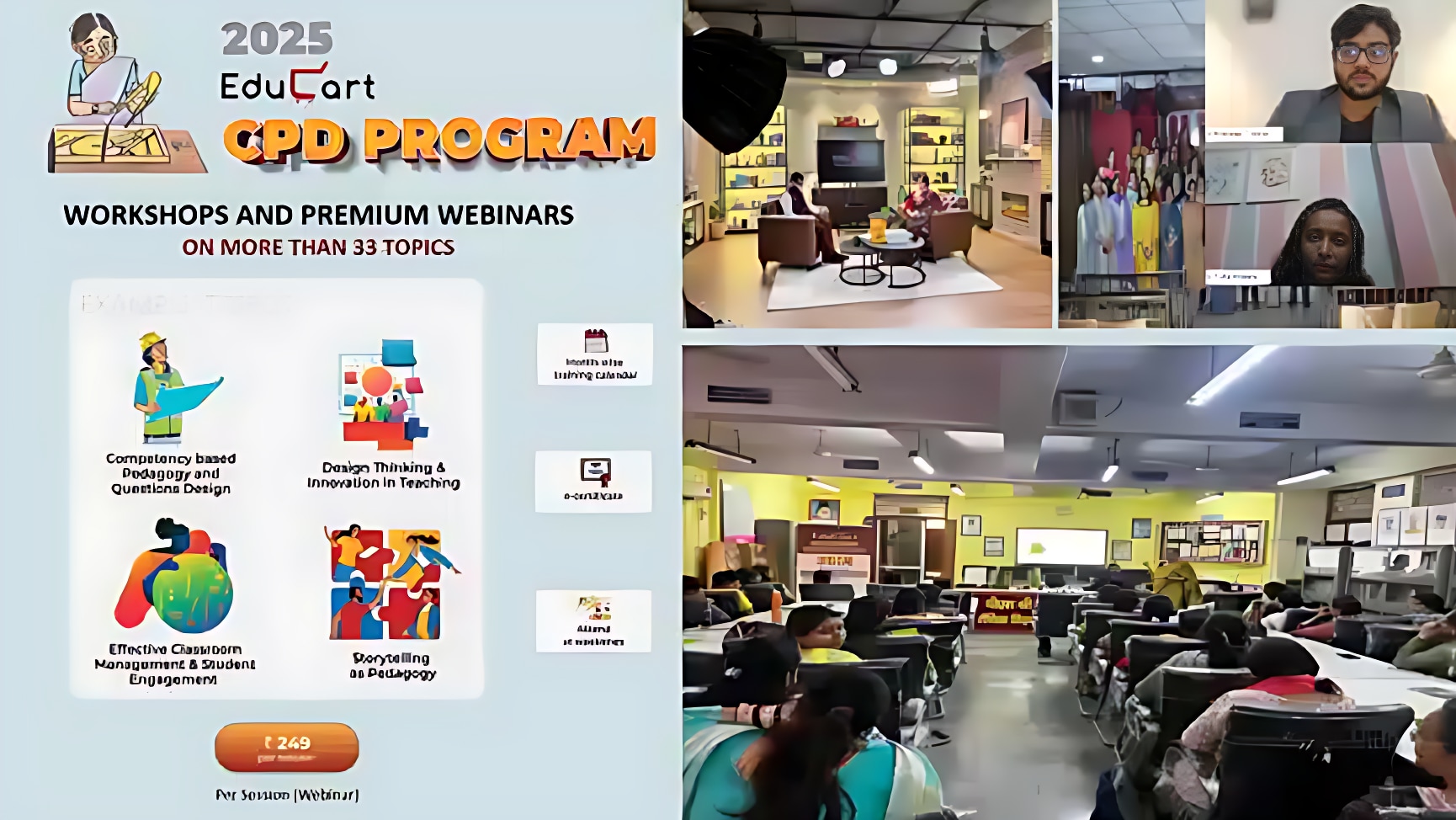
The session reflected Educart’s mission to support teachers with practical, relevant professional development. By connecting experts like Dr. Tulsi Kumari with educators, Educart helps teachers improve assessment literacy, teaching strategies, and exam preparation methods. The participation of 136+ teachers shows the strong need for such initiatives, and Educart continues to provide tools and guidance that help teachers improve student outcomes.
The Understanding CBSE Marking Scheme webinar was more than just an information session about exams. It was a comprehensive exploration of how teachers can prepare students more strategically, how assessment can be used as a tool for learning rather than just measurement, and how understanding the system helps both teachers and students approach board exams with confidence rather than anxiety.
Dr. Tulsi Kumari's expert facilitation, combined with Educart’s skilled moderation and strong teacher engagement, created a productive learning experience. Teachers left with not just knowledge but with specific strategies they can implement immediately in their own classrooms. When teachers understand assessment deeply and can prepare students strategically, exam season becomes less about anxiety and more about demonstrating genuine learning. That shift benefits everyone involved in the educational process.
As schools across India continue navigating the evolving landscape of competency-based assessment and board exam preparation, professional development opportunities like this webinar become increasingly essential. Educart's commitment to providing such opportunities reflects its understanding that supporting teachers is fundamental to supporting student success.