
Educart Teacher Training Workshop on Gender Sensitivity in Patna
Children learn through different activities in their day-to-day lives, such as everyday conversations, group play and school. Schools and classrooms therefore form an important part of children’s learning experience.
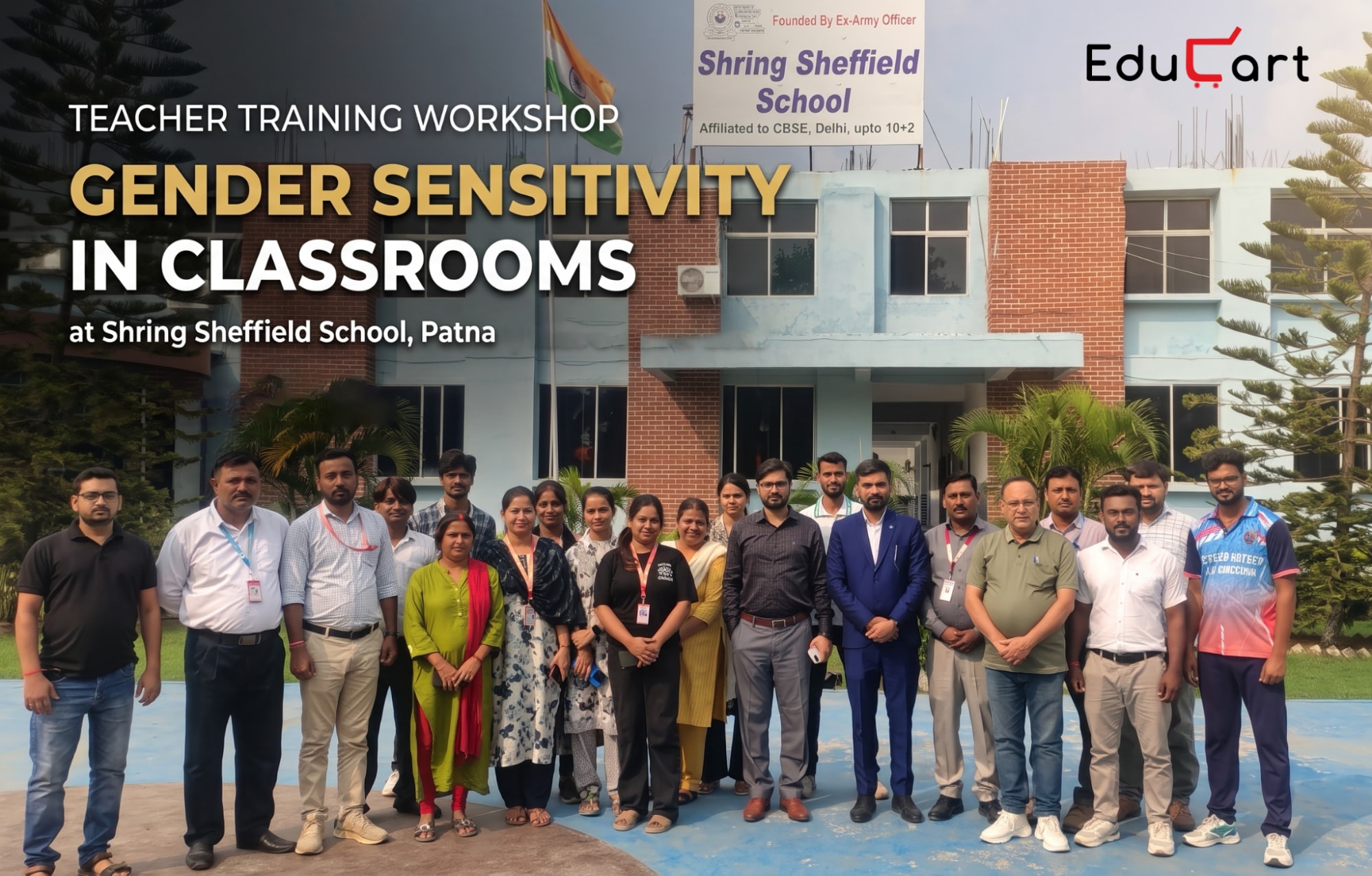
Educart understands this and organised a teacher training workshop on gender sensitivity at Shring Sheffield School, Patna, on 16 October 2026. The workshop discussed the importance of gender literacy, equality and sensitivity in the classroom.
Workshop at a Glance
- Topic: Gender Sensitivity
- Event type: Teacher Training Workshop
- Organised by: Educart
- Date: 16 October 2026
- Duration: 2 hours
- School: Shring Sheffield School, Patna
- Speaker: Mr Ajay Kumar, Principal, Leeds Asian School, Patna
- Discussion led by: Mr Sanjay
- Teachers attended: 18
- Participation fee: Free
Key Components of Gender Literacy
The session discussed several key components of gender literacy to help teachers understand gender-related concepts and their importance in classrooms and schools.

Understand Gender vs Sex
The first key discussion on gender literacy focused on the difference between sex and gender. Sex is assigned at birth and refers to biological traits, while gender is shaped by society, culture and beliefs about how people should behave.
Learning about sex and gender helps teachers understand that society’s expectations do not always match students’ abilities and skills. This understanding can help teachers identify students’ actual needs and provide them with support and fair opportunities.
Recognising Gender Stereotypes
Mr Ajay Kumar discussed common assumptions about how girls and boys should behave, known as gender stereotypes. These assumptions can be hidden in everyday school activities, playgrounds and classrooms.
For example, when certain tasks are repeatedly assigned to one gender, students may get the idea that those tasks are only meant for that gender.
Promoting Gender Equality
Promoting gender equality gives every student a fair chance to participate in classroom activities and responsibilities, regardless of gender.
Teachers should support gender equality by encouraging students to explore their interests and by encouraging them to support one another.
Respecting Gender Diversity
Every student has their own abilities, skills, experiences and interests. Teachers should respect these differences without making gender-based assumptions.
Respecting gender diversity is an important part of building a gender-sensitive environment. Every student should feel respected and included and have an equal opportunity to learn.
Building Critical Thinking
The workshop aimed to build teachers’ critical thinking so they can identify gender stereotypes. Knowing how to recognise stereotypes can help teachers make informed decisions. It also encourages students to try different activities without limiting their potential based on gender.
Discussion: Understanding Gender Sensitivity
The workshop discussed key definitions of gender, recognising stereotypes and how schools can promote gender sensitivity. It highlighted how teachers can use respectful language and provide equal opportunities to students.
- Sex and gender: Sex refers to the biological characteristics of the human body, while gender refers to behavioural expectations for boys and girls based on culture and society.
- Teachers’ role in promoting gender equality: Teachers should provide equal and fair opportunities to all students and encourage students to do the same.
- Using gender-sensitive language: Teachers should avoid comments that may suggest limits based on gender. Respectful language helps students feel confident.
- Role of school management: School management can support teachers in applying gender sensitivity in classrooms by providing guidance and training, and by promoting fair treatment and equal opportunity for all students.
Practical Approach: Activities and Classroom Practices
The workshop extended the discussion beyond definitions, explaining practical ways to identify gender stereotypes and use gender-inclusive language.
- The S and G activity: Teachers identified statements as either S for sex or G for gender. The activity gave them an opportunity to apply what they had learned rather than only review definitions.
- Bringing change to teaching practices: Teachers can review their classroom and teaching practices to identify stereotypes. Supporting students’ needs, interests and abilities without judging them by gender can help create a fair environment.
- Classroom interaction: Teachers can make classroom interaction more gender-sensitive by following a few simple practices.
- Share responsibilities fairly among all students.
- Encourage all students to participate in activities.
- Respect students’ individual interests, opinions and decisions.
- Avoid limiting students based on gender.
- Avoid language that reinforces gender stereotypes.
- Promoting gender sensitivity in schools: This requires combined efforts from teachers and the school. Fair classroom practices and awareness can help create an inclusive environment.
Key Takeaways for Teachers and Schools
The workshop explained the need for gender sensitivity in schools. Teachers can practise it through their language, classroom decisions and the opportunities they provide to students.
Teachers can use these steps to make the classroom more inclusive and supportive:
- Share responsibilities equally: Give all students responsibilities and opportunities to take on different tasks, regardless of gender.
- Use gender-sensitive language: Avoid comments or words that generalise or suggest certain abilities and behaviours suit only one gender.
- Encourage equal participation: Invite every student to participate in discussions, activities and classroom duties.
- Respect differences: Respect students’ abilities, interests and opinions without judging them based on gender.
- Encourage respectful behaviour: Encourage students to treat one another with respect and challenge gender stereotypes.
Schools should also support teachers in implementing gender equality practices. This can help create a supportive, gender-sensitive learning environment.
Conclusion: Gender Equality Part of Everyday School Life
Educart’s teacher training workshop gave teachers an opportunity to learn about gender sensitivity and apply it in their teaching methods. Mr Ajay Kumar led the session, and Mr Sanjay facilitated the discussion of key concepts and practical activities.
The workshop also explained how to identify gender stereotype assumptions. The workshop highlighted teachers’ and school management’s role in providing fair treatment and opportunity to all students.