
Educart’s Teacher Training Workshop Promotes Inclusive Education in Patna

Have you ever wondered what inclusive education means and why it matters in classrooms? Inclusive education aims to ensure that every student feels valued and has equal opportunities to learn, participate and grow. It encourages teachers to bring students together, regardless of their abilities, disabilities, learning needs and experiences.
Keeping this in focus, Educart organised a two-hour teacher training workshop on inclusive education at Shring Sheffield School, Patna, on 16 October 2026. Mr Ajay Kumar, principal of Leeds Asian School, Patna, led the key session, while Mr Sanjay led the event discussion.
Educart offered the workshop free to attend. Up to 18 teachers discussed inclusive education, effective teaching practices and ways to create a positive learning environment.
Workshop at a Glance
- Topic: Inclusive Education
- Event type: Teacher Training Workshop
- Organised by: Educart
- Date: 16 October 2026
- Duration: 2 hours
- School: Shring Sheffield School, Patna
- Speaker: Mr Ajay Kumar, Principal, Leeds Asian School, Patna
- Discussion led by: Mr Sanjay
- Teachers attended: 18
- Participation fee: Free
Understanding the ABC of Inclusive Education
The workshop began with the basic principle of inclusive education: helping children learn and participate together in supportive, age-appropriate settings, regardless of their abilities and disabilities.
This approach is based on the belief that all children are equal and deserve equal access to the same opportunities. It encourages schools to understand individual differences and create an environment where students can participate in the classroom without undue barriers.
Mr Ajay Kumar also discussed the potential academic and social benefits of inclusive classrooms for children with and without disabilities.
Why Inclusive Education Matters
Teachers play a key role in shaping students’ values and perspectives on how they treat one another. Beyond lessons, students notice their teachers’ language, behaviour and classroom discussions.
Inclusive education encourages acceptance, respect and cooperation across individual differences. It calls on teachers to treat every student fairly and provide equal opportunities to learn, participate and express their ideas.
- Provides equal learning opportunities without discrimination.
- Encourages teachers and students to interact and build mutual respect.
- Creates a collaborative learning environment that can improve students’ critical thinking and problem-solving.
- Highlights the role of legislation and education policies in supporting inclusion.
Developing Empathy Between Teachers and Peers
Teachers have an important role in creating an inclusive classroom. The session emphasised teacher awareness, professional training, effective communication and guidance to help educators understand and support students with varying learning needs.
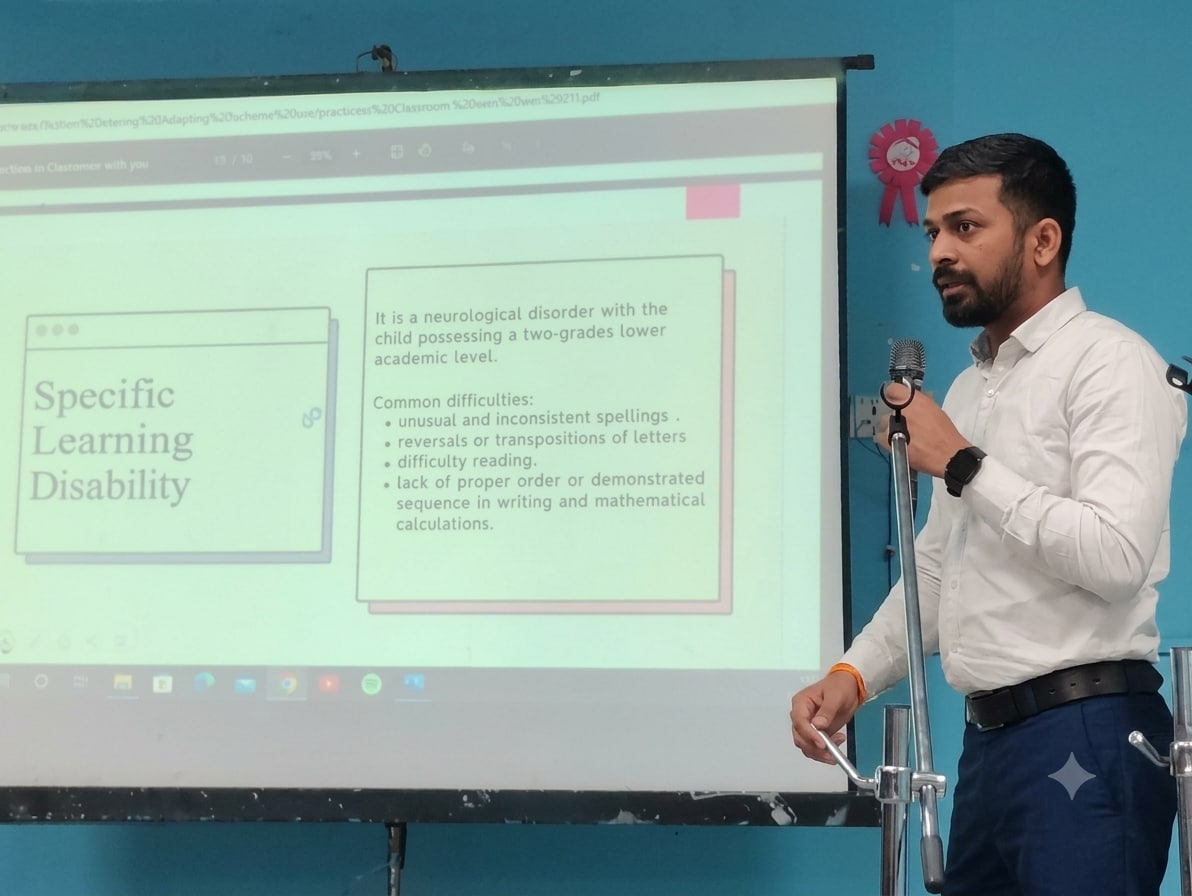
Mr Ajay Kumar demonstrated how workshops, webinars and special education awareness programmes can improve teachers’ understanding of inclusive education practices.
He also highlighted empathy among students, peer support groups, anti-bullying programmes and equal opportunities for interaction as ways to promote a positive school environment. These practices help build mutual respect, create a supportive environment and encourage every student to feel valued and included.
How to Make Schools More Inclusive
The workshop explored teaching practices, learning materials and infrastructure that can accommodate diverse learning needs. It also emphasised collaboration among teachers, school leaders, parents, peers and other relevant professionals to build an inclusive learning environment.
Key areas discussed included:
- Creative teaching approaches: Using a variety of teaching methods to meet diverse learning needs.
- Lesson plans and teaching-learning materials (TLMs): Preparing materials that build conceptual understanding and support classroom activities.
- Infrastructure changes: Identifying physical barriers that might prevent students from participating comfortably.
- Opportunities for all: Ensuring every student can participate in classroom learning and school activities.
- Professional development: Offering teachers training and guidance on inclusive education.
- Annual progress reports: Reviewing students’ progress to understand their learning needs and areas where they may need further support.
- Parent empowerment: Engaging parents in their child’s learning and working with teachers to support progress.
- Peer support: Promoting collaboration and positive relationships between students.
Teaching Strategies for an Inclusive Classroom
Mr Ajay Kumar discussed practical teaching methods that can make classroom instruction clearer and more accessible. These strategies can help students understand instructions, follow lessons and learn at their own pace.
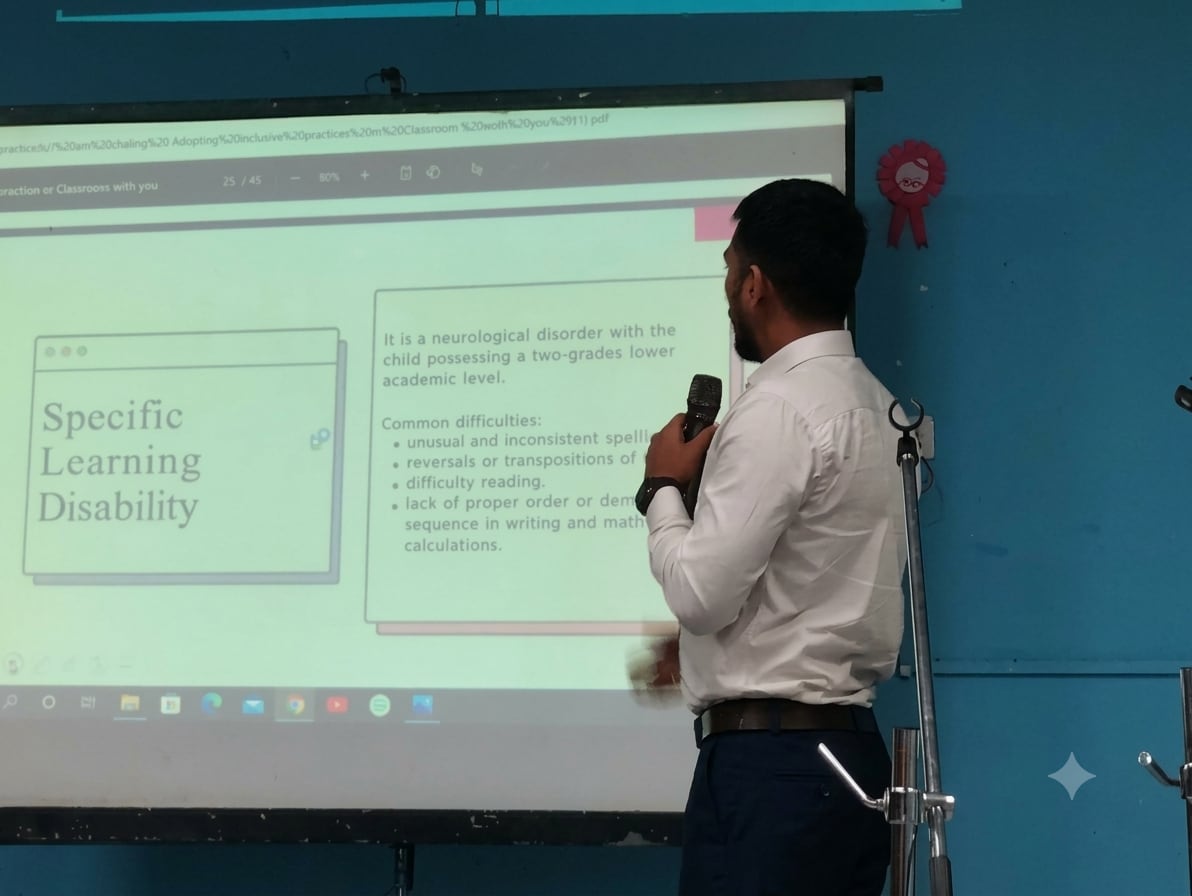
The key strategies included:
- Providing instructions that are clear, brief and in a logical sequence.
- Using assistive technology creatively, where appropriate, to support learning and participation.
- Offering repetition and preparation to reinforce concepts and help students become familiar with classroom tasks.
Not all students learn in the same way, so these practices highlight the importance of adapting teaching strategies to students’ individual needs.
Assessment Strategies to Support Different Learning Needs
The workshop also addressed assessment practices that can help students demonstrate their understanding more effectively. It emphasised considering individual learning requirements while setting suitable learning goals.
The following assessment methods were discussed:
- Modified questions: Changing how questions are presented or asked, where appropriate, to improve accessibility.
- Flexible marking: Considering assessment and marking strategies appropriate to a student’s needs and applicable guidelines.
- Extra time and support: Providing additional time or support when required to help students complete assessments.
Conclusion: Making Inclusive Education Part of Every Classroom
Educart’s teacher training workshop at Shring Sheffield School, Patna, brought together 18 teachers to discuss the principles and practices of inclusive education. Topics included empathy and peer support, classroom teaching strategies, school infrastructure, parent engagement and assessment methods.
The session highlighted the importance of giving all children opportunities to learn, participate and develop. It also emphasised the shared responsibility of teachers, parents, peers and school professionals in making inclusive education part of everyday school practice.