
Educart Workshop at Sharda World School Focuses on Competency-Based Assessment
As classroom learning slowly moves beyond memorisation towards understanding and application, assessment practices are also evolving. To help teachers adapt to this shift, Educart organised a Teacher Training Workshop on “Competency-Based Assessment” at Sharda World School, Agra, on June 29, 2026.
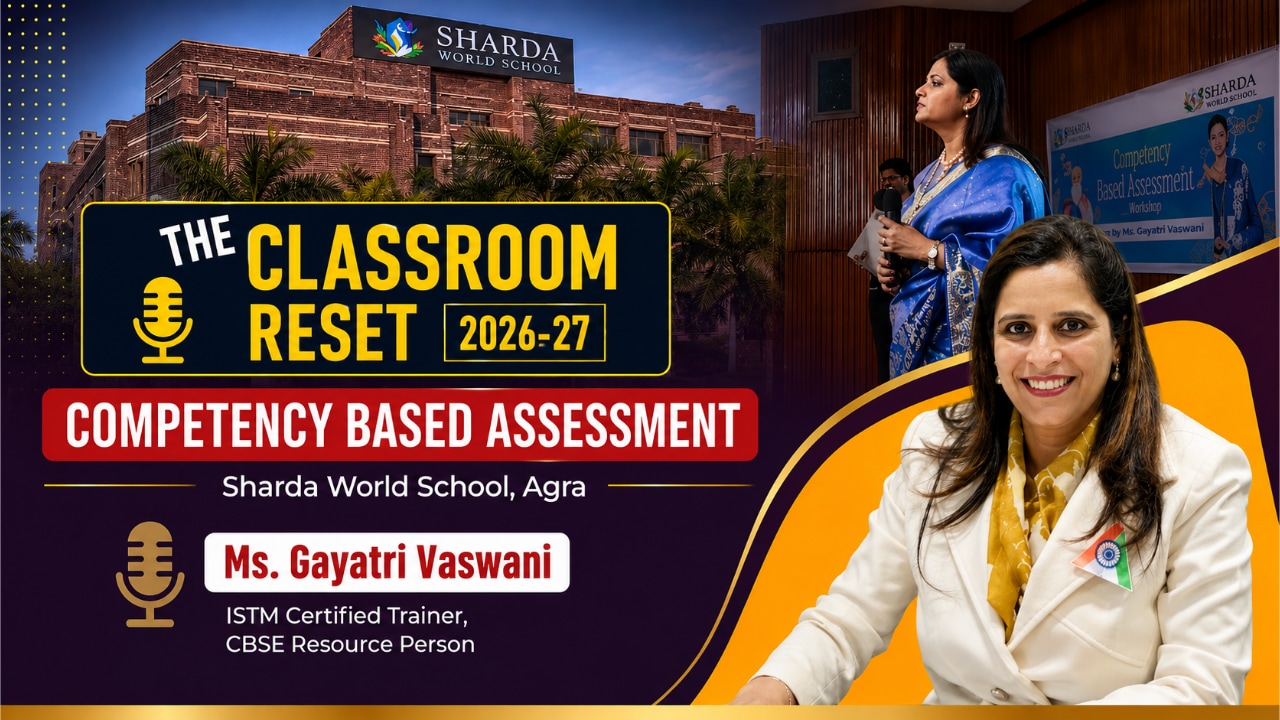
The two-hour session was conducted by Ms. Gayatri Vaswani, an ISTM Certified Trainer and CBSE Resource Person. The workshop brought educators together to explore assessment practices that focus on effectiveness of application by the students in different learning situations.
Workshop at a Glance
- Topic: Competency-Based Assessment
- Type of Event: Teacher Training Workshop
- Speaker: Ms. Gayatri Vaswani
- Participation Fee: Free
- Duration: 2 Hours
- Discussion Led by: Rohan
Moving from Traditional Tests to Competency-Based Assessment
One of the major focuses of the workshop was on the changing role of assessment in modern classrooms. Rather than evaluating students mainly on their ability to remember and reproduce information, competency-based assessments look at how well they understand concepts and apply them.
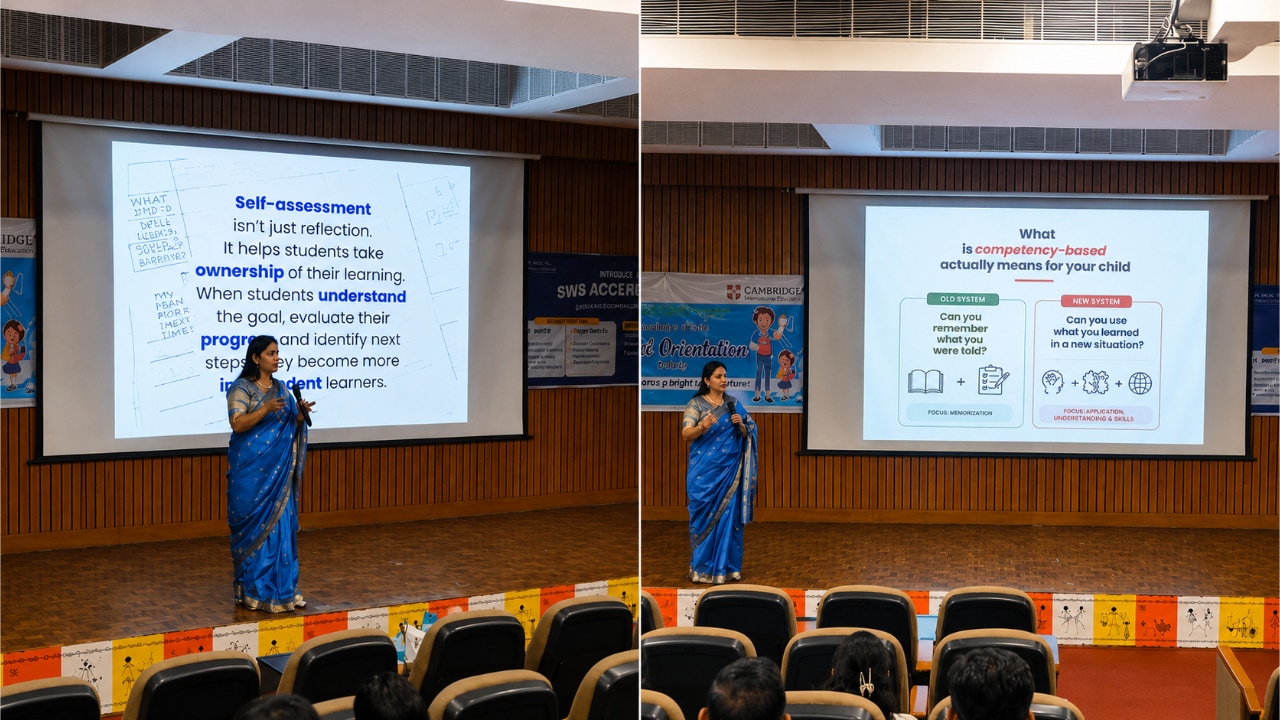
During the session, teachers explored how assessments can be designed in a way that evaluates skills such as critical thinking, and real-life application of knowledge. Ms. Gayatri Vaswani also discussed how educators can gradually move away from pre-existing examination patterns and introduce assessment methods that encourage deeper understanding and increased student participation.
Practical Ways to Design Better Assessments
The workshop placed a strong focus on practical classroom application. Instead of limiting the discussion to theory, teachers were introduced to practical strategies that could be adapted and used while planning lessons and assessments.
The session focused on:
- Creating competency-focused learning outcomes connected with classroom objectives
- Designing assessment tasks that encourage students to think and apply concepts
- Developing clear and effective rubrics for fair and consistent evaluation
- Framing questions that assess understanding, application, analysis and reasoning instead of simple recall
Through these discussions, teachers got to know that assessments are more than just a tool for assigning marks. When designed thoughtfully, it can also help teachers understand students’ learning needs and support their progress.
Learning Through Activities and Classroom Scenarios
The workshop remained highly interactive by giving teachers opportunities to participate rather than simply listen.
Educators took part in:
- Hands-on activities focused on assessment design
- Group discussions around common classroom assessment challenges
- Real-world assessment scenarios and case-based exercises
- Collaborative conversations where teachers shared classroom experiences and effective practices
These activities motivated participants to reflect on their existing assessment methods and exchange ideas with fellow teachers. They also helped teachers understand how assessments can be made more meaningful, practical and learner-centred.
Improving Assessment Literacy Among Teachers
Another important segment discussed during the workshop was assessment literacy in classrooms today. The ability of educators to design, use and interpret assessments effectively.

Through practical examples and interactive discussions, teachers understood how assessment can be used more than just a tool to measure academic performance. It can also support the overall learning and development of students.
Participants gained insights into how to:
- Design assessments that improve conceptual understanding and students’ growth
- Give constructive and meaningful feedback that supports continuous improvement
- Build learner-centred assessment experiences
- Use competency-based assessment strategies in everyday classroom teaching
- Align assessment practices with evolving educational standards
A Practical and Engaging Learning Experience
The workshop concluded with positive feedback from participating educators. They liked the interactive activities, practical ideas, and examples that were connected to real classroom situations.
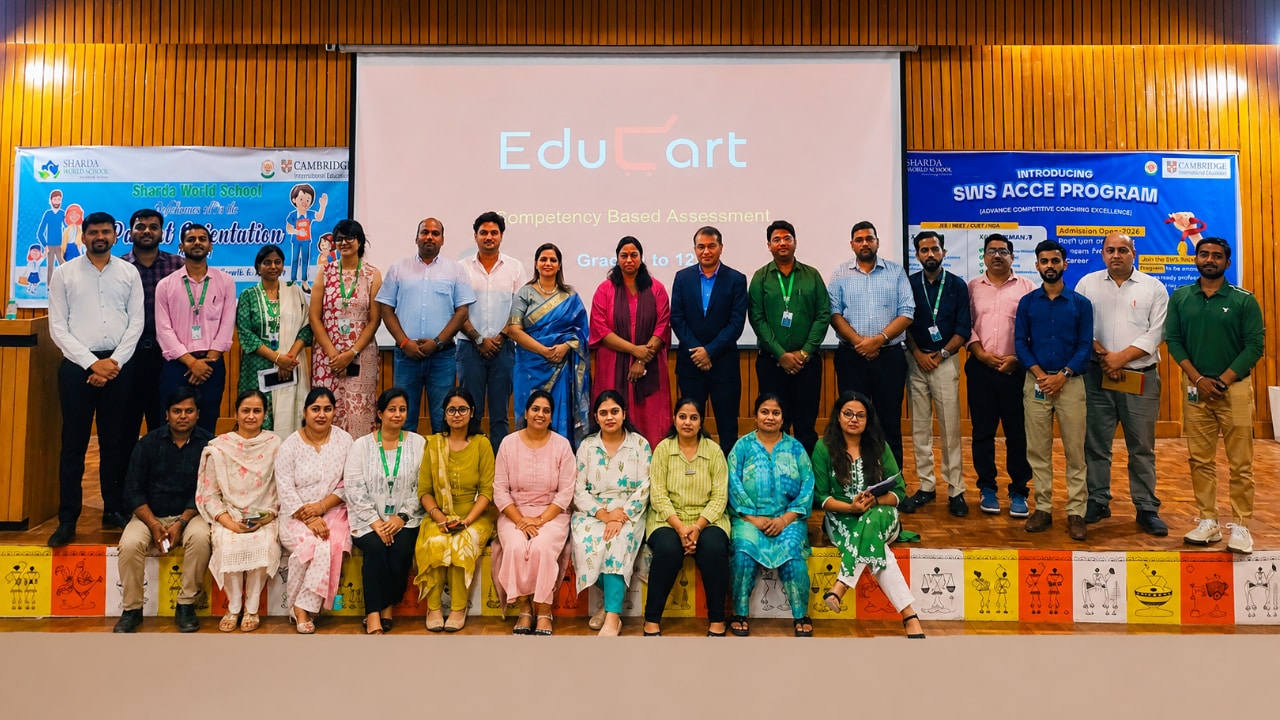
The hands-on activities, group discussions, real assessment examples, and expert guidance helped teachers better understand competency-based assessment and its importance in today’s classrooms. Through such programs, Educart continues to help teachers improve their teaching methods, assessment skills, and learner-centred practices.