
Life Skills in the Age of AI: Workshop by Educart in Varanasi
Artificial Intelligence is making its way through everything. It is no longer a futuristic concept as it is so accessible in the present, that it is a part of students' everyday life. From solving mathematics problems, to generating notes, AI is changing the way learners can access and make use of the information.
But as the technology continues to evolve, educators are beginning to question: What next?
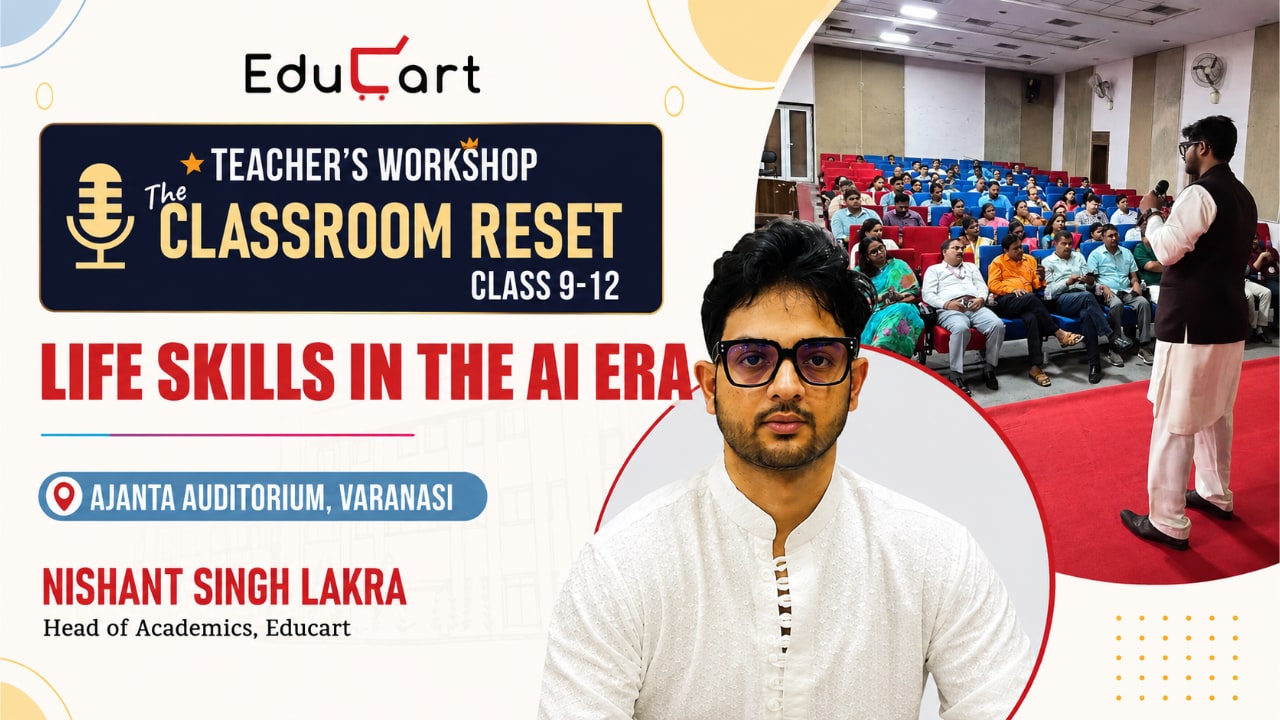
To answer this, a teachers' training workshop was organised in Varanasi by Educart. Bringing together school leaders, teachers and principals, the workshop focused on exploring how classrooms can make students future-ready in the age of AI and technology.
Workshop at a Glance
- Event Type: Teachers' Training Workshop
- Date: 26 July, 2026
- Duration: 3 Hours
- Participation: Free
- Topic: Life Skills in the Age of AI
- Speaker: Mr. Nishant Singh Lakra, Head of Academic, Educart
- Discussions Led By: Prashant Chauhan and Arbaaz Rayeen
Beginning with a Shared Commitment to Education
The event started with the traditional lamp-lighting ceremony, which formally marked the beginning of the workshop.
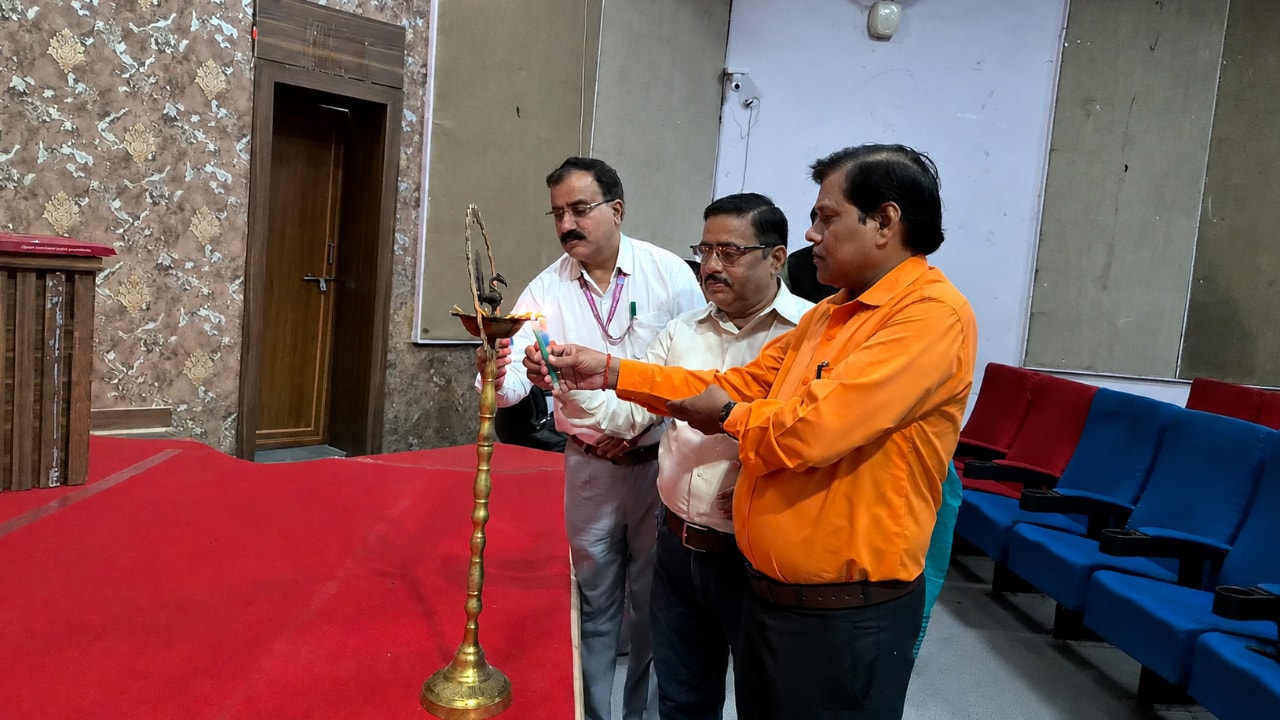
The ceremony was led by:
- Mr. Darminder Singh, Principal, Seth Anandram Jaipuria School
- Mr. Abha Singh, Principal, Vinita Public School
- Mr. Namvar Singh, Principal, Ambition Academy
- Mr. Anshuman, Vice President, School Association
- Mr. Nishant Singh Lakra, Head of Academics, Educart
The lamp-lighting ceremony showed the spirit of knowledge and learning. Also, it depicted the collective responsibility of the educators in shaping the future of the students.
It also set the tone for a workshop that would focus not only on technology, but on the values and competencies that define meaningful education.
The AI Era: Why Education Must Change
Following the ceremony, the workshop moved ahead with its first segment wherein a broader discussion started on the changing landscape of education.
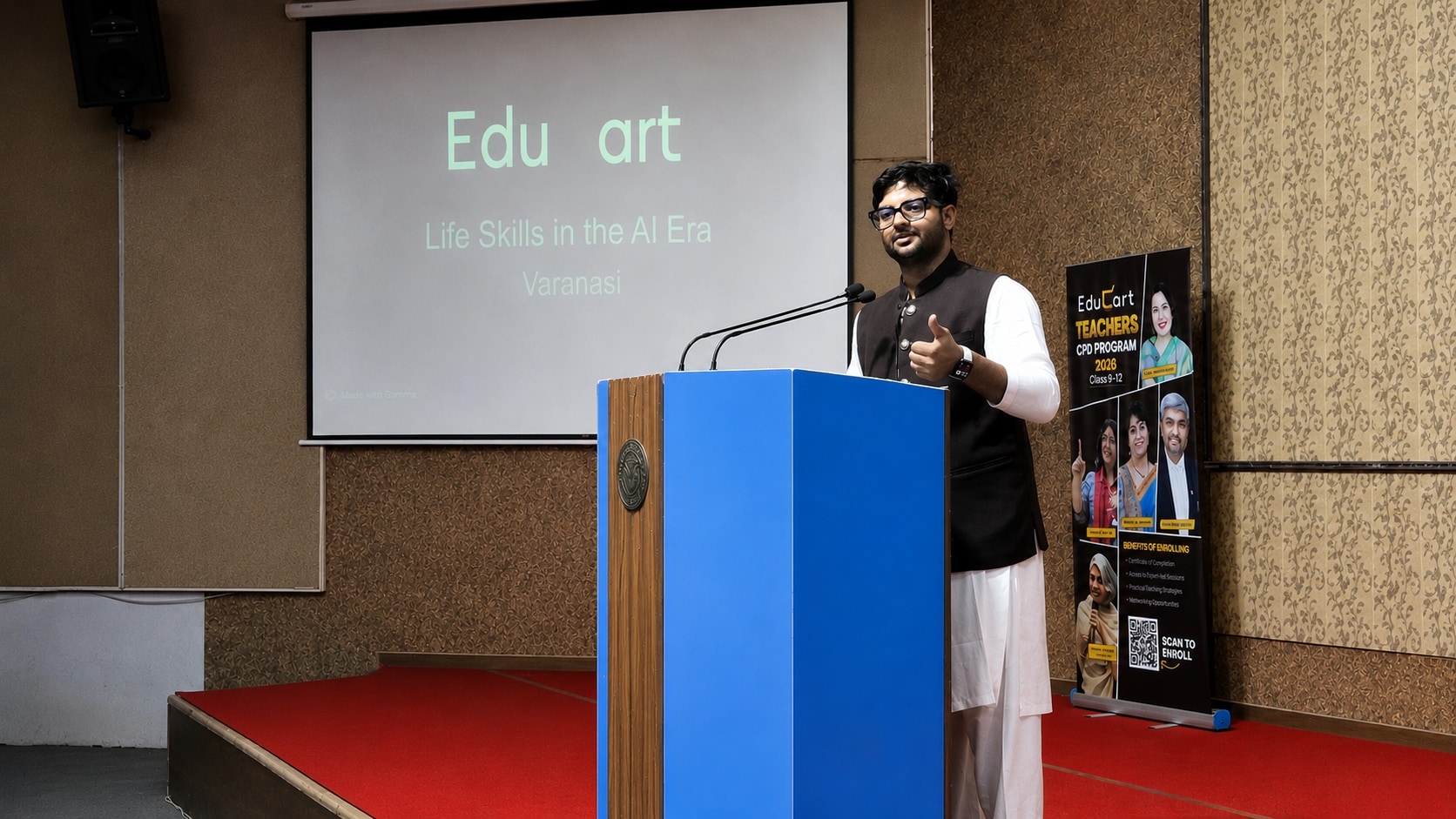
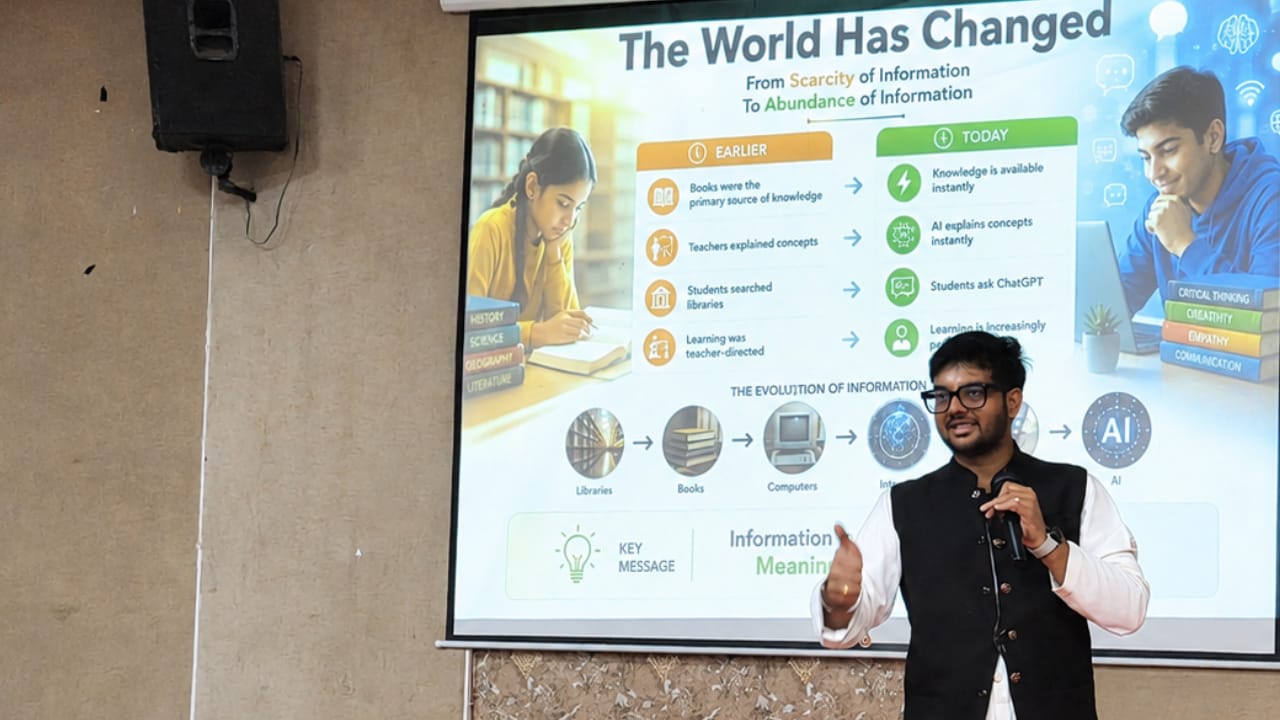
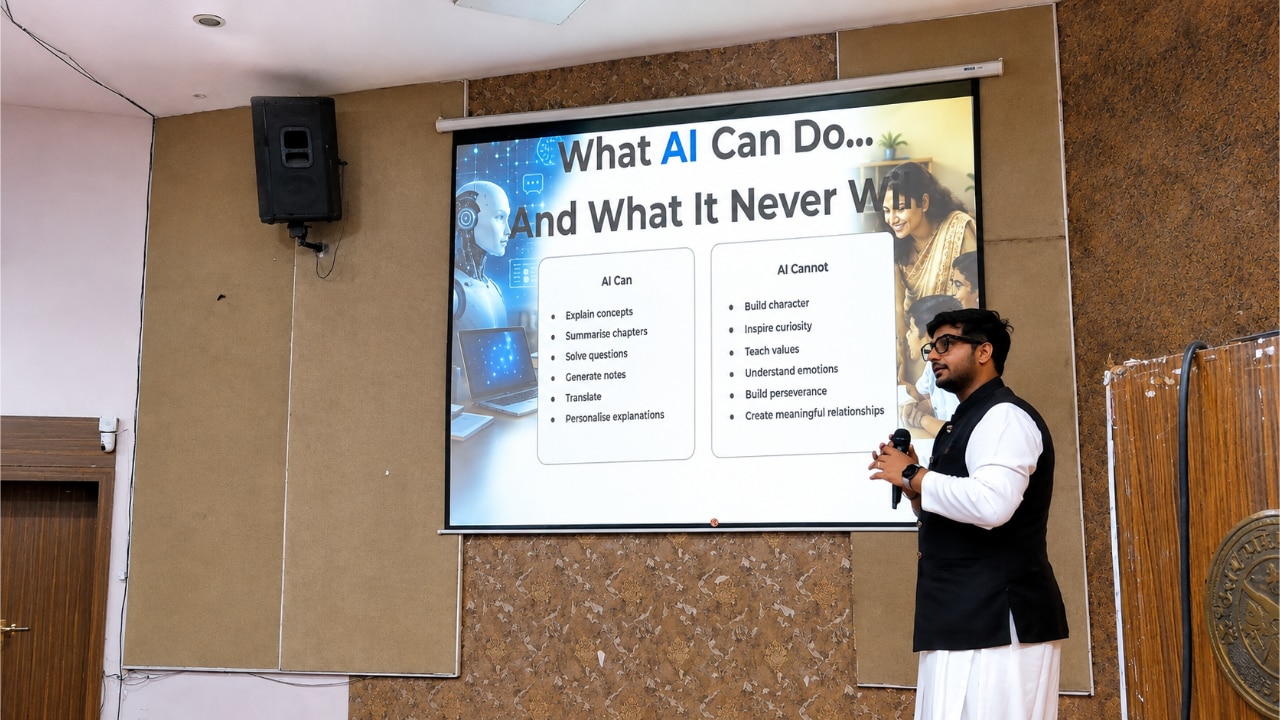
The session began by understanding how AI has transformed the way students access information. Today, AI can:
- Explain concepts
- Summarise chapters
- Solve questions
- Generate notes
- Personalise explanations
These qualities are changing the learning experience for students, making information more accessible than ever before. However, the session focused on the fact that AI can provide information and answers, but qualities which AI cannot replace are:
- Character
- Curiosity
- Values
- Emotional understanding
- Perseverance
- Meaningful relationships
On understanding this, a question came up which shaped the entire session ahead:
'If AI can provide information and answers, what should schools focus on developing in students?'
The educators were then motivated to look above the content provided by AI and consider how classrooms can help students become thoughtful, responsible and capable individuals in an increasingly technology-driven world.
From Content Coverage to Competency Development
Moving forward, this section put an emphasis on the need to gradually shift from an approach centered on syllabus coverage to one that focuses on competency, application and real world understanding.
The shift can be understood through two simple questions:
Earlier: "What does the student know?"
Now: "What can the student do with what they know?"
This transformation is important for competency-based education. The workshop highlighted that students need opportunities not to just remember concepts but also to:
- Apply knowledge in different situations
- Analyse information critically
- Connect learning with real-life contexts
- Make informed decisions
- Communicate their understanding effectively
The transformation can be easily connected to the evolved expectations of classroom and learning assessment. Rather than introducing only new question formats, competency-based education calls for a broader transformation in the way students learn, practise and respond to different learning situations.
Making Competency-Based Education Practical Through Educart Books
One of the key segments of the workshop was this one. The workshop focused on important challenges faced by the schools and Educart showed how their learning resources can help incorporate competency-based learning in everyday classrooms.
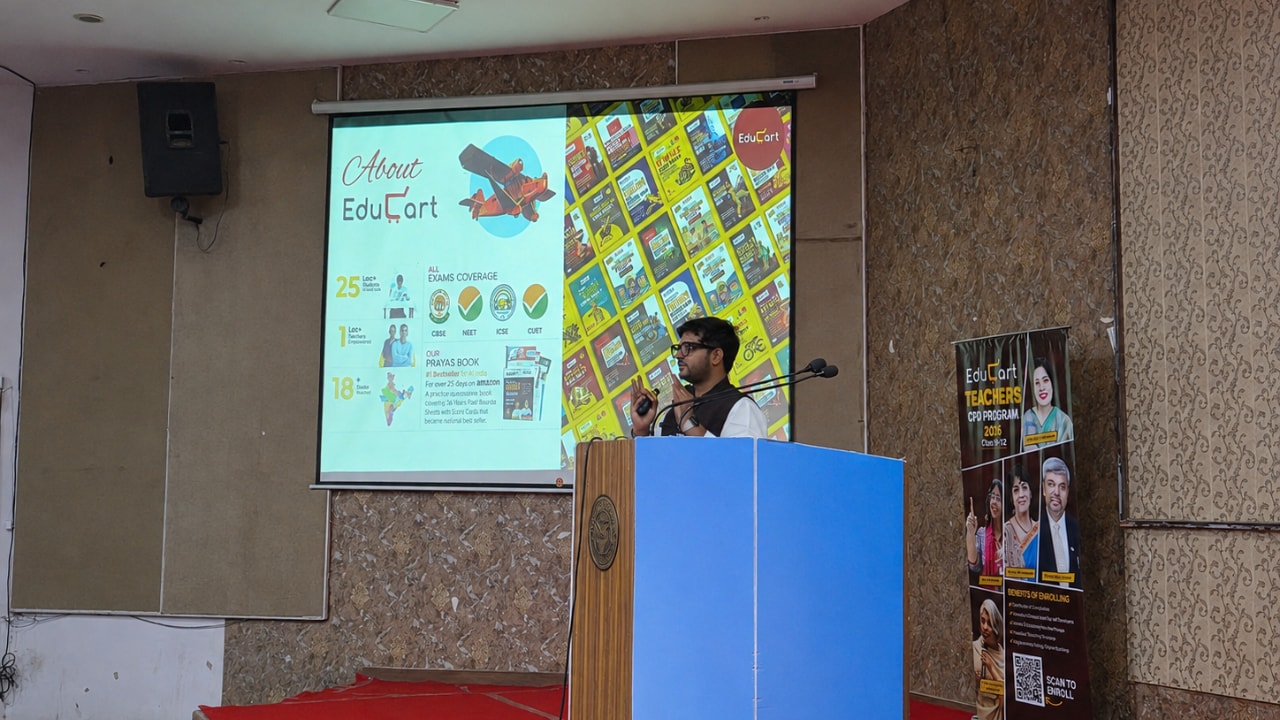
While competency-based education is important in giving direction to the students, it requires well-structured resources that can guide the students for the same.
Educart shared how its books are carefully designed to provide students with opportunities like:
- Apply concepts through guided practice in Educart exercises
- Analyse situations using competency-based questions included in Educart chapters
- Think critically through higher-order questions embedded in Educart assessments
- Engage with real-life contexts that are consistently integrated across Educart learning modules
Additionally to support this CBE approach, resources provided by Educart incorporate a strong competency-based framework including:
- Competency-oriented questions aligned with exam expectations
- Innovative assessment formats as seen in Educart practice papers and sample papers
- Real-life application-based learning sections within Educart chapters
- Structured, step-by-step practice designed for regular classroom and homework use
Educart's approach is simple. They understand competency-based education is not just a policy document, it has to become a classroom experience. So, their resources are prepared in a manner that they work on changing what students practice daily.
Life Skills Building Through Everyday Learning
In a technology-driven world, competence-based education naturally supports development of crucial life skills that students need. This part of the session emphasised on not treating life skills as separate classroom activity, but as a part of everyday classroom teaching.
Five essential life skills that formed the focus of discussion:
- Critical Thinking - evaluating information and making reasoned choices
- Creativity - generating original ideas and exploring multiple solutions
- Decision-Making - applying knowledge to real-life situations
- Communication - expressing, presenting and reviewing ideas effectively
- Self-Awareness - reflecting on one's progress and becoming an independent learner
The segment highlighted that these skills can be built or nurtured through thoughtfully designed classroom lessons along with learning resources. Moreover, by including application-based and reflective activities competencies can be catered along with subject knowledge.
Role of Books in AI Times
The biggest concern that the educators had was 'Do books still have a significant role in an AI-driven world?'
As AI continues to influence the learning process and has made the information readily available, the role of learning resources has evolved rather than being diminished.
A well-designed learning resource should encourage students to:
- Question what they learn
- Practise concepts regularly
- Apply knowledge to new situations
- Evaluate different possibilities
- Reflect on their understanding
Mr. Nishant then focused on the fact that AI and books need not be viewed as competing with one another. Together, both AI and books create a balanced learning environment where technology enhances access to knowledge while classroom resources improve understanding and application.
Teachers at the Centre of the Transformation
While the workshop described the growing role of AI, it put even more emphasis on the role of teachers in the education transformation. This segment puts strong focus on the importance of teachers, as technology can provide tools and information but it is the teachers who create the context that helps students understand and apply what they have learnt.

The session highlighted how educators continue to play a vital role in helping students:
- Ask better questions
- Interpret information meaningfully
- Understand values and consequences
- Learn from mistakes
- Communicate respectfully
- Develop confidence
- Use technology responsibly
Turning Ideas into Classroom Action
Moving from discussion to implementation, with the help of engaging activities, the workshop encouraged teachers to reflect on practical ways that they could introduce in their classrooms.
A reflective activity invited participants to complete the statement:
"From Monday… Instead of ________, I will ________."
Additionally, some more classroom transformation ideas were:
- Instead of giving answers, I will ask better questions
- Instead of only finishing chapters, I will ensure understanding
- Instead of focusing only on marks, I will also observe the student's thinking process
- Instead of discouraging mistakes, I will use them as learning opportunities
- Instead of fearing AI, I will teach students to use it responsibly
- Instead of relying only on recall-based questions, I will include more application-based tasks
- Instead of explaining everything myself, I will allow students to explore and discuss
This activity showcased that transformations would not be huge every time. Sometimes they can start with small activities, and consistent classroom practices. Sometimes it is about thoughtful decisions that can positively change the way of students' learning.
Conversations Beyond the Workshop
Following the formal workshop, the event transitioned into an interaction session over high tea. The gathering provided principals, school leaders and educators with an opportunity to exchange ideas and experiences on several important themes, including:
- Changing student needs
- AI and education
- Competency-based learning
- Classroom challenges
- The evolving role of teachers and learning resources
The networking encouraged meaningful conversations among the participants, and also improved the connection between Educart and participating schools.
Felicitation and Distribution of Learning Resources
The workshop concluded with the distribution of Educart specimens and learning resources.
Principals participating in the workshop were presented with certificates of appreciation along with Educart specimen bags in recognition of their contribution to education.

The distribution also gave school leaders an opportunity to explore Educart's learning resources and understand how they support competency-based classroom learning and evolving assessment practices.
Preparing Classrooms for the Future
As the workshop concluded, one message that stuck with everyone was: the future of education is not about choosing between technology and traditional learning resources. Instead it is about creating a thoughtful learning ecosystem where teachers, technology and well-designed academic resources work together. Also, they help students develop the skills required for the future.
These include the ability to:
- Think critically
- Apply knowledge confidently
- Communicate effectively
- Make informed decisions
- Adapt to changing situations
The Teachers' Training Workshop in Varanasi went beyond a discussion on Artificial Intelligence. It focused on competency-based education and nurturing life skills through everyday classroom practice.