
Ryan International School, Noida Partners with Educart for CPD Workshop on Active Learning: Teachers Explore Student-Centered Teaching Strategies!
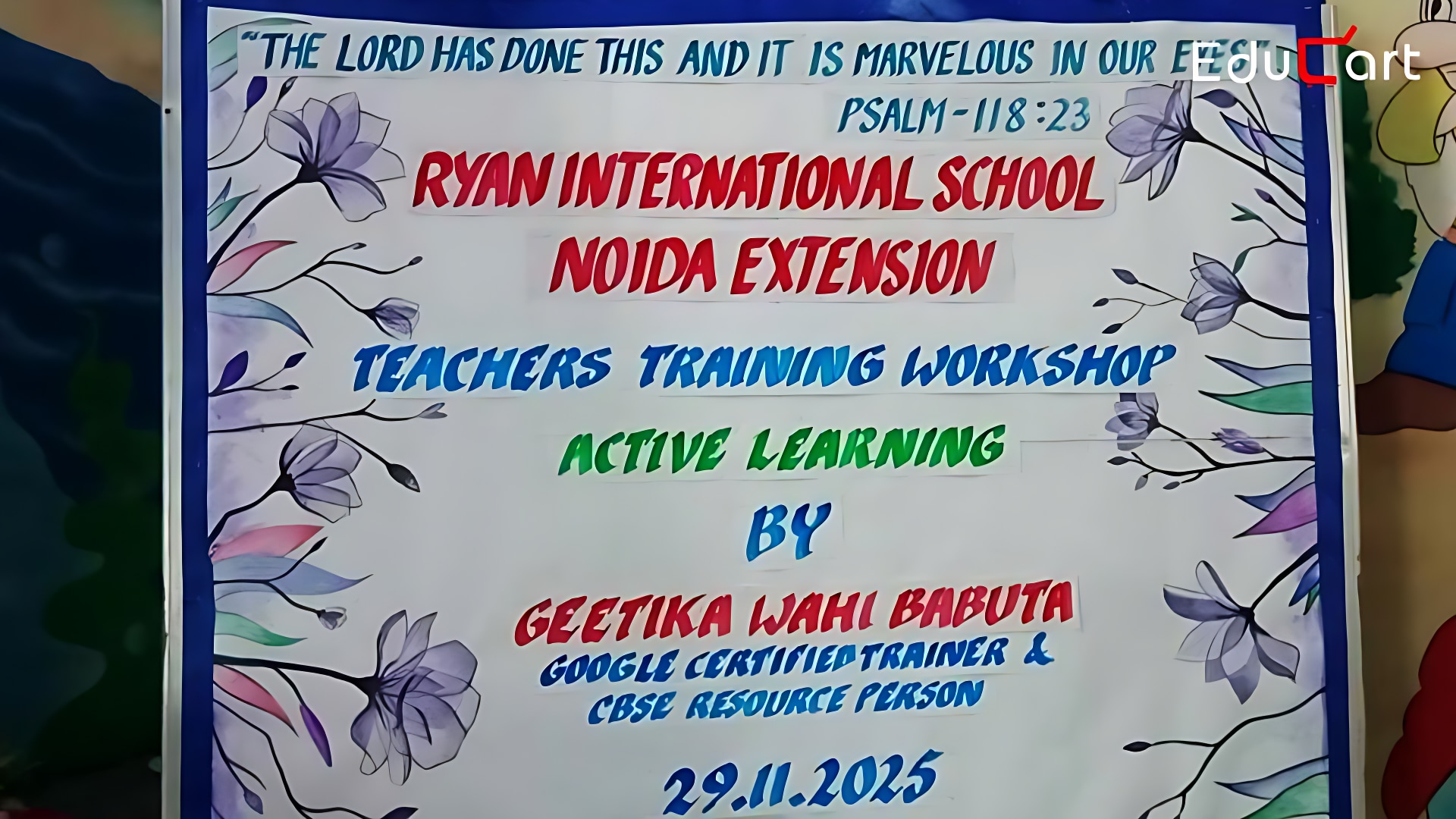
Noida, November 29, 2025 - Ryan International School, Noida hosted a comprehensive CPD Teachers Training Workshop focused on "Active Learning" in collaboration with Educart. The full-session free workshop saw participation from the entire teaching staff, demonstrating the school's commitment to modern, effective teaching practices.
The workshop was expertly conducted by Ms. Geetika Wahi, a Google Certified Trainer and CBSE Resource Person with extensive expertise in innovative teaching methodologies. The event was coordinated by Business Development Manager Hrithik, making sure smooth execution and maximum engagement for all participating educators.
The Problem with Quiet Classrooms
Ms. Wahi opened the session by addressing something many teachers experience but rarely question: "Are your students really learning, or are they just sitting quietly?"
She explained that passive learning, where students just listen, take notes, and memorize, often creates an illusion of learning without deep understanding. Students might be able to repeat information back on a test, but they struggle to apply concepts, think critically, or retain knowledge long-term. Active learning, in contrast, is when students participate, discuss, ask questions, work in groups, and apply what they learn to real situations. Students understand more deeply, retain information longer, and develop skills like critical thinking and collaboration that they'll need throughout life.
A major theme of the workshop was shifting instruction from teacher-centered to student-centered approaches. Ms. Wahi explained that in teacher-centered classrooms, lessons revolve mostly around what the teacher explains and demonstrates, leaving students in passive roles. In contrast, student-centered classrooms focus on what students do - exploring ideas, solving problems, discovering patterns, and constructing understanding with guidance.
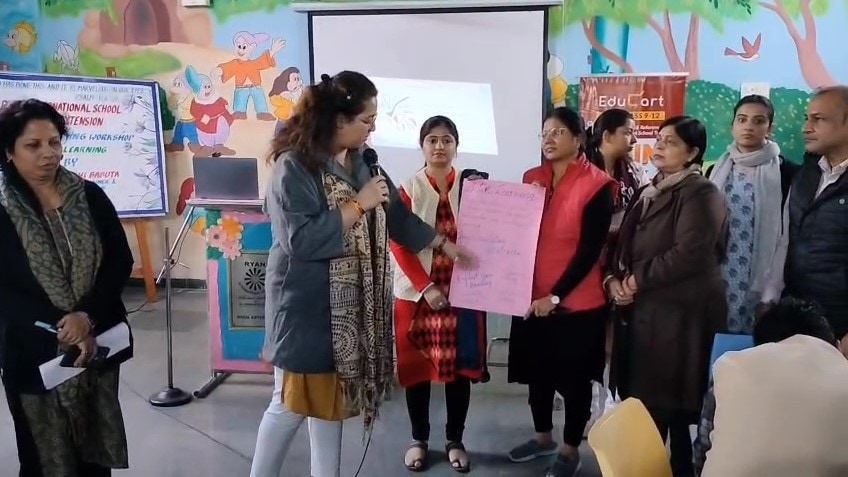
She shared practical examples of this shift: presenting problems instead of full lectures, letting students work through processes with resources and support, and asking open-ended questions that push deeper thinking rather than short, factual answers. This style of teaching requires planning activities that promote participation, designing questions that stimulate thinking, and building structures that help students work productively.
Ms. Wahi acknowledged that moving toward student-centered learning can feel challenging, especially for teachers accustomed to tighter control. However, she emphasized that giving students more responsibility leads to stronger engagement, better retention, and more independent learners outcomes that benefit both teachers and students in the long run.
Collaboration and Teamwork in the Classroom
The workshop also devoted significant time to building effective collaboration. Ms. Wahi highlighted that teamwork is not just an “extra,” but a core skill students need in modern academic and work environments. Yet most students need explicit guidance on how to collaborate successfully.
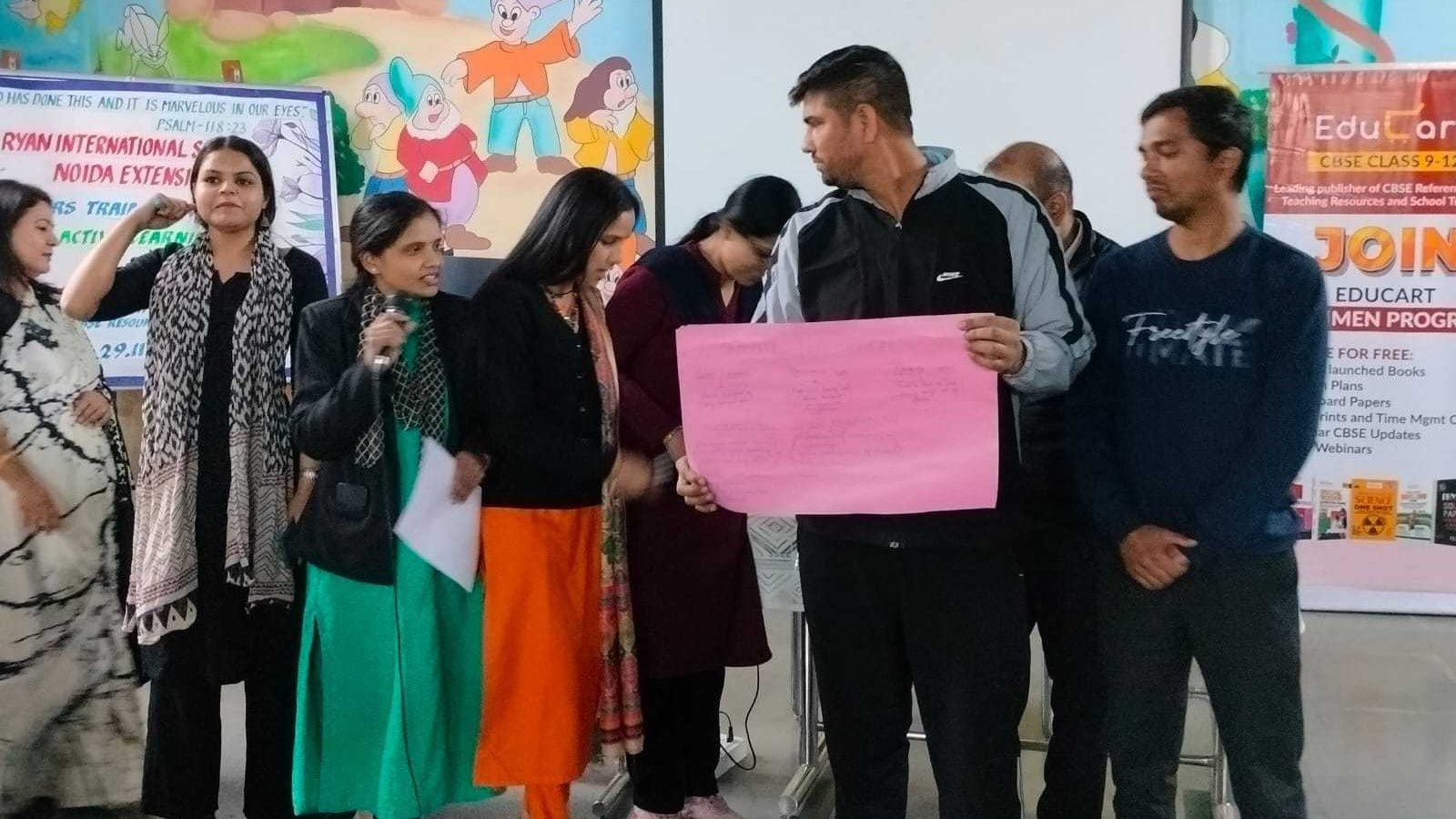
She introduced several structured strategies that make group work meaningful: think-pair-share for quick discussions, jigsaw activities where each student teaches part of the lesson, group problem-solving tasks, peer teaching, and long-term collaborative projects. She emphasized that these structures prevent issues like one student doing all the work or groups losing focus.
According to Ms. Wahi, successful collaboration requires clear roles, specific expectations, and accountability measures for both group and individual contributions. She also discussed common concerns off-task behavior, uneven participation, and rising noise levels and provided simple solutions such as circulating more actively, setting time boundaries, using noise-level cues, and requiring concrete outputs.
Developing Critical Thinking Skills
Another important focus was strengthening students’ critical thinking abilities. Ms. Wahi explained that critical thinking goes beyond remembering facts; it involves analyzing information, questioning assumptions, evaluating evidence, comparing perspectives, and applying reasoning to new situations.
She shared techniques teachers can use to build these skills daily: using open-ended and analytical questions, incorporating problem-based learning tasks, organizing debates or structured discussions, giving students opportunities to evaluate sources, and designing activities that ask students to compare, contrast, and justify their ideas.
A key part of promoting critical thinking is asking better questions. Instead of questions with one right answer, teachers can ask “why,” “how,” and “what if” questions that require students to reason. She also emphasized giving students time to think, pausing after asking a question so more students can form meaningful responses rather than only the quickest thinkers.
Finally, she stressed the importance of classroom culture. When students feel safe to take risks, challenge ideas, and learn from mistakes, deeper thinking naturally develops. Teachers found these strategies practical and appreciated understanding how small instructional changes can significantly improve students’ analytical abilities.
Connecting Learning to Real Life
Ms. Wahi highlighted the importance of helping students see how classroom learning connects to the real world, noting that relevance boosts motivation and engagement. She shared practical ways to make these connections clear: using everyday examples, linking lessons to current events, designing projects around real problems, inviting guest speakers, and showing concepts in action through field trips or videos.
She also encouraged teachers to involve students directly by asking questions like “Where might you use this?” or “Why does this matter outside school?” Even when topics don’t have obvious real-world uses, she reminded teachers to be honest and emphasize broader skills such as critical thinking or perseverance.
Teachers appreciated these strategies, especially since students often ask “Why do we need this?” and they now felt better prepared to answer meaningfully.
Practical Tools Teachers Can Use Immediately
Ms. Wahi shared ready-to-use activities that required little preparation, which teachers found extremely helpful. These included discussion routines, structured group work formats, questioning strategies that deepen thinking, exit ticket templates, and movement-based tasks for active engagement.
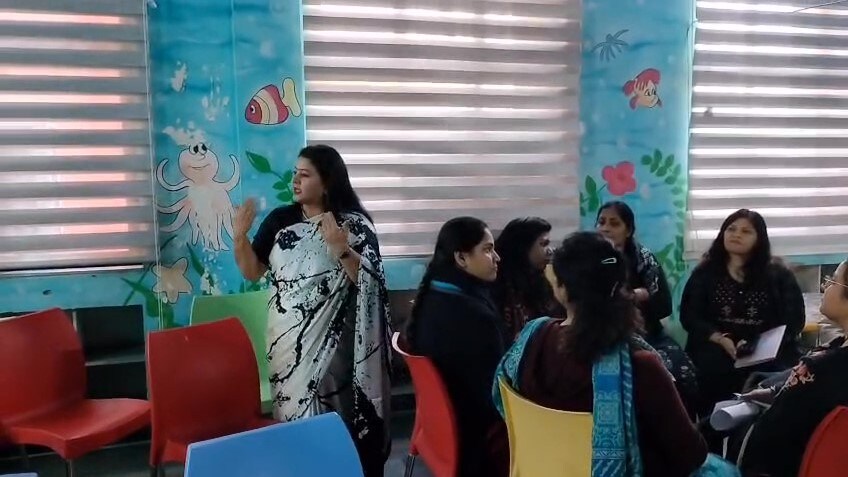
Each tool came with clear steps, common challenges, and tips for success, allowing teachers to apply them right away. Throughout the workshop, Ms. Wahi modeled active learning herself, having teachers participate in activities, collaborate in groups, and reflect on their experiences. This hands-on approach helped them understand how active learning feels for students and built confidence to use it in their own classrooms.
Many teachers remarked that these practical strategies made the workshop especially impactful.
Educart's Commitment to Modern Teaching Methods
This workshop at Ryan International School reflects Educart's commitment to supporting teachers in adopting teaching methods that align with modern educational research and student needs. Active learning isn't just a trend, it's an evidence-based approach that produces better outcomes for students.
By partnering with expert trainers like Ms. Geetika Wahi, who brings both Google certification and CBSE expertise, and coordinating through dedicated team members, Educart brings quality professional development directly to schools where entire teaching staffs can benefit. The organization focuses on practical implementation rather than just theoretical knowledge, recognizing that teachers need concrete strategies they can use within the real constraints of their classrooms. Through these ongoing school partnerships, Educart helps transform teaching practices across India.
Teacher Response and Engagement
The entire teaching staff participated actively throughout the session, engaging with activities, asking questions, and sharing experiences from their own classrooms. The collaborative atmosphere allowed teachers to learn not just from Ms. Wahi but from each other's successes and challenges.
Teachers expressed particular appreciation for the shift in perspective the workshop provided. Many admitted they had been teaching the way they were taught, with traditional lecture methods, without questioning whether better approaches existed. Ms. Wahi's presentation opened their eyes to possibilities they hadn't considered.
Several teachers shared that they had tried group work or discussions before but felt frustrated by the results. Understanding that effective active learning requires specific structures and teaching, not just telling students to work together, gave them new confidence to try again with better planning.
The emphasis on practical, immediately usable strategies resonated strongly. Teachers deal with enough theoretical professional development that doesn't translate to real classrooms. This workshop gave them concrete tools they could actually use, which they found refreshing and valuable.
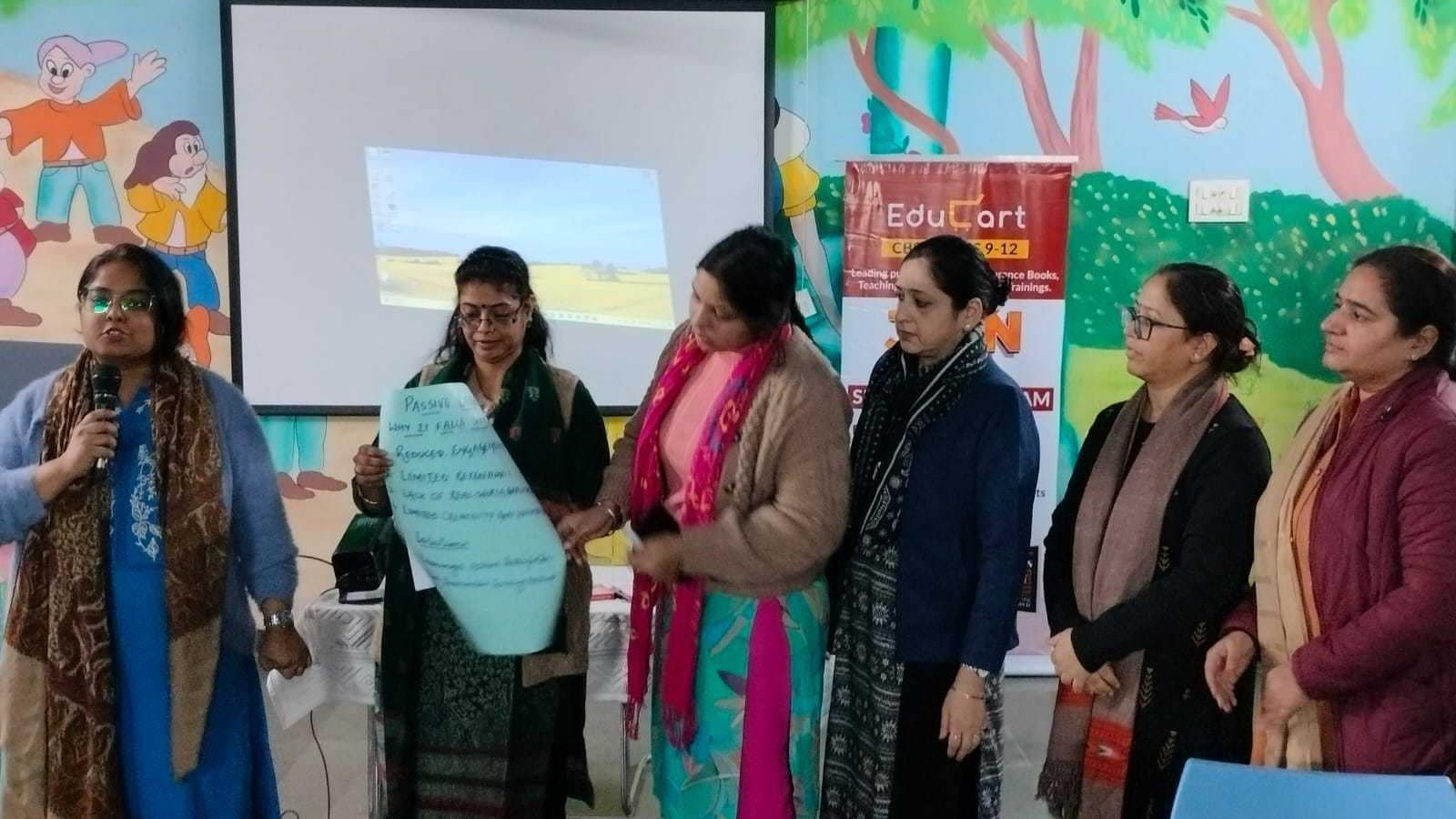
The Active Learning workshop at Ryan International School, Noida equipped teachers with the knowledge, strategies, and confidence to transform their teaching from passive to active approaches. Teachers left understanding that effective teaching isn't about how much the teacher talks but about how much students think and do.
Ms. Geetika Wahi's expert facilitation, combined with practical tools and collaborative learning experiences, created a workshop that genuinely inspired change. When teachers shift from teacher-centered to student-centered instruction, from passive to active learning, everyone benefits. Students engage more deeply, learn more effectively, retain information longer, and develop crucial skills for life beyond school. Teachers find teaching more rewarding as they see students genuinely learning rather than just memorizing.
As education continues evolving to meet the needs of modern students and prepare them for an uncertain future, professional development in evidence-based teaching methods becomes increasingly essential. Educart's commitment to providing this support reflects its understanding that better teaching creates better learning.