
Smarter Ways to Design Competency-Based Assessments: Educart CPD Webinar
Competency-based Assessment provides students with the freedom to think, and react based on their observation. On the day of independence, Educart organised a CPD webinar focusing on the theme ‘Designing Competency-based Assessment’. The topic revolved around how this power to think and observe can be made better by the educators for the students.

The session brought educators together to examine an increasingly important question in classroom assessment: Are students merely able to recall what they have studied, or can they understand, interpret and apply that knowledge?
Workshop at a Glance
- Duration: 2 hours
- Speaker: Ms. Aishwarya Taneja
- Speaker Designation: Senior, Headmistress, Bal Bharati Public School, Dwarka
- Discussion Led By: Mr. Nishant Lakra
- Type of Event: Continuous Professional Development (CPD) Webinar
- Participation Fee: Paid
Key Elements of an Effective Assessment Question
A major focus of the webinar was understanding what actually makes an assessment question effective in a competency-based framework. Educators were encouraged to move beyond questions that simply test recall to design questions that assess how well a student understands and applies a concept.
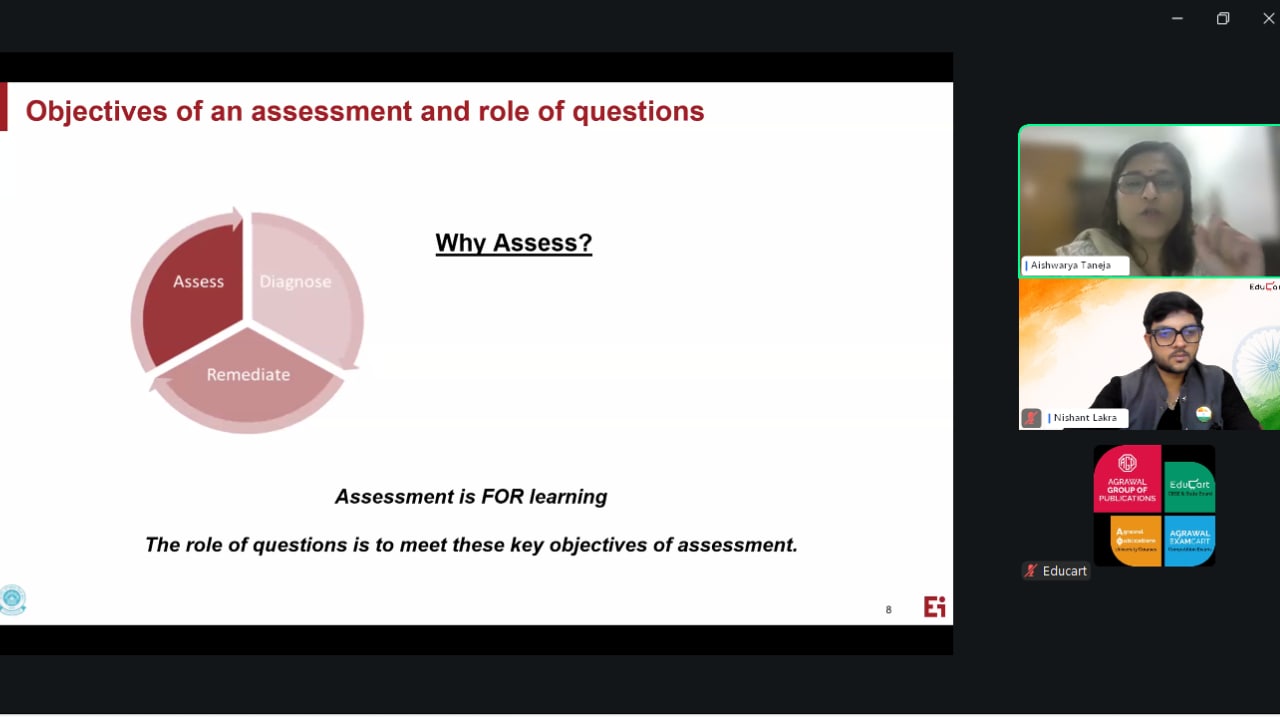
A strong session of assessment question is based on three important elements:
- Concept: What core idea or skill is being tested?
- Content: What information does the student need to engage with the question?
- Context: In what situation is the concept being applied?
When these elements come together collectively, questions become more meaningful with a shift from rote learning recall to deeper conceptual understanding. This approach helps teachers check not just what students know, but how they think and apply their learning in different situations.
Beyond Recall: From Memorisation to Application
A key segment of the webinar was understanding the transition from memorisation to application. Instead of asking the learners to provide the information directly from the textbooks, competency-based questions require them to use their knowledge to understand situations, connect ideas, make decisions and solve unfamiliar problems.
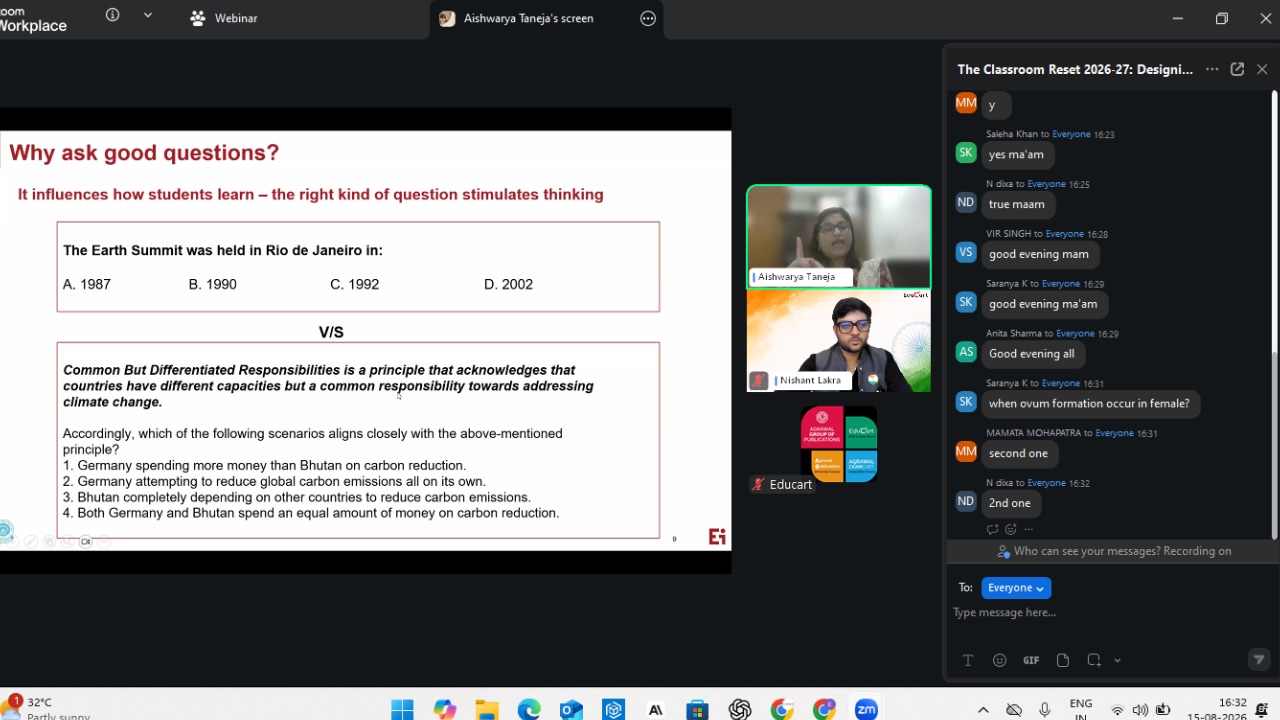
Teachers were motivated to rethink assessment planning by asking:
What should a student be able to do with the knowledge acquired?
This question broadens the thinking about competency-based learning rather than limiting the assessment to what students can remember. This change in approach can help educators understand not only whether learning has taken place, but also how deeply a concept has been understood.
Bloom’s Taxonomy as a Guide for Question Design
The session further emphasised on Bloom’s Taxonomy as a practical framework for building assessments across different levels of thinking. Questions need not remain restricted to remembering facts. They can progressively encourage learners to:
- Understand concepts
- Apply knowledge in different situations
- Analyse information critically
- Evaluate ideas and arguments
- Create new responses or solutions
When assessments include these varied cognitive demands, teachers can obtain a more balanced picture of student learning. The webinar also showed the value of placing questions in real-life or familiar situations so that students are required to use concepts rather than simply recognise textbook language.
Begin with Learning Outcomes: The Understanding by Design Approach
Another major discussion is on Understanding by Design (UbD), also called backward design. Under this approach,
- First, teachers identify what students should ultimately know or be able to demonstrate
- Next, they decide what evidence will show that the learning has taken place
- Finally, they design instruction and assessment based on these learning outcomes
This encourages teachers to move away from beginning solely with
“What should I teach?” and instead consider, “What evidence will tell me that the learner has understood?”
Bringing Real Data into the Classroom
Competency-based assessment can become more effective when questions are connected with situations students understand and recognise.
The webinar discussed the use of real data, surveys and everyday situations as stimuli for assessment. This can be used to create multiple question formats, including:
- True/False questions
- Fill-in-the-blanks
- Chronological arrangement questions
- Free-response questions
- Subjective questions
- Stimulus-based MCQs
However, the focus remained on the thinking demanded by a question rather than its format. For example, an MCQ can make students think deeply by linking it with what they already know, carefully checking all the options before choosing the correct answer.
In this way, even an objective question can test higher-level thinking when it is designed properly.
The Importance of Effective Distractors
The webinar further focused on an important element of MCQ design which is often underestimated, distractors.
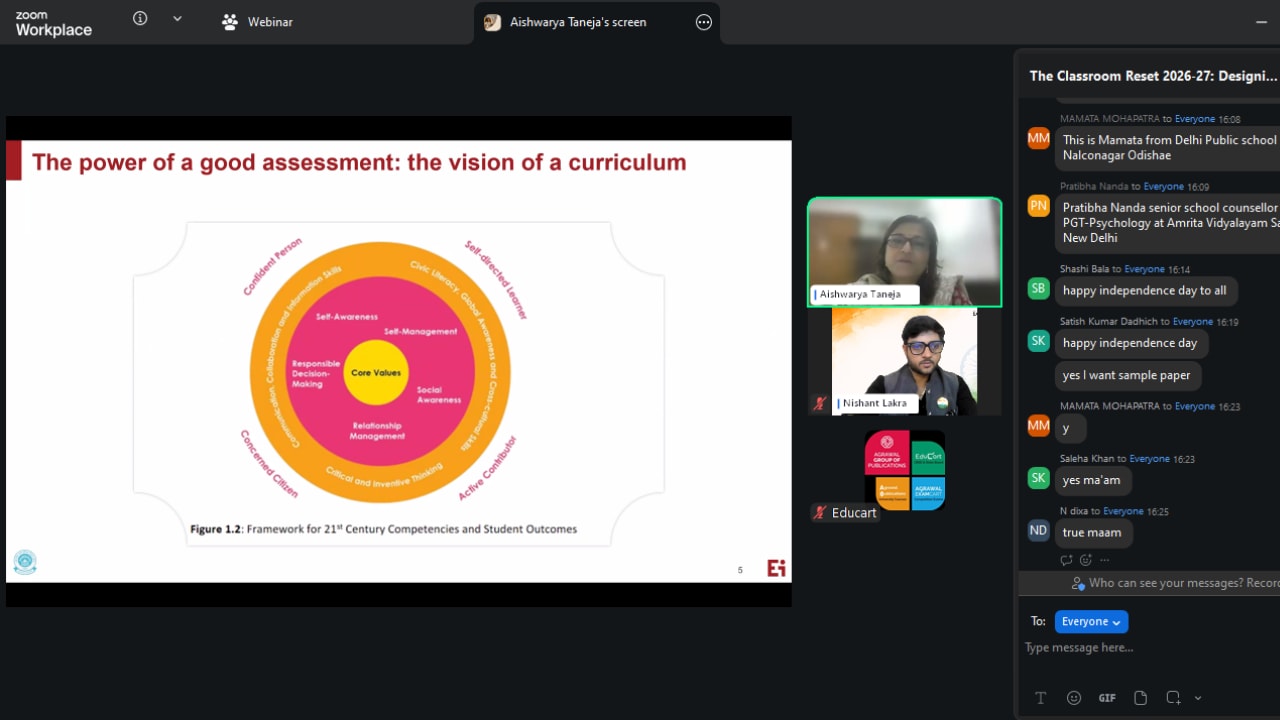
The distractors are not just another incorrect option or an obvious wrong or unrelated choice. Instead, an effective distractor should be believable enough to make students think. At the same time, it should reflect possible misconceptions, incomplete understanding or conceptual confusion. Well-designed distractors can help teachers identify learning gaps making MCQs useful. By this, MCQs are not only an assessment tool but also diagnostic tools for weakness in learning.
In particular, strong distractors should:
- Be believable enough to require careful evaluation
- Reflect common misconceptions or errors
- Indicate partial or incomplete understanding
- Help pinpoint specific areas of confusion
Assessment as a Diagnostic Tool
After the discussion about the importance of distractors in framing the MCQs, the webinar moved to a broader message which was that assessment should not end with the allocation of marks.
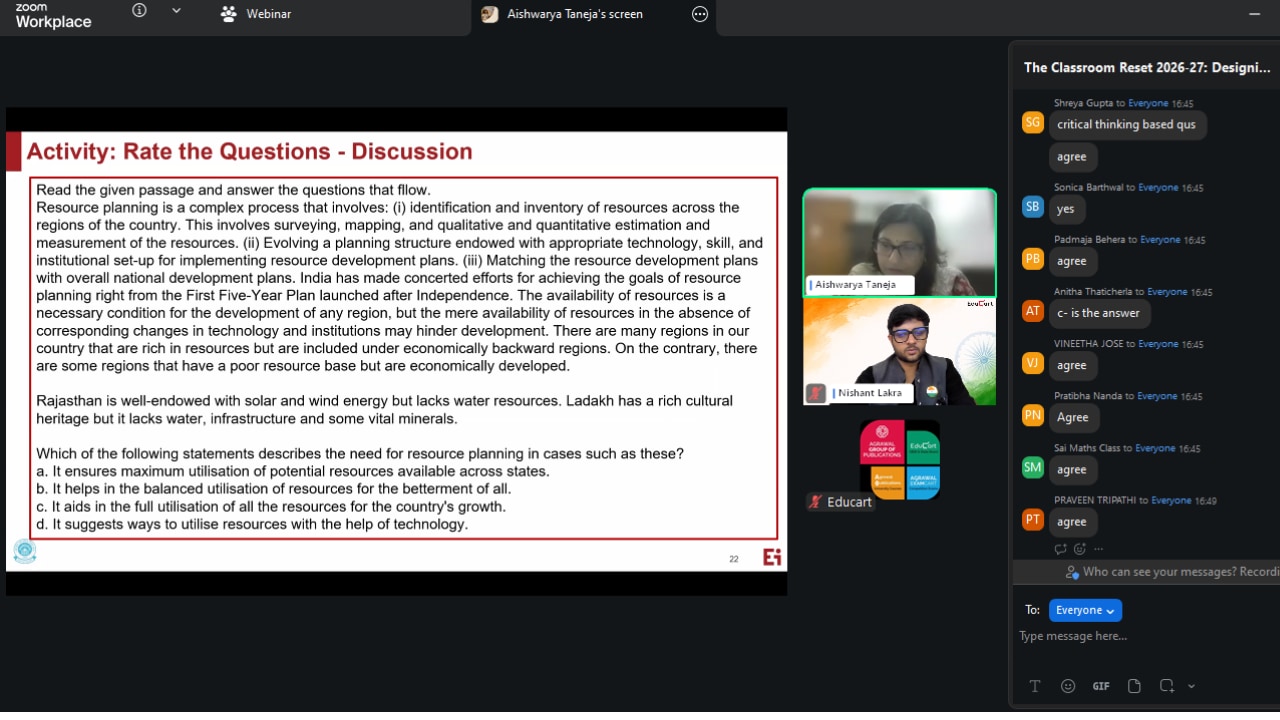
A student’s incorrect response can provide useful information about:
- Misconception
- An incomplete understanding of the topic
- Difficulty in concept application
By studying such responses, teachers can identify areas requiring further explanation and modify their teaching accordingly.
Rubrics for Clearer Expectations
Moving forward, the session also focused on how rubrics support competency-based assessment. Teachers explored holistic and analytical rubrics and learned how they can be used to set clear expectations and evaluate student responses fairly and consistently.
By defining what students are expected to demonstrate, rubrics make both question-setting and grading more structured, clear, and effective.
Teaching for Understanding and Moving Beyond Content
The session ultimately connected assessment design with a larger classroom goal - moving from teaching content to teaching for understanding. When teachers begin to focus on the learning outcomes, use meaningful contexts, across different cognitive levels and analyse the results produced by students, assessment becomes closely connected with the teaching process itself.
Teachers can then better identify what learners already understand, what they still need to learn and what kind of response would demonstrate genuine conceptual clarity.
The webinar concluded by encouraging educators to go through the questions they already use and examine whether those questions genuinely measure understanding. Teachers were prompted to check whether the
- Context is meaningful
- Question tests an identifiable competency
- Students are required to think
- Students' responses can reveal learning gap
The Next Step for Teachers
The webinar concluded by encouraging teachers to review the questions they already use and evaluate them from a competency-based perspective.
Before finalising a question, teachers can ask:
- Does it assess recall or actual understanding?
- What competency does it test?
- Is the context meaningful?
- Does it require the learner to think?
- Are the distractors plausible?
- Can the response reveal a learning gap?
- Is it aligned with the intended learning outcome?
Even small changes in question design can make assessments more effective in understanding how students think, apply and demonstrate their learning.
Through its CPD Webinar Series, Educart continues to bring educators together around practical issues in teaching, learning and assessment, with an emphasis on strategies that can be applied directly in classrooms.