
Revolutionizing Classrooms: Educart Partners with Vijaya International School for Seminar on CBE and NEP 2020
In a world where information is at our fingertips, education is no longer just about what we learn, it's more about how we learn. Our trusted companion in the education space, Educart,is taking this idea seriously and investing in what truly matters: The Teachers.
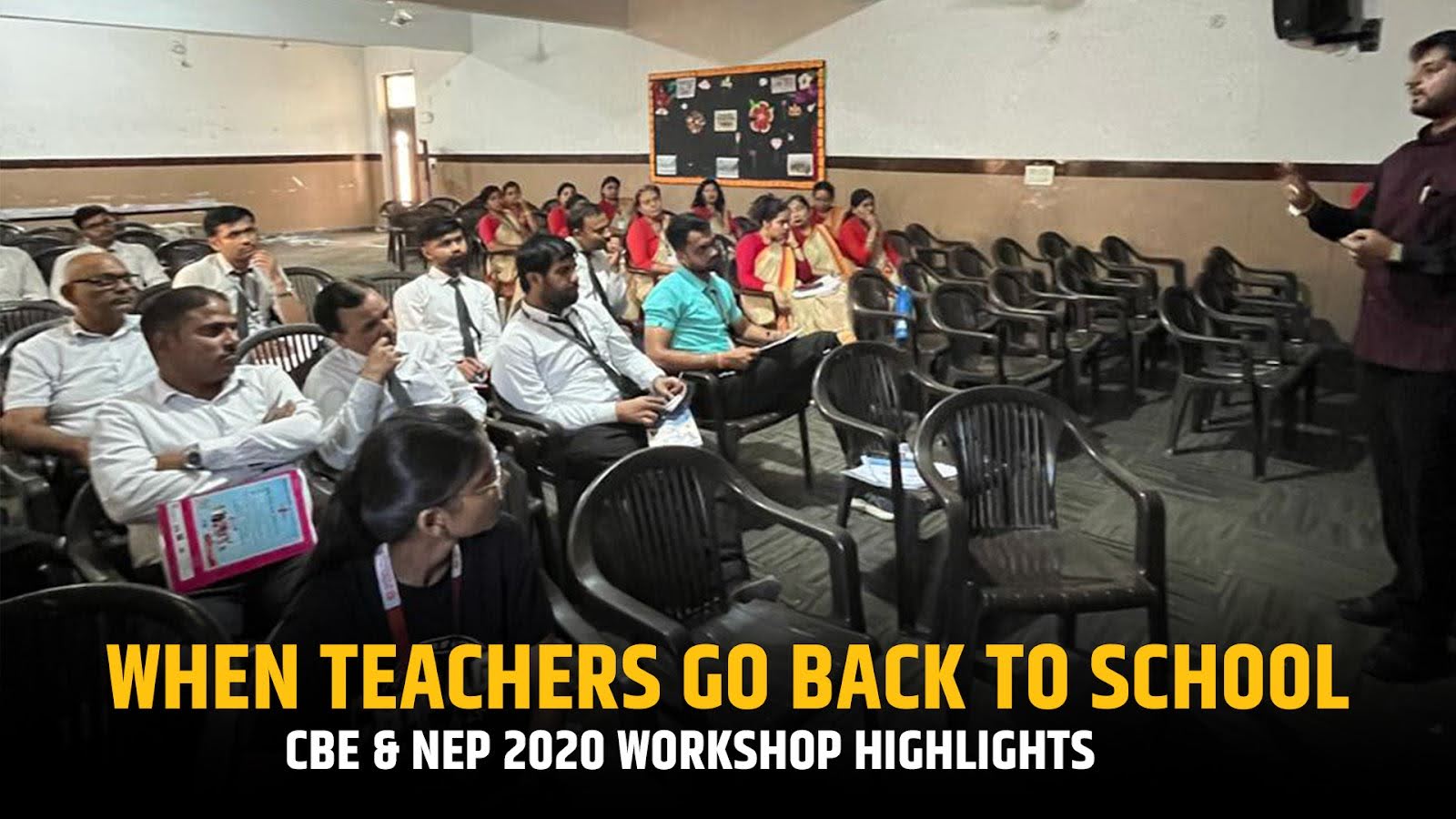
On 28th April 2025, Educart, along with Vijaya International School, located near Bichpuri Crossing in Shastripuram, Agra, hosted an engaging teacher training workshop centered around two main themes in today’s academic scene i.e, Competency-Based Education (CBE) and the National Education Policy (NEP) 2020. The session was led by noted education consultant Mr. Nishant Lakra, who brought not only knowledge but also a spirit of collaboration and inspiration to the room.
Why Did This Workshop Matter?
With the NEP 2020 pushing for a complete restructure of the traditional education system - making it more holistic, skill-focused, and rooted in real-world application - schools are now expected to do much more than cover a textbook. They're expected to prepare students for a life out of the books.
This sounds like a big turn. And it is. But as this session at Vijaya International School showed, it’s a leap that can be managed with the right mindset and training.
While the session didn’t involve students directly, 20 teachers from across subjects and grade levels participated in the workshop, really interested in upgrading their teaching ways and skills.
The workshop kicked off with a unique ice-breaking activity - one that encouraged teachers to reflect on moments in the classroom that truly mattered. This was just to bring out the emotional and human side of teaching that sometimes gets lost in curriculum and deadlines.
Educators shared stories. It was a reminder that at the heart of education lies connection, and that NEP 2020 encourages exactly this kind of authentic, student-centric experience.
More About Competency-based Education (CBE)
So what exactly is Competency-based Education, and how is it different from the traditional model of classroom learning?
In simple terms, CBE focuses on mastery, not memory. It values whether a student has genuinely understood and can apply what they’ve learned and not whether they can reproduce it word - for - word in an exam. Instead of pushing all students through the same content at the same pace, CBE allows flexibility, choice, and meaningful assessment.
During the workshop, Mr. Lakra broke this down in teacher-friendly language, using real classroom scenarios to illustrate how lessons can be designed to focus on skills rather than just textbook content.
There were also detailed discussions on:
- Flexible lesson planning
- Designing formative assessments that help track progress
- Using rubrics to evaluate how students think
- And perhaps most importantly, how to support learners at different levels within the same classroom
NEP 2020: From Policy to Practice
While many teachers have heard of NEP 2020, the workshop gave a more detailed overview. Mr. Lakra took participants through the core principles of NEP - base knowledge, flexibility in subject choices, vocational skills, and the promotion of multilingualism and showed how these are already being implemented in some forward-looking schools.
Teachers discussed questions like:
- How can we make learning more interdisciplinary?
- What does "assessment for learning" look like, as opposed to assessment of learning?
- How do we balance academic rigor with student well-being?
These conversations helped clarify that the NEP is not just a policy document, it’s a student-friendly education system.
A standout segment of the workshop was the collaborative lesson planning activity. Teachers were grouped and asked to reimagine one of their existing lessons—this time in CBE ways.
Q: What would a Biology class look like if the goal was scientific thinking, not just definitions?
Q: How can a History lesson be learned in ways which are not for rote-learning but memorization?
Q: What competencies should a student build in Math—accuracy, yes, but also logical reasoning and problem-solving?
These were not just theoretical questions. Teachers worked together to create detailed, implementable plans. The activity wasn’t just about changing lesson plans—it was about changing mindsets.
By the end of the session, one thing was clear: teachers left not just with notes, but with a new sense of purpose. As one participant put it,“This wasn’t just training. It felt like we were building something bigger, something future-ready.”
Under the guidance of Principal Mr. Farooq Khan, Vijaya International School has been consistently investing in professional development. This session is part of a broader Continuous Professional Development (CPD) initiative that aims to keep teachers informed, inspired, and innovative.
And while students weren’t present in the room that day, their classrooms will soon reflect the shift i.e, less lecture, more dialogue; fewer tests, more reflection; and most importantly, learning that sticks.
By embracing Competency-based Education and the NEP 2020, Educart is not just upgrading its pedagogy, it’s re-writing the future of learning itself.