Hindustan Times
In Focus

In Focus
Photo Credits: NASA
10 NASA 'Images of the Day' that are out of the world

The US space agency National Aeronautics Space Administration (NASA) selects a captivating photo from its gallery as "Image of the Day". Let's look at some of these images taken by NASA.
Photo Credits: NASA

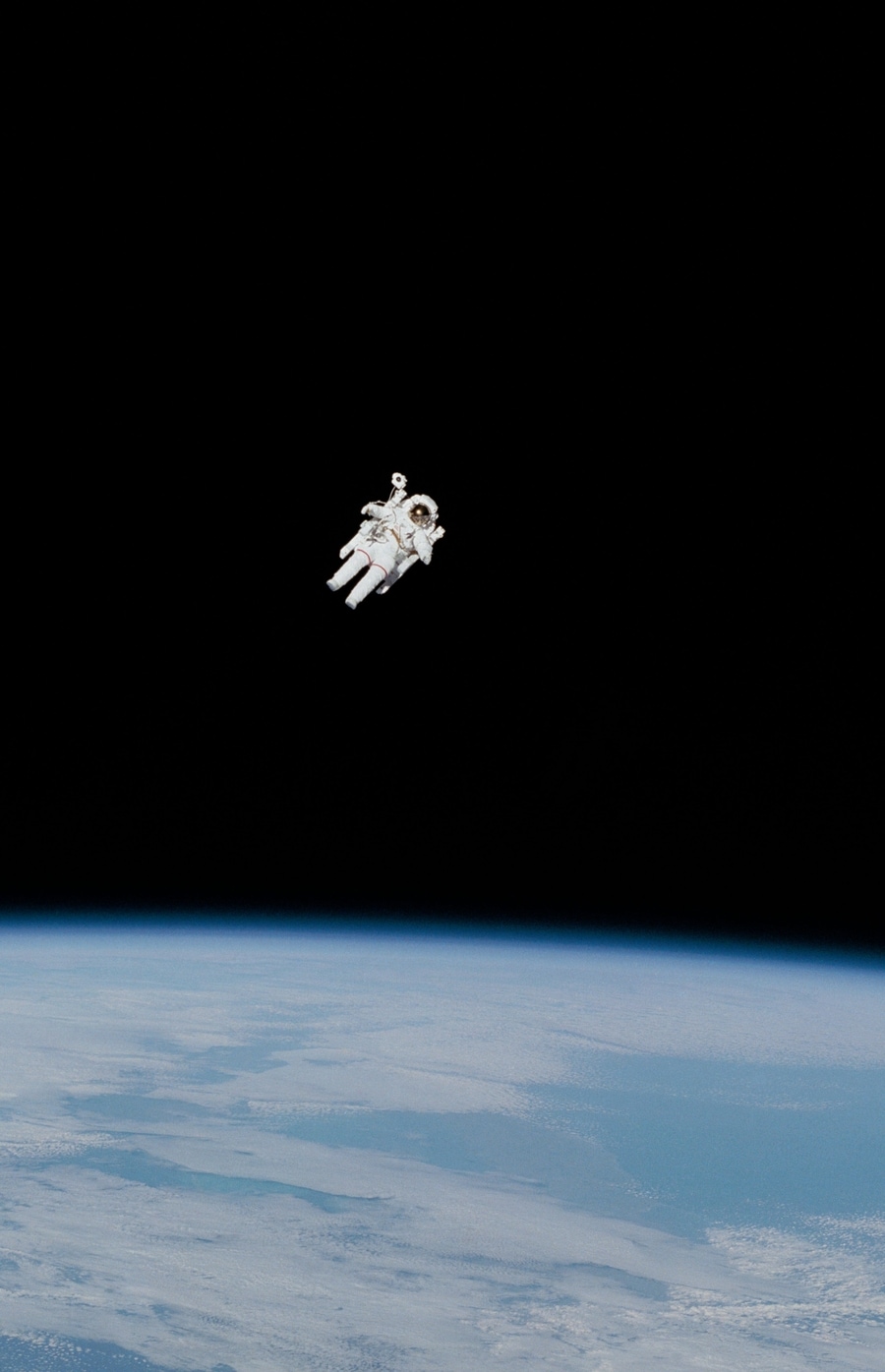
This photo shows Astronaut Bruce McCandless II approaching his maximum distance from the Earth-orbiting Space Shuttle Challenger.
Photo Credits: NASA

NASA's Hubble Space Telescope captured this photo featuring a luminous blue compact galaxy (BCG) that shows an intense burst of star formation.
Photo Credits: NASA

This high exposure photo of Earth was taken from the International Space Station. It shows Earth's atmospheric glow against the backdrop of a starry sky.
Photo Credits: NASA

Captured by the Hubble Space Telescope, this picture shows a peculiar phenomenon of the collision of two galaxies. This photo was also selected as NASA's Hubble Picture of the Week.
Photo Credits: NASA

NASA's Hubble Space Telescope captured this image that shows debris from a stellar explosion in the Large Magellanic Cloud galaxy, resembling sparks from a fireworks display.
Photo Credits: NASA

This photo shows two neutron stars colliding to merge. The collision leads to blasting a jet of high-speed particles that produce a cloud of debris.
Photo Credits: NASA

This is a composite image of young stars that emit X-rays, detected by NASA’s Chandra X-ray Observatory. The green gas in the nebula resembles a Christmas tree against the backdrop of a starry sky.
Photo Credits: NASA

NASA's space station captured this mesmerising image of the spectacular aurora borealis, or the northern lights over Canada.
Photo Credits: NASA

This captivating photo shows an ultraviolet view of Jupiter, captured by NASA's Hubble Space Telescope.
Photo Credits: NASA

NASA captured this image from Mars, resembling the face of a bear. The photo features a hill with a V-shaped collapsed structure resembling a bear nose, two craters depicting eyes and a circular fracture pattern surrounding them, making a bear face.
Photo Credits: NASA

Read Next