

All you need to know about badminton!
By HT Brand Studio | September 13, 2019

Experts Vijay Lancy and Nikhil Kanetkar—who are associated with the PNB MetLife JBC Bootcamp channel on YouTube—talk about training techniques, nutrition requirements for budding players, and more.
The recent weeks have catapulted ace shuttler P V Sindhu into the limelight, once again—she scripted history by winning a gold medal in the Badminton World Federation World Championships in Basel. While her defining moment lasted about 38 minutes, her stellar performance was backed by a great coach who worked on her training and nutrition over time, and shaped her win.
Every coach understands the needs of his students and trains them accordingly. The making of a Sindhu or a Saina takes years of consistent training and perseverance, which is why coaches emphasise the importance of starting early.
Besides, the competition has grown manifold over the years—several kids aspire to take up badminton as a professional sport, unlike earlier.
An early start is important
“Badminton is a highly competitive sport, and in India, too, it has picked up really well after our players started doing well at the international level. The earlier the kids are identified, nurtured and trained, the better are their chances of doing well professionally. If we start at 7 today, the benchmark is that once they are 11 or 12, they want to at least reach the state level and by 13-14, they are at the national level. So, if you start, say, when you are 10 or 11, you’ve lost out on years of practice,” says former Olympic player Nikhil Kanetkar.
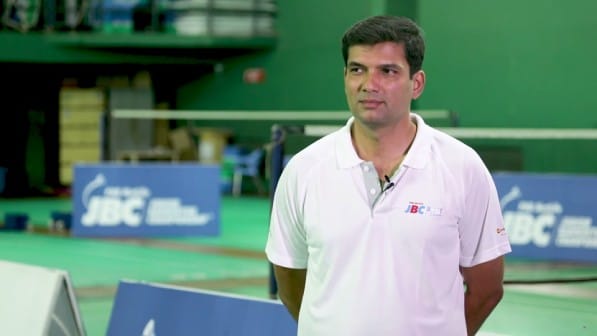
Training a child also ensures that the right fundamentals are picked up at the right time.
“Badminton training usually starts at the age of six. The right fundamentals are important, so there has to be a proper curriculum under some academy to learn the basics correctly. It is difficult to change the fundamentals at a later stage,” says esteemed coach and national badminton gold medalist Vijay Lancy.
The benefits of playing badminton
As any other sport, badminton contributes towards the physical and mental development of a child, and also teaches life skills, such as leadership qualities and the capacity to handle failure.
“The physical and mental aspects of training depend on the level of an individual. It is dependent on different age groups and levels of playing. For instance, there is an age group that’s under 10, there’s one under 13 and 15, and then there’s also one that is 17 and above. So, it is difficult to generalise the physical and mental aspects of training. At the basic level, your physical level should just be that you can play a match without getting tired and your mental condition must be enjoyment of the game. The first and foremost thing for kids is to enjoy the sport, so that they keep playing the sport every day, without being forced to. At the advanced level, it’s different—every small action matters,” says Kanetkar.
He adds, “The biggest lesson that badminton teaches these kids is to handle failure. That is the reality of life, and it’s better to learn it as soon as possible. It also teaches you leadership qualities, team work, and many other things.”
Being a ‘friend’ to players
Today, handling kids is also not just about training them; it is about assessing their strengths and weaknesses, and training them by being a friend. At the same time, it is important to create a motivated atmosphere to retain their interest in the sport.
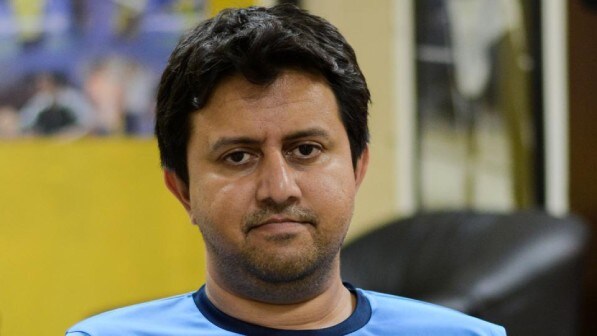
“The age groups that are there as part of the PNB MetLife Junior Badminton Championship are not there anywhere. So, that’s a good thing. As far as training the kids is concerned, it’s normally about beginning a casual conversation with them and then trying to teach them something. It’s more about enjoyment—only when they enjoy the sport that their grasping will be better. As they get older, the pressure rises even more. That time, you have to be a little hard on them, since most kids today are hooked on to technology. Today, you have to be friends with your students,” says Kanetkar.
According to Lancy, a coach should also make the training environment lively.
“When a kid comes in, it’s important for a coach to make the environment very lively. Some children love badminton and they don’t need to be motivated. But, there are some who just play and then go home. The children at this stage are like a blank canvas and more receptive—that is a good thing,” he says.
While nutrition also forms an integral part of early training, the coaches believe fresh, home-cooked food is good enough for overall fitness and development.
“At a very basic level, I always tell parents that dal chawal and home food is good enough. Most of the kids have challenges eating in the first place. Just getting kids to eat home-cooked food and avoid junk is good enough at an early level,” says Kanetkar.
A commendable initiative
Both Kanetkar and Lancy are associated with the PNB MetLife JBC Bootcamp channel on YouTube, where they put forth many important aspects of the game. PV Sindhu and Anup Sridhar are the other experts. There’s information about drop shot and shadow practice techniques, common injuries and recovery tips, as well as diet plans.
Talking about the platform, Kanetkar says, “It is a good thing because the topics covered are very important. Right from the technical aspects of the game to other topics like nutrition and other skills, it’s all taken care of. For me, it has been a great experience overall. I hope that the JBC Bootcamp continues.”
Lancy, too, feels the same.
He says, “This [PNB MetLife JBC Bootcamp] is good because an authority is speaking. If I am interested in something, I would like an expert talking. It is a good initiative because you hear the big names talk about the sport and the nuances of the game, nutrition and other aspects. It must be sustained for sure.”
The channel is a part of a larger initiative known as the PNB MetLife Junior Badminton Championship, which aims to take badminton to the grassroots. In its 5th year now, it also wants to spread the message of good health among the youth.


The above content has not been created by any HT Journalist or editorial team.


 © Hindustan Times