|
Women want to work. But what will it take for them to stay?
Reframing the women and work dialogue.
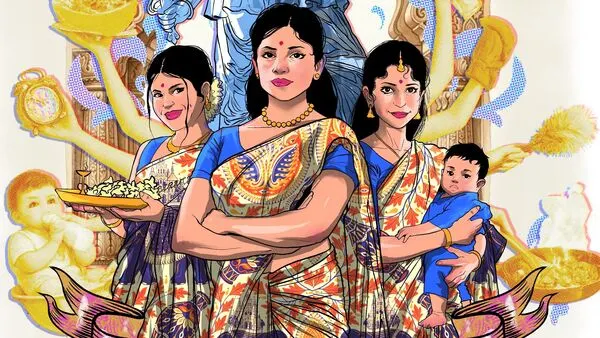
If a woman’s job is to cook, clean and care for children and the elderly, then where is the time for her to work outside the house? (Tarun Kumar Sahu/Mint)
One woman said flexibility. Another wanted the ability to address issues like work-life balance “without being stereotyped as dramatic and problematic”.
A third said she wanted high quality jobs in Tier 2 and Tier 3 cities so that women can work closer to home. There were suggestions for mandatory quotas to recruit women returning to work after maternity break and policies that take into account women’s health issues, including menstruation and menopause.
The central question that the survey of 1,400 women was this: What does it take to keep women in the workforce? Intended as a listening exercise, it was part of a three-day conference organised by Breakthrough, a non-profit that seeks to transform gender and social norms.
The #1 barrier to paid work nearly everyone, regardless of age, location or occupation, agreed is care work.
Indian women bear a disproportionate burden of unpaid care work which includes looking after children, the elderly and the sick. Taken together, caregiving as well as household chores, women spend over seven hours a day—more than twice the time spent by men, according to the 2025 Time Use Survey—on unpaid care work, leaving them with very little time to work outside the home.
This allocation of gender-based care work cuts across women’s life stages and is why more than three out of four, or 77%, of women quit work.
Listening to women
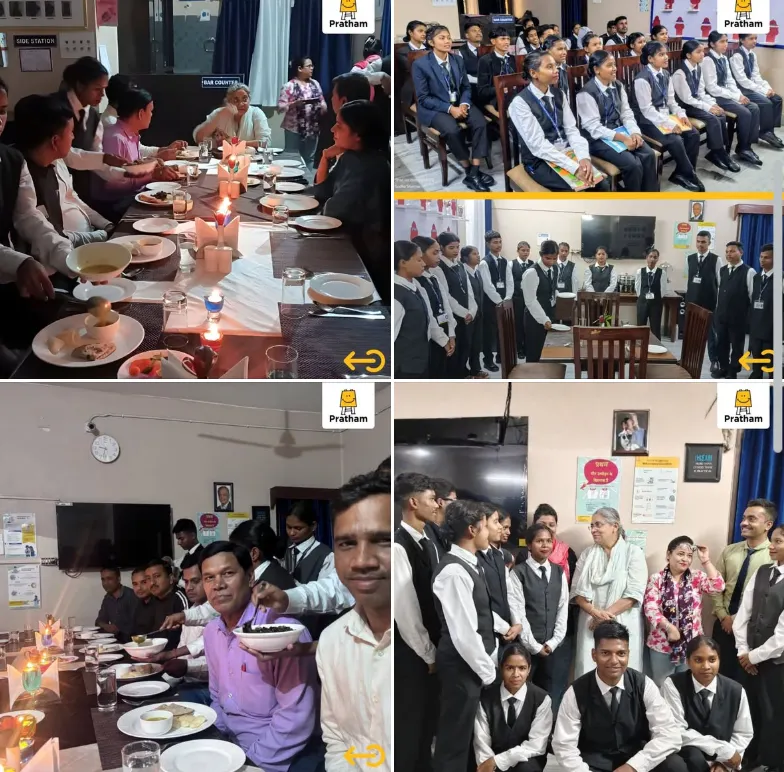
Learning the skills of the hotel trade in Ranchi (Pratham Education Foundation)
Some years ago, I was working on a year-long series on India’s declining female workforce participation. In the course of that reporting, I met a truck driver whose 19-year-old daughter had enrolled in a hospitality skilling course near Aurangabad.
The father was furious when he found out. What was the point of this course, he wanted to know, when it would not lead to a ‘respectable’ job? Moreover, he stated, he knew what happened to girls once they started earning—they would end up having a love marriage and bring shame to the family.
I don’t know if the girl completed her course or whether she joined the hospitality trade or not. But nearly a decade later, family restrictions and social expectations continue to impact women with younger, rural women bearing the brunt; 66% of women below 30 and a similar number in rural India said these were among the main reasons for quitting work, the Breakthrough survey found.
Despite the social constraints, younger women also have the strongest career orientation. Women under-20 want equal opportunities for growth and promotion (61%), learning and skill development (67%) and financial independence and decision-making (58%).
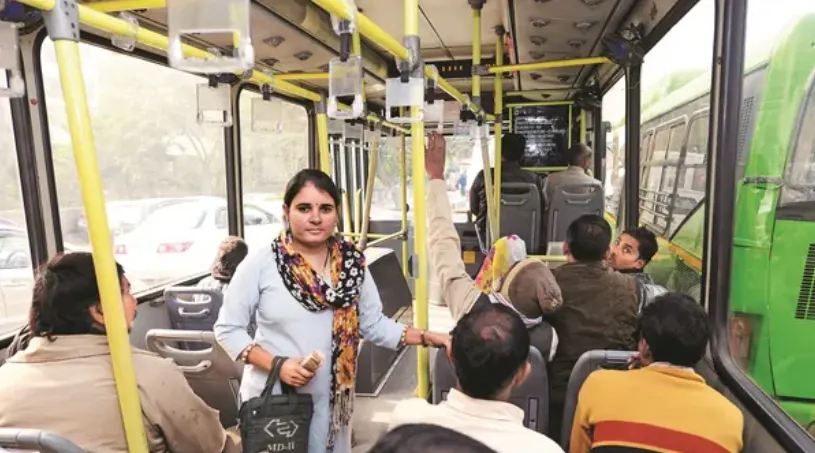
Ticket to ride (Ramesh Pathania/Mint)
Younger women were also more likely to prioritise safe travel and public spaces than older women with 67% of women below 20 quitting because this was not available. In rural India too, over half the women respondents said unsafe travel and public spaces were a hindrance to workforce participation, compared to just 19% in metros.
Older women were more likely to face dilemmas around work-life balance, with 37% of women aged between 30 and 49 saying it was a reason for quitting, compared to around 20% among women below 30.
The preference for flexible working hours is also split on urban/rural lines with only 28% of rural women preferring flexi hours.
Interestingly, 54%, or over half the respondents, said a “respectful workplace culture” was more important than formal workplace provisions. This included a workplace free of harassment.
Reframing gender norms
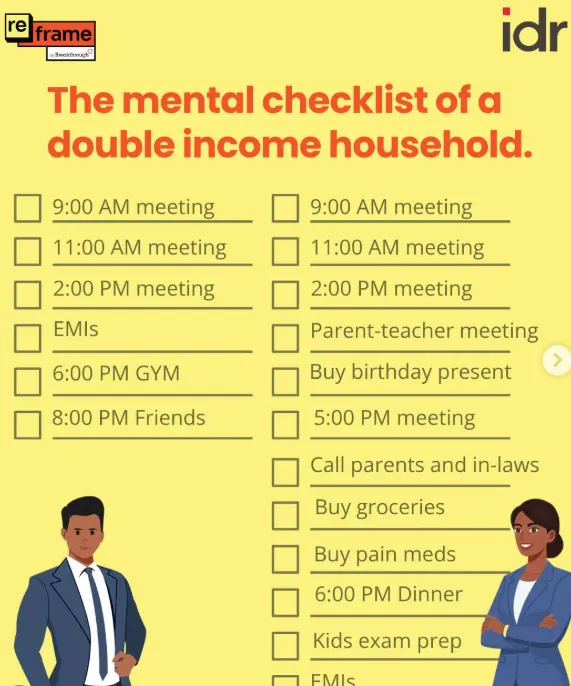
Women’s double shift (Breakthrough’s Instagram)
India’s economic future depends on getting more women into the workforce. The Breakthrough conference made it clear that the challenge in getting women to stay in the workforce depends on transforming systems, workplaces and social norms. “The barriers women face are connected to the systems and norms around them,” said Nayana Chowdhury, CEO of Breakthrough. “India has spent decades preparing women for work. Now we need to prepare our workplaces for women.”
The question to ask, said Newsworthy founder Anubha Bhonsale is why women are not able to continue to stay in the workforce. “The workforce expects women to absorb everything—bad working conditions, lack of mobility, lack of support, all the caregiving responsibilities.” The questions to ask now, she said include how much we are getting paid, what is this money allows us to do and how it is changing our lives.
Women’s workforce participation is much more than about jobs and data. No discussion can ever be complete without talking about mobility, safety, infrastructure including hostels, and, perhaps the trickiest of all, sticky social norms that decide which work is suitable and respectable for women and which isn’t.
At the end of three days this much became clear: there is no shortage of talent, aspiration or ambition. What women need is an enabling environment that will help them fulfil their potential.
|