|
|
|
Good morning
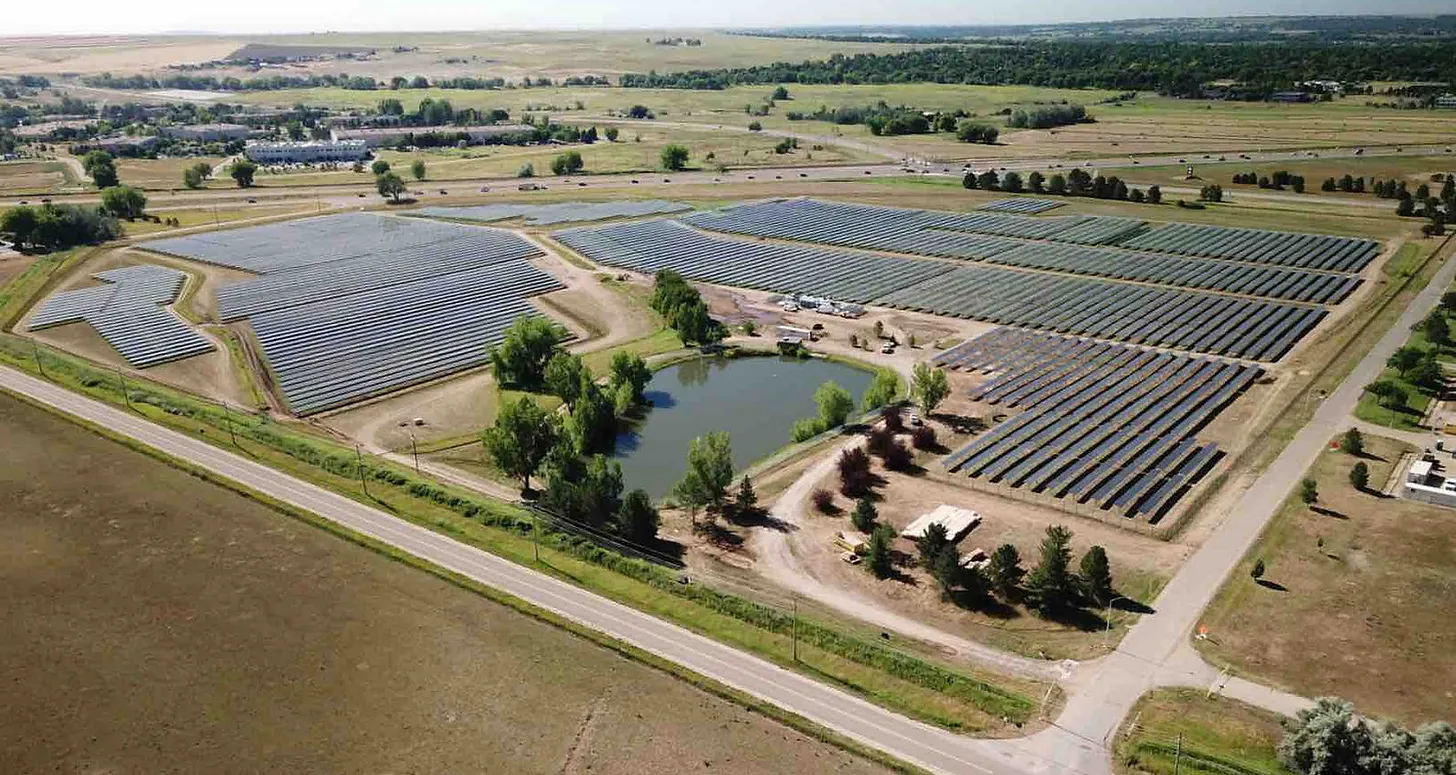
Opening thoughts. Some of you may have noticed (and perhaps appreciated) a genuine attempt at starting our weekly Wired Wisdom conversations on a note of positivity. Happy updates, that are a reflection of humanity achievements no matter how fine they may be at this stage, rather than feed into the negativity that usually surrounds us. That pursuit of positivity continues today as well, and we must therefore have a conversation about agrivoltaics (a combination of the words "agriculture" and "photovoltaics”).
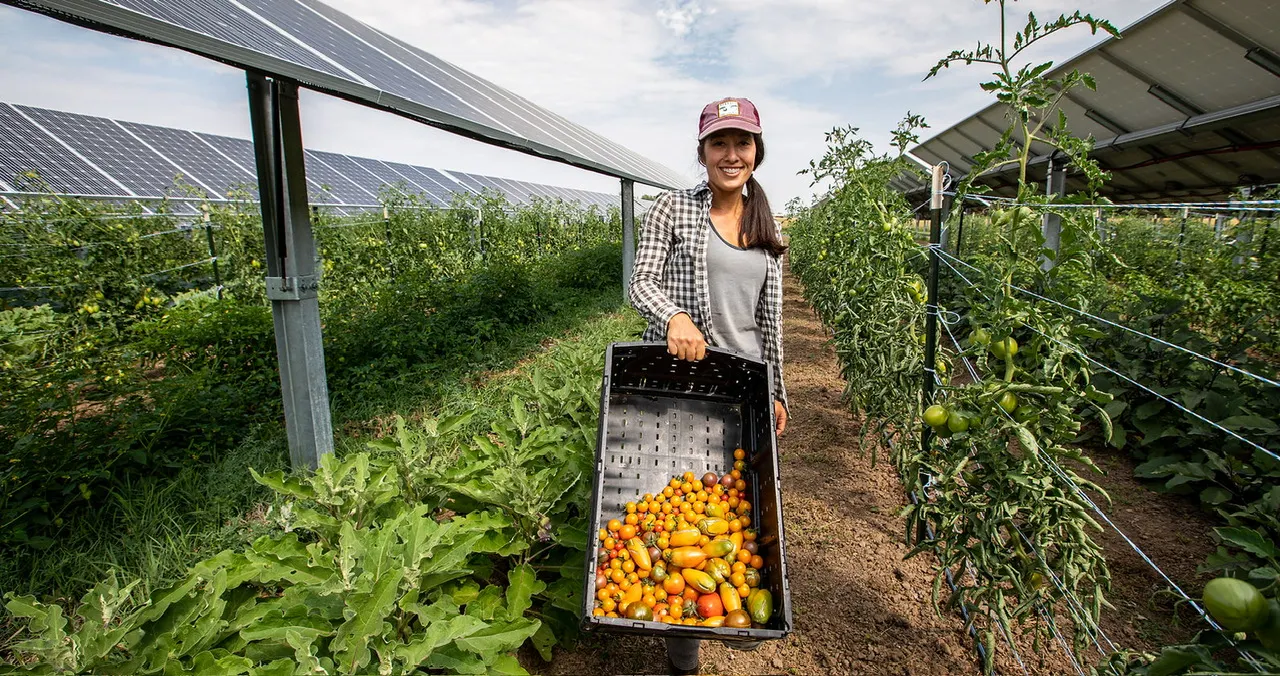
Agrivoltaics is the dual-use of land to simultaneously produce food (or livestock) and generate renewable solar energy. Solar panels, we all know, are becoming quite useful. While the concept of agrivoltaics originated in Japan and gained traction across Europe throughout the 2010s, Colorado's major entry into this innovative field began a few years, and has since became the nation's premier site for agrivoltaics and the largest commercially active research facility of its kind in the United States.
Agrivoltaics in Colorado include the CSU Horticultural Field Research Center of the Colorado State University in partnership with Sandbox Solar, The Solinator Garden for which the City of Fort Collins, Namaste, and Solaris Energy partnered, Jack’s Solar Garden that is working with working with the University of Arizona, Colorado State University, the National Renewable Energy Laboratory and Sprout City Farms, as well as the IBM Gunbarrel Campus.
Capacities vary. For instance IBM Boulder now has a 10 megawatt generating capacity that can power the energy use of 2,200 homes every year. Jack’s Solar Garden is a five acre 1.2 MW community solar garden, while the CSU Horticultural Field Research Center began researching effects of small scale solar panels on plants as far back as 2018.
Traditionally, industrial solar farms are fenced off, the ground is covered in gravel, and the land underneath is effectively removed from use. In an agrivoltaics system, ground-mounted solar panels are spaced wider apart or raised much higher off the ground. This allows tractors to drive between them, crops to grow beneath them, or livestock to graze around them.
A three way win-win system for farmers, and the energy industry. First, panels provide much-needed shade in hot, arid climates like Colorado. This reduces heat stress on crops and livestock, and prevents soil moisture from evaporating as quickly—meaning farmers need less water for irrigation. Secondly, Farmers can earn a steady income from the electricity generated (or by leasing their land to solar developers) while still producing crops or meat—important as land prices rise. And finally, Solar panels lose efficiency when they get too hot. The plants growing underneath release moisture (transpiration), which creates a cooler microclimate that improves electricity generation.
India is in the early pilot stage of agrivoltaics, albeit the scale is large with 50 operational pilot projects. Estimates suggest India’s agrivoltaic potential ranges from 3,200 GW to nearly 14,000 GW, which is more than enough to meet the country's targets without sacrificing farmland. Reports suggest that a pilot project by the Indian Council of Agricultural Research (ICAR-CAZRI) in Jodhpur, Rajasthan, achieved a Land Equivalent Ratio (LER) of 1.41—simply put, one hectare of their agrivoltaic land produced the same combined agricultural and energy output as 1.41 hectares of separate land would’ve delivered.
PREVIOUSLY, ON WIRED WISDOM
|
|
EDITOR’S MARGIN: LAVA VIRAT V1 5G
I can appreciate there is no direct inspiration, but some thought is necessary with naming. In this case, it is only natural that the name “Virat” will evoke memories of prime Virat Kohli (probably that batting against Haris Rauf, for some of you), you’d look at this phone’s spec sheet, the price and shrug your head. I’ll concede the UNISOC T8200 processor choice at first glance (and second glance) doesn’t exactly elicit a lot of confidence. While pieces around this piece are on solid ground, it still doesn’t make for an exactly powerful phone.
There are two parts to the Lava Virat V1 5G, that is priced ₹11,999 onwards. First, impact of geopolitical uncertainty on supply chains as well as costs have led to this chip selection. Secondly, it works fairly well for an affordable Android phone for the most part, here and now. Admittedly, I don’t have definitive answers about potential headroom for longevity.
There will obviously be comparisons to the likes of the Poco M7 Pro with the MediaTek Dimensity 7025 Ultra chip, but remember, that phone launched in the peaceful time that was January 2025. Same for Xiaomi Redmi 14C powered by Qualcomm Snapdragon 4 Gen 2, and Moto G45 with Snapdragon 6s Gen 3 is from earlier still. Irrespective of the timing, they’re also slightly faster across use cases. And that matters to buyers.
Your apprehension is understandable. The Geekbench 7 scores put this in the range of the MediaTek Dimensity G99 Ultra. Real world usage also matches these observations, with single app responsiveness leaving nothing to complain about but even the slightest bit of multitasking leading to a scenario where performance strain becomes quite apparent. The jitters and stutters are often noticeable, and that’s never a pleasant sight. This chip struggles, to put it simply, and that will significantly detract from the overall experience.
In this context, I do observe that the Lava Virat V1 5G does not have revenue stream from ads in the interface, or a bundle of preloaded bloatware, which many rivals persist with for good reason. That rarity of approach, remains a key for Lava’s smartphones. And also why 4GB memory mostly works, whilst rivals must do at least 6GB memory to make things chug along.
The 6.75-inch display is bright, so much so that the auto brightness tuning needs a bit of rework because it stays slightly on the higher side most of the time. Secondly, the Lava Virat V1 5G is a nicely built phone that also keeps weight in check (at 210 grams). The camera just about gets the work done, while the 6,000mAh battery does give Lava an advantage over most rivals at this price point. Silver linings…
THE LATEST, ON NEURAL DISPATCH
|
|
CAR CORNER: ASTON MARTIN VALEN
The guideline is crisp. The Aston Martin Valen is the most powerful front engine V12 in the automaker’s history. And production is limited to 150 cars worldwide. More than anything else, the Aston Martin Valen is a stunning, unexpected and a defining rebellion against the collective push towards electrification of motor vehicles, and engines will lesser power for the sake of emissions and whatnot. Aston Martin simply decided a powerful, good old internal combustion engine, is the way to go. No batteries, no hybrid system, no algorithms getting between the driver and their connection with the car.

The V12, an endangered species, is an engineering marvel in the case of the Valen too—its 5.2 litre twin-turbocharged producing 838 horsepower and 1,000nm of torque, which means 0-60km/h in 3 seconds and an electronically limited top speed of 214 miles per hour. It has been created by the bespoke 'Q by Aston Martin' division, the Valen makes use of a full carbon fibre body to reduce body structure weight by 25kg, while a lightweight titanium exhaust system removes 14.8kg. The Aston Martin Valen looks gorgeous (at least to my eyes), and the design cues don’t immediately betray an Aston family familiarity—particularly true for the front-mid engined models.
Reminiscing my time at the Aston Martin Lagonda Production & Technology Centre.
 As robots take over, Aston Martin trusts the charm of handcrafted luxury cars As robots take over, Aston Martin trusts the charm of handcrafted luxury cars
Inside, the leather and Alcantara lined customisable cockpit gets seats not seen in any Aston before, a Bowers & Wilkins 15-speaker, 1,170-watt surround sound system, a completely redesigned centre console.
If I am to compare the Aston Martin Valen to some of the most powerful front and mid-engined hyper-cars of this generation, you’d be able to get a sense of what the British automaker has achieved. The Ferrari 12Cilindri comes to mind immediately, with a 6.5-litre naturally aspirated V12 engine producing 819 bhp and revving to a spectacular 9,500 rpm. Then there’s the Pagani Utopia powered by a Mercedes-AMG developed 6.0-litre twin-turbo V12 that delivers 852 bhp. The Bugatti Chiron Super Sport, which probably represents the peak of combustion, is powered by an 8.0-litre quad-turbo W16 that makes 1,578 bhp.
With great power, comes great responsibility.
|
|
|
|
Were you forwarded this email? Did you stumble upon it online?
Sign
up
here.
|
|
Written and edited by Vishal Shanker Mathur. Produced by Shad Hasnain.
|
|
|
|
|
|
|
Get the Hindustan Times app and read premium stories
|
|
|
|
|
|
View
in
Browser |
Privacy
Policy
|
Contact
us
You
received
this
email
because
you
signed
up
for
HT
Newsletters
or
because
it
is
included
in
your
subscription.
Copyright
©
HT
Digital
Streams.
All
Rights
Reserved
|
|
|
|
|

| |