


 Live Score
 Cricket Teams
 Cricket Players
Is the time right for split coaches in cricket?
Gary Kirsten seems to think so, making a case for taking on the English Test side only. Ricky Ponting says he may consider the Australia job if they split coaches. If split captaincy is the order of the day, can coaching be far behind?

 Prefer HTon Google


Till Sunday, Paul Collingwood—not for the first time during his stint as assistant coach—was standing in for Chris Silverwood as England’s head coach during the T20I series in West Indies. Several English counties already have specialist T20 coaches catering to The Hundred separately. Inadvertently, Ravi Shastri and Rahul Dravid ended up coaching India in three different formats in England and Sri Lanka last July. England officially split coaching roles between Andy Flower (Tests) and Ashley Giles (white-ball cricket) in 2012 but scrapped that policy in 2014.
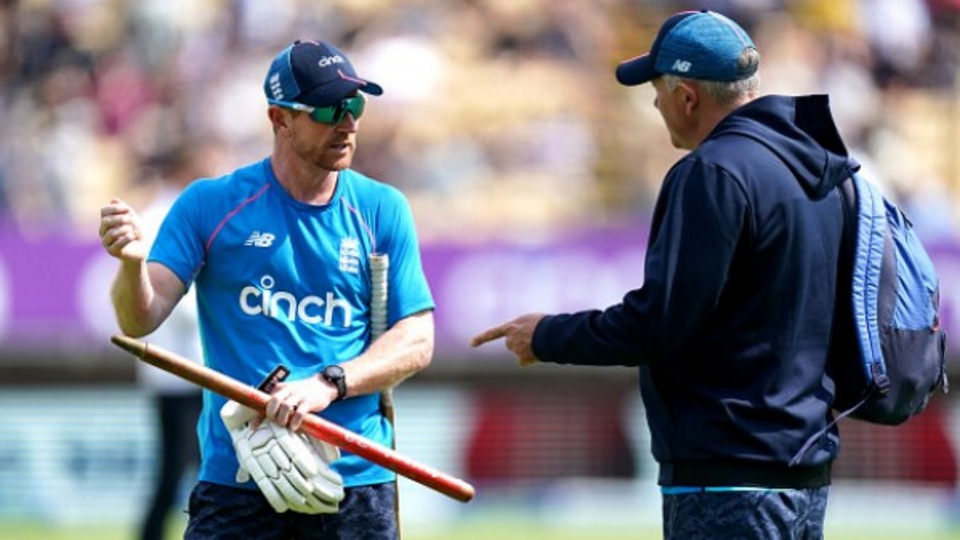
But if the constantly evolving specialization in white-ball cricket formats demand a split-captaincy approach, is it time to think of cleaving the coaching roles as well?
Gary Kirsten certainly seems to think so. With England winning the 2019 World Cup and making the semi-finals of 2021 T20 World Cup, many believe their white-ball setup doesn’t need tinkering. So, Kirsten, now head coach with men’s Hundred team Welsh Fire, said last month that he would be keen to take over as England’s Test coach on the condition that the roles were split between red and white-ball formats.
“I’ve walked this journey twice now (Kirsten has applied twice before) and I’ve always made it clear that I would never commit to doing all formats,” Kirsten told i newspaper in December. “And when international cricket boards get their head around the fact that they need to split coaching roles, then it becomes a consideration. The England ODI side is set-up, you’re the best ODI side in the world at the moment. It’s a project that has been well thought out. Your Test side has battled for a while...I think it’s a great project for someone to come in and take that Test side on. There’s a lot that needs to be put in place to build this Test team out.”
Leaders like Eoin Morgan have always backed a format-specific coaching approach. “I think down the line there will be,” Morgan had said in 2018 when asked if different coaches for each format was the way forward. “Cricket is going to change even more in the next 10 years than it has in the previous 10 years. I’d say, if anything, the formats are getting further and further apart. So, I’m open to it.” Consistency of communication is an area of concern during such switches, something Giles—the ECB’s managing director of men’s cricket—couldn’t ignore while appointing Silverwood as Trevor Bayliss’s successor in 2019. With split captaincy gaining favour across top tier nations like South Africa and India, there is a growing argument that the same logic be applied to coaches.
One compelling reason for such a move is not tactical, but concerned with workload. Captaining a side in three different formats with different competition cycles is proving too much of a burden for the best of captains, why should it be different for coaches? On the same vein, just the amound of cricket being played and the time on the road that it demands can become a major factor. With strict Covid-19 protocols making a home series no different from an overseas tour, players and staff are spending close to 300 days confined in hotels if you incorporate two months of franchise cricket. That’s a lot. This is exactly why Ricky Ponting doesn’t want to coach Australia across every format.
“Time is the only thing that’s stopping me, to be honest,” Ponting told The Grade Cricketer podcast in November. “I’d love to coach the Australian team, but what I have done with my playing career was being away from family as much. I have a young family now, a seven-year-old boy, and to give up 300 days a year is not what I would do. That’s where the IPL works so well for me.
“To be able to coach 8-10 weeks in winter months, and to be able to come back and do the Channel 7 stuff (TV commentary) in the summer, I have got enough work to keep me happy and to keep me around the game but also be able to spend time with the family,” he said.
Highly experienced in franchise cricket, Ponting is often considered an ideal candidate to be Australia’s coach given there are two World Cups in the next 20 months.
“Let’s see what they (Cricket Australia) do, if they ever split the coaches among, say, white-ball and red-ball teams," Ponting said. "I actually think, from my view, it's almost an older man's job and not for someone who has got a young family or for a person like Justin (Langer) where he is on the other end now where his family is all grown up and moved away. You are not giving up that side of your life.”
Time tends to change even the most rigid opinions. “Split captaincy doesn’t work in India,” MS Dhoni had famously said after stepping down from white-ball captaincy in 2017. Four years later, India went for two different captains. None of the cricket boards have officially bit the bullet on coaching. But if the same current yardstick is used to measure the emotional drain in working with a team across three formats while being on the road for 10 months, then splitting the job starts making more sens


