
Football is more than just Europe and South America. Football is global, says Infantino
The 1998 World Cup would prove a watershed moment in the sport’s most prestigious spectacle. On the back of the 1994 edition that shattered attendance records—which, by the way, hold till date—tapping into an unexplored market in the United States, France ’98 began the expansion of newer territories and emergence of greater forces to colour football with a more global brush.
In a World Cup that was meant to be about Ronaldo and the band of Brazilian boys tipped to defend their title, Les Bleus painted their home red by capturing the first-ever World Cup crown. That wasn’t the sole bit of history (and we aren’t just talking about that Golden Goal rule in extra time). It was the first edition to feature 32 teams in the finals instead of 24 (until 1978, the 16-team tournament had just one spot each for Asia and Africa), spreading its wings to also include South Africa, Japan, Jamaica and Croatia for the first time.
Croatia, for whom a certain Igor Stimac played a key role in defence, soared all the way to the semi-finals in their maiden appearance, losing to France before signing off third defeating the Dutch. Twenty years later Croatia would go on to face eventual champions France again, this time for the 2018 World Cup title, adding in Russia to the list of firsts that began in France.
That 1998 World Cup had French written all over it. About its national team—comprising players from diverse backgrounds with roots in different pockets of the world—momentarily galvanising a country largely divided. About Zinedine Zidane being the headline, literally and metaphorically with his twin headers in the final. About a footballing nation shaking up the stranglehold of a select few in the pecking order and sowing the seeds for fresh champions.
It was Spain’s turn to blossom the next decade, the golden generation of La Furia Roja shining brighter than ever at the 2010 World Cup—Andres Iniesta's late winner did the job against Netherlands in the final—two years after their Euro triumph. Two years later, they would win the Euro again completing a circle of dominance.
Punching above their weight
The sport’s steadily evolving all-encompassing tale has been as much about the lesser-established countries punching above their weight on the global stage. Think Croatia. Think Nigeria impressing on debut in 1994 four years after Cameroon made the quarter-finals, or South Korea finishing fourth and Senegal making their maiden show count in 2002, or Ghana and Costa Rica entering the last eight in 2010 and 2014, respectively.
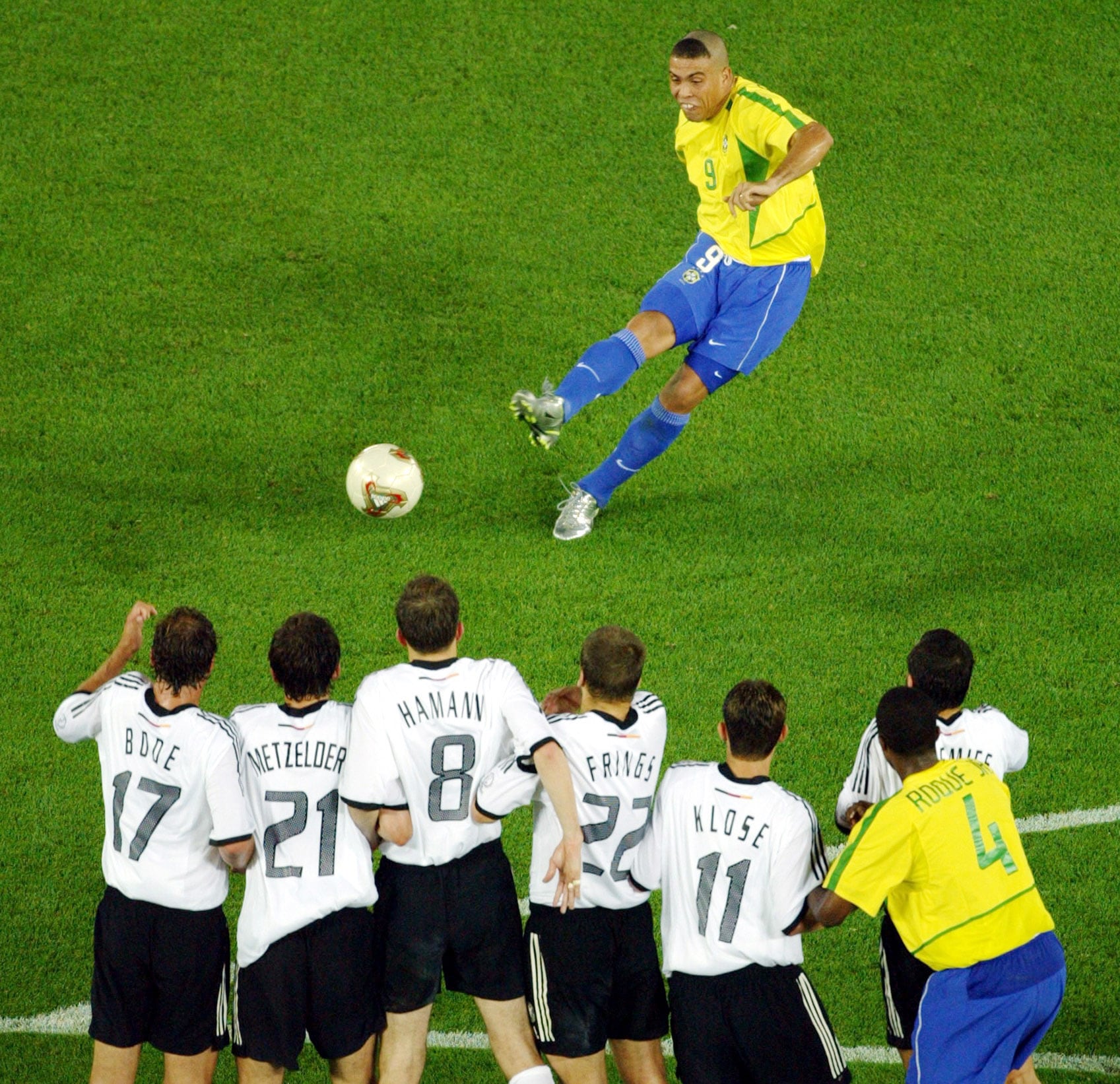
Ronaldo takes a free kick against Germany. REUTERS/Kimimasa Mayama
That 2014 edition—considered among the most memorable—was held in Brazil, with the World Cup making a return to the football-crazy nation after 1950. Four years prior to that, Africa hosted the marquee event for the first time when South Africa played hosts. The base of the expansion plank to take the tournament to pristine routes though had been placed much before that.
Breaking away from its trend of oscillating between countries in Europe and Americas as hosts, the World Cup was co-hosted by South Korea and Japan in 2002, a first on Asian soil and in multiple countries.
Then came the African adventure. Then the Brazilian bash in 2014. It was the first time two consecutive World Cups were held outside Europe. The former witnessed a record 204 countries enter for the preliminary qualifying competition, wiping away the previous number of 199 for the 2002 World Cup.
But while FIFA was breaking the glass ceiling, cracks of corruption opened up to go with the political and financial undercurrents. The international governing body’s enlargement exercise had the blessing and backing of African and Asian confederations that constitute a large chunk of votes for the FIFA president’s chair. And outlining his wish to “see globalisation taken seriously”, FIFA president Sepp Blatter, who succeeded from Joao Havelange in 1998, would openly push for more African and Asian representation at the World Cup stage.
“It cannot be that the European and South American confederations lay claim to the majority of the berths at the World Cup (18 or 19 teams), because taken together they account for significantly fewer member associations (63) than Africa and Asia (100)," Blatter wrote in the FIFA Weekly magazine in October 2013.
Walking Blatter’s talk
Two years later, Blatter was forced to quit amid a corruption scandal that rocked FIFA and saw some high-profile faces in its top leadership group arrested.
Current FIFA president Gianni Infantino, however, too is walking his predecessor’s talk. From touching down at the US, South Korea and Japan, South Africa, Brazil and Russia, football’s uncharted flight now lands in Qatar, the first West Asian country to host the event.
It would mean more countries getting a bite of the World Cup pie and FIFA relishing on a bigger financial cherry (it is estimated to generate an additional revenue of $1 billion in television, sponsorship and ticketing during the first period).
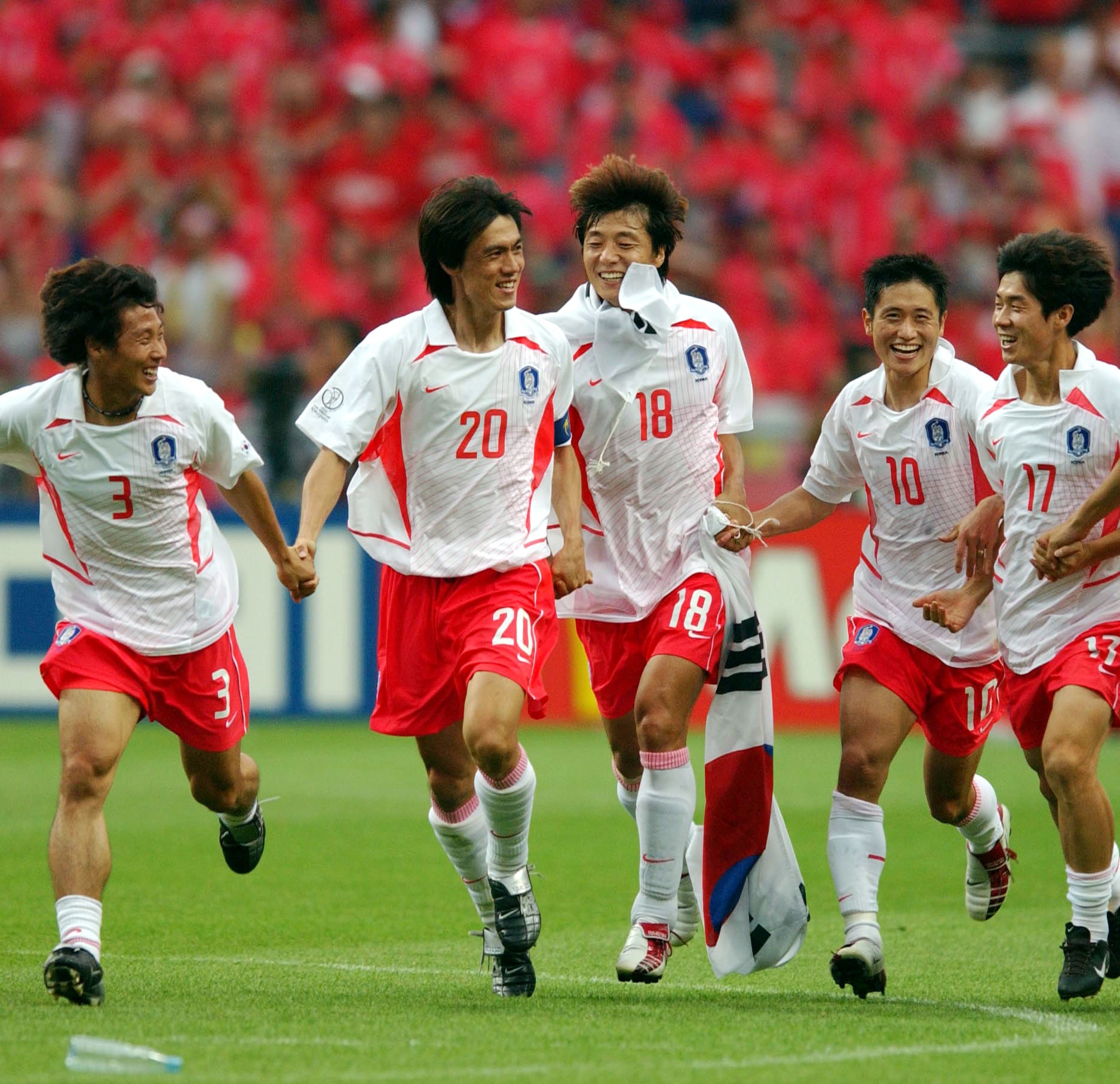
South Korea celebrate during the 2002 World Cup. Action Images / John Sibley
“We are in the 21st century, and we have to shape the football World Cup of the 21st century,” Infantino had said in 2017 while the expansion plan was stamped. “Football is more than just Europe and South America. Football is global.”
