
Football’s success in the 1924 Olympics birthed the idea of FIFA having its own competition
Call it the new French Renaissance, if you will. The impact of the sporting revolution at the turn of the 20th century in France has kept on giving. The spark was first lit by Pierre de Coubertin, educationist and sociologist, who founded the International Olympic Council (IOC) in 1894, launching the Games two years later.
The international football federation, FIFA, was also born in Paris, in 1904, with Coubertin’s compatriot, the business-minded lawyer Jules Rimet the driving force. However, the modern Olympics, which began in 1896, and the sporting event rivalling it in scope and commercial size, the FIFA World Cup which started in 1930, could not have charted more divergent paths.
The International Olympic Committee (IOC) swore by the amateur code. The launch of FIFA was to channel professional players to give a push to what was evolving into the most popular global game. Football at the Olympics was a notional world competition, but when Rimet successfully organised a 24-nation tournament at the 1924 Paris Olympics for IOC, he was convinced that FIFA needed its own tournament to showcase the game, featuring as many nations as possible.
Starting with seven
FIFA was launched in 1904 with seven member countries -- France, Belgium, Denmark, The Netherlands, Spain (represented by Real Madrid till the federation was formed in 1913), Sweden and Switzerland--besides Germany’s pledge to join. The British Isles, the spiritual home for the game with England, Scotland, Wales and Ireland wielding massive influence, didn’t join till two years later. And South Africa, Argentina, Canada, Chile, and the United States came on board over the next few years. The first half of the 20th century was about FIFA’s ambition to carve its own destiny, away from IOC’s influence. FIFA and IOC were united in staging the 1908 and 1912 Olympic football competitions with amateur players — England won both.
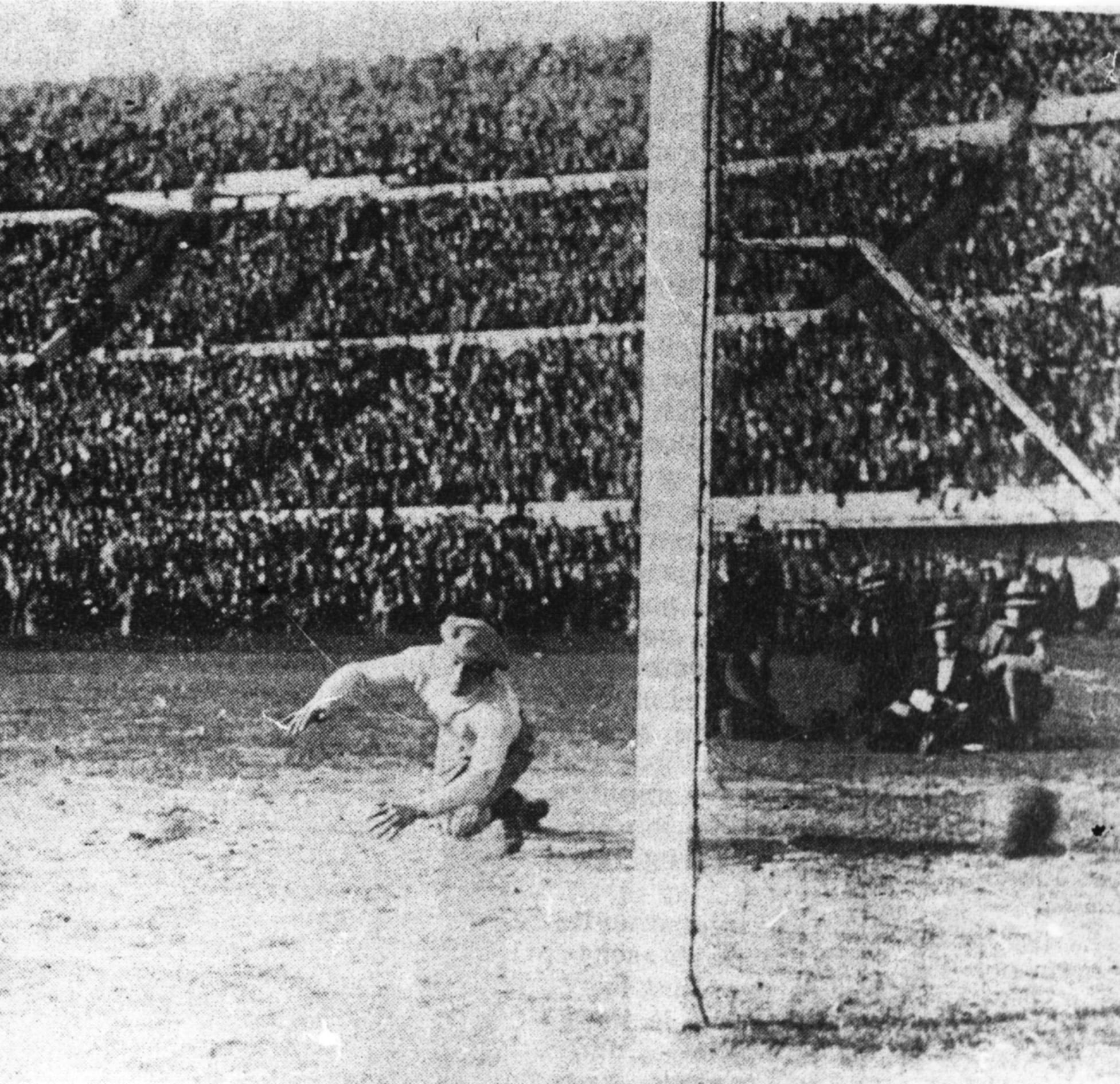
Uruguay score against Argentina during the 1930 final. Getty
Under Rimet, the push for an exclusive FIFA tournament started gaining strength. But the period saw disruption caused by the World Wars, and the reluctance of the British associations to commit. They (England, Ireland, Scotland and Wales) opted to leave FIFA after WW I when the world body chose not to exclude those who were part of the Central Powers. Their stance changed by 1922, and in 1924, they rejoined FIFA. Still, they were unhappy with FIFA’s professional push. Only 13 teams took part in the 1930 World Cup in Uruguay. The British teams boycotted — England played their first World Cup in 1950 — while other European teams were indifferent, complaining about the trans-Atlantic travel with players worried about holding their jobs. Uruguay becoming Olympic champions at 1928
Amsterdam, and professionalism taking root in South America, made the choice of the first host country easy.
Only four European teams —France, Belgium, Romania and Yugoslavia — made it to the 1930 tournament, that too due to Rimet’s influence. It helped that Uruguay agreed to bear the travel expenses as the tournament marked the nation’s centenary, but the founding president of the French association still could not make his own team’s main defender Manuel Anatol or coach Gaston Barreau board the SS Conte Verde for the voyage.
Rimet — he took over in 1921 and is FIFA’s longest-serving president, staying on till 1954 — personally carried the World Cup trophy, which was named after him. It was awarded till 1970, when Brazil were given permanent possession of it after a third win, and a FIFA trophy was instituted in its place. As is apparent from the goings on mentioned above, putting together the first World Cup was an ordeal. FIFA was crippled during WW I, which saw many players sent to the battlefront. It took a major effort to rebuild, both politically and financially. But FIFA was determined. The 1932 Los Angeles Olympics deciding to not include football, as it was not popular in the US, only made Rimet more determined, and IOC’s insistence of retaining the amateur code stoked the differences further.
Birth pangs
The 1930 tournament suffered from multiple birth pangs. In the final, the hosts Uruguay beat Argentina 4-2 before a crowd of 93,000 at the Centenario Stadium in Montevideo -- but it almost didn’t happen. Both teams quarrelled that the ball they had brought should be used. Eventually, both were used, one in either half.
Rimet had helped FIFA expand from 12 members to 85 countries by the time his 33-year term ended in 1954. His efforts in establishing the World Cup even earned him a Nobel Peace Prize nomination in 1956.
After the 1930 event, Italy and their manager Vittorio Pozzo towered over the 1934 and 1938 World Cups.
In 1934, there were 16 teams after qualification was introduced. But it was held under in Benito Mussolini’s fascist regime. Rimet was accused of ignoring the government using the World Cup for propaganda. Pozzo, a journalist turned football manager, was also accused of being a Fascism supporter. Uruguay, upset with poor European participation in 1930, boycotted a tournament won by Italy.
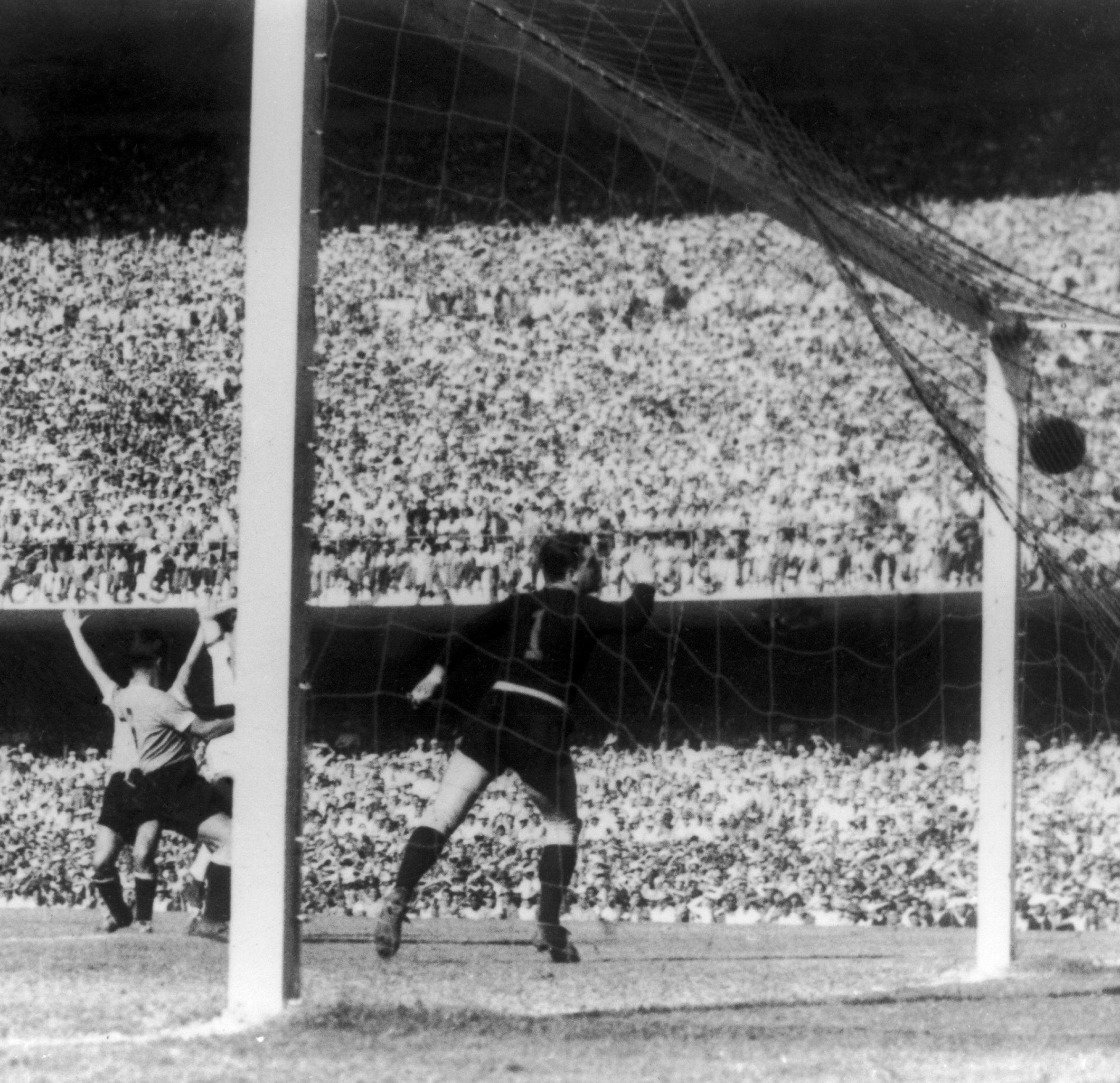
Uruguay beat Brazil in the 1950 final. Getty
Italy’s ‘Metodo’
European politics continued to have its echo in the World Cups. Austria, which had come under German
rule in 1938, withdrew, reducing it to a 15-nation tournament. Some Austria players were in the Germany squad, but it still didn’t prevent first-round elimination.
But the 1938 edition in France, too, saw Italy triumph under Pozzo.
His innovative tactical formation, Metodo -- using the central midfielder as the pivot to defend and attack-- and the introduction of a pre-tournament training camp, paid dividends. Italy’s victory over Brazil in the semi-final was followed by an easy win over Hungary in the final.
The next edition didn’t happen until 1950. Initial plans were made for a 1942 edition with Germany applying to host it. But hostilities began in September 1939 sparking the World War II, which ended in 1945 but left FIFA in no shape to organise a World Cup in 1946.
The 1950 tournament was in Brazil, where Uruguay won their second title. There were only 13 teams, and India was among those that didn’t travel. Two shock results — England losing 1-0 to part-timers US, and Brazil beaten by Uruguay to be crowned champions — added to the allure of a tournament that was set to explode in the decades that followed.
