
Puskas was denied but no one could stop Pele from being the only footballer on the planet with three World Cup titles
Football was direct and physical when the Magical Magyars arrived on the scene in the 1950s. They could do what the best in the business did: Sandor Kocsis headed as well as anyone else and left-footers from Ferenc Puskas would test or beat goalkeepers from even 35 metres. But they could also be dynamic and tactically innovative. Before the ideas gained currency, Nandor Hidegkuti played a deep-lying forward and in Gyula Grosics they had a sweeper-keeper.
The result: Hungary dominated world football scoring goals at will. But no team mesmerised for over a decade like Brazil. They were sorcerers who would weave patterns on the pitch with passes. And, boy, didn’t they love dribbling! The Europeans called them uncultured initially but by 1970 Brazil had become the World Cup’s most successful team.
The early half of 1950s though was Hungary’s. They swatted aside powerhouses such as Soviet Union, England, Sweden among others. One year before the 1954 World Cup, they become the first team to beat England at Wembley. The 6-3 verdict was termed ‘Match of the Century’ and Puskas’ second goal had so fooled Billy Wright that the Times said the England captain was a “fire engine rushing to the wrong fire.” After the match, Bobby Robson was quoted as saying: “We saw a style of play, a system of play that we had never seen before.” Just to show that Wembley was no fluke, Hungary beat England 7-1 before the World Cup.
‘Prototype for Total Football’
Hungary’s manager Gusztav Sebes created a 3-2-3-2 formation which allowed the team to quickly switch between attack and defence. Skipper Puskas called it the “prototype for Total Football”.
Hungary arrived at the 1954 edition not having lost a match in five years but their campaign unspooled as the tournament progressed. Puskas, who has more international goals (83) than Pele or Diego Maradona, carried an injury into the final. The wet weather, soggy pitch and a spirited Fritz Walter-led West Germany, back in international football after World War 2, emerged ‘Heroes of Bern’ bettering the best side of the decade. The team was then ripped apart by the 1956 Hungarian Revolution. Puskas and Kocsis left and "from playing people from outer space”, in the words of England centre-half Syd Owen, Hungary became a team of mortals.
It was at this time that Brazil emerged an unstoppable force. As Pele has said, it was because of football that the world got to know of Brazil.
In 1938, Brazil had lost to Italy in the semi-final. The disappointment of 1950 (hosting the World Cup, they lost to Uruguay in the last match) and 1954 (losing to Hungary in the quarter-final) meant the pressure was immense as they resumed their quest in 1958.
They started with a 3-0 win against Austria but following a goalless draw against England, Brazil unfurled two of their all-time best players: Pele and Garrincha.
Pele, 17, and Garrincha, 24, played their first World Cup match against the mighty Soviet Union. Vava scored both goals in the 2-0 win but both announced their arrival by hitting the framework in the first 60 seconds. Whenever Pele and Garrincha played together, the Samba Boys never lost a game. There was no looking back after that. Pele scored six goals in three knockouts games, with more than a little help from Garrincha on the right wing, including a hattrick in the 5-2 demolition of France in the semi-final and twin strikes in the final against Sweden which Brazil won 5-2.
The Garrincha show
By the time 1962 World Cup had arrived, Pele had shaped into one of the best in the world but he was injured in the second match and missed the rest of the tournament.
Amarildo proved adequate replacement getting the goals but this was a show run by Garrincha.
The ‘Little Bird’, whose left leg was shorter than the right, scored twice in 3-1 quarter-final win against England and in the 4-2 victory against Chile in the semi-final.
Back home, Garrincha, who was called ‘Angel With the Bent Legs’ and revered as much as Pele if not more. He flummoxed defences and once he had the ball at his feet, it couldn't be taken off him. But for his wayward lifestyle, Brazilians feel he could have been as successful as Pele.
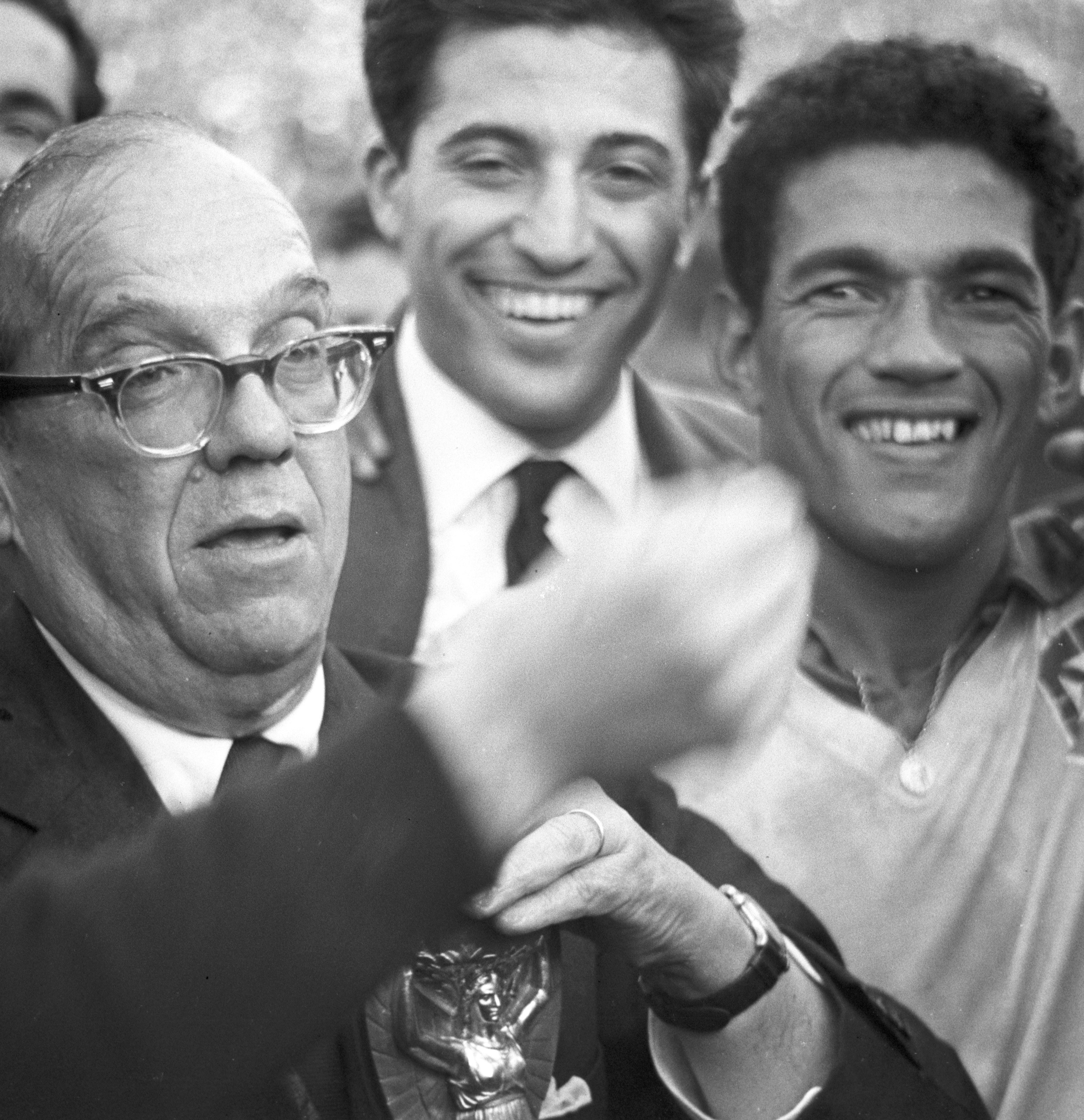
Garrincha (right) in the 1962 World Cup. Getty
When it came home
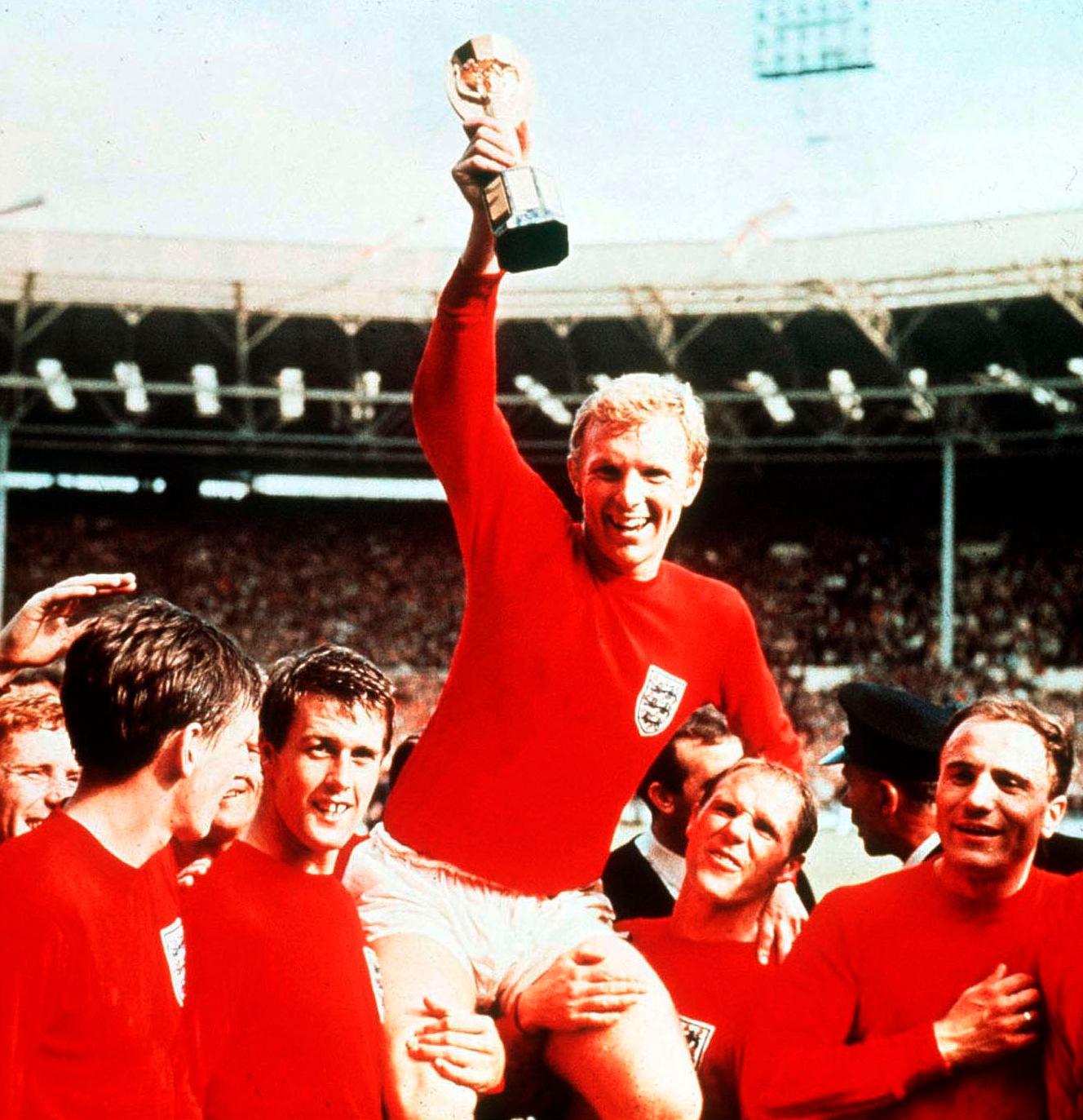
England's Bobby Moore is hoisted by his teammates after winning the 1966 World Cup. Reuters
Brazil's ageing squad was knocked out in the group stages of the 1966 edition in England but till they were there, they were the biggest attractions with people crowding their hotel and training sessions.
Like now, England was going through a recession and, barring a few pockets, people had little interest in football. According to BBC, apathy was evident from the opening match between England and Uruguay being played in front of a half-empty Wembley. But interest grew as England realised that the Bobby Moore-led side consisting of Bobby Charlton, Geoff Hurst and Roger Hunt, could conjure something special.
Hurst's hattrick in the final, including a controversial goal in extra-time, against West Germany gave England a 4-2 victory, the win reconnecting fans with football which just took off thereafter.
The beautiful game
Four years later, Brazil built one of their best teams, one which captivated the world on way to a third World Cup which fetched them the Jules Rimet Trophy for keeps. It was also to be Pele’s last hurrah. He remains the only one on the planet with three World Cup titles.
West Germany’s Gerd Muller won the Golden Boot with 10 goals but an experienced Pele with the help of young guns like Jairzinho (seven goals), Rivelino and Tostao took Brazil to the final where they beat Italy 4-1 at the Estadio Azteca in Mexico City to put a seal on the team’s and the country’s greatness. When in the mood, they transformed football into the beautiful game.
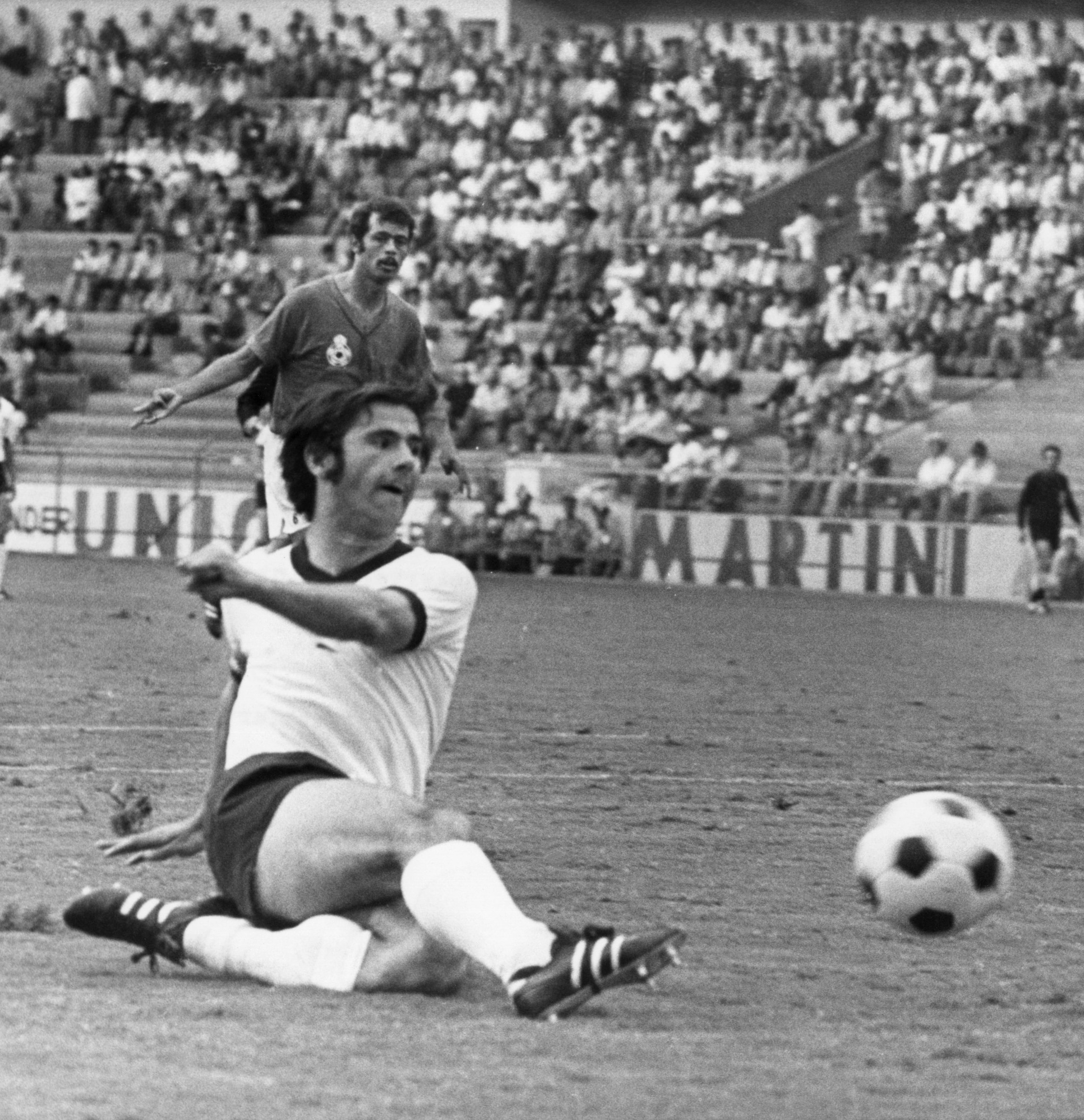
Germany's Gerd Mueller in action during the 1970 World Cup match against Morocco. Getty
