
The era saw the introduction of magicians such as Pele and Garrincha on the pitch and continues to be defined by the mesmerising football they played. Some enriching anecdotes from the era
No distractions, we are Brazil
The shock defeat to Uruguay in 1950 and a quarter-final exit in the 1954 edition meant Brazil went great lengths to make sure they didn’t suffer the same fate in 1958.
Besides introducing fresh faces like Pele and Garrincha, they also made sure the squad was focussed on the job at hand. In his book Futebol, The Brazilian Way Of Life, Alex Bellos writes: “The coaching staff introduced a psychologist to make sure the team was mentally prepared.”
According to Bellos’ findings, the Brazilian team doctor asked the Gothenburg resort, where the team was staying, to replace all 28 female staff with men as he didn’t trust his squad to practice abstinence. In his quest to make sure the squad is not distracted, he even asked the local nudist colony, visible from the window of their hotel, to wear clothes.
56 years of hurt
It’s more than 56 years now but the Germans still feel that they were robbed in the 1966 final at Wembley when Geoff Hurst's goal in extra-time—which gave England 3-2 lead—was awarded. The Three Lions went on to win 4-2.
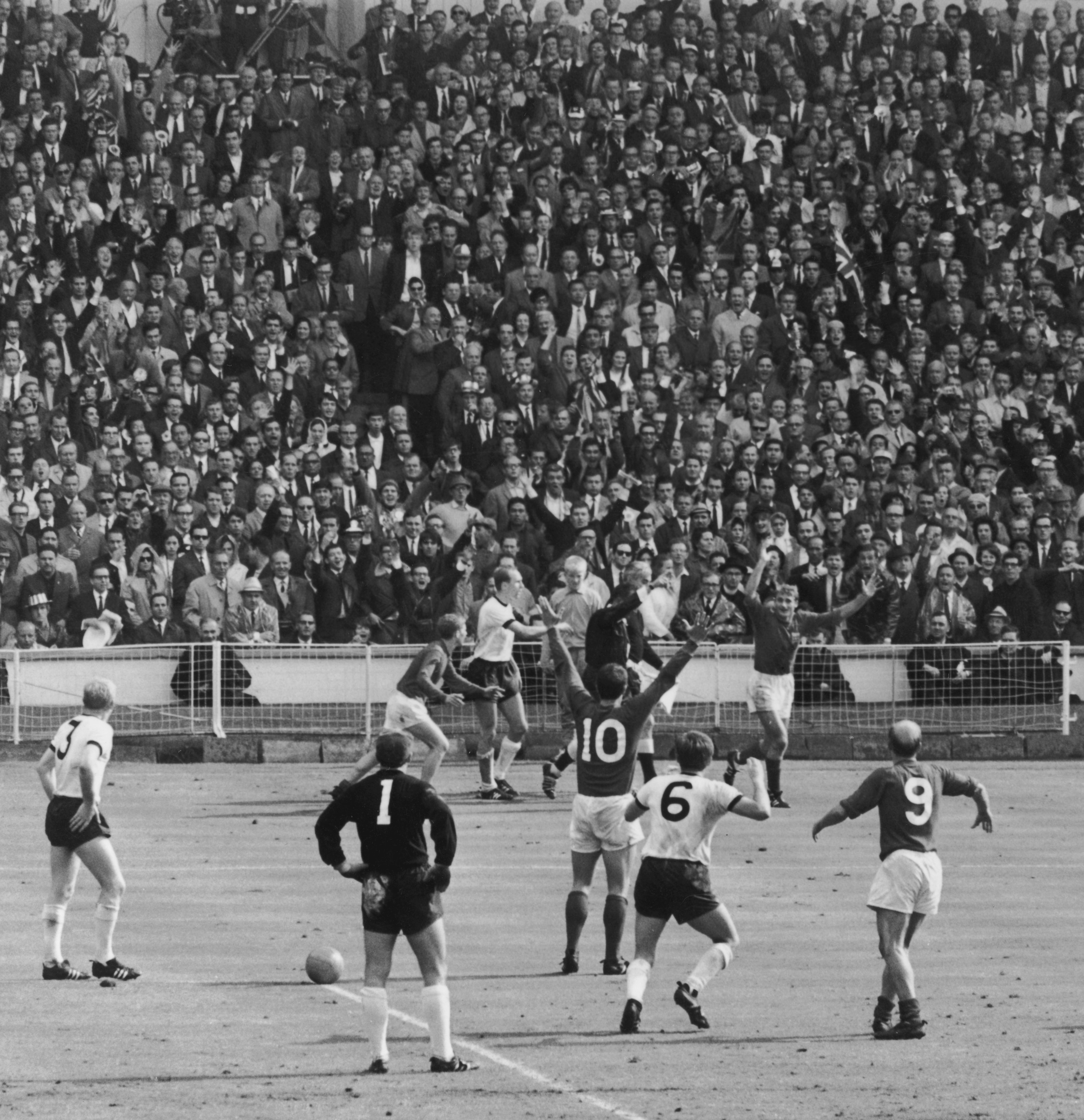
England celebrate Geoff Hurst’s goal in 1966 final. Getty Images
They have also put an interactive installation of the goal at the German Football Museum in Dortmund which shows visitors footage from different angles of the goal and asks them to vote whether it was a goal or not.
The man at the centre of the controversy was linesman Tofiq Bahramov, who was consulted by Swiss referee Gottfried Dienst before awarding the goal. Dienst, till his death in 1998, maintained that he had no idea whether the ball crossed the line or not and he depended on his assistant to award the goal.
Hurst’s shot beat West Germany goalkeeper Hans Tilkowski and then hit the underside of the crossbar, bounced on the line before being headed away by defender Wolfgang Weber.
Save that forged a friendship
Can a lifelong relation be forged between opponents because of an exquisite passage of play? Gordon Banks saving a Pele header during the 1970 World Cup group game at Estadio Jalisco in Guadalajara, Mexico, was the moment when their mutual respect turned into friendship.
On June 7, 10 minutes into Brazil versus England game, Jairzinho floated a cross from the right to find Pele in the box. The Brazilian soared to place his header perfectly with goal written all over it— and had everyone in the stadium ready to celebrate—but an airborne Banks jumped to the right of his goal to tip it over the bar. Such was the quickness showed by Banks that it was dubbed as the ‘Save of the Century’. The conversation that followed between the legends goes like this…Pele said: “I thought that was a goal.” Banks replied: “Me too.”
Later, Banks was quoted as saying: “Everyone asks more about the save than the 1966 World Cup (which England won).” Pele till recently couldn’t believe that Banks managed to save it but he was glad he saved it as “it made us great friends for life”.
‘Kick that won the World Cup’
Everything was going swimmingly for Hungary in the lead-up to the 1954 World Cup. They had won the Olympics gold, were on a 32-game unbeaten run in which they scored at will.
But a nasty tackle on their talismanic skipper Ferenc Puskas by West Germany centre-half Werner Liebrich towards end of their match derailed their campaign. Puskas injured his ankle and Hungary were never the same again even though they made it to the final where they lost 3-2.
What followed was a long-drawn blame game with Puskas calling it a vicious tackle and accusing Germans of doping while his counterpart Fritz Walter claimed the Hungary skipper had landed awkwardly.
After undergoing extensive treatment, Puskas played in the final but clearly he wasn’t fit. In the hindsight, Hungary would have been better off without their skipper but who would argue with ‘The Galloping Major’. Football writer Brian Glanville later described it as the ‘the kick that won the World Cup’.
