
A death threat from a dictator, a failed dope test, and a celebrated coach getting his due. A look at some exciting anecdotes from the era:
The Zaire kick that wasn’t funny
But for bizarre act, Mwepu Ilunga would not be top of the mind when talking of the 1974 edition. Playing Brazil, Zaire conceded a free-kick and while Rivelino and Jairzinho were deciding who would pull the trigger, Ilunga broke from the ‘wall’ and hoofed the ball upfield. A commentator put it down to ignorance of the rules, the claim more ludicrous than the act for Zaire had come through the qualifiers beating Morocco and Zambia and had won the African Cup of Nations. But those were different times. What was more likely was that Ilunga was trying to kill time. They were down 0-2 and apparently feared for their lives were Brazil to score another goal. That was because Zaire’s dictator Mobutu Sese Seko had threatened that the players wouldn’t return alive had they lost 0-3. This was after Yugoslavia had beaten them 9-0 leaving the dictator, who had invested a lot in football, livid. For qualifying as the only African nation — there was only one slot for the continent then —Sese Seko had plied the team with riches and while a 0-2 loss to Scotland, who had Dennis Law and Kenny Dalglish, could be tolerated, the humiliation against Yugoslavia was too much for him to take. So what if they had played with 10 men? So what if goalkeeper Kazai Mwamba was replaced by someone who was five foot four because he knew ‘people’? Zaire lost 0-3, Sese Seko did not stick to his word but the players returned home in disgrace. Sese Seko lost interest in football soon after.
The man who taught Cruyff
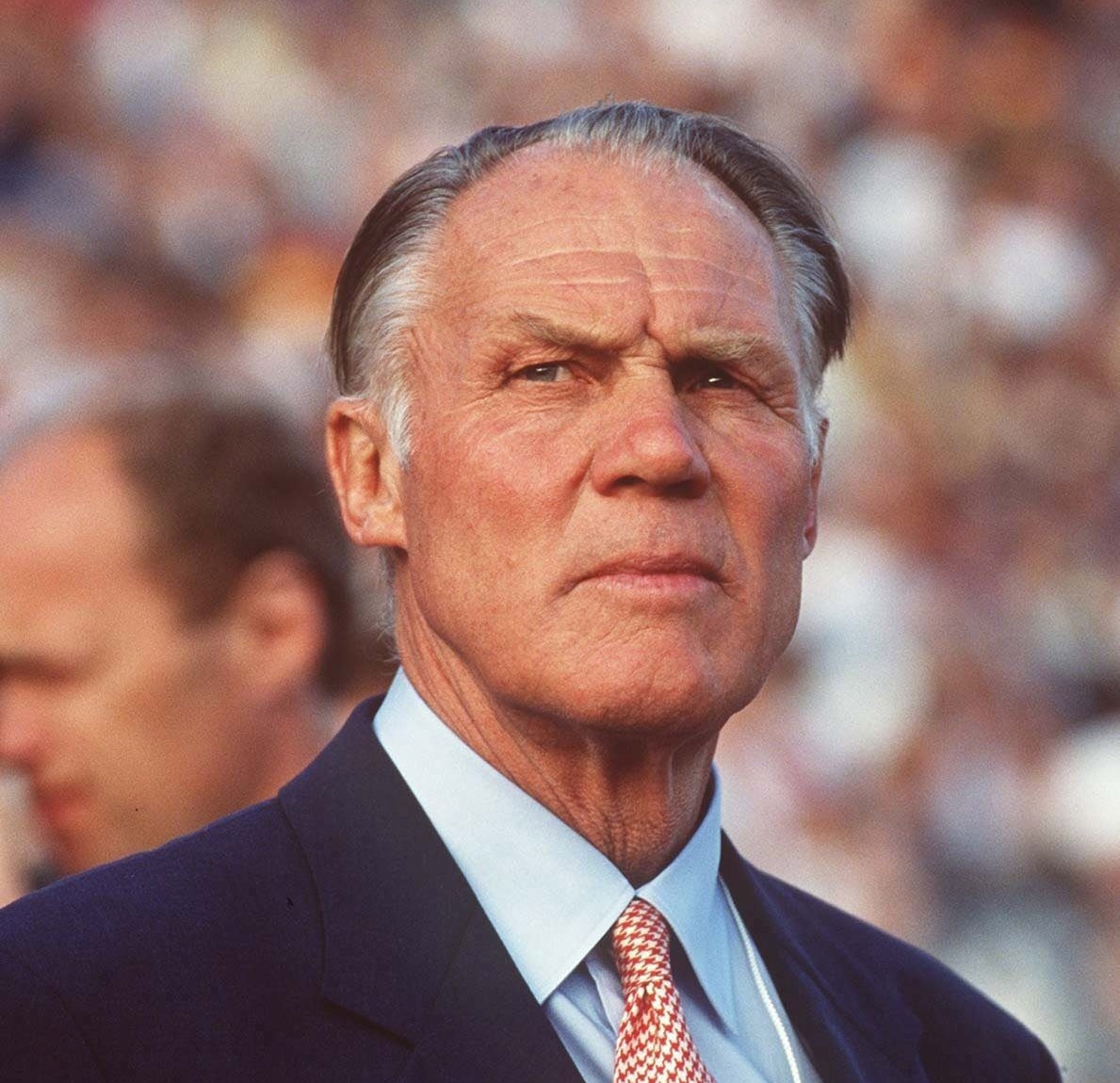
Rinus Michels. Getty
It is appropriate that Holland’s only major international title came on his watch. Rinus Michels did not win a World Cup though he came really close but the 1988 European Championship provided the silver lining to a glittering managerial career, one that relooked at how football was played and, with the right personnel, made it better. Johan Cruyff saying no one taught him as much as Michels is proof of his contribution to the world game. For as Pep Guardiola has often said, everything he learnt was from the cathedral Cruyff built.
Michels brought a kind of possession-based dynamism to Ajax, where he also played with distinction for 12 years scoring 122 goals, and then to Holland that made them the team of the 1974 finals.
It was built on the versatility of players— a reason why it wouldn’t always work — their awareness of space and innate intelligence of when to exploit it. It was the brain of Cruyff, a notional centre-forward because he would pop up in places you wouldn’t expect a poacher in those days, that made it work in 1974. The idea of ‘Total Football’ also stressed on the sweeper moving up. So, Franz Beckenbauer did what Michels wanted his team to do and it was fitting that the two met in the final. Exactly how much the 1-2 defeat meant to Michels was evident when after beating Soviet Union in the final of the Euros, he said defeating West Germany in the penultimate round was the real deal.
Failed dope tests
Haiti had just come off a good show against Italy, scoring first in a 3-1 loss — Dino Zoff conceding a goal in an international after 1147 minutes — and were basking in the afterglow of that performance when disaster struck. Centre-forward Ernst Jean-Joseph failed a dope test. The player said he had taken medications for asthma, a claim overruled by the team doctor who said at a press conference that the player didn’t know what he was taking. The player was soon shoved into a car and taken away from where the team was staying. The story broke because the German attache to the team told the press about Jean-Joseph’s ordeal. Do you know what the World Cup organisers did? They removed the German from his post. Four years later, Willie Johnston of Scotland tested positive.
The Scottish attacking player said he had taken medicine for hay fever but it soon transpired that he would take those pills in club games too. He got a year’s ban but Scotland told him they would never pick him again. He made money selling his story to a newspaper.
Sorry, time’s up
Brazil were tied 1-1 with Sweden when off a corner-kick Zico thought he had scored in the 1978 finals. Referee Clive Thomas though blew the final whistle as the ball was going in. Dumbstruck, Brazil protested but the Swedes countered by saying they had heard the final whistle and thought the game was over. Well, guess why Thomas incurred FIFA’s wrath? Not because of this but because he had covered his face when Sweden almost scored a self-goal.
