
Bollywood has a reputation for dismissing realism and championing fantasy over restraint and elegance. To a large extent, Hindi commercial cinema in the ’80s is to be credited for this.
It’s difficult to make sense of Bollywood in the 1980s. Why was tinsel the weapon of choice for everything from room decoration to skirts? Why was the hair so fluffy and the make-up so shiny? What were scriptwriters and directors having for breakfast to come up with plot twists like “guitarphobia” (in Disco Dancer, 1982) and a battle scene (from Ajooba, 1991) that Wikipedia describes as “a panorama of demons, magical horses and donkeys”?
Who thought superimposing “…and they lived happily ever after” over two people weeping over a dead body made for a better ending than a concluding scene that perhaps showed the couple living happily ever after?
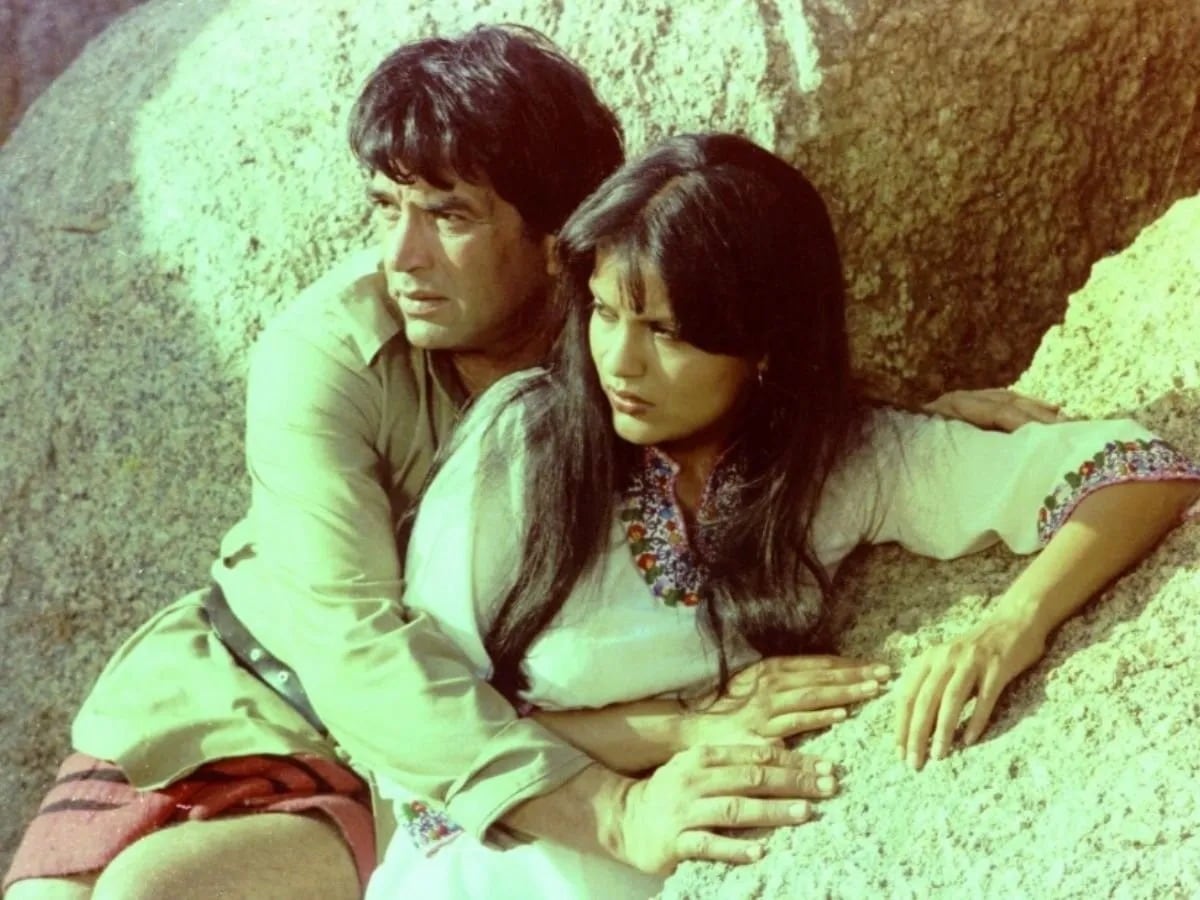
In Shalimar (1978), an eccentric criminal millionaire invites a group of master criminals to his private island and challenges them to steal a priceless gem.
Bollywood has a reputation for dismissing realism and championing fantasy over restraint and elegance. To a large extent, Hindi commercial cinema in the 1980s is to be credited for this. Contemporary Bollywood may want to bury this period in its history, but under the embarrassing excess of the films from this era are themes like violence rooted in social inequality, modern family dramas and vigilante justice, which would win acclaim for Indian cinema in later decades. It’s just that when Bollywood initially explored these ideas in the ’80s, the storytelling was amateurish and the visual vocabulary was awkward at best and hilariously bad at its worst. And in between all the grime, there were indeed some gems.
In many ways, the ’80s were an age of fantasy in cinema. In Hollywood, directors started reimagining magic for the modern era with a scientific twist in films such as ET the Extra-Terrestrial, Back to the Future, Who Framed Roger Rabbit?, Honey, I Shrunk the Kids, and the Indiana Jones series. The “West” stood as an inspiring presence on the borders of mainstream Indian culture. The surging popularity of video cassettes brought Hollywood and other foreign cinemas into Indian homes, opening up new possibilities for adapting (and plagiarising) others’ work.
Bollywood had neither the budgets nor the technology to pull off Hollywood-style spectacles, but it did create fantasies that audiences lapped up enthusiastically. This has usually been held up as a failing, but if you consider the tumult in India between 1977 and 1992, it’s not surprising that escapism felt like the need of the hour.
The Emergency ended in 1977, but darker days lay ahead. Death seemed to be everywhere. The Bhopal gas tragedy, in which over 500,000 people were exposed to a highly toxic chemical leak, occurred in December 1984. There were horrifying incidents such as the Marichjhapi massacre from 1979, in which hundreds of Dalit refugees lost their lives in an eviction campaign by the state government; the Bhagalpur blindings of 1980; and the massacre of more than 2,000 in an ethnic clash in Nellie, Assam, in 1983.
Two prime ministers — Indira Gandhi in 1984 and Rajiv Gandhi in 1991 — were assassinated in this period, and thousands died in natural disasters, including the 1977 cyclone that struck Andhra Pradesh and had a toll of more than 10,000.
Political instability riddled India, especially after Operation Blue Star and the anti-Sikh riots of 1984. Insurgency rose in Kashmir, which was brought under central rule in 1990. This period also saw the ascent of Hindutva politics and the demolition of the Babri Masjid in December 1992.
Faced with this reality, Bollywood served up entertainment that frequently seemed untethered to logic, but often still managed to be campy fun. Consider Shalimar, in which an eccentric criminal millionaire invites a group of master criminals to his private island and challenges them to steal a priceless gem. Or Parvarish, which shot the underwater submarine chase in its climax using toy boats and figurines.
There was The Burning Train, which was nicknamed “the turning brain” by those who tried to make sense of the chaos and spectacle that plagued the 182-minute ride.
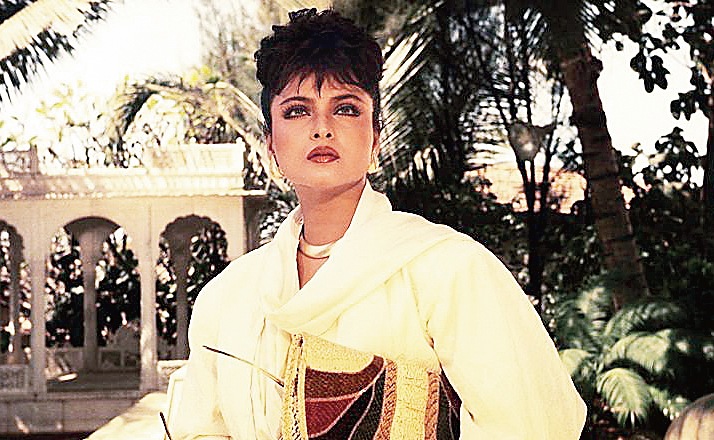
Initial steps were taken towards what would become ‘women-centric films’. In one such, Rakesh Roshan’s Khoon Bhari Maang, Rekha plays a woman whose husband tries to kill her for her money. She survives, and is now seeking vengeance.
There’s an audacity to the choices made by filmmakers in the 1980s, along with a determination to not be overwhelmed by current affairs events. Bollywood chose to not reflect reality and instead hold up a funhouse mirror to the world around us, for the audience’s viewing pleasure. Enter heroes such as Mithun Chakraborty, Anil Kapoor and Govinda, heroes that represented the Indian everyman. They played characters who almost always came from humble backgrounds and understood what it meant to be powerless. In the alternative on-screen reality of Bollywood, the little guy could make a difference to the world around him and win against his oppressors. Alongside these up-and-coming stars stood ageing leading men such as Rishi Kapoor and Amitabh Bachchan. Bachchan evolved from playing the angry young man in the 1970s to playing an angry older man in the 1980s (remember Kaalia and Shahenshah?).
There’s a lot that’s wrong with the films made in this era. Female characters were readily raped to titillate audiences. Bigamy was a popular premise for comedies and it was invariably shown from the perspective of a harrowed husband who must keep his wives apart and satisfy their desires. Yet also lurking in these years are interesting initial steps towards what would later become known as woman-centric films: movies such as Khoon Bhari Maang, Nagina and Chaalbaaz, which placed the heroine at the centre, rather than the hero.
Occasionally, films even turned the tables on the male gaze. For instance, there’s a sharp contrast between how the camera in Satyam Shivam Sundaram and Ram Teri Ganga Maili leers at Zeenat Aman and Mandakini — as innocent village belles, they apparently have no idea how wet saris work — and the way Sridevi and her chiffon sari have fun in the rain in Mr India. By virtue of her lover being invisible, the focus is on the woman’s pleasure and Sridevi as Seema adds a sense of self-assuredness to the scene that makes it seem as though she’s the one in control.
The ’80s also made space in the mainstream for stories that would today be considered niche. Films such as Arth, Silsila and Masoom found audiences despite being unconventional, as did the endearing comedies that rejected spectacle and presented a romanticised take on modest, middle-class India. Films like Gol Maal, Khoobsurat, Shaukeen and Baton Baton Mein had normal-looking men and women as protagonists who found themselves going up —and winning — against an older generation set in its ways.
There’s a bravado to commercial cinema in the ’80s that manages to be cringeworthy in its execution, but powerful when you consider the ideas below the surface of some of these films. Faced with disaster and despair, filmmakers devised the comfort of the masala film that has since become a trademark of Indian culture. But today, it’s minus the unsheathed anger and outlandish imagination.
