
A decade of crime and revenge shifted gears suddenly, in 1988, with the coming of two new stars: Aamir Khan and Salman Khan. The boyish Aamir lit the spark with Qayamat Se Qayamat Tak. Salman kept it burning with Maine Pyar Kiya.
The 1980s were a strange time in Bollywood. Formulaic tales of crime and revenge were repackaged over and over, as the industry tried to find a successor to the Angry Young Man of the 1970s. The oddness peaked, in a sense, in 1987, with a 52-year-old Dharmendra appearing in six mindless action films in a single year. These included the ultra-violent Hukumat, the biggest hit of the year by revenue, and Watan Ke Rakhwale, in which Dharmendra ripped the villain’s stomach open with his bare hands. To be fair, he had warned him, with the memorable lines: Kutte kamine tu mujhse bachkar nahi ja sakta... main tujhe dhoondkar tera kaleja cheer doonga, main tera pet phaad daloonga.
Suddenly, two years later, it all changed, with the coming of two new superstars: Aamir Khan and Salman Khan. What was really happening at the dawn of the ’90s?
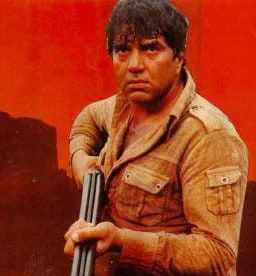
Dharmendra in Mera Karam Mera Dharam (1987). The oddness of ’80s Bollywood peaked, in a sense, in this year, with the 52-year-old star appearing in six mindless action films.
The change had begun with the launch of star sons Kumar Gaurav, Sanjay Dutt and Sunny Deol in the early 1980s. All three were launched as romantic stars, a space vacant since the phenomenal superstardom of Rajesh Khanna began to wane in the mid-’70s. The soundtracks of the new actors’ debut films, Love Story (Kumar Gaurav, 1981), Rocky (Sanjay Dutt, 1981) and Betaab (Sunny Deol, 1983) were blockbuster hits too.
After a decade of aging superstars playing the same violent roles, these love stories opened the floodgates. More young men shot to stardom: Anil Kapoor, whose first big hit was Mr India, in 1987; Jackie Shroff (Hero, 1983); Mithun Chakraborty (Disco Dancer, 1982).
By the time Mansoor Khan released Qayamat Se Qayamat Tak (QSQT) in April 1988, the audience was primed and ready. When the boyish Aamir Khan strummed his guitar and sang Papa Kehte Hain beside the youthful, smiling Juhi Chawla, a spark was lit.
The film was essentially a retelling of Romeo & Juliet, with traditional Bollywood elements. But, amid the scenic song sequences and teary melodrama, there was something new and fresh happening here. Aamir as Raj didn’t speak like a poet; he talked like a regular young man. He got beaten up in fights and didn’t always win. And Chawla’s Rashmi wasn’t shrinking and coy. She clearly liked the young hero. She even made the first move, saying “Hum par aapka bada achcha impression pada hai.”
The initial posters featured that most daring of things in Bollywood: A kiss. A safer poster was more widely distributed. This one showed angry dad Dalip Tahil holding a gun and determined lover Aamir holding a knife, a still from the climactic scene. Perhaps the makers were a little unsure the film would work without the violence audiences were so used to by now.
Within a week, word-of-mouth publicity and the blockbuster hits (Ae Mere Humsafar; Gazab Ka Hai Din; Akele Hain To Kya Gam Hai) ensured that families were rushing to the theatres. The film’s superb music was reminiscent of the pre-disco good old days of melody in Hindi cinema. Composers Anand-Milind and veteran lyricist Majrooh Sultanpuri staged a revival of sorts, and paved the way for more musical hits, the most important being Maine Pyar Kiya the following year.
Rajshri Productions was on the verge of closing down when the young Sooraj Barjatya signed on as director of Maine Pyar Kiya. He, too, used two new faces: Salman Khan and Bhagyashree. He too had stellar music (Dil Deewana; Aaja Shaam Hone Aayee). And he soon had the nation going nuts over a song about a pigeon.
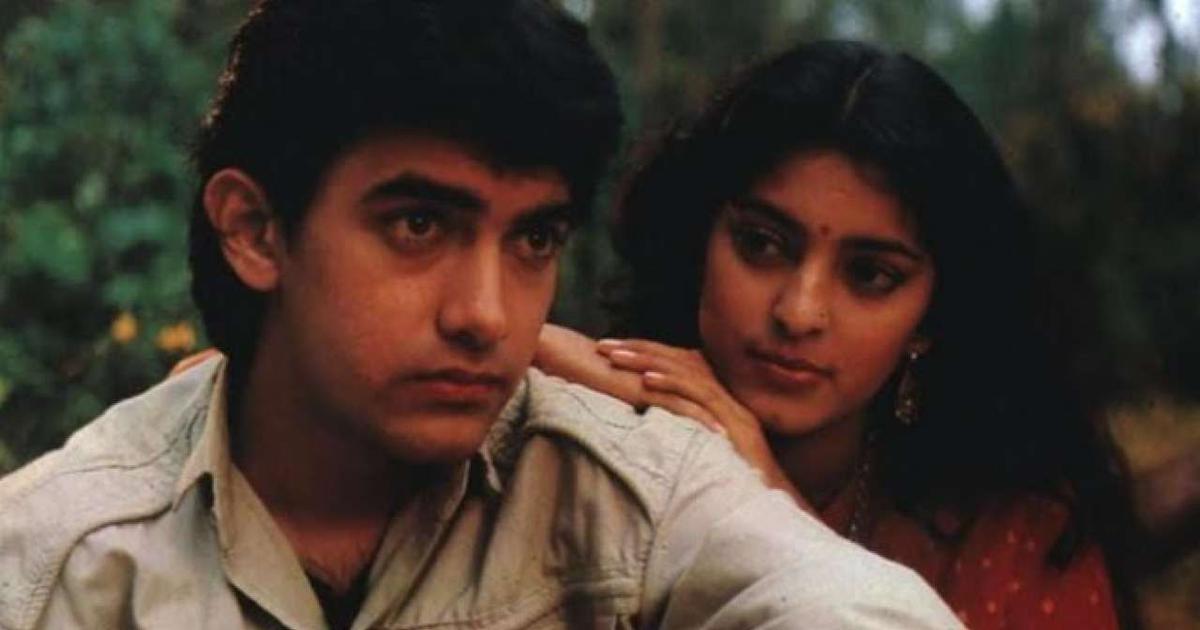
When Mansoor Khan released Qayamat Se Qayamat Tak in 1988, it helped that Aamir Khan was a different kind of hero. He talked like a regular young man. He got beaten up in fights and didn’t always win.
With seductive I Love You vocals woven in the background music of many romantic scenes, Maine Pyar Kiya was hailed as a “modern” film rooted in Indian “traditions”. It too had families flocking to the theatres. The representation of Indian values was just enchanting enough for the vast middle class of the time: The US-educated Prem smokes but never in front of his parents; he dutifully closes his eyes while applying Iodex to Bhagyashree’s leg.
T-Series, meanwhile, sold more than 5 million copies of the QSQT soundtrack on cassette, a breakthrough for the music company that was only six years old at the time. They would beat this record soon enough, with the soundtrack for the 1990 Mahesh Bhatt-directed musical blockbuster Aashiqui (Bas Ek Sanam Chahiye; Jaane Jigar Jaaneman; Nazar Ke Samne), which sold more than 10 million copies.
After many bleak years, the musical was back. The singing, dancing, eventually-happy family would remain the focus of Bollywood for quite some time.
(Yasser Usman is a journalist who has authored best-selling biographies of Guru Dutt, Rajesh Khanna, Rekha and Sanjay Dutt)
