
Salman Khan is master of the makeover. The aw-shucks grin and nonchalance belie the immense thought and strategy that have allowed this megastar to toss plot and character aside, storm the screen, and rake in millions, over and over.
In early 2009, Salman Khan was shooting for Wanted at Mehboob Studio, Mumbai. Bodyguards kept fans at bay as he sipped a coffee outside his vanity van. A teenaged girl finally mustered up the courage to run to him for a selfie. While they posed, she said, “People say you’re scary but you’re not. You are sweet. You are the perfect man.” He replied, “I am not perfect. Nobody is.” Whether Khan believes that or not, with his self-deprecating shrugs and smiles, he usually acts like he does.
By 2009, the third superstar in the Khan triptych had been one of Bollywood’s brightest stars for two decades, having made his debut in Maine Pyar Kiya in 1989 and followed that up with successes such as Saajan, Hum Aapke Hain Koun..! and Judwaa, in which he typically played the romantic hero.
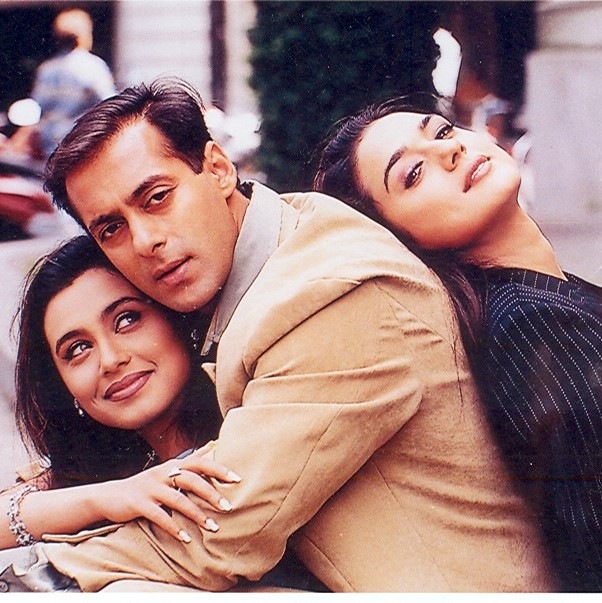
Before he was the super-fighter, he was the lover boy, winning hearts in romance dramas such as Chori Chori Chupke Chupke.
By 2009, he had a veritable army of fans. Flops, controversies, criminal charges, stints in jail (over death in a hit-and-run, and over allegedly hunting an endangered blackbuck), nothing could cause them to waver. Even in 2022, fans turn up outside his modest housing society in Bandra, Mumbai, with such regularity that vendors and pickpockets have begun to ply their trades there on the weekends, selling snacks and stealing cellphones amid the chaos.
But between 2005 and 2009, his films weren’t faring so well. Khan fronted about a dozen duds (Jaan-E-Mann; Marigold; the period drama Yuvvraaj). The only bright spot for him in this period was the David Dhawan film Partner, which had the actor playing a love guru called Prem to Govinda’s bumbling Bhaskar.
He and his directors started to realise that he was in desperate need of a makeover. Given how much his fans just loved the idea of Salman Khan (or who they believed that to be), they reasoned, why not give them versions of that on screen?
A few months later, the first such experiment was rolled out. In a darkened single-screen theatre in Meerut, the audience watched as Radhe (Khan), the hero of Wanted, was bashed up by the villain. The men in the audience “took off their shirts en masse and roared. “A friend who witnessed this scene described it almost as a pagan ritual. When Salman tore his own shirt off on screen, the crowd screamed ‘Bhaijaan, Bhaijaan’,” says filmmaker Samreen Farooqui, co-director with Shabani Hassanwalia of the documentary Being Bhaijaan (2014).
It was this anecdote that triggered the duo’s interest in decoding this man’s unique appeal, Farooqui added. After all, no one in Bollywood’s history had so successfully monetised his off-screen persona. Others had built on-screen personas that worked for them: the Angry Young Man (Amitabh Bachchan), the arms-outstretched lover (Shah Rukh Khan). No one had tossed plot and character aside, stormed the screen, and raked in millions, over and over, even with films that seemingly had no plot (Ready), even with films where the plot made no sense (Bodyguard).
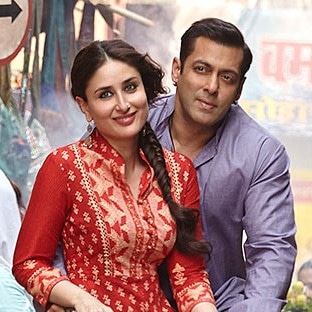
He wants his roles to inspire good in people, Khan says. In Bajrangi Bhaijaan (2015), he plays a large-hearted man who helps a Pakistani girl return to her country and family.
What Salman Khan understands, and appreciates, is that his audience craves masala, action, stunts, and simplicity. “The action you see in the film is all Salman,” says Wanted producer Boney Kapoor. “He trained for it and we didn’t use a body double.” Wanted (2009) was one of the earliest films to earn ₹100 crore at the box office (Aamir Khan’s 2008 film Ghajini was the first). In the years since, Khan has had 15 films hit this mark, including Bajrangi Bhaijaan (2015), where he plays a large-hearted man who helps a young Pakistani girl return to her country and family, and Ali Abbas Zafar’s Sultan (2016), where he plays an aging, out-of-shape former wrestler battling personal demons.
His home in Bandra — a flat rather than a mansion — adds to his everyman image. Not for him the high walls and separating lawns of the Bachchan homestead or Shah Rukh’s Mannat. The fact that he lives with and cares for his aging parents plays into the Indian idea of what a dutiful son should be. His annual Eid releases are another gesture to his fans that he sees them, he is them.
The decision, in 2010, to host the reality show Bigg Boss was a masterstroke, offering unfettered access to the adored smile, the self-deprecating shrug, the brotherly sternness and concern. Meanwhile, since 2007, he’s worked to rehabilitate his image through a foundation called Being Human, which operates in the fields of philanthropy and fashion.
Vitally, Being Human gives his fans a chance to literally wear their passion. Salman wears the Being Human T-shirts too, allowing himself and his fans mirroring each other once again.Where is he going with all this? How does he view his legacy? Salman has said, over and over, that he wants his roles to inspire his fans to be better people. In an interview in 2017, I asked him if he truly believed that that year’s outing, Tubelight, where he plays a simple-minded do-gooder, could have this effect. “I do. I really, really do,” he said. “When you watch a good film, one that you connect with and it’s about noble people, you want to be that person. If you watch films that inspire you, you’ll slowly absorb the qualities that you see on screen. I want to help people become better human beings.”As his character put it in Kick (2014): “Main dil mein aata hoon, samajh mein nahi.”
(Karishma Upadhyay is a film journalist, critic and author of Parveen Babi: A Life)
