
How are dubbed versions of south films topping Hindi charts? They’re often tales of carnage, myth or machismo, but with a crucial difference: intense attention to detail. They’re masala movies that tell the masala audience that they matter.
When cricketer Virat Kohli wiped his chin with a palm-down flourish during the India-Sri Lanka Test in March 2022, it was a sign of the times.
The gesture was a tip of the hat from a Delhi boy to Allu Arjun, a moviestar from all the way over in Andhra Pradesh. The palm-down chin wipe was his signature move in Pushpa: The Rise (2021), a film originally made in Telugu. Its dubbed Hindi dubbed version was one of the highest-grossing Hindi blockbusters of the year.
Until about the mid-2010s, few Hindi-speakers knew the names Allu Arjun, Nani, Vijay, Ram Charan or NTR Jr. In recent years, dubbed Hindi versions of Telugu, Kannada, and Tamil films starring these men have shot to the top of earnings charts. They’re beating Hindi blockbusters right in the heart of Bollywood. They are doing so well that, by mid-2022, of the highest-earning Indian films of all time domestically, the top three were Bahubali 2, KGF 2 and RRR, originally made in Telugu-Tamil, Kannada, and Telugu and all blockbuster successes in their dubbed Hindi versions too.
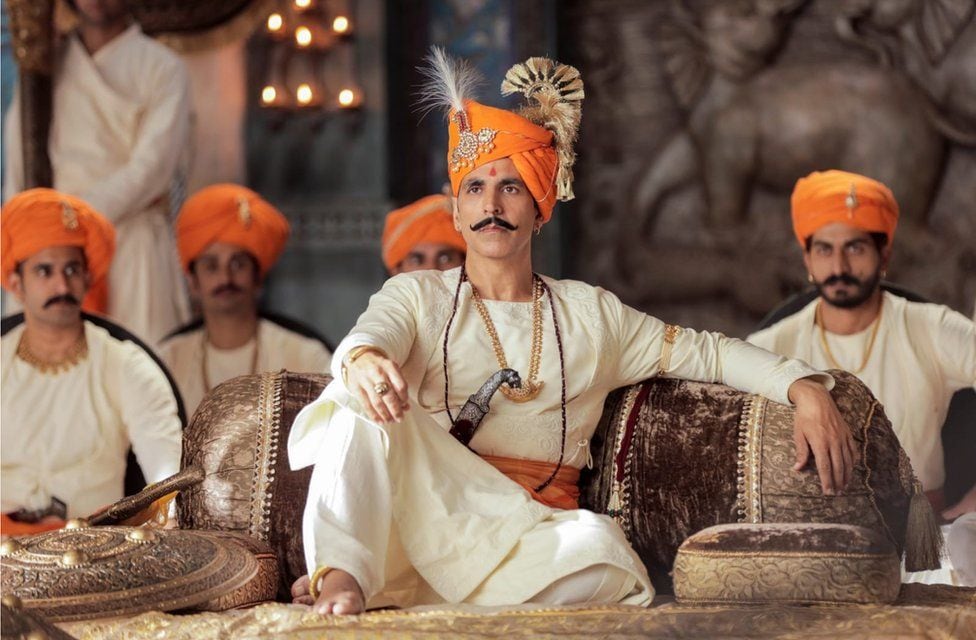
A still from the Akshay Kumar-starrer Samrat Prithviraj, which earned ₹65 crore in its first two weeks. It is Kumar’s second non-success this year, the first being the gangster flick Bachchhan Paandey.
How is this happening? To be fair, the stories aren’t the dramatically different tales that are raising the bar in the indie / small-budget Hindi space. The south films sweeping in the crowds are usually tales of carnage and myth, revenge and crime, violence and machismo, with one crucial difference: an intense attention to detail.
The talent shines. Each frame is polished until it sparkles. Cinematography, lighting, costumes and sets are put together with immense discipline and care. The result is a masala offering that tells the masala audience that they matter. It is not, for instance, the arbitrarily planned, irregularly paced stuff of Aamir Khan’s 2018 flop Thugs of Hindostan or Akshay Kumar’s Samrat Prithviraj (2022).
The change began, with a bang, in 2015, with SS Rajamouli’s Bahubali (2015). The grand mythological saga shattered language barriers, raking in ₹650 crore in box-office collections worldwide. It opened up the average Hindi-language viewer to mainstream non-Hindi cinema. Then the pandemic hit, theatres shut, online and streaming platforms boomed, and what barriers remained began to come down too. Suddenly, with minimal promotion, films from the south were turning blockbusters in Hindi, while films made in Hindi trailed behind.
While SS Rajamouli’s blockbuster RRR (a 2022 period drama about two revolutionaries in colonial India) minted more than ₹1,100 crore worldwide (across languages), Samrat Prithviraj earned ₹65 crore in its first two weeks. It is Kumar’s second flop this year, the first being the gangster flick Bachchhan Paandey (2022). Director Kabir Khan’s big-budget sports drama ’83 also tanked. Salman Khan’s last theatrical release, Antim (2021), failed to cross the ₹50 crore mark. Meanwhile, the 2022 Tamil action drama Vikram, starring Kamal Haasan, Vijay Sethupathi and Fahadh Faasil, has earned more than ₹400 crore worldwide.
The energy, fresh plots and new faces of the south movie industries has drawn Hindi-speaking audiences for decades.
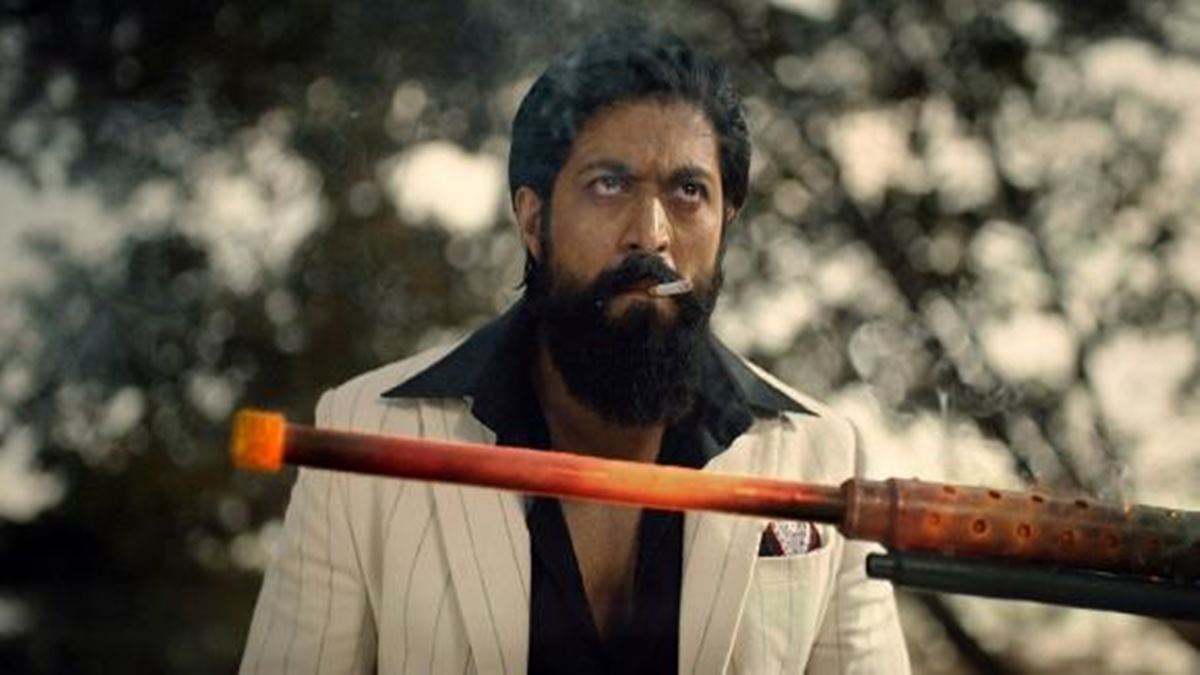
Yash in KGF: Chapter 2. Pushpa, RRR, Beast, KGF 2 and Vikram all hit screens in the space of eight months.
Hits included Kamal Haasan’s Ek Duje Ke Liye and Rajnikant’s Andha Kanoon in the 1980s and Nagarjuna’s Shiva and Chiranjeevi’s breakthrough Pratibandh in the 1990s. Tamil filmmakers such as Mani Ratnam and Shankar also saw dubbed versions of 1990s films such as Roja, Bombay and Hindustani succeed.
But these were exceptions. Pushpa, RRR, Beast, KGF 2 and Vikram were all released in the space of eight months. So what’s changed? Why this swerve?
Common consensus has it that the Hindi film industry became too focused on the “multiplex” film (urban-centric, targeted at metro and often NRI audiences) and stopped making the pan-India, “‘paisa-vasool” masala entertainer that had been its bread-and-butter. The Hindi film industry, in large parts, had begun to take its audience for granted and lean too heavily on dwindling star power.
Attempts to reverse this trend have not yielded results so far. The latest, Yash Raj Films’s mega-budget masala entertainer Shamshera (a dacoit-themed action drama starring Ranbir Kapoor and Sanjay Dutt, released on August 22), has also flopped.
So what is the way forward for Bollywood? New collaborations are being formed. Filmmakers Karan Johar and Farhan Akhtar are in talks with south filmmakers. RRR has Ajay Devgn and Alia Bhatt in strong cameos. Shah Rukh Khan’s upcoming film Jawan (2023), his first non-cameo role since Zero flopped in 2018, is directed by Tamil filmmaker Atlee, and will be released in Hindi, Tamil, Telugu and Malayalam. The best way forward might just be together.
(Yasser Usman is a journalist who has authored best-selling biographies of Guru Dutt, Rajesh Khanna, Rekha and Sanjay Dutt)
