
These were the Khan years. The decades of Dilwale Dulhania Le Jayenge, and also of AR Rahman. In a liberalised India, the NRI film got bigger and bigger.
In the Disney TV series Ms Marvel, 16-year-old Kamala — the first desi superhero in the Marvel universe — establishes herself as a person of South Asian descent with a discussion about Bollywood. She picks Baazigar as her favourite Shah Rukh Khan film, even though it was released 13 years before she was born. “It’s only SRK’s best work,” she says.
Immediately after the episode aired, social media was awash with nostalgia as people posted about their favourite SRK films, proving that while Kamala’s superpowers might be fictional, Khan’s status as a Bollywood icon is very much a fact.
Although he caught everyone’s attention while playing the bad guy in Darr and Baazigar, Khan redefined masculinity for Bollywood in the 1990s by updating the romantic hero. He replaced machismo with mischief and brought sensuality back to the heroic persona. His performances often compensated for the questionable writing, giving rise to the phenomenon of the star vehicle.
SRK fans across the gender spectrum would watch a film simply because he was in it. One may roll eyes at how Kuch Kuch Hota Hai views tomboys as ugly and a break-up as the ultimate evil, but fans (meaning the bulk of India’s movie-going public) set good sense aside and watched SRK portray a single parent who unexpectedly falls in love and makes bedroom eyes at Kajol.
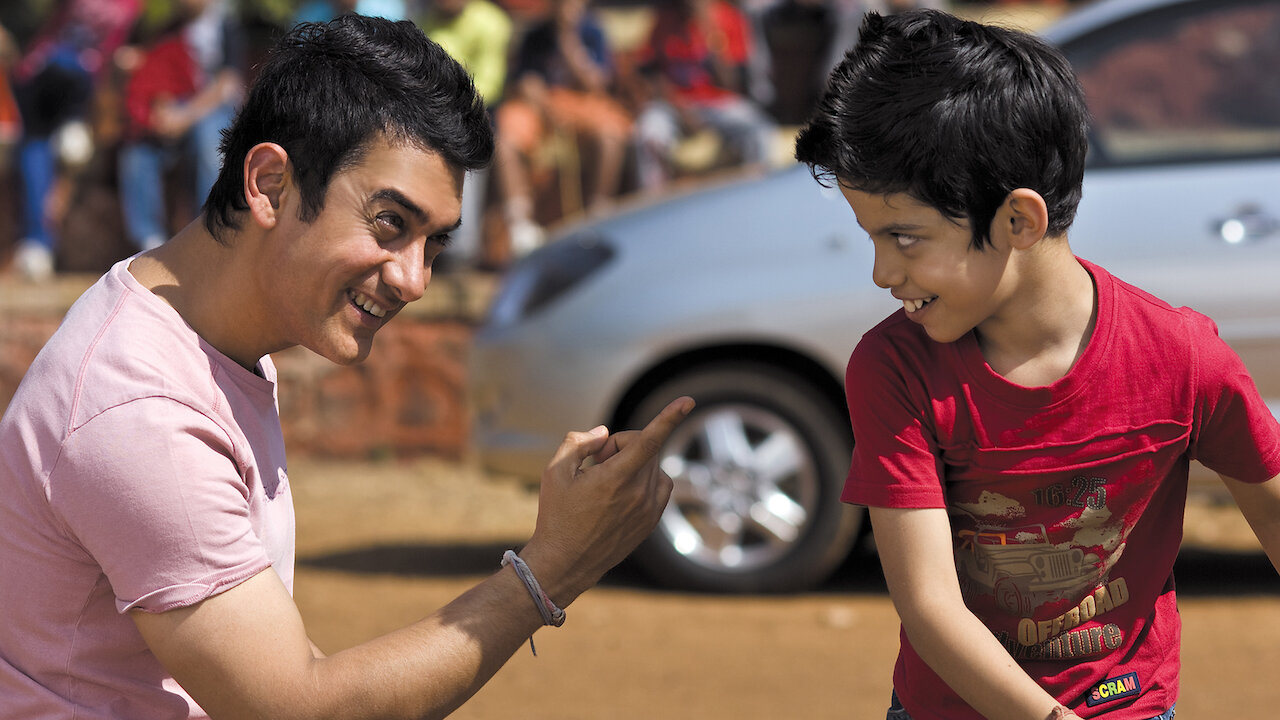
Aamir Khan, who often pushes the boundaries of what one can do with stardom, told an evocative tale of learning disability and art as therapy, in the 2007 film Taare Zameen Par.
Films like Dilwale Dulhania Le Jayenge (DDLJ), Hum Aapke Hain Koun..! (starring Salman Khan) and Taare Zameen Par (Aamir Khan) broadened the scope of what was considered heroic and manly in Bollywood. Shah Rukh led the campaign by playing characters who were not afraid to show vulnerability, who cried openly, and preferred persuasion over raging against the establishment. SRK and his masculine softness — along with Salman and Aamir — dominated the period between 1992 and 2007. So much so that we tend to forget that the ’90s was also the decade of the action hero, with actors such as Sunny Deol, Ajay Devgn and Akshay Kumar flexing and flaunting hairy chests and bulging biceps. With both the violent and the sentimental finding favour with audiences, the definition of the male hero in Bollywood broadened in some ways while narrowing in others.
The early ’90s saw the last of the rebellious, working-class heroes in commercial Hindi cinema. Their swansong was performed in films such as Jo Jeeta Wohi Sikandar, Ghulam and Rangeela (all three starred Aamir Khan, who would play an underdog hero again in 2001, in Lagaan, the 224-minute epic that defied all expectations by becoming a huge hit).
From the mid-’90s, as the Indian economy recovered from the balance-of-payments crisis of 1991, Bollywood leads would become progressively richer. The poor became minor characters who existed only to make the middle-class and rich protagonists look good. For example, all the blockbuster family dramas feature domestic help who practically worship the family that employs them.
Wealth, which had long been a trademark of the villain in Bollywood, became a positive attribute. The mid-1990s were all about heroes from an affluent middle class. In the early 2000s, the billionaire businessman’s son (who used to be a wastrel in older Bollywood films) became the hero. The palatial homes and large portraits that once characterised a villain’s lair now became markers of an aspirational family space. The love stories changed too. Eloping with the girl became passé, especially after DDLJ. The hero now tried to win her family over.
Another stereotype that changed in the ’90s was that of the foreign-returned Indian. In the past, the non-resident Indian (NRI) character would usually be one who disrespected Indian culture and, if the lead was someone who had lived abroad, he or she was invariably clueless about critically important things. With the globalisation of the Indian economy and South Asian diaspora audiences contributing significantly to box-office earnings, Bollywood gave the NRI a makeover. Instead of being a confused desi, the NRI became the exemplar of a modern Indian, as seen in films like DDLJ, Swades, Pardes, Kuch Kuch Hota Hai, and Kabhi Khushi Kabhie Gham.
By the 2000s, entire stories were set in the Indian diaspora. Whether it was elaborate dance sequences, Hindu rituals, or making a bunch of white people stand up for the Indian national anthem, the message was the same: Bollywood saw the (wealthy) NRI as its newest champion.
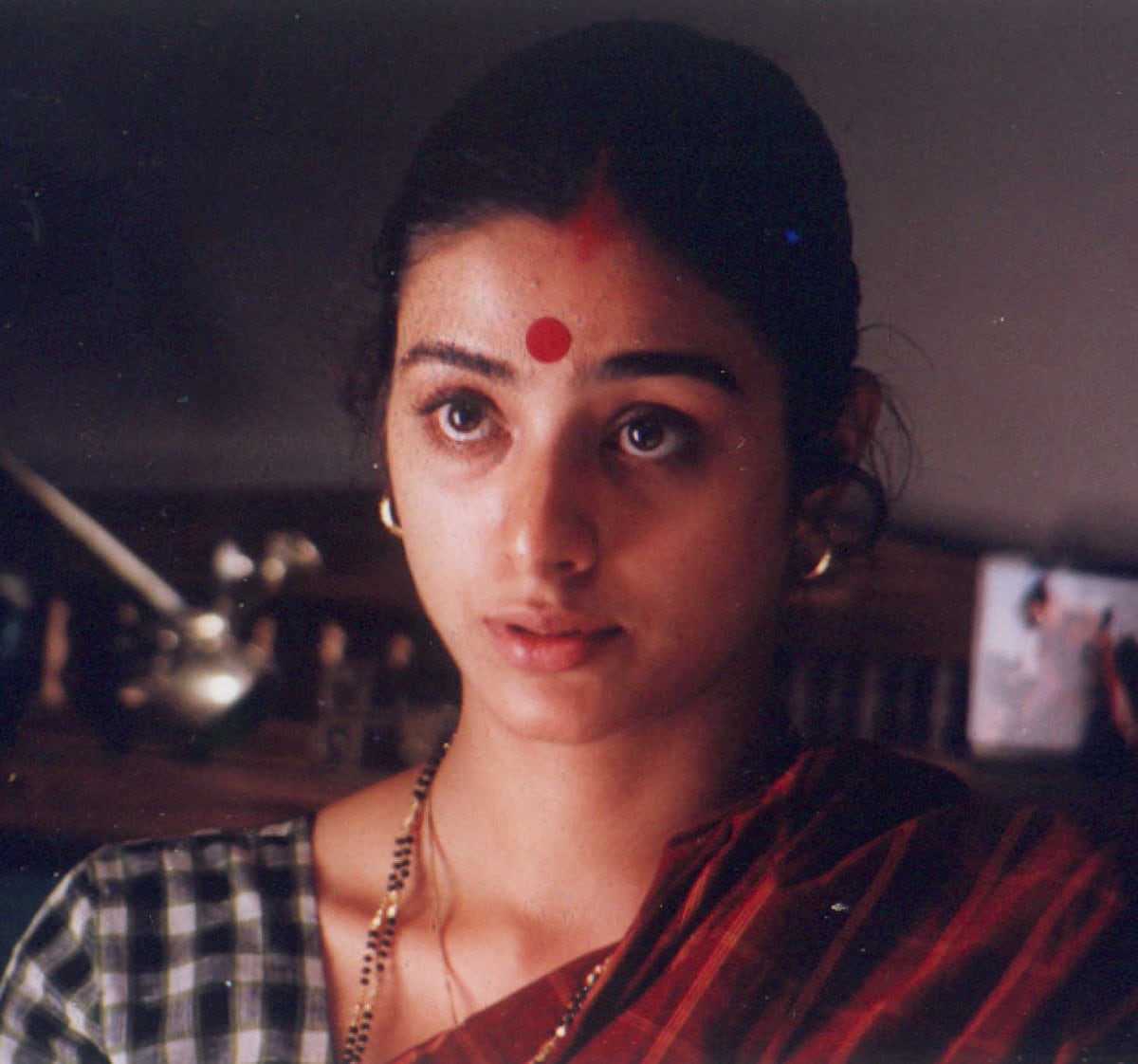
Tabu infused life into the trope of the innocent village belle in Viraasat (1997).
Looking back, the box office for Hindi films in the ’90s suggests an optimism that feels jarring when viewed alongside events of the time. For example, 1998 saw the nuclear tests of Pokhran-II, a stock market crash and bomb blasts in Coimbatore. Among the highest-grossing films that year were Kuch Kuch Hota Hai; Pyaar To Hona Hi Tha, a remake of the Hollywood romantic comedy French Kiss; and Bade Miyan Chhote Miyan, supposedly an action comedy. In 1999, Christian missionary Graham Staines was burned to death, India and Pakistan were on the brink of war, and the hijacking of Indian Airlines Flight 814 ended with three terrorists being released in exchange for hostages. The biggest Bollywood hits of that year were the saccharine family drama Hum Saath Saath Hain; Biwi No 1, a misogynistic comedy about adultery; and the tearjerker romance Hum Dil De Chuke Sanam.
The years between 1992 and 2007 were turbulent for India -- terror attacks, the Kargil conflict, the Gujarat riots, the Latur and Bhuj earthquakes. Most of these incidents came as a surprise to the nation, underscoring how unpredictable life was. Perhaps it was in response to this uncertainty that Bollywood offered assurances of stability. Commercial Hindi cinema in this period diligently promoted conformity. Prodigal sons had tearful reunions with patriarchs, who were frequently shown as victims of unfair treatment. Gangsters reformed themselves. Muslim characters all but disappeared from the screen. Heroines became more demure, domestic, and ready to submit to the men in their on-screen lives.
Even successful actors such as Madhuri Dixit, Karisma Kapoor, Kajol and Manisha Koirala got roles that were secondary to male leads. In the raunchy comedies, like Judwaa, Raja Babu, No Entry, and Welcome, women characters were the butt of jokes and subjected to a sleazy male gaze. Modern, assertive women were invariably shown in a negative light and career women were reviled. Rekha — once the queen of Bollywood — was reduced to playing a villain who ends up rolling around in mud to seduce a younger man, while declaring, “Even naughty girls need love, hai na?” Talented actors such as Tabu, who managed to infuse life into the trope of the innocent village belle in Viraasat and would shine in a small role in Maachis, would have to wait till the mid-2000s to get roles that properly utilised their acting ability.
The saving grace of the 1990s was that space was made within commercial Hindi cinema for offbeat projects. As the industry thrived with rising ticket prices, the advent of multiplex cinemas and new audiences around the world, there were some who were willing to take the risk of tackling complex subjects. Ram Gopal Verma’s Satya depicted organised crime in Mumbai with gritty and violent artistry. Bhopal Express, by Mahesh Mathai, told the story of the 1984 gas tragedy through the perspective of an employee of Union Carbide. Gulzar tried to process insurgency in Maachis as did Mani Ratnam in Roja and Dil Se.. Films such as Omkara by Vishal Bhardwaj and Cheeni Kum by R Balki introduced characters who defied the traditional formulae and told stories that felt grounded in reality.
This genre of intelligent cinema may have been the exception, but it helped to raise the bar for Bollywood in general. If the star vehicles, soppy melodramas and regrettable comedies stabilised the industry between 1992 and 2007 by making money (and providing fodder for future drinking games), the less commercial films paved the way for the indie-flavoured Hindi cinema that would wow audiences in coming decades.
