
From the start, Shah Rukh didn’t just bend showbiz rules, he broke them. He took roles no one else wanted and turned them into blockbusters. Aamir began as a romantic hero, but soon set off on a very different path.
Shah Rukh Khan was earning about ₹8,000 per episode, on the Doordarshan TV show Fauji, when he stood at Marine Drive in the late 1980s and, the legend goes, said out loud: “I’ll rule this city one day.”
He was a young man from Delhi, in his early 20s, passionate about theatre and now the screen, but with no inroads into an industry that was famously closed to outsiders (and, in many respects, remains that way).
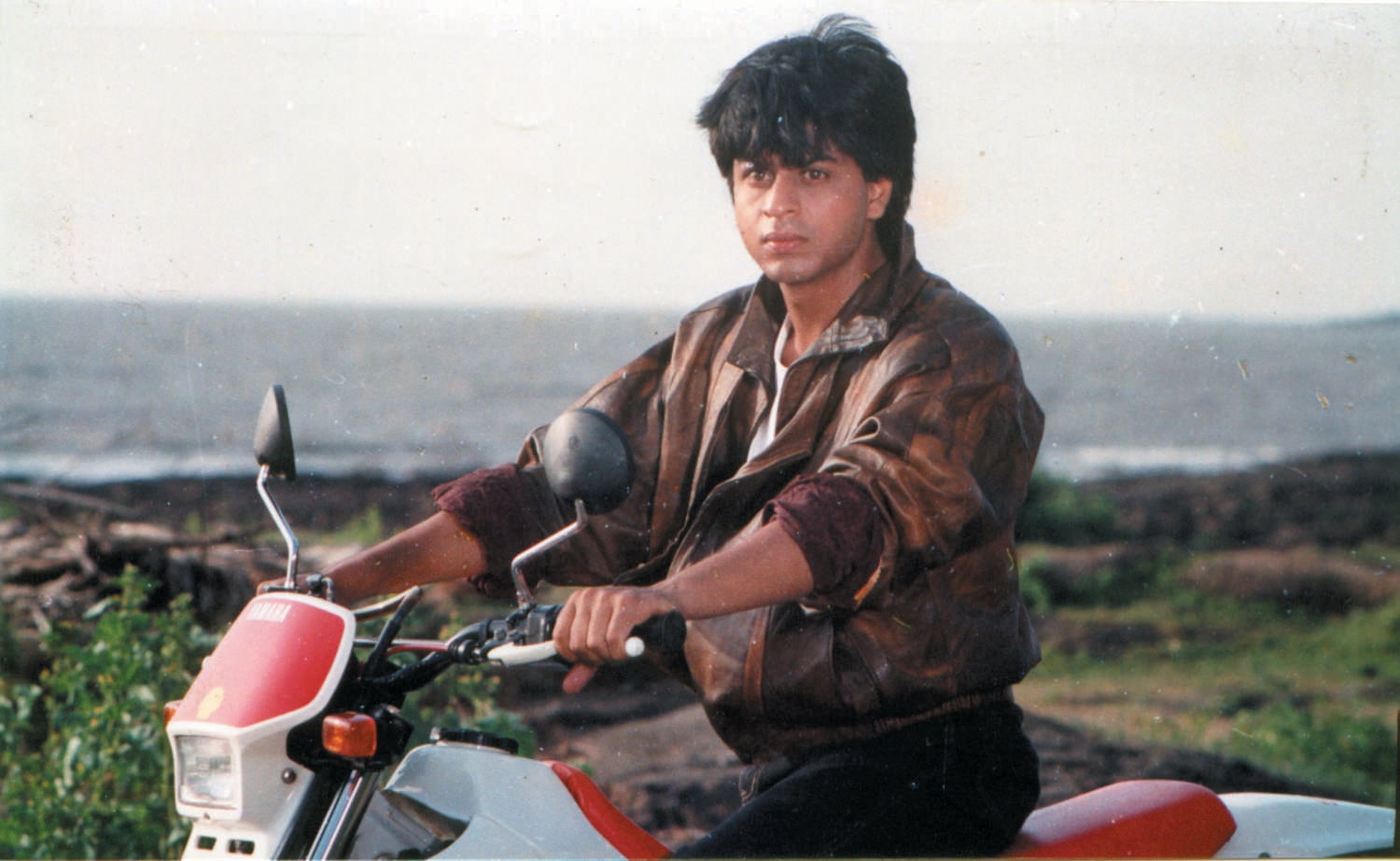
Shah Rukh Khan in Deewana (1992). Director Raj Kanwar first approached Armaan Kohli to play the brash, rich brat, but Kohli refused because he didn’t want to play second fiddle to Rishi Kapoor.
Right off the blocks, Shah Rukh didn’t just bend showbiz rules, he broke them (much like a certain other young outsider, Amitabh Bachchan, once had). As with Bachchan, some of Khan’s earliest roles were ones that had been rejected by other actors. Director Raj Kanwar first approached Armaan Kohli to play the brash, rich brat in Deewana (1992), but the actor refused because he didn’t want to play second fiddle to Rishi Kapoor. The role then went to Khan.Khan’s first big hit, Baazigar (1993),was refused by Anil Kapoor, Salman Khan and Akshay Kumar before it was offered to him. Aamir Khan was the original choice for both Raju Ban Gaya Gentleman (1992) and the obsessive lover in Yash Chopra’s Darr (1993).
Aamir, in fact, topped the list of every director who needed a conventional leading man. Qayamat Se Qayamat Tak (1988) had made the then 23-year-old an overnight teenage heartthrob. There were stories of students stalking him in hotels and fans sending him letters written in blood. Having grown up in the industry (his uncle was the famous director-producer Nasir Hussain, and QSQT was directed by his cousin Mansoor Khan), Aamir understood the transient nature of the business and the importance of seizing the opportunities coming his way. He signed nine films in six months, just after the release of QSQT.
But the scales between the two Khans would soon tip. For two years, Aamir delivered a string of turkeys that included Raakh (1989), Love Love Love (1989) and the Dev Anand-directed sports film Awwal Number (1990). Success returned only with Inder Kumar’s Dil, in 1990. Here, much like in QSQT, the couple in love run away to escape their disapproving parents; only, this story has a happy ending. The audience lapped up the masala caper, which was helped along by its catchy music and by the sizzling chemistry between Aamir and Madhuri Dixit.
Aamir was back. A string of hits followed. First, Dil Hai Ki Manta Nahin (1991), a remake of Frank Capra’s It Happened One Night (1934), directed by Mahesh Bhatt; a winning blend of romance, comedy and Nadeem Shravan’s chartbusting music. Then, blockbusters such as Jo Jeeta Wohi Sikandar (1992) and Raja Hindustani (1996), which was one of the highest grossing films of the decade. Through the ’90s, Aamir’s films established his romantic boy-next-door persona and it became his calling card and the key to his stardom.
Then, after a decade of being typecast, he picked a new direction. Deepa Mehta’s critically acclaimed Earth (1999) reminded filmmakers that he could do so much more. That film was set in the years just before and during Partition, and his outing as Dil Navaz, first a voice of reason and compassion, then a man driven mad by a thirst for vengeance, remains one of his most powerful performances.
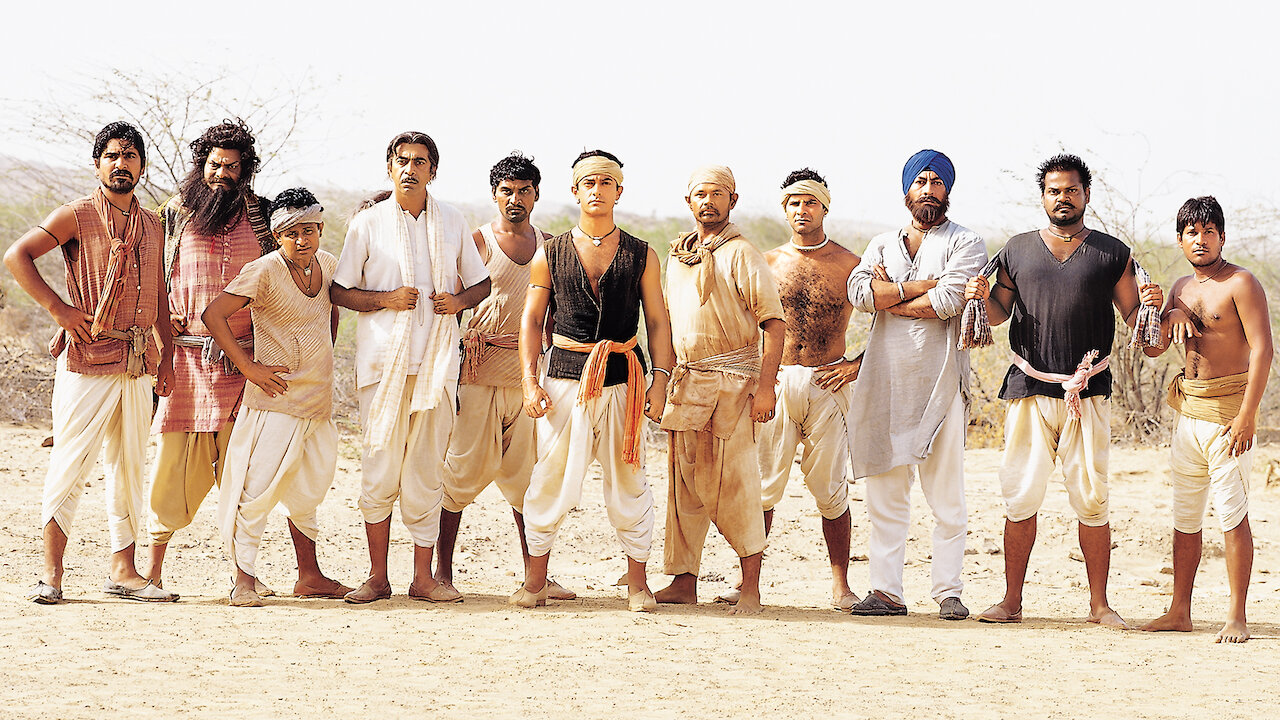
Lagaan (2001), despite its runtime of nearly four hours, was a blockbuster success. The story of underdog villagers fighting a colonial authority — through cricket, no less — was, in hindsight, designed to succeed. It was written and directed by Ashutosh Gowariker.
All this while, Shah Rukh was building up a rare kind of superstardom. A 1994 poll of 10,000 film fans conducted by Movie Magazine saw him picked as the country’s second-favourite hero after Amitabh Bachchan. And that was before 1995, and Dilwale Dulhania Le Jayenge. Aditya Chopra’s directorial debut was a classic boy-meets-girl, boy-fights-world-for-girl tale, and SRK wasn’t interested at first. He was still largely playing the anti-hero, and revelling in it. It took many meetings for Chopra to convince him to accept the role. So much would never be the same again.
Overnight, he became immortalised as Raj, arms outstretched, goofy grin, eyes welling up with tears. Over and over, for years, he would fight the same fight, struggling for his love in Dil To Pagal Hai (1997), Kuch Kuch Hota Hai (1998), Mohabbatein (2000), Kabhi Khushi Kabhie Gham… (2001). He swept up awards and cemented his position. Became the poster boy for post-liberalisation India and the darling of the NRI audience.
The downside was that he couldn’t play anything else. Attempts such as Baadshah (1999; he played a private eye) and Phir Bhi Dil Hai Hindustani (2000; he played a reporter) found few takers.
Meanwhile, Aamir made two decisions that set him further apart from the pack. In 1995, he announced that he would not accept any awards or attend any awards functions. Then, in the early Aughts, he announced he would only work on one film at a time. In an age when actors still often shot for different films in the same day, this announcement was greeted with sniggers. But he stood by it. The results — Lagaan (2001), Dil Chahta Hai (2001), Rang De Basanti (2006), Taare Zameen Par (2007), 3 Idiots (2009) — add up to a string of chart-toppers. He was still a superstar, but he was doing it very, very differently.
And then it all changed. By the turn of the millennium, multiplexes were opening up screens to smaller productions; then the internet and the streaming ecosystems altered the game further. As the market became more scattered and diffused, the idea of the superstar became almost anachronistic. Shah Rukh, Aamir and Salman Khan are now headed into their senior years (all three turn 57 this year), and still there has been no successor. It is likely there will never be another trio in Bollywood quite like this one.
(Karishma Upadhyay is a film journalist, critic and author of Parveen Babi: A Life)
