
The sound of Hindi cinema was changing, and so were the names atop the charts. Laxmikant-Pyarelal stormed the stage. Kalyanji-Anandji came into their own. RD Burman made a splash. There was jazz and Latin music, Western arrangements and Indian raags.
It was their debut movie as music directors, and film-music buffs were already talking about how they’d rule in the years to come. With Parasmani in 1963, Laxmikant-Pyarelal stormed the world with songs such as Hasta Hua Noorani Chehra, Ooi Maa Ooi Maa, and Roshan Tumhi Se Duniya. The following year, they made waves with the soundtrack of Dosti, which included the Mohammed Rafi hit Chahoonga Main Tujhe.
Over the next couple of years, another young music director would make a splash. RD Burman assisted his illustrious father SD Burman. He even played harmonica in Dosti, before making his debut as a music director in 1961, with Chhote Nawab.
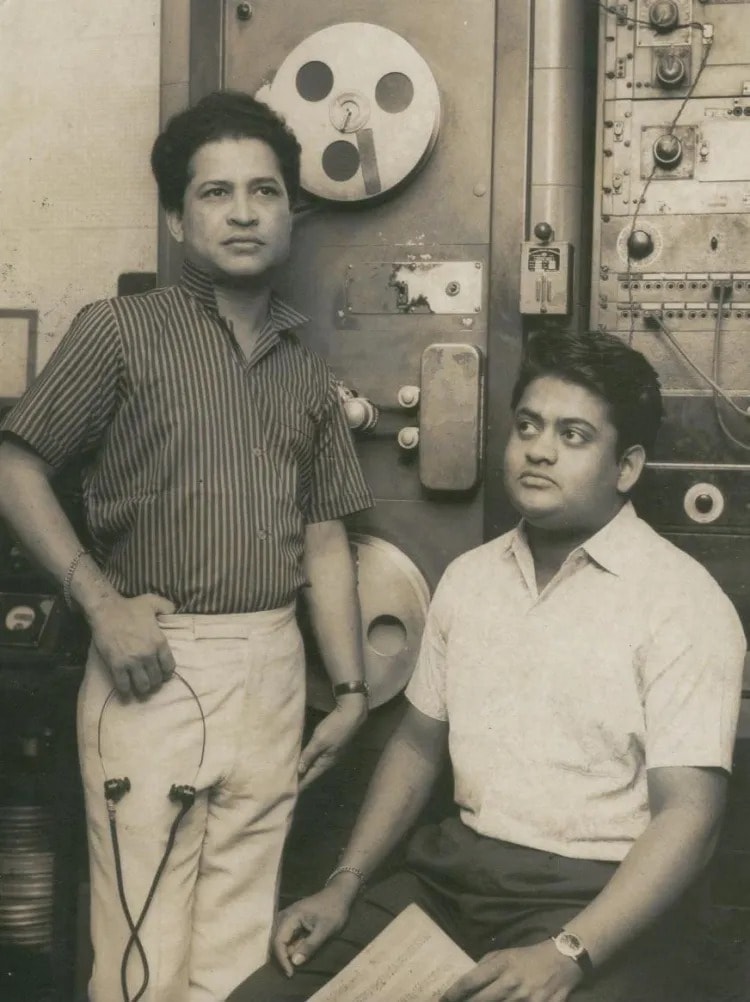
Laxmikant-Pyarelal used a lot of Indian melodies, and their easy-to-hum tunes catered to the masses.
His first major success came in 1966 with Teesri Manzil. It was a new sound, with guitars, horns and lots of drums, combining elements of rock ‘n’ roll with a unique personal style. Aaja Aaja and O Hasina Zulfonwali heralded the arrival of RD.
In looking back at the Hindi-film music of this period (1962-77), it becomes clear that the mid-1960s saw a shift. While Laxmikant-Pyarelal and RD Burman began bagging more films, Kalyanji-Anandji came into their own.
Among the older music directors, SD Burman and Shankar-Jaikishan continued to be prolific, but Naushad and OP Nayyar slowed down. Madan Mohan, Roshan, Salil Chowdhury and Ravi, who started off in the previous decade, blossomed during this period.
By the early 1970s, RD Burman, Laxmikant-Pyarelal and Kalyanji-Anandji were everywhere, releasing hit after hit. Salil Chowdhury had some great soundtracks, including Anand, Rajnigandha, and Chhoti Si Baat in the 1970s, and the decade saw the rise of Ravindra Jain, who made simple fare shine in Geet Gaata Chal, Chitchor and Tapasya.
In 1975, Rajesh Roshan created the soundtrack for the evergreen Julie. Khayyam, who had been on the scene for years, had the brilliant Kabhi Kabhie in 1976.
The change, of course, was not only in the big names on the scene, but also in the sounds. Laxmikant-Pyarelal used a lot of Indian melodies, and their easy-to-hum tunes catered to the masses. RD Burman incorporated elements of jazz and Latin music, and Salil Chowdhury used Western classical arrangements. Though even Shankar-Jaikishan had used Western flavours, the RD sound was quite different. And like Shankar-Jaikishan, RD didn’t stick to Western influences. Some of his most popular songs are based in Indian classical raags.
In comparison to music directors, the change in terms of singers was less pronounced. Lata Mangeshkar continued to rule. Asha Bhosle, who had some great duets over the years, got some fabulous solo songs in the 1970s. Peppy songs such as Piya Tu in Caravan and Dum Maro Dum in Hare Rama Hare Krishna (both 1971) gave her a unique identity.
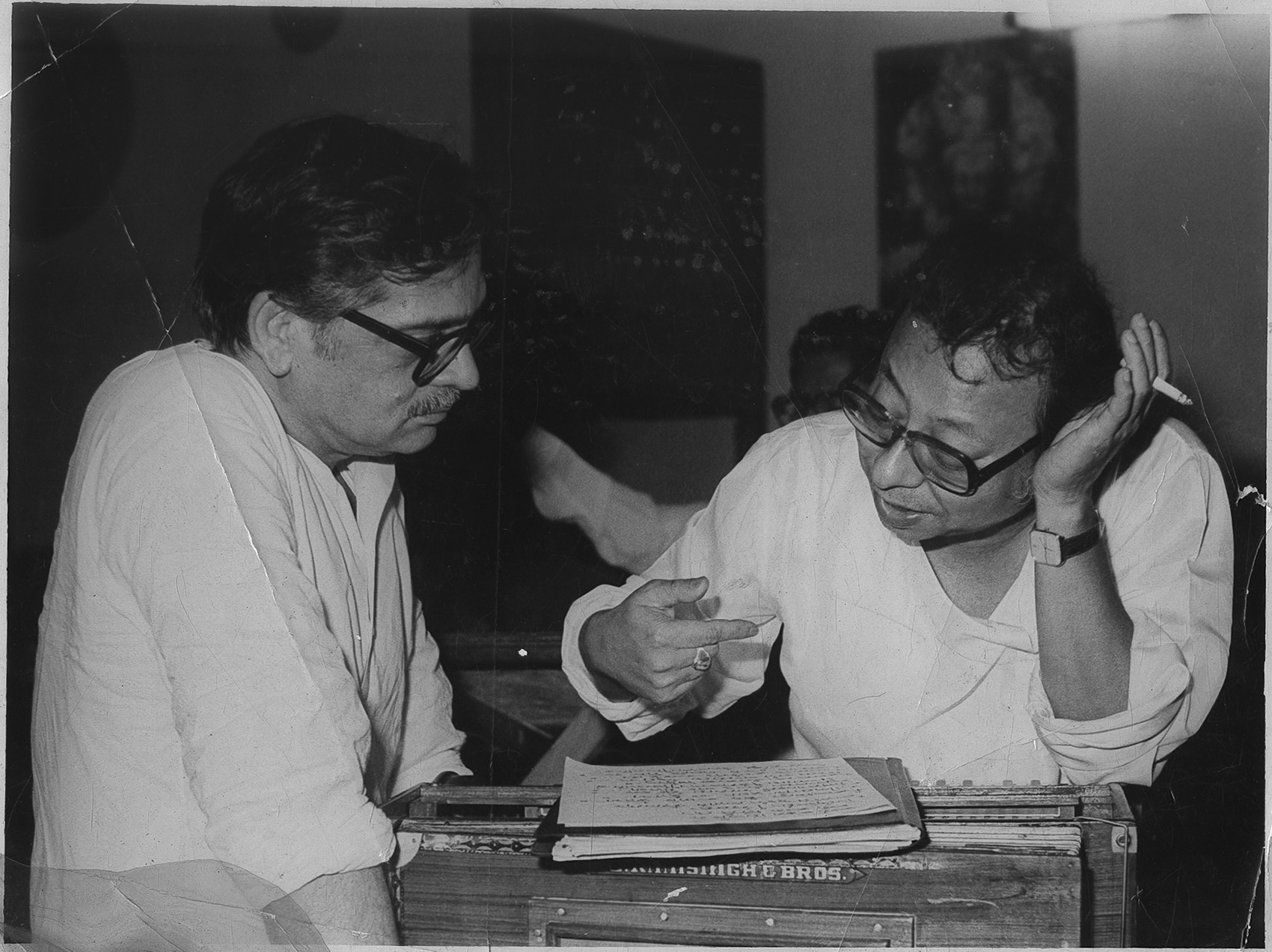
RD Burman with his father SD Burman. RD Burman’s first major success came in 1966, with Teesri Manzil. It was a new sound, with guitars, horns and lots of drums, a unique personal style.
With Geeta Dutt’s career affected by her failing health (she had cirrhosis of the liver),and Shamshad Begum, now in her 40s, getting fewer offers as the new generation took over, Asha climbed to No 2 in the rankings. Newer voices like Suman Kalyanpur, Vani Jairam, and Hemlata began getting breaks.
Among the men, Mohammed Rafi was unbeatable in the 1960s, until the Kishore Kumar phase began with Aradhana in 1969. Singing for superstar Rajesh Khanna, and doing iconic numbers for other stars too, Kishore was all the rage in the 1970s. Mukesh continued until his sudden death from a heart attack in 1976, aged 53.
Mahendra Kapoor and Manna Dey, star singers of the 1950s, had their share of hits. Jaspal Singh had a brief phase, and Kerala singing star Yesudas arrived on the Hindi-film music scene. But the 1950s star Talat Mahmood cut down on work, unhappy with the new kinds of songs.
The world of lyricists saw some interesting changes. Two veterans, Shailendra and Raja Mehdi Ali Khan, died in 1966, and Shakeel Badayuni died in 1970. While other old-timers such as Majrooh Sultanpuri, Sahir Ludhianvi, Rajendra Krishan, Kaifi Azmi and Hasrat Jaipuri continued writing, a newer crop of lyricists was making a mark. Anand Bakshi was the most prolific, using simple words to spin elegant numbers.
Gulzar had his own style of imagery-filled writing. Others such as Neeraj, Yogesh, Gulshan Bawra, Naqsh Lyallpuri, Santosh Anand and Indeevar did quality work, though they took on fewer projects than the younger crop. Ravindra Jain also wrote the lyrics for many of the songs he composed.
Overall, though this period brought about many changes and experiments, the traditional style of film music continued to flourish too. It was a very interesting melange where a classical, raag-based romantic song could be heard alongside a breezy pop ditty. Naturally, music from this era still finds a dominant place in today’s remixes, retro radio shows and talent competitions. It is evergreen in every sense.
