
Between the dialogue-baazi of the mainstream and the artistry of the new wave, middle-of-the-road cinema made a smooth landing. It took popular elements such as songs, comedy and melodrama and placed them in tales of ordinary middle-class people, to create memorable hits.
A close look at the Indian cinema of 1970s reveals a fascinating story of the two diametrically different personas of a young country: the angry young ambitious man, aka Amitabh Bachchan, and the amiable middle-class boy-next-door, aka Amol Palekar. The two not only coexisted but flourished. The Angry Young Man was one who famously said, “Main phenke hue paise nahi uthata”. The amiable Amol was one whose future hinged on his clerical Grade 2 promotion at Jackson Tolaram Pvt Ltd (in Chhoti Si Baat). The Angry Young Man has gaadi, bangla, bank balance... but no maa. Amiable Amol had a maa who wanted her son to have gaadi, bangla, bank balance, so he could marry a middle-class girl of his parents’ choosing.
Recently, while watching Deewar again, I realised it’s the only film in which the Bachchan and Palekar tropes co-exist as brothers. Don’t be alarmed. Look closely and you’ll see that Ravi Verma (Shashi Kapoor) is actually an Amol Palekar character, lifted from a Basu Chatterjee set and transplanted into the Salim-Javed universe.
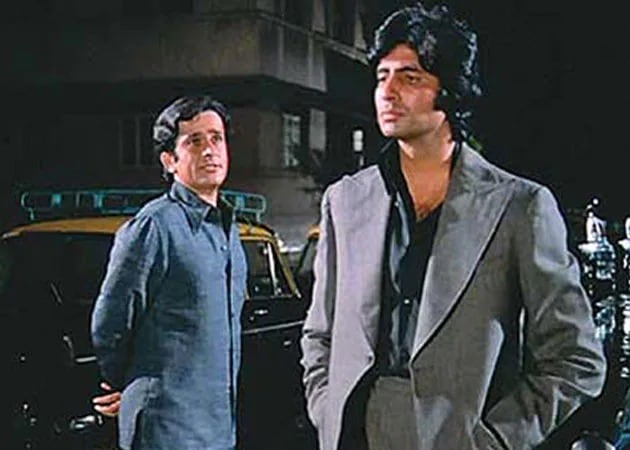
In a slight departure, look closely at Shashi Kapoor’s character in Deewar. Isn’t he really more of an Amol Palekar sort, lifted from a Basu Chatterjee set and transplanted into the Salim-Javed universe?
The origins of this duality can be traced to 1969, which was a watershed year for Hindi cinema as three fascinating events occurred. Fascinating because no one realised then that these unconnected, contrasting events carried within them the road map for the next decade of Hindi cinema.
It was in 1969 that the romantic star Rajesh Khanna kicked off his phenomenal superstardom. It was also the year Bachchan made his debut, with the box-office flop Saat Hindustani. And, 1969 witnessed the birth of what’s now called the parallel cinema movement, with the release of Mani Kaul’s Uski Roti, Mrinal Sen’s Bhuvan Shome, and Basu Chatterjee’s Sara Akash.
By 1974, the Rajesh Khanna “phenomenon” was fading and Bachchan’s angry young man was beginning to capture the imagination, particularly of the country’s youth. In the same year, Shyam Benegal’s Ankur, a starless, songless, melodrama-less film, shocked everyone by becoming a sleeper hit. With his next two films, Nishant and Manthan, which were also hard-hitting tales set in rural India, Shyam Benegal became the poster boy of the new wave.
It was a truly captivating phase, the “dialogue baazi” of commercial actors such as Bachchan and Dharmendra coexisting with the realistic, grounded and intense performances of Om Puri, Anant Nag, and Naseeruddin Shah. On the covers of magazines such as Stardust and Star & Style, mainstream stars and filmmakers were branding the parallel movement “elitist” and “boring”. Cheerleaders of the parallel retaliated by calling the commercial films and their stars “trashy”. Between these two ends of the spectrum, middle-of-the-road cinema made a smooth landing with Basu Chatterjee’s surprise hit, Rajnigandha, in 1974. It was a game-changer.
The middle-of-the-road films took popular elements such as songs, comedy and melodrama from commercial cinema and placed them in tales of ordinary middle-class people. This unique blend created lighthearted, memorable films starkly different from the intense cinema of Benegal or the later films of Govind Nihalani.
While Hrishikesh Mukherjee and Gulzar are also known as pioneers of this middle-of-the-road cinema, they cast mainstream stars (Rajesh Khanna, Bachchan, Jeetendra, Hema Malini, Sharmila Tagore etc) in their middle-of-the-road films, while Basu Chatterjee’s initial hits featured the likes of Palekar, Rakesh Roshan and Anil Dhawan in lead roles.
Chatterjee’s trilogy Rajnigandha, Chhoti Si Baat and Chitchor, released during the Emergency, were hugely successful without a saleable “hero”, an evil thakur, a slimy sahukar or comic-book villains such as Gabbar and Teja. In these films, the struggles and uncertainties of middle-class life played the villain, and the average middle-class protagonist’s coming-of-age triumphed in the end, a celebration of small victories in life — the coveted promotion, the love of the girl next door, the new two-wheeler or, finally, a happy joint-family home.
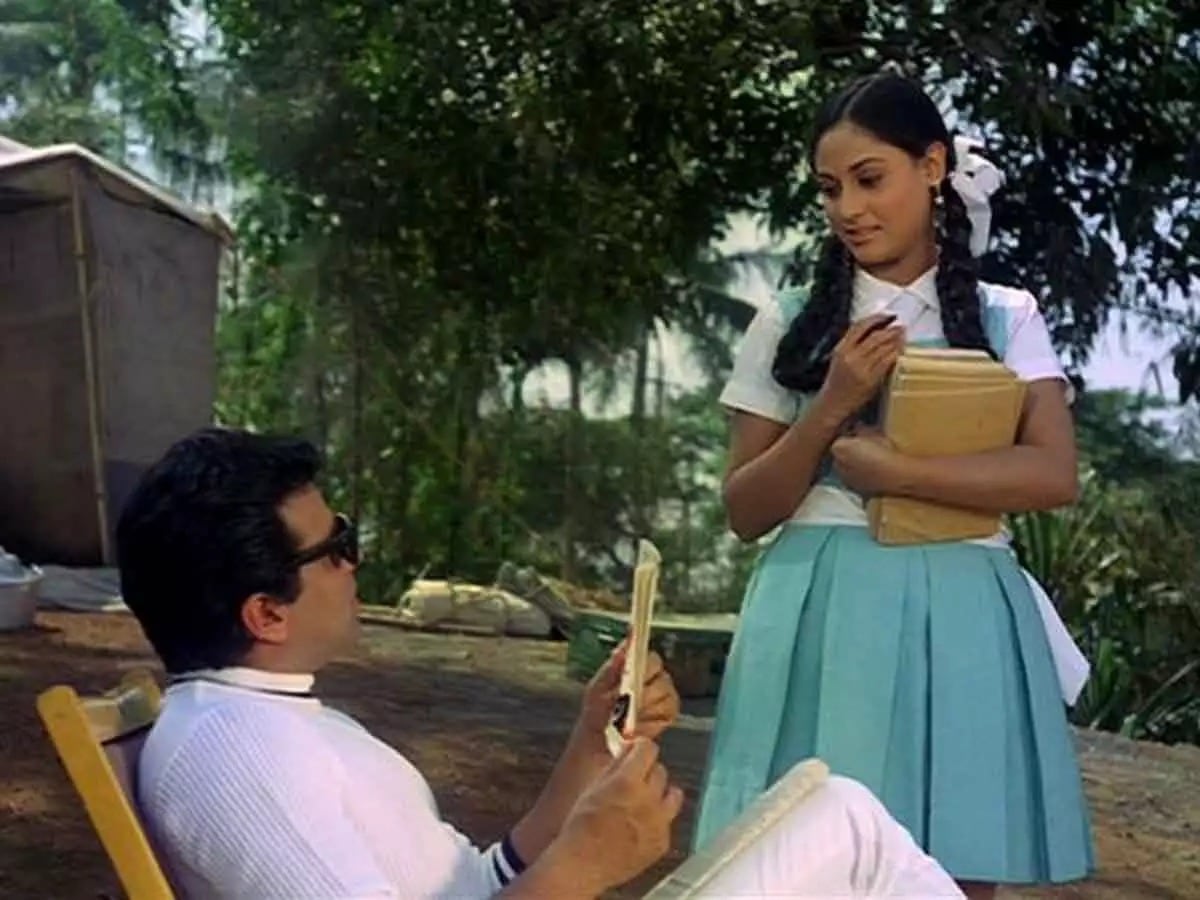
Dharmendra and Jaya Bhaduri in Hrishikesh Mukherjee’s Guddi.
While mainstream films had lead female actors for the usual song-and-dance routines, here the modern middle-class woman’s perspective and choices were also in focus. Piya ka Ghar had a young couple living in a cramped Mumbai chawl, craving privacy. Rajnigandha and Chitchor, dealt with the uljhan, or dilemmas, of a young woman in love. Gulzar’s Mausam and Guddi had headstrong women, Baton Baton Mein had Christian families at its centre, while Khatta Meetha had middle-class Parsis. Their conflicts were suburban and dramatic; their resolutions simplistic, with a dash of humour.
In these films, the city itself was often a character too. The love story in Chhoti Si Baat unfolds in the BEST buses of Bombay, while the love story of Tony Braganza and Nancy Perreira blossoms in a local train in Baton Baton Mein, and the iconic Mukesh song Kai Baar Yun Bhi Dekha Hai (Rajnigandha) has Vidya Sinha’s dilemma play out in the back seat of a kaali-peeli Bombay taxi.
Just as Chatterjee’s films were an ode to Mumbai, filmmaker Sai Paranjpye made the Delhi of the 1980s an integral character in her romantic comedy, Chashme Buddoor. The characters live in Defence Colony, landmarks include Delhi University, Mandi House, Lodhi Gardens and Tughlakabad Fort.
In the 1980s, with the rise of television in India, middle-class characters and their stories shifted platforms. Hrishikesh Mukherjee, Gulzar, Saeed Mirza, Aziz Mirza and even Basu Chatterjee began to create classics for the small screen. Their heartwarming TV shows (Rajni, Darpan, Mirza Ghalib, Hum Hindustani, Talaash, Kirdar, Nukkad, Circus, Byomkesh Bakshi, Ye Jo Hai Zindagi) contributed to what is still called the Golden Age of Doordarshan.
Today, when you watch a Vicky Donor, Bareilly ki Barfi, Ramprasad ki Tehrvi or Dum Laga Ke Haisha, you realise that the legacy of the middle-of-the-road cinema of the 1970s lives on.
