
 E-Paper


Vanuatu ancestral relics, trafficked as art to New York, return home with FBI escort
U.S. Deputy Secretary of State Kurt Campbell attended a ceremony on Thursday in Port Vila, the capital, to repatriate five crates of human relics.

 Prefer HTon Google


When a crate escorted by the FBI from New York was opened this week at the national museum of the Pacific island nation of Vanuatu, Kaitip Kami instantly recognised the statue inside.
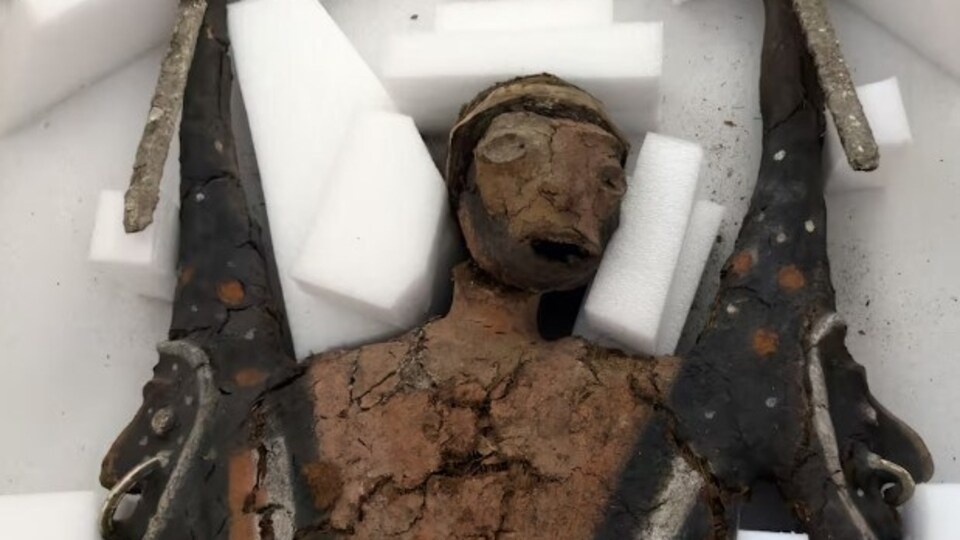
It incorporated the skull of a male ancestor of the hill tribes of Malakula, his island home, said Kami, a curator at the Vanuatu Cultural Centre.
"By looking at it, I knew straight away," he said. "I recognise it, where it belongs, up in the bush."
U.S. Deputy Secretary of State Kurt Campbell attended a ceremony on Thursday in Port Vila, the capital, to repatriate five crates of human relics, in the biggest return of such sacred items, ending an eight-year FBI investigation.
The contents were two skulls moulded with mud and three large effigies, called rambaramp, each containing the skull of a man, uniquely painted to depict the final stages of his life, Kami said.
Probably stolen from a sacred men's house in a bush village, they were seized by the FBI in 2016 from the estate of a deceased New York collector who had amassed 200 sacred items from indigenous cultures around the world.
"New York is the art capital of the world, and because of that, is the art crime capital of the world," said Chris McKeogh, an agent in the FBI's art crimes team, who travelled to Vanuatu for Thursday's event.
"We don't know who looted them or took them out of the country, but there is a market in the world for human remains, they are trafficked unfortunately and they are collected," he said in an interview.
The return of the Vanuatu effigies, the largest of them 11-1/2-ft (3.5-m) -long and weighs 700 pounds (318 kg), posed the biggest logistical challenge the art crime team has faced, McKeogh added.
"They are extremely fragile, probably, the most fragile, objects that we have ever come across," he said.
Once seized, they sat in temperature-controlled storage facilities in New York as FBI investigators sought clues to their origin.
In 2018, they contacted anthropology professor Holly Cusack-McVeigh at Indiana University to help with the "massive, seized collection", she said.
Cusack-McVeigh, who recruited her students to identify comparable items in museums worldwide, said the Museum of New Zealand was able to identify the Vanuatu items.
"Throughout the 18th and 19th centuries, there was a robust trade in human skulls, funerary items (burial objects) and sacred items from cultural groups throughout the Pacific," she told Reuters.
The FBI's Rapid Deployment Team designed a plan for officers to escort the five custom-built crates on a multi-leg journey from Washington to Vanuatu, where the U.S. opened an embassy this year.
The Smol Nambas tribe in Malakula stopped practicing rambaramp 50 years ago, after converting to Christianity, said Kami. They can identify a man by his effigy.
The tribe did not bury its dead, instead placing bodies on a platform for up to 50 days, before removing the bones. After a year they made a statue, moulding the skull with mud and plant materials and placing it in a sacred men's house.
"That's where people go and steal all these things," Kami said.
The rambaramp should not be displayed outside Vanuatu because it is "part of a human being", Kami said.
"We are really glad to receive our ancestors - it's a happy moment for us."
The effigies are the museum's biggest repatriation in its efforts to seek the return of relics including human remains from around the world, he said.
"We deeply respect cultural heritage, the sanctity of these artifacts," Campbell told reporters in Vanuatu.


