
Narendra Modi fulfilled a certain desire within the Indian electorate — for a strong leader, a Hindu leader, a clean leader, a pan-India leader, and a leader who was all for stronger national security. He projected himself as all of this, enabled by shrewd and innovative use of social media and a return to mass rallies as a form of political campaigning. And into his tenure, he has added the image of being a pro-poor leader, which is now arguably his biggest strength.
A nation in flux
In the middle of December in 2007, India changed. Or more accurately, Gujarat threw up an electoral outcome that would change India. The unexpected face of that transformation – or new India, as his government likes to call it – has been Narendra Modi, a RSS pracharak-turned BJP organiser-turned Gujarat chief minister-turned Prime Minister of India. In 2007, he decisively won a second term as CM of Gujarat with a fusion of Hindutva and economics, setting the stage for his eventual rise in national politics. Read more
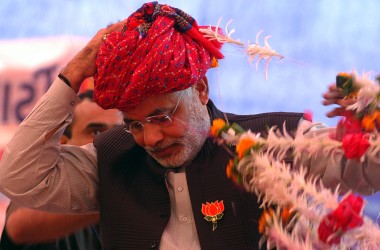
Gujarat Chief Minister Narendra Modi at an election rally in Gujarat’s Dang district.
Narendra Modi’s national victory reflected the transformation that had already been underway in Indian society; his win then shaped a new set of changes.
The electoral salience of corruption and misgovernance in India has waxed and waned over the past seven decades. The 2014 election yet again demonstrated that, under the right conditions, an anti-corruption plank can be an election winner. In the years leading up to the poll, India was rocked by sustained protests sparked by the “India Against Corruption” movement. Although the movement would give birth to the upstart Aam Aadmi Party and turn Arvind Kejriwal into a household name, it also served as a convenient Trojan Horse for the opposition Bharatiya Janata Party (BJP). No one read the political tea leaves better than then-chief minister of Gujarat, Narendra Modi, the prime ministerial face of the BJP’s 2014 campaign.
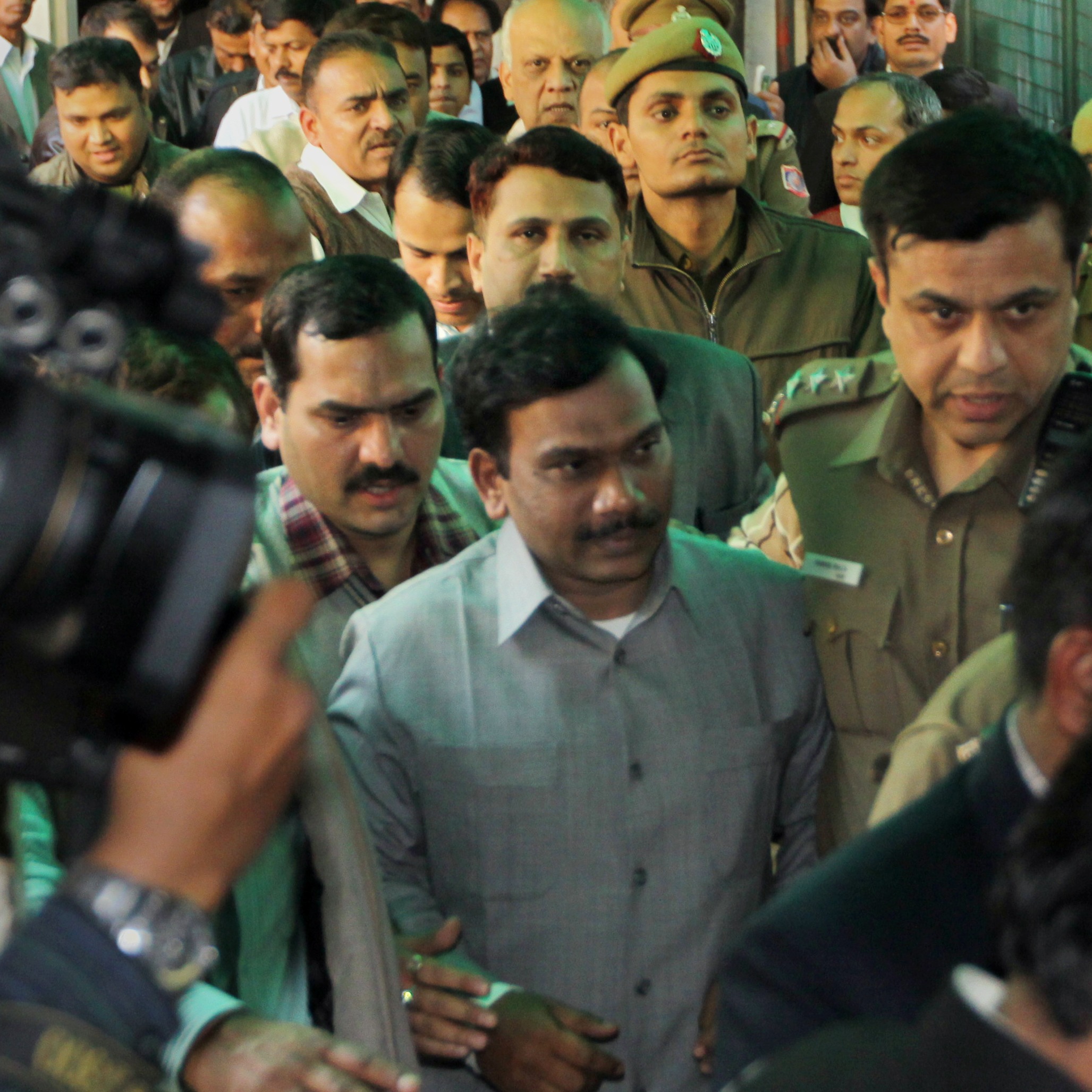
Former telecom minister A Raja produced in court.
The final years of the United Progressive Alliance (UPA)’s second term were consumed by a toxic brew of graft allegations, economic mismanagement, and policy paralysis. Modi challenged the status quo by portraying himself as a man for all seasons. Reformist chief minister who presided over the fastest growth rates in India? Check. Savvy marketer with a penchant for wooing foreign investors? Check. Hindutva hardliner who would put an end to liberal, “pseudo-secular” pandering? Check. Read more
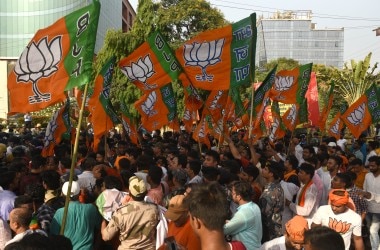
A BJP protest at Salt Lake in Kolkata in April 2022.
The BJP’s victory at the national level in 2014 was accompanied by many victories in state elections, often with large majorities of seats. Even though the party has won less than half of the 50 state elections that have taken place since 2014, it has done much better than its opponents, particularly the Congress, as political scientist Sanjay Kumar recently observed in a tweet. The Congress has won seven, regional parties have won 19, and the BJP and its allies have won 24 state assembly elections in this period.
The BJP’s string of victories helped create an image of invincibility, prompting political scientists Milan Vaishnav and Suhas Palshikar to suggest that India was entering a new phase of dominance or hegemony, propositions that were confirmed with the BJP’s victory in 2019. In the Hindi belt, the BJP and its allies won 201 out of 226 seats in 2014, and 202 in 2019. Read more
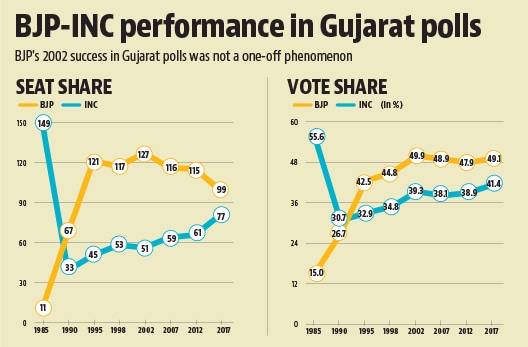
The political genius of Narendra Modi lies in fact that he married his Hindutva appeal to an economic narrative. The signs of this were visible as early as in 2003, when Modi, as the chief minister of the state, launched the first Vibrant Gujarat summit courting both domestic and international capital. In the later years of Modi’s chief minister-ship, the summit would become the biggest stage of what came to be known as the Gujarat Model of economic development. In the fifth of five interactive graphics, we track 75 years of politics in data. Read more
Compiled by Prashant Jha. To see why he picked these books, click here
