
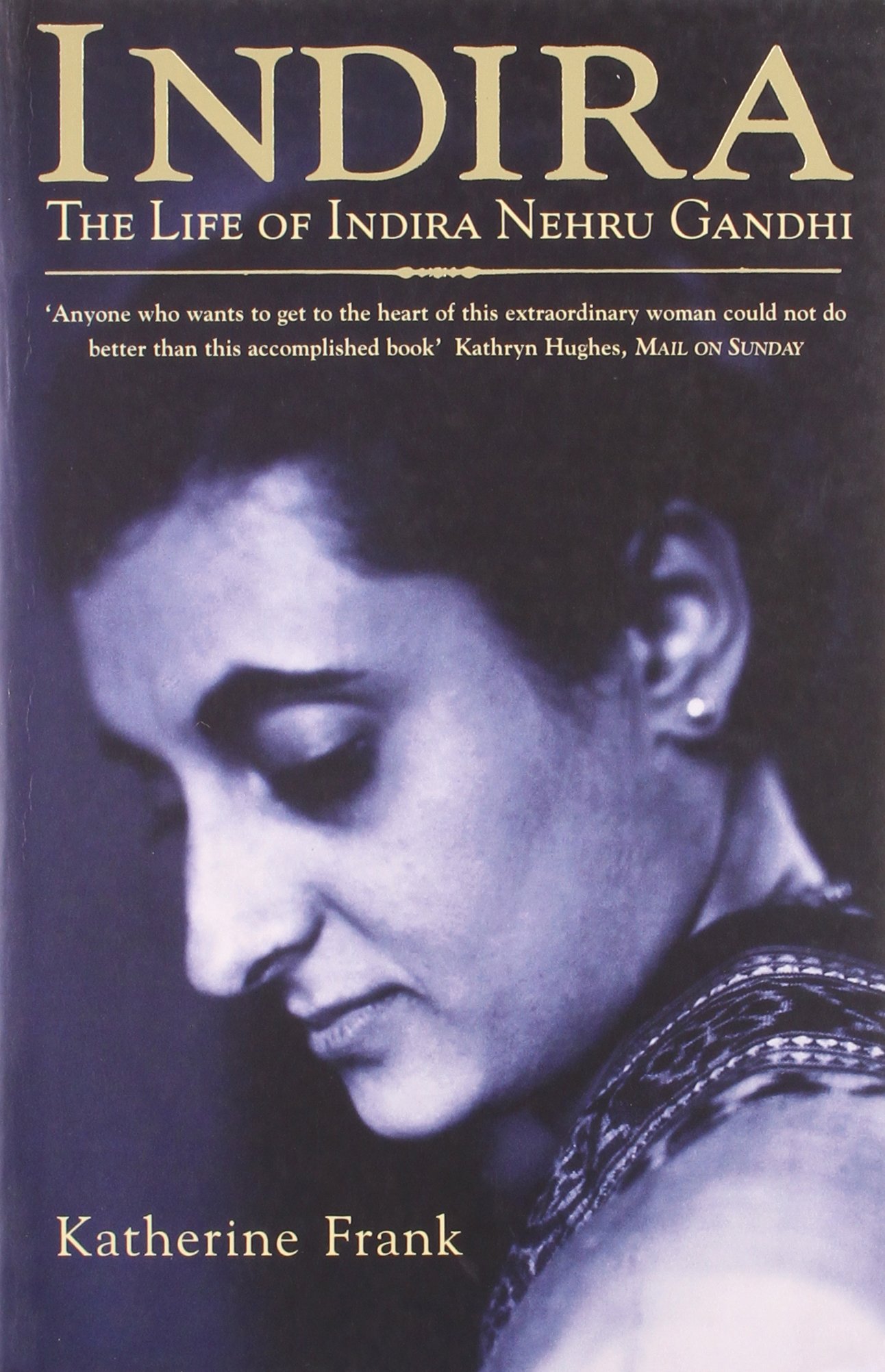
If India’s first 15 years were about democratic consolidation, in the next 15 years, India turned towards political centralisation and populist Left-wing economics. And the symbol of this change was Indira Gandhi. Gandhi’s elevation in 1966 was sponsored by the Congress old guard, which saw her as a pliable leader they could control. But she succeeded in establishing herself as the true inheritor of the Congress legacy, sidelining her rivals, planting loyalists in key positions and ensuring control over key institutions. She nationalised banks. She abolished privy purses. She stepped up State control of the economy. The 1971 election victory and the Bangladesh victory added to her aura of invincibility. But then, in the only formal interruption to India’s democracy, she imposed the Emergency in 1975.
When India turned
For the first 15 years of independence, Prime Minister Jawaharlal Nehru’s leadership had provided political stability. But by the early 1960s, India was entering a new political phase. In the span of a decade, India fought three wars. By the late 1960s, Congress hegemony was finally being challenged, both by a set of Opposition parties in states and due to internal factionalism at the Centre.
The economic policy took a definite leftward orientation. Social unrest was intensifying. And for the only time in modern Indian history, India suspended its experiment with democracy and declared an internal emergency, only for citizens to resoundingly reject this turn towards authoritarianism.
Read more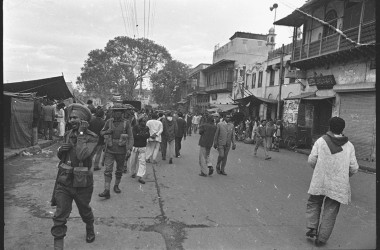
Security personnel patrol Delhi’s Jama Masjid area after the declaration of curfew.
It was Nehru’s daughter, Indira Gandhi, who was the face of India through this churn as India turned, for better and for worse.
On December 16, 1971, a day after decisive Indian Air Force (IAF) strikes on the Governor’s house broke the will of the East Pakistan administration to resist the Indian assault, the Indian Army rolled into Dacca and forced the surrender of 93,000 Pakistani troops across East Pakistan along with their commander, Lieutenant General Niazi. Despite its fractured polity, for once, India was united across party lines as its leadership combined realpolitik with genuine empathy for victims of the genocide. On a philosophical plane, this ensured that all the tenets of a “just war” were followed by the Indian State and its armed forces, both in letter and spirit.
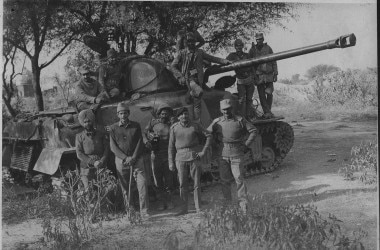
Indian Army soldiers after capturing an enemy armoured vehicle.
It was only after exhausting all the other means of diplomacy and leverage did India decide to use force to further its national interest that was largely inward-looking, protective and not expansionist in nature. Even Kautilya would have approved as he has emphasised in his treatise Arthashastra that waging war must be the last resort of the king. Jus in Bello or the right reason to go to war cannot be faulted on any count. Read more
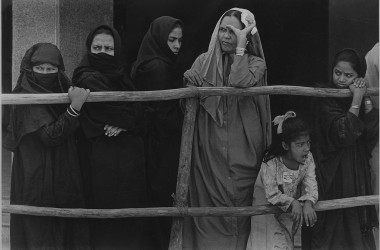
Women queue at a polling booth in New Delhi’s Nizamuddin.
The Congress system worked for the first 29 years or so of Independent India, but ultimately cracked under both internal and external pressures. At the same time, successful alliance experiments among regional parties would lead to the re-organisation of the opposition space, increasing the competitiveness of India’s elections. However, groups that were under-represented under the Congress regime remained by and large under-represented under new governments, too.
Even though the Congress still received wide support from Muslim communities, it never felt compelled to provide them with substantial representation. Women were also absent from the Lok Sabha in the early years. Finally, despite the significant political shifts that took place during these 15 years, the caste profile of the Lok Sabha did not change much, at least in the Hindi belt, for which data is available. The representation of upper castes was way more than twice their demographic weight. When we look at opposition parties, we see that the caste profile of major players did not differ much from the Congress’, the only variation being the degree of upper-caste dominance. Read more
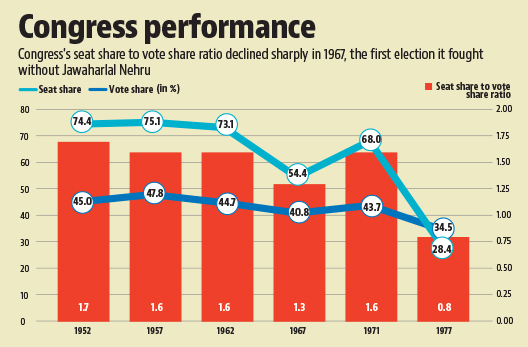
1962 was the last national election fought by the Congress party under Jawaharlal Nehru’s leadership. 1977 was the first general election when the Congress lost power in the country. This second 15-year period is best described as the phase of the dismantling of what is popularly referred to as the Congress system in Indian polity. Thanks to the leadership role it played in the freedom struggle, the Congress was the hegemonic political party when India won independence. Things changed drastically in the 1967 elections, which were fought under the leadership of Indira Gandhi.
Even though the Congress vote share dipped only marginally – it came down from 44.7% in 1962 to 40.8% in 1967 – its seat share fell drastically. In the second of five interactive graphics, we track 75 years of politics in data. Read more
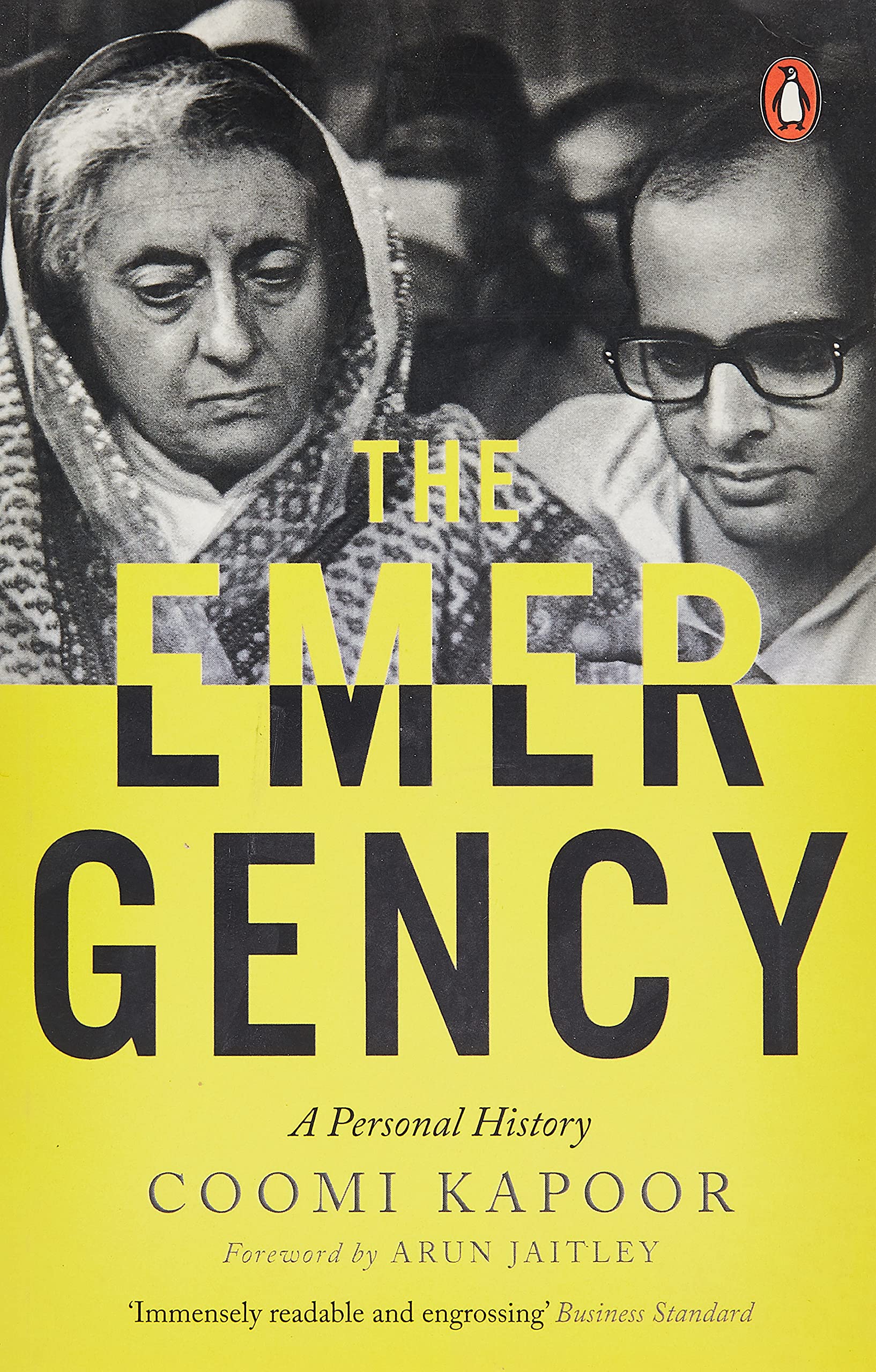
Compiled by Prashant Jha. To see why he picked these books, click here
