
Indira Gandhi imposed the Emergency in 1975, the only formal interruption to India’s democracy, but in the 1977 elections, Indians decisively rejected this authoritarian turn. The Janata Party came to power, but torn apart by internal contradictions and leadership tussles, the experiment collapsed, leading to Gandhi’s return. More significantly, the 1980s inaugurated a period of unprecedented challenges to India’s political stability, social harmony and internal security. This was a period in which India was hit by a storm of violent identity-based movements, both ethnic and religious, and often fused with territorial aspirations.
When India was challenged
If India, as an infant republic, consolidated its domestic constitutional order in the first fifteen years after independence, in its adolescence, it grew in ways good and bad. Both at the top, and on the ground, there was a period of political renegotiation -- between the Centre and states, which culminated in the rise of regional parties; between different caste groups,
which culminated in reservations for backward classes and an anti-Mandal agitation; between different visions of India and the role of religion in public life, which culminated in the Ram Janmabhoomi Mandir agitation of the late 1980s; and between the Centre and identity based secessionist movements, which saw armed rebellions threatening India’s territorial integrity.
Read more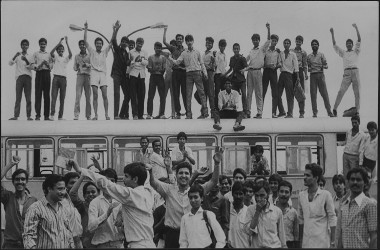
University students atop a DTC bus, protesting the Mandal Commission report, on August 27, 1990.
India faced a set of extraordinary challenges that were perhaps inevitable with being a young adult republic.
Public violence and systemic disorder were the defining themes of the 1980s. The causes were multiple and stemmed substantially from the weakening of India’s institutions the previous decade. A powerful political executive with few checks, a deeply entrenched culture of subservience to power and a politics that had taken to heart Machiavelli’s advice that “It is necessary for a prince wishing to hold his own to know how to do wrong” were a combustible mix. In attempting to hold their own, the country’s princes would inflict multiple wrongs on the country’s body politic and whose wounds continue to inflict pain across generations. Read more
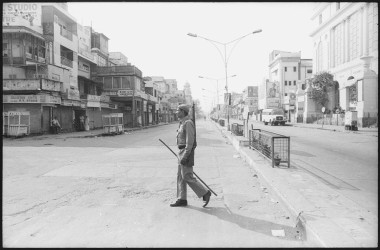
Armed police personnel at Chandni Chowk after curfew was declared on November 2, 1984.
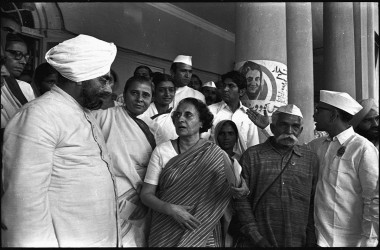
Former prime minister Indira Gandhi at an AICC meeting on April 30, 1977.
The Congress lost the 1977 election, but was not routed. While it was crushed in the north (shrinking to two seats in the Hindi belt), it did reasonably well in many other states, particularly in the South, which was less affected by the abuses of the Emergency. An amalgamation of socialists, ex-Congress and the Jan Sangh formed India’s first national coalition government under the Janata Party banner. But internal contradictions led to the collapse of the government soon after. The Congress swept back to power nationally in 1980 with 43% of vote share and 67% of the seats. The 1980s were a crucial decade of deep transformation, both of the party system, and of parties themselves. Read more
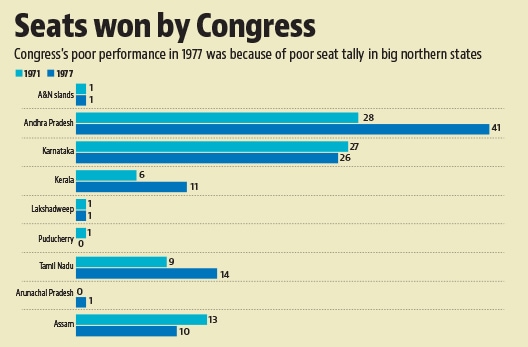
Both 1977 and 1992 are landmark years in the history of independent India. 1977 saw the first non-Congress government at the Centre and 1992 was the year when the Babri Masjid was demolished. While the former was the culmination of what has been described as the dismantling of the Congress system, the demolition, ironical as it sounds, laid the foundations for the hegemonic rise of the Bharatiya Janata Party (BJP) in Indian polity.
While it may sound preposterous at the moment, the BJP’s dominance was hardly a foregone conclusion for a large part of this fifteen-year period. While the Congress’s Lok Sabha tally fell sharply from 352 to 154 between the 1971 and 1977 elections, there was a large regional difference in its performance. In the southern states, the Congress actually increased its seat tally. The actual loss came in the rest of the country, especially in large north Indian states such as Uttar Pradesh and Bihar, where the Congress could not even win a single seat. In the third of five interactive graphics, we track 75 years of politics in data. Read more
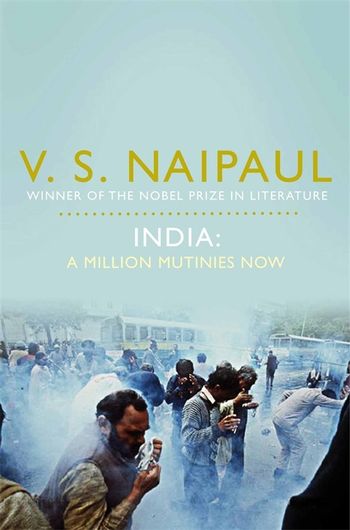
Compiled by Prashant Jha. To see why he picked these books, click here
