
 E-Paper



Review: In Pursuit of Peace by SK Lambah
An insightful look at the impulses that have guided the chronically troubled relationship between India and Pakistan over five decades

 Prefer HTon Google


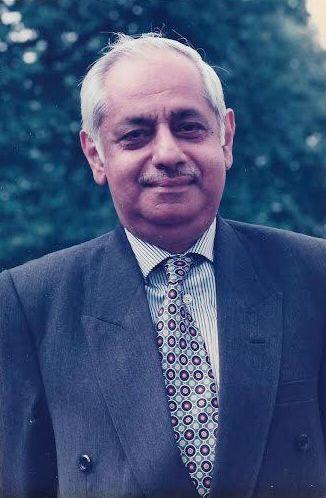
Ambassador SK Lambah fought cancer through the Covid period while working on his book, In Pursuit of Peace: India-Pakistan Relations under Six Prime Ministers. The venerated diplomat with a career spanning over five decades lost the battle against the terminal disease, but not before signing off on the 372-page manuscript of his tenacious tryst for peace with the recalcitrant western neighbour.
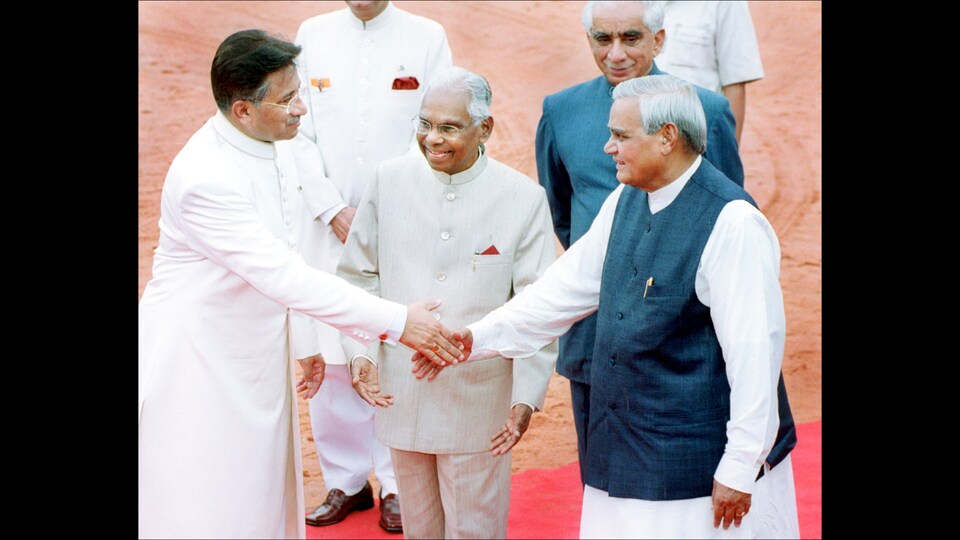
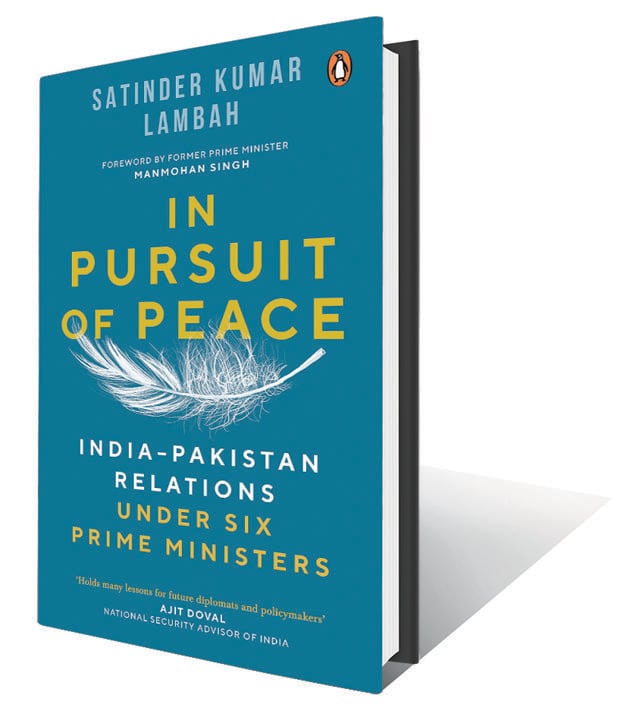
Lambah had two stints in Pakistan as India’s deputy chief of mission and high commissioner. He was Atal Bihari Vajpayee’s special representative for Afghanistan and Dr Manmohan Singh’s special envoy for backchannel talks with Pakistan on Jammu and Kashmir. The dramatis personae on either side of the table changed across decades, not the constantly disheartening outcomes of myriad promising starts.
He also served the country as its ambassador to Hungary, Germany and Russia but was typecast in a positive sense as the man to “go-to” on Pakistan. While seeing him off as India’s envoy to Budapest in 1986, the then minister for external affairs PV Narasimha Rao laughingly called him a “one-country (read Pakistan) man.” Lambah responded with equal banter: Don’t say that loudly Sir as it’ll ruin my career. The minister promptly made amends: “Loudly, I’d always say you are good for everywhere…”
Much is talked and rightly so, about the author’s long engagement with India-Pakistan affairs. But as Ambassador to Moscow, he made possible Jaswant Singh’s call on Vladimir Putin at the cusp of the 1999 Kargil conflict. As secretary of the National Security Council, Putin then ranked above Russia’s foreign minister. A few months later, he became prime minister and thereafter the President.
As it builds, Lambah’s narrative affords priceless insights into two sets of Pakistani minds: one that sought peace and the other that forever worked to undermine it. For instance, he was the only Indian High Commissioner to Pakistan to have had a “structured meeting” with the director general of Inter-services Intelligence (ISI) after the abduction and torture in Islamabad of an official of our mission, Rajesh Mittal.
As ISI chief, Lt Gen Javed Nasir had succeeded Maj Gen Asad Durrani who caused ripples in 2018 by jointly authoring a book with AS Dulat, former secretary of the Indian spy agency, the research and analysis wing (R&AW). When Lambah asked as to why Mittal was so brutally treated, Gen Nasir cited the treatment meted out to a Pakistani military attaché in Delhi, Brig Zahirul Islam Abbasi whom New Delhi declared a persona non grata in November 1998. He was speechless, however, when reminded by the well-informed Indian envoy that the Pakistan army had itself found Abbasi “unsuitable” on promotion as Major General after his expulsion from India. Many lives were lost in a botched up attack Abbasi ordered as the force commander in the Northern area.
Such insights make Lambah’s memoirs entertaining for the lay reader and instructive for practitioners of diplomacy. The book is a ready reckoner on the impulses that guided establishments on either side in the chronically troubled bilateral India-Pakistan ties. For him, Nawaz Sharif, Pakistan’s three-time Premier was always a phone call away; their ties dating back to the days before he became chief minister of (West) Punjab under Gen Zia-ul-Haq. The only time he made himself unavailable was in the immediate aftermath of the December 6, 1992 demolition of the Babri Mosque in Ayodhya.
Lambah recalls that period with deep personal angst. At Finland’s national day reception the same evening, he found a “gleeful” Pakistan foreign office hand directing journalists to him. His response to the prying media was measured. He said he was “extremely unhappy” over the turn of events; that in principle he was against any place of worship being made a target of attack: “But Indian democracy is strong enough to bear such shocks.”
A day later, a mob ransacked the residence of the Indian council general in Karachi, Rajiv Dogra. The rioters raided and destroyed the premises, the Indian diplomat’s wife and children barely escaping their wrath by locking themselves in a room. The arsonists scooted with valuables and cases of alcohol.
The book’s contemporary value is in Lambah’s recollections of his backchannel on Kashmir that lost creative force after President Pervez Musharraf’s exit in the wake of his face-off with the legal fraternity he tried suppressing with disastrous political consequences. For most part, the Pakistani interlocutor in the talks was Tariq Aziz, a taxation service official who had Musharraf’s ear. It took them over 100 hours across 18 meetings in different cities to finalise the pact (that remains in limbo) on the agreeable aspects of Musharraf’s “four-point” formula. Besides demilitarisation, it laid down the road map to self-governance, joint India-Pak mechanism to oversee self-governance and trade and free movement of Kashmiris across the LoC.
The hard work came to naught when, post-Musharraf, the new army chief, Gen Ashfaq Pervez Kayani did a volte face despite being on board as the disgraced President’s DG ISI. Kayani even feigned ignorance about the draft, a copy of which was with the army headquarters. Lambah notes: the document that can be the basis of future negotiations would’ve been lost forever had Aziz not also marked it to the Pakistan Foreign Office. In a paradigm shift from “new borders to no borders”, the proposed pact ventured to change the status quo in J&K without redrawing boundaries. The free movement it envisaged across the LoC aimed to give the people a sense of control of their destiny.
Lambah’s disappointment over the turn of events is writ large in his recipe for the future. Given the uninspiring state of play, his advice to New Delhi is to structure policies to “manage” the relationship with “realistic” expectations. A significant point he makes, without being sanguine about any change in the attitude of the Pakistan army, is that they be kept on board in any prospective dialogue, given their ability to remote-control that country’s foreign policy and domestic politics. While responding to their covert operations, India must not freeze engagement, which needs insulation from domestic electoral compulsions.
The prescription obviously applies to both sides. But is anyone listening?


