
 E-Paper



Ecostani | Election Commission’s delay does not augur well for faith in democratic institutions
EC released the final voting turnout for the first two phases only after the third phase, raising the question of why it was not done earlier.

 Prefer HTon Google


The Election Commission of India (ECI) on Saturday published the data on parliamentary constituency-wise voter turnout in absolute numbers for the first five phases of Indian elections with chief election commissioner Rajiv Kumar claiming that the commission will “eventually” reveal how the people were misled by a series of petitions against the poll body to “sow” doubt.
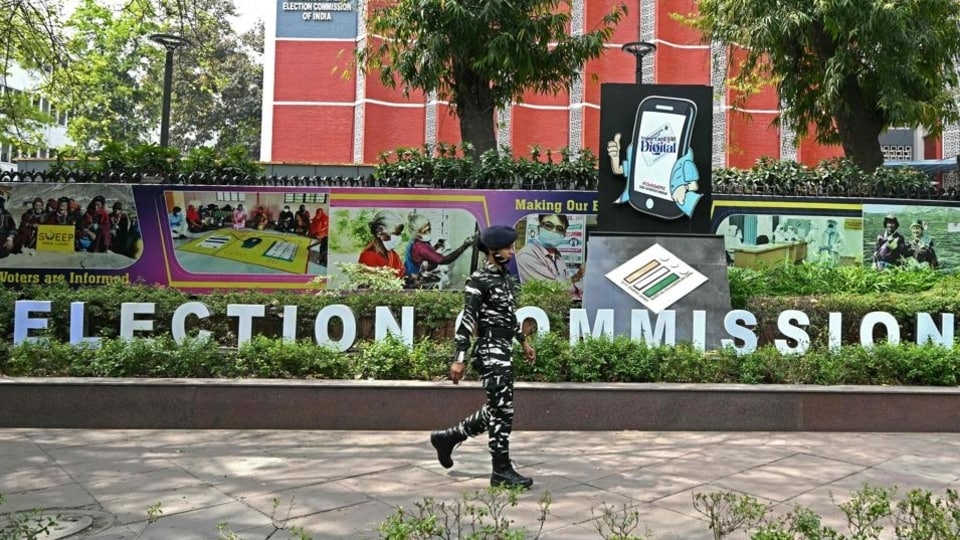
The election commission raised several questions over the petition filed by the Association for Democratic Reforms (ADR), whose petition led to candidates declaring their assets and criminal records in election affidavits. The non-profit petitioned the court to ask the EC to release Form 17 A data on booth-wise polling numbers to ensure that people continue to have faith in the ongoing electoral process.
Providing data on the actual number of people who have voted is not difficult for the election commission because the same is provided by returning officers to the commission on a regular basis. At the end of the voting process, the ECI has data on voter turnout in absolute numbers and it needs to release the same after tallying the Form 17 A voting data collected under the Representation of the People’s Act rules, 1961.
The presiding officer of a polling booth is required to tally the number of votes polled as per Form 17A with the data recorded in electronic voting machines. If there is a mismatch, the officer needs to rectify it immediately in the presence of polling agents of contesting candidates, as per the commission affidavit, thus making it a transparent and trustworthy election process.
Instead of providing the data, the election commission in its affidavit submitted to the Supreme Court on May 22 expressed unfounded apprehension that such data can be “morphed” and misused on social media.
It also questioned the intention of the petitioners, ADR, to seek such data and found “no reason to trust” the Centre for the Studying of Development Societies (CSDS) survey which said that the trust deficit of the election commission among people has increased in 2024 as compared to 2019.
However, the poll panel on Friday got relief from the Supreme Court, which told the petitioners that it will not ask the election commission to perform any specific action with elections underway. The court had kept the petition pending for disposal indicating that it would deal with larger election commission transparency issues after the counting of votes on June 4.
A day later, the EC released the data, which it suspected can be misused saying it was doing so for “transparency” and “participative” electoral process.
While getting the absolute number of votes cast in each constituency was not difficult considering that the EC had released voting turnout in percentages for each Lok Sabha seat, one wondered why the poll watchdog did not release the data after polling for the first phase on April 19. Releasing data on time would have helped the EC to silence its critics much earlier.
This is not the only issue on which EC faced flak. The failure of the EC to release voter turnout data in percentage terms soon after the end of the first two phases lead to a furore with political parties and former election commissioners questioning the move.
It was the first ever instance – at least in the past three decades – that the ECI did not release tentative voter turnout percentages on the night of polling and the final percentage the next day. The EC released the final voting turnout in percentage terms for the first two phases only after the third phase, again raising the question of why it was not done earlier. The EC did not explain this delay.
A similar argument is valid for the EC’s failure to release voter turnout data in absolute numbers for each parliamentary constituency immediately after the voting for the particular Lok Sabha seat was over.
As per rules, the returning officers of each Lok Sabha are required to submit the data on voting turnout in absolute numbers with how many men and women have voted, to the Election Commission before notifying the end of the voting process.
The rules don’t specify how many days the returning officer has to declare the end of the voting process. But in states such as Jharkhand, for example, which has remote tribal areas, the voting process was declared complete within 24 hours of the voting and the difference between final and tentative voting percentage was less than one percentage point. This clearly showed that if the EC wants it can get voting percentage and voting in absolute numbers within 24 hours of the voting day.
One needs to compliment the ECI for conducting the world’s largest election process fairly efficiently but it needs to explain a lot about why its trust with people has eroded.
CEC Rajiv Kumar should try to come clean on all the issues and restore the high trust of people in the Constitutional body, the election commission.
Chetan Chauhan, national affairs editor, analyses the most important environment and political story in the country this week


