
 E-Paper



Review: Vampire by Mirza Azeem Baig Chughtai
An intimate first-hand account of an unnamed 16-year-old, who is separated from her family and is subsequently raped, this novel is as relevant today as it was when it was first published in the 1930s

 Prefer HTon Google


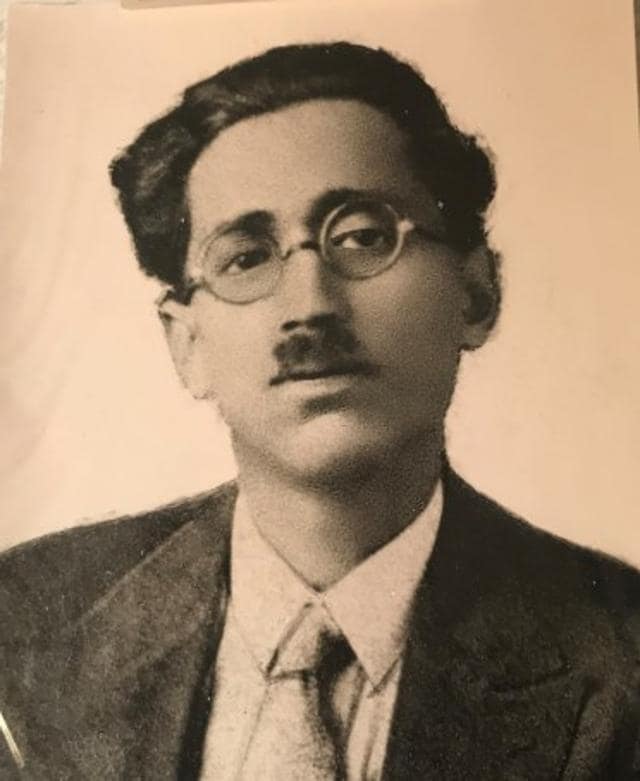
Vampire is the first work by Mirza Azeem Baig Chughtai to be translated from Urdu into English. The brother of legendary Urdu writer Ismat Chughtai, he died young at the age of 43. His writing career lasted only 14 years, but given his body of work, to quote his famous sister, “his defiant spirit will live on forever”.
Vampire is the original title of Chughtai’s novel as he couldn’t find an Urdu equivalent. He writes in the preface: “Vampire is an English word and I admit I have committed a theft… As we are Muslims, we feel compelled to invade the Arabic language with great aplomb. I, on the other hand, decided to steal from English. Let me assure you that the Urdu language needs the word ‘vampire’.”
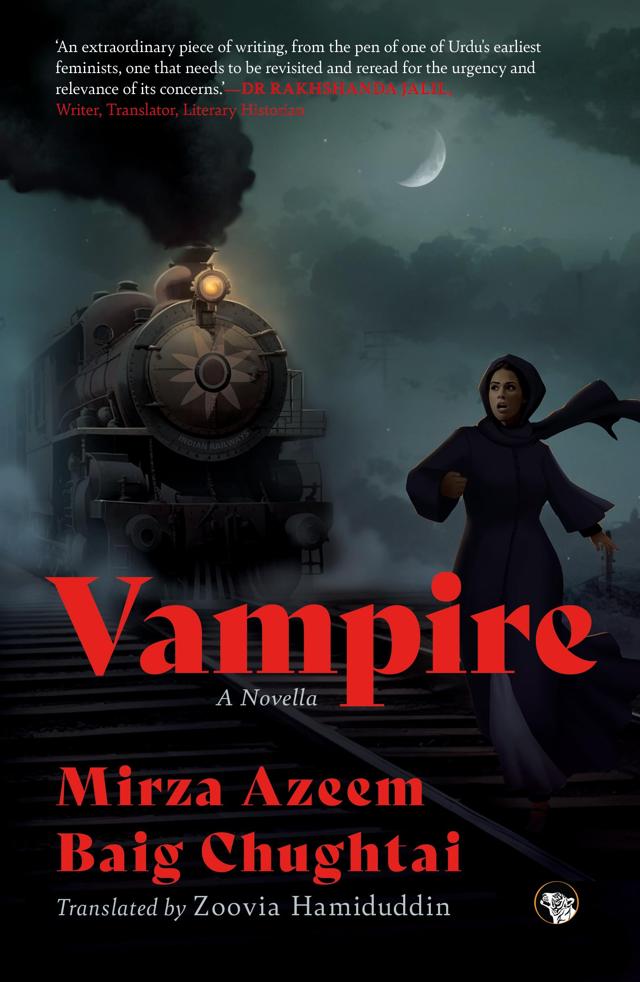
Through the heartbreaking story of a 16-year-old who is violated by her own people, he exposes the “vampires” within the Muslim community. Chughtai wrote this novel in the 1930s (the preface is dated November 24, 1932), but the 16-year-old’s story is as relevant in the 21st century when violence against women in India shows no sign of abating.
Vampire is an intimate first-hand account of the unnamed 16-year-year, who has just had her nikah ceremony, but her rukhsati (ceremony where she moves to her husband’s house) has been postponed till her husband, newly recruited to the police force, finishes his training. The nikah has been solemnised but as the tradition was then, she hasn’t seen her husband’s face. Neither has he seen hers.
Following her nikah ceremony, her marriage party is headed to another town to attend her cousin’s wedding. They are on a train, the coach overflowing with people. Two more marriage parties storm into the coach, and she is separated from her own family. She is now in a coach with her extended family, and after enjoying a hearty meal she falls asleep. When she wakes up, the train has reached its destination and her family – her own and extended – is nowhere to be seen.
The graphic description of the sequence of events on the train will remind readers of the recently released movie Laapataa Ladies – except that in the movie the new bride is rescued by kind-hearted people, who take her to the station master, who wires her “missing” status to other stations.
In the novel, a station master “offers” her to a guest and she loses her “honour”. The terrified girl, eventually reunites with her family, who left her behind “like a useless piece of luggage” and is forced to tell her brother, who comes to pick her up, that she was treated very well by the station master’s non-existent family. As she follows her brother “like a walking corpse”, she wonders if “death” is the only solution ahead.
She is wise enough to understand that she cannot reveal her predicament to anyone or expect any kind of sympathy. Instead, she writes a letter to God. In this moving first person account, she touches upon how she was trapped in the station master’s house, but most of all her letter is about how she is unable to cope with the excruciating pain and the shame of being raped.
When she returns, her family notices visible changes in her behaviour. They blame it on her trauma of going missing, till one day her mother notices the obvious bodily changes. Thus begins her family’s collective nightmare, and this wasn’t like the one they had when their son died, which they hoped would heal with time. This ordeal has to end even if it means risking their daughter’s life to save their family honour.
The way Chughtai inhabits the victim’s mind is staggering. And to think he was writing this in 1932, almost a century ago, when such empathy was unknown even in liberal western countries. It is hard to believe that Chughtai never spoke to a victim of rape, yet has documented with such perfection the victim’s trauma, the darkest corners of her troubled mind, and her being in the “realm of the undead”.
“The loss of my honour, my chastity, altered me forever. I became a burden on this world, a disgrace and dishonour to my family, and to my husband. But the oppressor who inflicted this torture on me? He remains untainted, unburdened, unshackled; his devilish behaviour does not change his life,” Chughtai airs every rape victim’s angst in this observation.
There are no details here that titillate. Chughtai, in fact, exposes such double standards among his fellow-writers, who he opines are enriching the language with a “treasure trove of pornography”.
Experiencing extreme feelings of guilt, the victim thinks of herself as a criminal, and hates herself for destroying the note that her rapist had handed her – in case she wanted to establish contact with him for further liaisons. She wonders if she could strike a deal with him and marry him and save her and her family’s honour.
Chughtai acknowledged the dignity of women, and was quite possibly the first Urdu writer to champion women’s rights much before terms such as ‘activist’ or ‘feminist’ gained currency. His writings were greeted with angry demonstrations, and he was showered with death threats.
Chughtai’s grandniece Zoovia Hamiduddin, who has translated the book, underlines this in her introductory note: “Long before the #MeToo movement, long before any recognition and acceptance of Rape Trauma Syndrome, long before terms such as ‘secondary rape’ and ‘Stockholm Syndrome’ were coined, he dared to write about the unpalatable, the unmentionable, the unrecognised subject of rape in a Muslim society and that, too, from the female victim’s perspective.”
It wasn’t easy for Hamiduddin, a medical doctor based in New York, to read Vampire. She avoided it for the longest time until the #MeToo movement gathered momentum. She writes that Chughtai grew up at a time when Gothic horror novels were popular, and he was familiar with these works. Here, he compares rape victims to women who were devoured by vampires as described by Irish author Bram Stoker’s Dracula (1897).
Chughtai wrote both in Urdu and Hindi. Among his popular novels are Shareer Biwi (The Mischievous Wife), Maharani Ka Khwaab (The Queen’s Dream), Khanum (Lady), and Shehzori (A Woman of Strength), which was serialised into a television play and broadcast by Pakistan Television (PTV) in the 1970s. He was also a lawyer, who fought landmark cases to obtain female-initiated divorce for Muslim women.
Although Chughtai trains his guns at the Muslim community of the time, it will be fair to say that Vampire is every woman’s story – cutting across religions and socioeconomic strata. Hamiduddin has translated this work with great sensitivity, and I, for one, cannot wait to read more translations of her grand uncle’s writings.
Lamat R Hasan is an independent journalist. She lives in New Delhi.


