
 E-Paper



High GST collection reveals robustness of Indian economy
The total gross collection for 2022-23 stood at over ₹18 lakh crore, a 22% year-on-year jump.

 Prefer HTon Google


The government on Friday released Goods and Services (GST) tax collection data for the month of March, which has two important messages – the new indirect tax regime that was launched on July 1, 2017, has now undoubtedly matured; and the sustained buoyancy on the tax on consumption for 12 consecutive months despite global headwinds underscores the resilience of the Indian economy.
It was not very long that achieving the ₹1 lakh crore mark a month appeared ambitious. The year GST was launched in 2017-18, ₹95,600-odd crore was the highest monthly collection. Next year (2018-19), ₹1 lakh crore monthly collection crossed only four times. Seven times in the next fiscal year (2019-20). Then came the Covid-19 pandemic that devastated the Indian economy with the lowest-ever collections of ₹32,172 crore in April 2020.
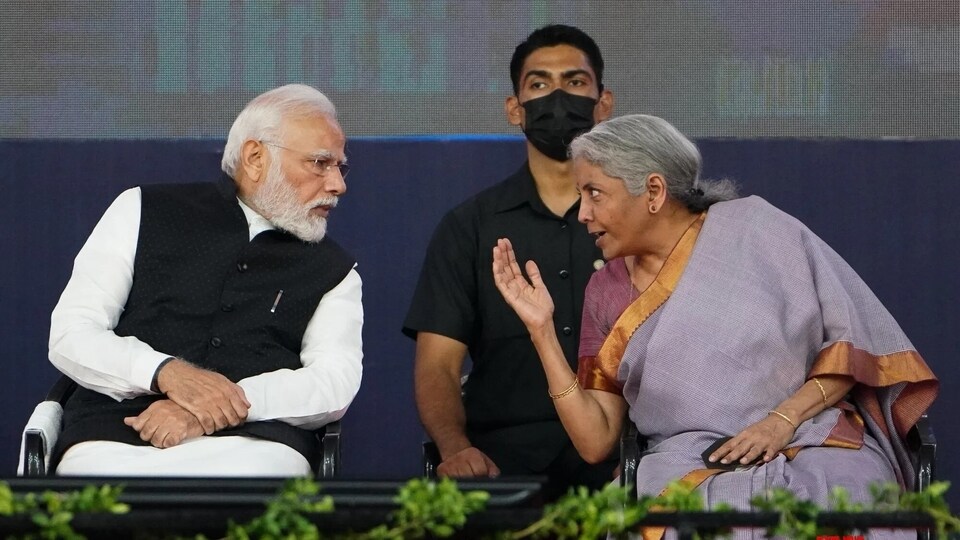
The year 2020-21 saw Prime Minister Narendra Modi’s emergency measures – free food and fuel to the poor, direct cash transfer to the vulnerable, free vaccines to all citizens, etc. Finance minister Nirmala Sitharaman responded to the need of the hour by providing stimulus to the economy in a calibrated manner. Instead of doles, she focused on productive credit facilities without collaterals, providing a lifeline to firms, particularly micro, small and medium enterprises (MSMEs). The result was quick and visible when GST collections in October 2020 bounced back to the psychological level of ₹1 lakh crore. The level was not just regained, but also sustained – for six consecutive months till the financial year-end on March 31, 2021.
Business activities recovered rapidly in the next financial year (2021-22), which was evident from stronger monthly GST collections. Barring May and June 2021, GST revenues were robust every month, closing March 2022 at over ₹1.42 lakh crore, a record till date. The FY23 was exceptionally good – starting with an all-time high at ₹1.67 lakh crore in the month of April 2022 and ending with the second highest ever at ₹1.60 lakh crore in March 2023.
According to the latest official statement issued on Saturday, the total gross collection for 2022-23 stood at over ₹18 lakh crore, a 22% year-on-year jump, and the average gross monthly collection for the full year was ₹1.51 lakh crore. The quarterly analysis also pointed at robust business activities. The average monthly gross GST collection for the last quarter of the FY 2022-23 went up to ₹1.55 lakh crore against the average monthly collection of ₹1.51 lakh crore in the first quarter, ₹1.46 lakh crore in the second quarter and ₹1.49 lakh crore in the third quarter of 2022-23.
The progressive growth in GST collection since its inception on July 1, 2017 proves that the new indirect tax regime has matured. This is an answer to the naysayers that such a vast reform – which unified the entire domestic market – requires patience. Notwithstanding sharp criticisms by the Opposition about hasty implementation of GST, the Modi government engaged with stakeholders and worked with them to make it happen. The patience of the government finally paid.
GST is a tax on consumption, therefore, it is one of the high-frequency indicators of economic health. When major economies of the world are facing headwinds because of unprecedented inflation (mainly due to their big freebies to stimulate their economies post-Covid pandemic), India is relatively safe. While advanced economies are slowing down, India is still one of the fastest-growing major economies.


