
 E-Paper



Himachal: Panel to study causes behind landslides in Shimla
Dr SS Randhawa, the principal scientific officer of the Himachal Pradesh Council for Science, Technology and Environment (HIMCOSTE), has been appointed as the coordinator of this committee

 Prefer HTon Google


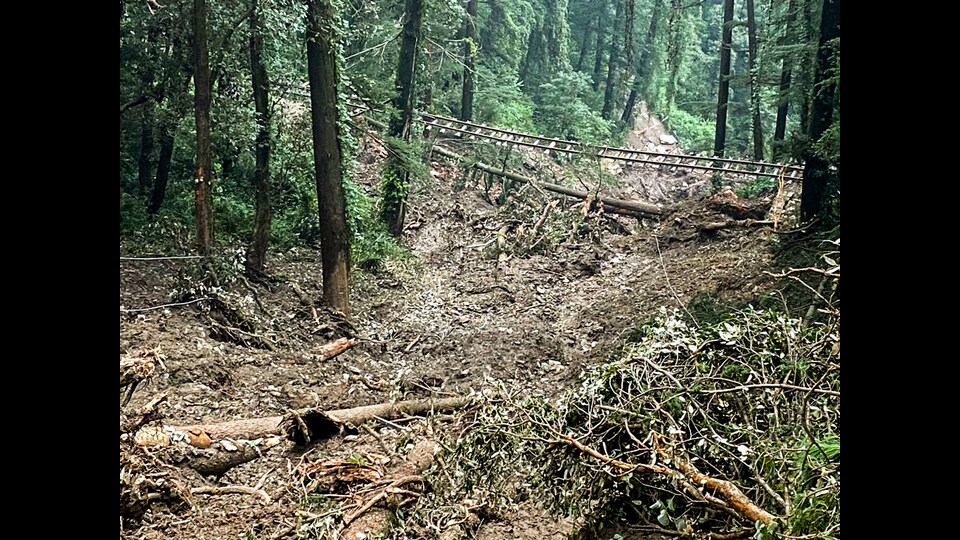
In a proactive move aimed at addressing the recurring challenge of landslides in the town of Shimla, the government has established a committee dedicated to studying the causes and effects of landslides in and around the area. The announcement comes as a response to the increasing concern over the safety of residents and infrastructure due to landslides, which have been a recurring issue in the region.
Dr SS Randhawa, the principal scientific officer of the Himachal Pradesh Council for Science, Technology and Environment (HIMCOSTE), has been appointed as the coordinator of this committee.
Other members of the committee include state geologist Puneet Guleria, representatives from Public Works, Jal Shakti Department, Shimla Municipal Corporation, and a representative from the Shimla deputy commissioner’s office.
The committee has been tasked with submitting its comprehensive report to the government within a week. This report will be a pivotal source of information for the formulation of a robust policy aimed at mitigating and preventing the devastating impact of landslides in Shimla.
According to a notification issued by Onkar Sharma, principal secretary of the revenue department, the government is steadfast in its commitment to safeguarding the residents and the region’s infrastructure from the ominous threat posed by landslides. The need for proactive measures is highlighted by studies conducted by the National Disaster Management Authority, revealing that a substantial area of 38,000 sq km in the state is susceptible to landslides. Among this area, a concerning 7,800 sq km is deemed to be at high risk.
Historically, Shimla has witnessed several significant landslides, resulting in loss of lives and infrastructure. A notable incident dates back to 1971, when a six-story building was demolished during a landslide near present-day IGMC. More recent events include a 2017 landslide near Mehli Shiv Temple and the 2021 collapse of a multi-story building in the Raw Valley area.
The committee’s study aims to shed light on the contributing factors to these natural disasters. Deforestation and excessive manipulation of the region’s terrain have long been suspected as prime causes.
Cracks develop in several houses in Shimla
As Shimla continues to grapple with the monsoon season, several buildings remain at risk. Cracks have developed in numerous houses, roads are sinking, and even the lumber market has faced subsidence over the years. The Directorate of Urban Development and Industries has been actively monitoring the situation. While Shimla has endured a persistent challenge in the form of landslides, the formation of this committee represents a significant stride towards better understanding and addressing this issue.


