
 E-Paper



Punjab agriculture department to add 50,000 hectares under cotton cultivation in Malwa
The decision comes keeping in view a bumper production in 2020 and no major pest outbreak in the crop for the last five years

 Prefer HTon Google


Keeping in view a bumper production in 2020 and no major pest outbreak in the crop for the last five years, the Punjab agriculture department has decided to add 50,000 hectares under cotton cultivation in the Malwa region this year.
This will be an increase of 10% over the current area of 5 lakh hectares. The sowing for the major cash crop in eight semi-arid districts of the region will start from next month.
Experts say as farmers received good rates for their produce and global and domestic demand of raw cotton is increasing, more growers will be motivated to diversify towards the cash crop. If the state authorities manage to achieve the set target, it will be the highest since the 2010 season of 5.16 lakh hectares.
State agriculture director Sukhdev Sidhu said, “Cotton sowing will start from April 1 and the department is planning to increase area under the traditional kharif crop. We have put all arrangements in place to meet the target and 25 lakh packets of seeds will be made available to farmers.”
While cotton sowing commences in the first week of April in the mustard-growing areas, but the bulk is done after April 15 when wheat is harvested in the region.
“In the wake of an incident of deadly pink bollworm in Bathinda last year that infested nearly 100-acre land, cotton ginning and pressing units, key source of such infestations, have been instructed to follow the protocol to complete processing by March-end and destroy the waste immediately,” said Sidhu.
Officials said the direct payment mode adopted by Cotton Corporation of India (CCI) was successful for the last two consecutive years under which more than ₹2,000 crore, including ₹1,525 crore in 2020-21, was paid to the cotton growers.
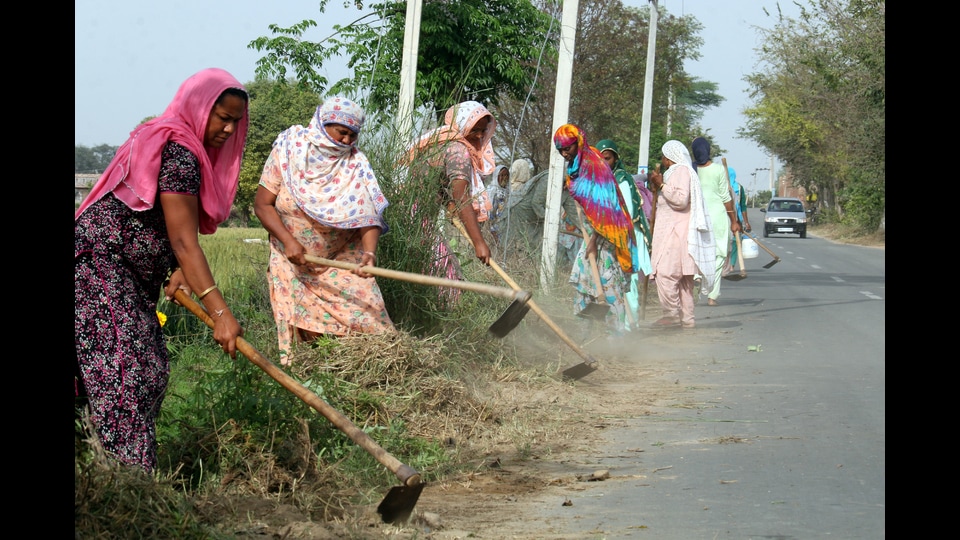
Paramjit Singh, director, Punjab Agriculture University (PAU) regional research station, Bathinda, said the first step will involve removing weeds like ‘kanghi buti’, ‘peeli buti’, ‘puth kanda’, ‘dhatura’ and ‘bhang’ that grow on field bunds, wasteland, roadsides and irrigation channels/canals through community participation.
“In the last two seasons, weed removal proved immensely beneficial in keeping the whitefly pest at bay. Coordinated efforts by agriculture scientists, extension teams and farmers resulted in a disease-free season in 2020. It will encourage the farmers to go for cotton in a bigger way,” he added.
Mandi board cotton state coordinator Rajnish Goel said till March 17, at least 41 lakh quintal cotton was purchased and farmers were paid up to ₹6,270 for a quintal, which is ₹545 above the minimum support price (MSP).
Goel said in 2020, the average yield was close to 833kg lint per hectare whereas it was recorded 800kg in 2019.
In 2015, cotton yield dropped to a low of 197kg lint per hectare due to whitefly attack. The crop yield in the Malwa belt was 756kg; 750kg and 778kg from 2016 to 2018.
“Amid the coronavirus scare in 2020-21, the CCI played an important role by purchasing a record 24 lakh quintals on MSP. Timely announcement by the central government on increasing the MSP will lead to increase in the area under cotton,” he said.


