E-Paper



6 locations across Capital consistently in ‘severe’ zone
it is likely that local sources of pollution are responsible for the worst AQI in Ashok Vihar, Anand Vihar, Bawana, Wazirpur, Jahangirpuri and Vivek Vihar.

 Prefer HTon Google


The average air quality index (AQI) in the Capital has been ‘very poor’ since Sunday, but at least six stations have recorded ‘severe’ AQI -- worst in Delhi -- during this period, as per Central Pollution Control Board’s (CPCB) data.
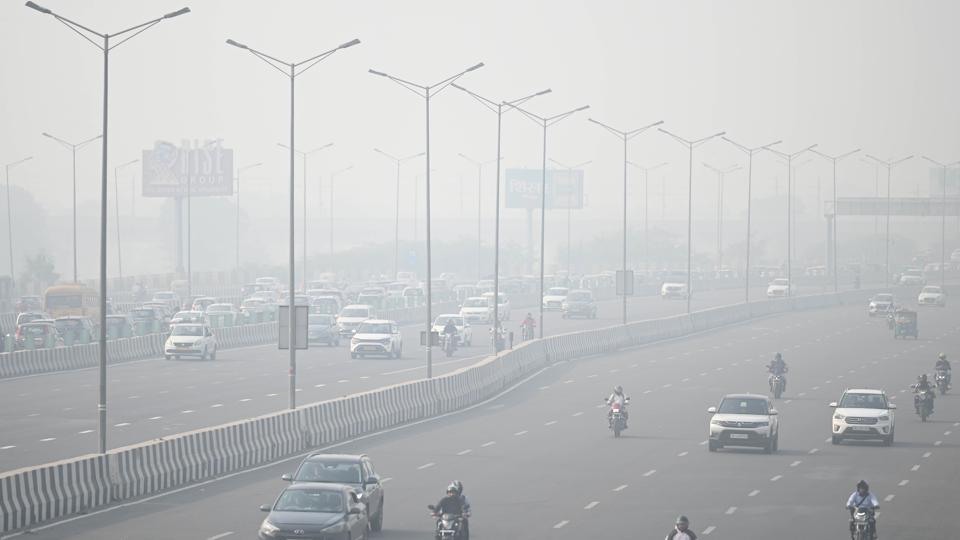
With pollution levels higher than the city’s average, it is likely that local sources of pollution are responsible for the worst AQI in Ashok Vihar, Anand Vihar, Bawana, Wazirpur, Jahangirpuri and Vivek Vihar.
All the six spots are part of Delhi’s 13 pollution hotspots’ list, which also comprises Mundka, RK Puram, Rohini, Punjabi Bagh, Okhla, Narela, and Dwarka. The Delhi Pollution Control Committee (DPCC) and the Central Pollution Control Board (CPCB) had identified these 13 pollution hot spots in Delhi in 2018, based on the annual PM 2.5 concentration of these locations being higher than Delhi’s mean PM 2.5.
Anand Vihar was the most polluted in the city across the last three days, with an average AQI of 431 during this period, HT’s assessment of CPCB data showed. Locals said that despite having area-specific action plans with involvement of officials from different land-owning agencies, civic bodies and a nodal officer, little difference was visible.
“Earlier in October, we were seeing agencies sprinkle water on the roads, but even that is not being seen as frequently now. The air is thick with pollutants and people have stopped going out for morning walks and yoga,” Vinod Kumar, 56, RWA president of DDA flats in Anand Vihar, said, adding that with the ISBT and a railway station in the same location, vehicular pollution remains the main source.
After Anand Vihar, north Delhi’s Wazirpur recorded the highest average AQI over the last three days at 421.
Delhi government, as part of its winter action plan, had announced plans to use drones to monitor pollution at the hotspots. A trial was also held on October 25 at Wazirpur, however, deployment at other hotspots will only be done if the findings from the trial are found to be adequate, officials said. On October 28, the government announced plans to deploy civil defence volunteers at hotspots too. On November 1, environment minister Gopal Rai also said 200 anti-smog guns were being deployed across Delhi, with additional guns at the hotspots.
Dr HC Gupta, president of the federation of Ashok Vihar RWAs, said that large scale burning of waste and pollution from industries in Wazirpur were two key reasons behind high pollution in the area. “Every evening, we start to see garbage and waste being burnt around Ashok Vihar. Industries in Wazirpur are also polluting, despite permissions to only carry out non-polluting activities. We see smoke coming out from the back of several units, which not only pollutes Wazirpur but Ashok Vihar too,” Gupta said.
The other locations with severe air quality during this period were Ashok Vihar, Jahangirpuri, Bawana and Vivek Vihar, recording an average AQI of 414, 416, 410, and 413, respectively during the last three days.
Sunil Dahiya, founder and lead analyst at the think-tank Envirocatalysts said there is still lack of transparency on the identified sources of pollution. “Based on that, there needs to be further accountability on the action taken for each hotspot. We also need action on the ground at the other 27 stations in Delhi that have not been designated as hotspots. Data clearly shows that the local sources are not being controlled. Three of these locations are also industrial clusters in Bawana, Jahangirpuri and Wazirpur, indicating that could be one source,” he said.