E-Paper



Break from cold wave in Delhi, but not for long: IMD
Delhi's minimum temperature rose to 9°C, easing cold wave conditions, but is expected to drop again over the weekend. AQI remains in the "poor" category.


Residents got a respite from cold wave conditions on Friday, as the minimum temperature rose sharply after being below the 5 degrees Celsius-mark for two consecutive days.
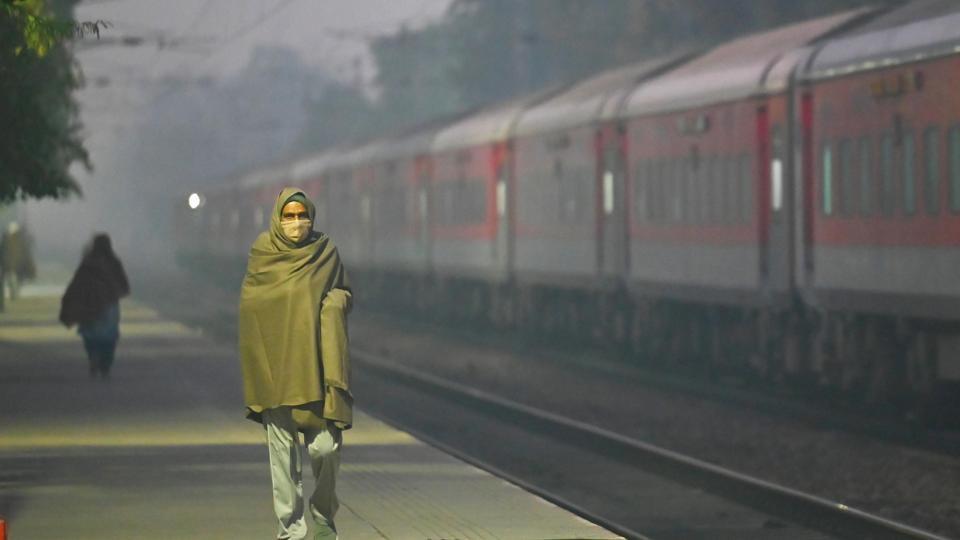
Safdarjung, representative of Delhi’s weather, recorded a low of 9°C, which is around normal for this time of the season. This was a sharp increase from Thursday when the minimum was 4.5°C. Prior to that, on Wednesday, the minimum temperature was 4.9°C — when the Capital witnessed cold wave conditions in some parts for the first time this season.
On Friday, no weather station recorded cold wave conditions. The India Meteorological Department (IMD) said the rise in temperature was likely due to localised variations in wind direction and speed.
IMD has, however, forecast a drop in mercury again over the weekend but said that cold wave conditions are unlikely to return.
“The rise in minimum temperatures is quite localised and can be attributed to variable wind conditions. Minimum temperatures did not show a significant change over most parts of northwest India,” said IMD scientist Krishna Mishra, stating the minimum had risen by more than 2°C only at isolated places including Patiala, Karnal, Rohtak, Delhi, Sikar, Alwar and Phalodi.
“A rise of more than 3°C rise in minimum temperature meanwhile occurred only over Sikar, Rohtak, Phalodi and Safdarjung over the entire Northwest India plains,” Mishra said.
Delhi’s minimum is likely to hover around 7°C over the weekend, with isolated stations hovering around 5-6°C, the weather office said in its forecast.
IMD classifies it as a cold wave if the minimum temperature is below 10°C and 4.5°C or more below normal. It can also be classified as a cold wave in the plains if the minimum temperature is less than 4°C.
“No station met this criteria on Friday,” said Mishra, stating that the lowest minimum across the city was 6.3°C at Palam, which was only three degrees below normal. In comparison, the lowest minimum on Thursday was 3.2°C at Pusa, which was six degrees below normal.
Mahesh Palawat, vice president at Skymet meteorology said that consistent northwesterly winds are still blowing towards Delhi-NCR and will continue till the weekend. “There can be fluctuation in temperature during such spells, generally when winds remain strong. The impact of the snowfall recorded a few days ago is gradually reducing. Surface cooling is also impacted if winds remain consistent even at night-time, as a sharp dip generally occurs when winds are calm,” he said.
The maximum temperature stood at 22.8°C, which is normal for this time of the year.
AQI remains poor
Meanwhile, the air quality index (AQI) marginally rose but remained in the “poor” category on Friday.
The AQI stood at 262 (poor) at 4pm against Thursday’s reading of 288 at the same time.
Forecasts show that AQI is likely to remain “poor” over the weekend, but may turn “very poor” next week as wind speed dips again.
“The air quality is likely to be in the ‘poor’ category from Saturday till Sunday. The AQI is then likely to be in the ‘very poor’ category on Monday,” said the Centre’s Early Warning System (EWS) for Delhi, forecasting AQI to hover between “poor” and “very poor” from December 17 till December 22.